Showing posts with label SFFWorld. Show all posts

Monday, November 03, 2025

Countdown to Halloween 2025 @ SFFWorld

It was another big Halloween at SFFWorld, I wound up posting 7 book reviews during October in the lead up to and (in the case of one book) on Halloween.

This is my favorite bookish time of year, especially as just over 50% of what I’ve been reading every year for the past few years has been horror. Here's what I featured, going back to the start of the month.


The Sundowner’s Dance by Todd Kiesling kicked off the Halloween 2025 celebration at SFFWorld. This is the second year in a row I’ve included a Todd Kiesling novel in the countdown. The man delivers on the creeps and the emotions.


Few writers deliver as often (multiple books per year) with such quality as Jonathan Maberry, including his Lovecraftian/Space Opera/Military Science Fiction novel NecroTek. This is not his first Halloween appearance at SFFWorld, nor will it be his last… because (like Jonathan Janz's back-to-back appearance in 2024) while NecroTek published in 2024, the sequel published on October 14, 2025, which is when my review of Coldwar:A NecroTek Novel post.


You wouldn’t think a septuagenarian would be the Final Girl star of a slasher / murder mystery novel, but then you may not have read The Autumn Springs Retirement Home Massacre by Philip Fracassi. This novel impressed the hell out of me and fell in love with Rose DuBois as a protagonist.


Last year (2024), the DarkInk event at the Doylestown Bookstore was a great event and provided some books for the Halloween Reads. The same can be said for the 2025 event because Small Town Monsters by Diana Rodriguez-Wallach was a book I picked up at that event and absolutely adored. She was the surprise star of the day for me because I hadn't read her previously and she just oozed enthusiasm during her panel.


Over the last 2 or 3 years, Ronald Malfi has become a must read horror writer for me, Senseless kept that trend alive. A little different from his previous novels that leaned more into the crime genre, but an excellent novel nonetheless.


Closing out my contribution to the Countdown to Halloween is the 2025 novel from a writer who just might be the current Queen of Horror, Rachel Harrison and her take on the Haunted House story, Play Nice.


Friday, November 01, 2024

Countdown to Halloween 2024 at SFFWorld is a Wrap!

Well…Countdown to Halloween 2024 is a wrap at SFFWorld. We had a lot of reviews go up this year and as ever, our friend Randy M (noted Horror expert) contributed quite a few. Take a look at what we (Randy, my long-standing SFFWorld colleague Mark Yon, and I) did this year at Countdown to Halloween 2024. For my part, I’ll provide just a little bit more with the links below. 


I started off October / Countdown to Halloween 2024 with reviews of Jonathan Janz’s two Children of the Dark novels: Children of the Dark and Children of the Dark 2: The Night Flyers. I’d have to say, my favorite “new to me” horror writer I started reading the past five years is Janz and these two books just might be his best. They play on the great trope of Kids on Bikes/Kids vs. Monsters to a very satisfying degree.


Next was Murder Road by Simone St. James. I’ve read a few novels from her prior to this one and they’ve all been a very enjoyable mix of mystery and supernatural. This one continues that trend.


The following week, I posted a book that is going to be a favorite read of 2024 for me, Todd Keisling’s Devil’s Creek. A story of a cult/dark church that has some Lovecraftian overtones. A truly dark and harrowing novel.


It is always great to read new voices in the horror genre, especially when those voices bring something you haven’t seen before or a perspective that is different than your own experiences. That’s Del Sandeen’s This Cursed House, which was an extremely impressive debut novel. 


Next up is another new-to-me writer, but a writer who has received (arguably) the highest honor a horror writer can receive, the Bram Stoker award for Life Achievement. I refer to Nuzo Onoh’s fable-like horror novel, Where the Dead Brides Gather.


Closing it out is a book by a writer with an interesting personal connection. Nicole M. Wolverton and I both own dogs…these dogs happen to be sisters. We adopted our dogs (Dusty for my, Myrtle for her) from the wonderful Angel’s Retreat dog rescue. Little did I know that one of the side benefits to bringing the perfection that is Dusty into our lives is that I’d “discover” such an engaging horror writer with A Misfortune of Lake Monsters. There you have it, a half-dozen +1 batch of horror novels for your reading pleasure.


Thursday, November 03, 2022

October 2022 Reading Round Up

October, shockingly, was all about horror. Well, the books I read, at least. The first weekend in October was New York Comic Con and it was the fist time since 2019 I was able to attend. They limited the press passes in 2021 and it wasn’t held in 2020 because of the COVID-19 Pandemic. One of the books I’ve already read, but you can click over to these three posts at SFFWorld to read my recaps of my time during the convention:


As I said above, every book I read in the month of October either had some horror flavors or was flat out horror. Three of those books were review books part of the annual “Countdown to Hallowe’en” series we do at SFFWorld


Little Eve touches many topics in its slim, but potent length. There’s the concept of “grooming,” psychological manipulation, cults, animal cruelty, and of course child abuse (both mental and physical). Although this is a fictional tale set nearly a century prior to today, the games Uncle plays with his family are frighteningly real and are very much cultish in nature.

Hines manages to generate a wonderful atmosphere in the novel, there are hints of things familiar in the genre, but mixed up in a way that feels quite refreshing. With a creepy mine, there’s some definite horror vibes of the dark dwellers flavor of the genre and even something of an old west feel…In addition to The Thing, I also felt a sense of resonance with some of Jeff VanderMeer’s weird horror fiction and in the way the Institute “helps” humanity, I couldn’t help thinking of Octavia Butler’s Dawn and Lilith’s Brood/Xenogenesis books. Like I said, some familiar echoes that when fully projected are a story of its own.

What I found as unnerving as the black cloud over “The Day” was the affect it had on Nina’s relationship with her husband Lord Hugh. He initially seems quite stable, but as Nina begins to stray from the home as the “Day” draws ever closer, he seems to unravel. As it turns out, Nina is a quick learner and the true impact and import of “The Day” begins to settle into her mind, she understand what it means to be a resident of Lute and somehow begins to find herself more resolute.

Compulsive…that’s the word that comes to mind when I think of this novel. Gibson has lovely prose and the tale is told with both auras of relaxed prose as well as elements of urgency, but through it all, the narrative of Constanta’s confessional is powerfully compulsive, which is why I read this book in only a couple of days. Her tale is gripping and you want to see her overcome her abuser.


Of the non-SFFWorld review books, let’s start with Ronald Malfi’s Black Mouth, which is the first novel I’ve read by the author. I’ve been seeing good things about his work for the past couple of years (Come with Me in particular), but this one’s description grabbed me for its very superficial similarity to books like King’s IT and Dan Simmons’s Summer of Night - friends reunite in their hometown to take down a monster they thought was gone. Those similarities, as I noted, are just superficial. Malfi’s tale is a little more confined, in that there are fewer characters and much more despair surrounds the characters; protagonist Jamie Warren is an alcoholic struggling with his addiction; his mother is a junkie who killed herself, thus brining Jamie back to Sutton’s Quay, VA. His disabled brother was found wandering. Dennis’s other friends Mia and Clay have their own demons, but they were very close friends when they were kids, but haven’t seen each other in years, since an eerie man known only as the Magician touched their lives. Malfi excels with his characters and building a sense of creepiness, between the Magician and the haunted region of Black Mouth itself.

He tells the tale in intertwining chapters that focus on the present and past when Jamie and his crew initially encounter the Magician. Malfi has a very deliberate pace and that pace works perfectly in Black Mouth to build up empathy for all the characters, the horrific nature of the Magician, the unsettling nature of Black Mouth itself, and how the tension builds towards the conclusion.

Black Mouth is one of my favorite novels of the year and I’m looking forward to reading more from Malfi in the future.


One of the books I picked up at New York Comic Con was Clay McLeod Chapman’s Ghost Eaters, which he then signed. I’ve read two of his books so far (The Remaking and Whisper Down the Lane) and enjoyed both and shared both with my wife to read. This one focuses on a drug called Ghost that allows the people who consume it to see dead people, or ghosts. Thinking about seeing dead loved ones might bring a swell of positive emotion to your heart…Clay goes the opposite direction. 

I won’t spoil what that means, but damn. The story focus on Erin and her toxic ex-boyfriend Silas. She keeps trying to get away from him and his addictions, but she finds it difficult. He eventually turns up dead of an overdose. Erin can’t hold on, she always feared he may wind up dead, but it actually happened and she has difficulty dealing with it. Then she learns about the aforementioned drug called Ghost. There’s an escalating creep factor that sets it apart. Chapman’s characters seem genuine and are empathetic and not since Jeff VanderMeer have mushrooms been so very creepy. 

The other non-SFFWorld review book I read was Nick Cutter’s Little Heaven, which I was looking forward to reading after The Troop earlier in the year because I enjoyed it so much. I can’t say I felt the same way about Little Heaven. The book started off fine, I was into it. But it just turned into a slog as it felt everything was happening at a glacial pace.


The audiobook I read (and have yet to finish) took up all of October, but it was a re-read, Chuck Wendig’s Wanderers, which I reviewed back in 2019 for SFFWorld when it published. The book was released before the COVID-19 Pandemic, but damn if Wendig’s story wasn’t prescient for what we’ve experienced the last few years. Seems more horrific in hindsight than it did at the time. Here’s some of what I said back in 2019: 

In short, between the potent politics, graphic nature, and embracing of the tropes, Wending doesn’t shy away from ANYTHING in Wanderers. As a writer, Chuck is far from a shy person, as people who follow him online and in fiction already know. I’ve read a few of Chuck Wendig’s novels and I see some pieces of those works, here, except maybe a little more refined an in your face. Wanderers is a magnum opus for him, it seems like a work of fiction he’s been working towards, and is a powerful achievement ...  Wendig has shown himself at the very least an equal storyteller/writer of the Epic Apocalypse with Wanderers. For me, it is an instant classic, an immediate Modern Masterpiece of the genre, and will probably be my favorite 2019 novel, and a book I will hold very high in my pantheon for years to come.

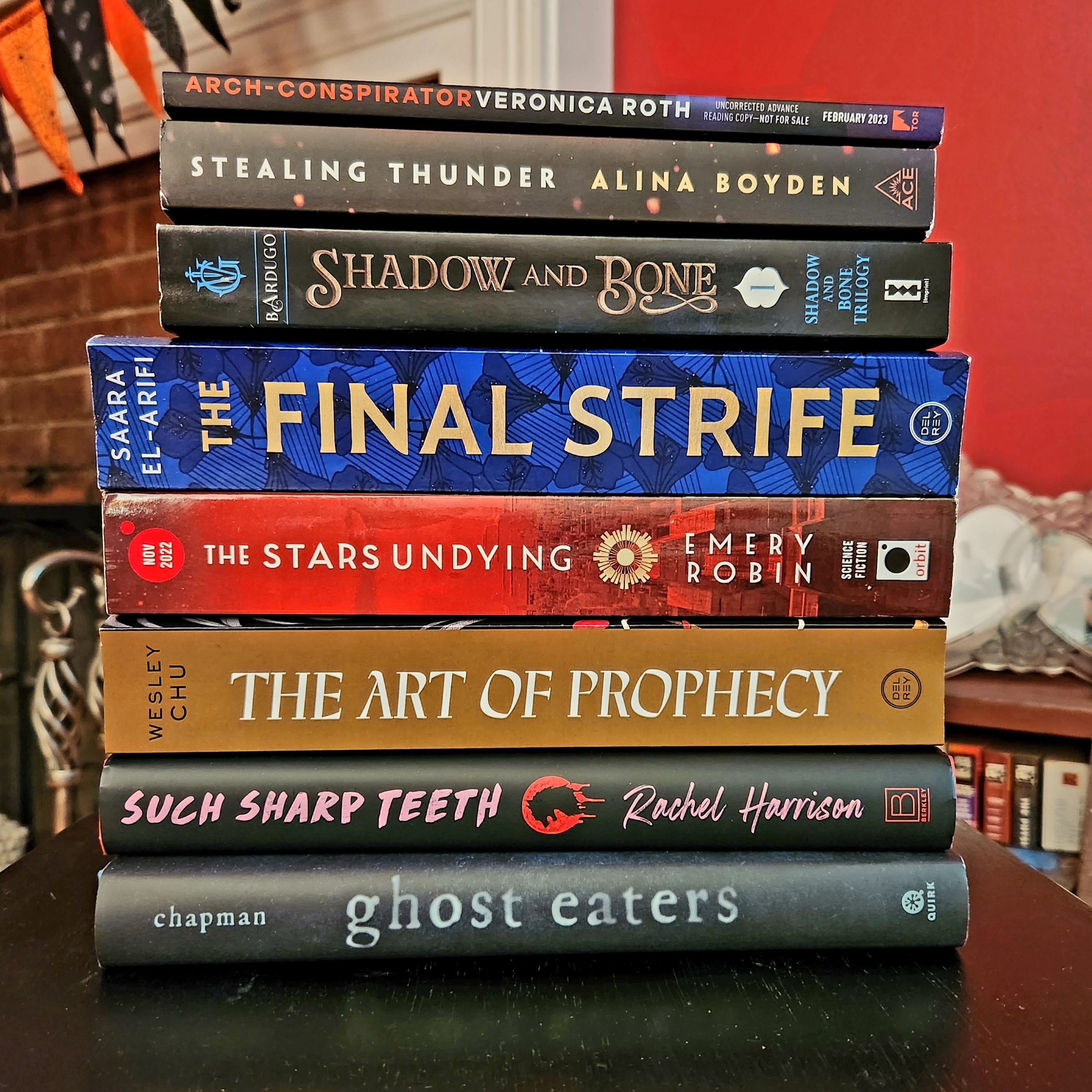
I’ll close out with my bookstack from New York Comic-Con 2022.


Friday, June 03, 2022

May 2022 Reading Round Up

This is getting to be a regular thing, it seems – I read some books, I post about them. Sure, I’ve been doing that at SFFWorld for years, but with far less frequency here.


I’ll briefly mention the reviews I posted to SFFWorld during the month of May before doing an overview of the goodies I read not for review for SFFWorld, i.e. books I bought or were gifted, but not sent for review from the publisher. Over the last month at SFFWorld, you’ll find my review of The Hacienda by Isabel Cañas, which I posted last week. This was a haunting, excellent horror debut novel. Last month, I hinted at a book I read in April whose review would be going live May 3, that was Holly Black’s Book of Night. A review of a book I read back in March went live in May, too. An outstanding Horror Anthology edited by John F.D. Taff, Dark Stars: New Tales of Darkest Terror. There’s one book officially publishing in June which I’ll post to SFFWorld on the book’s publication date. I started it late last week, but will hopefully finish it in the next week or so. Here’s the rundown of what I read outside of the review books I received for SFFWorld. 


May started out strong with the audiobook of Take Your Turn, Teddy, by Hayley Newlin. This is a book I’ve seen good things about on the various horror blogs and instagrammers I follow. This book starts out as a sad tale of a young boy named Teddy whose father is extremely abusive to his mother and becomes a horror novel mixed with a serial killer police procedural. Some creepy scenes, nice character development with the cast of characters, and nods to the Stephen King. It works extremely well and the narration by Thomas Gloom helped to enhance the story. Haley also reviews for Cemetery Dance magazine online. 


Clown in a Cornfield is a book whose title alone would strike a chord of creepiness in most reader’s imagination. Adam Cesare tells the story of a middle American town, but it can be seen as a microcosm of some of the issues in everyday America. Our main character, Quinn Maybrook, moves to Kettle Springs, a town whose divide between the adults and teens traces back to the recent shutting down of the syrup factory, which was a great source of the town’s economy and livelihood. Added to the chaos is “Frendo the Clown,” the mascot of the syrup factory, who begins killing people. Quinn is caught up in the mess as a new kid torn between the popular crew and the not so popular crew. 

Cesare did a fantastic job of immersing me in the story, building empathy for his characters, and keeping the tension and scares a very appreciable level. I read the book in only a couple of days because it was both relatively short and very difficult to set aside. As this post goes live, the sequel, Clown in a Cornfield 2: Frendo Lives is on the horizon. 


A break in the horror with Sarah Chorn’s second novel in her Songs of Sefate series, Glass Rhapsody. I was a big fan of the first book (Of Honey and Wildfires reviewed @SFFWorld) and was eager to see where she took this fantastical frontier world. Her prose remains top notch and beautiful. Building on the momentous events at the conclusion of the first book, Sarah manages to maintain the same emotional pull that drove Of Honey and Wildfires while also examining new ways for her characters to deal with grief and tribulation. Sarah self-publishes her novels, but her storytelling ability is stronger than many traditionally published writers whose work I’ve sampled.


Back to Horror with The Troop by Nick Cutter. This book, as well as Cutter’s other books, seem to make every recommendation list I see for “recent horror” novels. After finally diving into the book, I now understand why. A scout troop goes to a local uninhabited island, Falstaff Island, to experience the wilderness as part of their annual trip. This island is essentially cut off from civilization, which is the point of the trip, especially in a world that is uber-connected. The boys and Scoutmaster arrive and are shortly joined by an unexpected visitor. That unexpected visitor brings some unexpected visitors of his own. The hype is pretty genuine with this book, it is horrific and creepy, at turns reminding me of the films Alien and The Thing, and of course the easy novel comparison, The Lord of the Flies. Some gruesome scenes, but not really gory for gore’s sake. Any of the squelchy scenes serve the story as a whole and a couple of characters are equally monstrous. Cutter openly admits the use of “real” updates like blogs, court records, and psychological transcripts interspersed in the text was inspired by Stephen King’s Carrie. It is an extremely effective method for building tension in the story. I’m looking forward to reading more of Nick Cutter’s novels in the future.


I took a break from my audiobook re-read of The Wheel of Time to finish out Lindsay Buroker’s Star Kingdom space opera series over the past month with book 7 Home Front and I started, book 8 Layers of Force at the end of the month, and will finish early June. This is a fun, character driven space epic set thousands of years in the future and unlikely hero Casmir Dabrowski who finds himself at the center of events of galactic conflict. The series features genetically modified humans, robots with AI, royalty, romance, space pirates, ancient technology and is enormously fun. In many ways, protagonist Casmir Dabrowski and his hopeful outlook in the face of tyranny reminds me of Julius from Rachel Aaron’s equally fun Fantasy/Apocalypse hybrid, Hearstrikers. I reviewed the first two books of that series for SFFWorld: Nice Dragons Finish Last and One Good Dragon Deserves Another.

On to another month of books!


Sunday, May 01, 2022

April 2022 Reading Round Up

Books, I read books. I read lots of books. 


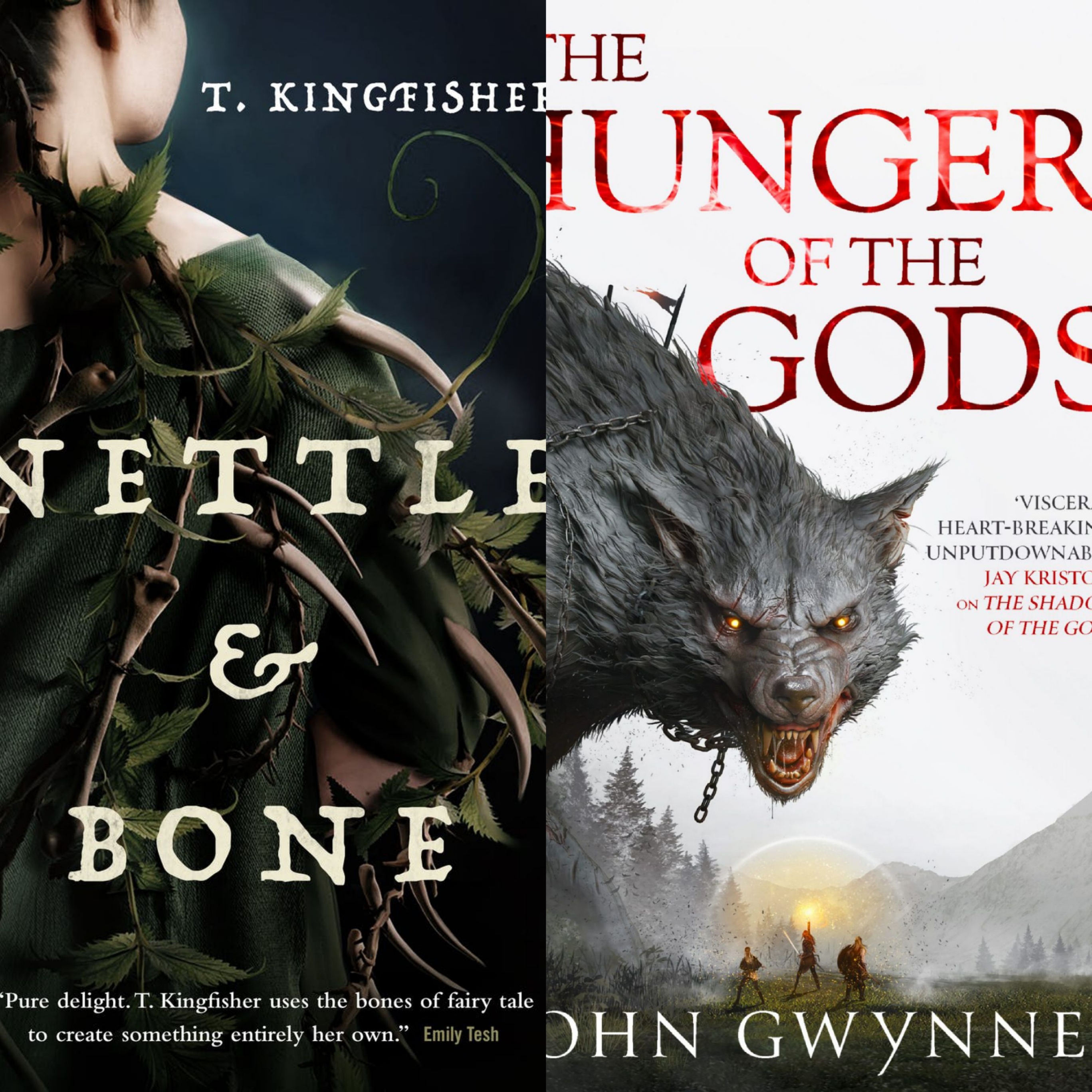
I read a few books in April, one of which is a May release. I’ll be posting my review to SFFWorld on May 3, the day of publication. I also posted a couple of book reviews in April, books I read in March: The Hunger of the Gods by John Gwynne, the spectacular second entry in his Norse-inspired Bloodsworn saga. Bottom line: this is shaping up to be a stellar fantasy saga. The other book review was T. Kingfisher’s Nettle & Bone a modern take on the tried and true fairy tale about the princess who wants to marry the prince. In the case of this delightful novel, a princess wants to kill the prince. I highly recommend this one, too. 


On the audiobook front, the entire month was consumed joyfully with book four of The Wheel of Time, The Fires of Heaven wonderfully narrated by Michael Kramer and Kate Reading. I continued with my descent into the Horror genre with two gems from small presses. 


John F.D. Taff’s The Fearing, which was originally published in serialized format as short novels/novellas, much like Stephen King’s The Green Mile. Grey Matter Press released a “Definitive Edition”/omnibus slightly re-worked by Taff to be more of a novel. Boy-howdy did I enjoy this book. In it, all the fears of the world have been unleashed and it is up to a handful of characters to figure out how to navigate this world in the midst of transforming. Seemingly at the head of this release of fears is a man named Adam. Taff follows Adam’s journey across America and his affect on the people he encounters along with a few groups of characters who manage to survive the catastrophies and monsters unleashed in the world. 

Have I said I loved this book? Well, Robert R. McCammon’s Swan Song, Stephen King’s The Stand, and Chuck Wendig’s Wanderers now have another book joining them on my proverbial top shelf of Epic, Apocalyptic Horror. Love the cover on this one, too. 


Gwendolyn Kiste’s  The Rust Maidens received the Bram Stoker Award for Superior Achievement in a First Novel and it has been appearing on several lists when I'm looking for a good creepy read. 

Set in 1980, Kiste paints a very bleak picture of a Cleveland manufacturing town in the process of dying. The factory which employs the majority of men in town may be closing or cutting back. Phoebe is our protagonist who is returning to town when her mother is about to move from the family home and the area is even more rundown in 2008 than it was in the 1980. Phoebe is powerfully devoted to her friends, even when they exhibit strange maladies like leaking water, glass fingernails, and showing metal bones. Kiste does a fantastic job with character and place in this novel. I could have used a little bit more of an explanation of why these girls were transformed, but sometimes in life, things happen without explanation. I’ll be reading more from Gwendolyn Kiste in the future. 

Unfortunately, one book did not work for me and it is from an author whose work I typically adore. Seanan McGuire’s Season Fears is the “companion” novel to her masterpiece, Middlegame. I found the book to be an overwrought world-building exercise, with one of the main characters taking far too long to actually believe what was happening. The plot momentum was extremely sluggish and everything was bogged down with dense, complicated, and confusing world building.

...and that's a wrap for my April Readings

Thursday, March 03, 2016

February 2016 Reading: Elliott, Schwab, Gannon, Sutter, & Akers

February was a short month, but longer than usual as it was a Leap Year (yay!) and like every month for the past forever, I read a handful of books. I'll cover the books I didn't review in more detail than those I did.  I’ve been much more inclined to pick off books from the older slopes of Mount Toberead as of late than the Newer Releases. 

That said I did post a couple of book reviews in February, the first of which was for Tim Akers’s The Pagan Night, posted to SF Signal at the beginning of February. I thought this one had some good ideas, but ultimately was weighed down by an overly bulky middle and a muddling of secondary characters. Loved the monsters Tim created for this Historical Epic Fantasy.

From there I jumped into Trial by Fire the second installment in Charles Gannon’s Terran Empire series. This is a fun space opera saga that is leaning towards Military Science Fiction as the series progresses. 

Fun stuff, great aliens and Gannon mixes traditional SF with modern sensibilities quite nicely. His characters feel real, for the most part, and behave in a plausible fashion in the galactic society he’s constructed for this series.

 My only real complaint with this one is that the protagonist, Caine Riordan, seems to not feature in the book quite as prominently as he did in Fire with Fire. This book was sitting on Mount Toberead for quite a while, I picked up at the Baen Books booth back at New York Comic Con in October 2014.

I listened to two audio books in February, one of which was James L. Sutter’s Akers’s Death’s Heritic which I thoroughly enjoyed. More about that one at the link to my review, but I’ll again stress that an excellent story and a superb narrator make for a great story experience.

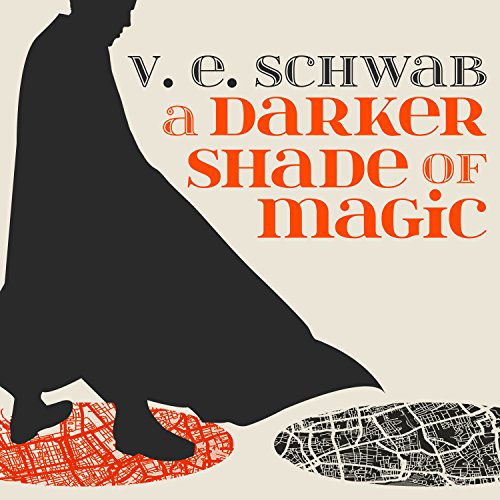
That story + narrator combination was full effect in V.E. Schwab’s A Darker Shade of Magic, the audio book which kept my ear-holes happy for the early part of February. A couple of years ago, I read Schwab’s Vicious which is one of the best superhero (supervillain) prose stories I’ve ever read. For A Darker Shade of Magic, Schwab turns her pen to a mix of magic and parallel worlds. As a long time comic book reader, I love parallel world stories and what Schwab with the concept is fantastic. Schwab’s concept of a magical multiverse is, if not exactly a new concept, but one that feels very fresh in how magic exists in each of the parallel worlds.

The characters were very well drawn, Kell as a pressured and roguish magician who can travel between worlds. Delilah (Lila) Bard is his co-protagonist, well initially she felt like a sidekick, but grew as the story grow. I also was slightly annoyed by her at first, but Schwab did a wonderful job of endearing the character to me by the end of the novel.

Steven Crossley is the narrator for this audio version and he’s got a very pleasant style. His narration, combined with Schwab’s at times poetic and lyrical storytelling, made me feel as if I was listening to a Dr. Seuss story. This is not a bad thing.

Continuing with my re-read and catch-up of Kate Elliott’s Crown of Stars series, I stormed through Prince of Dogs. Elliott does such great things with the characters in this one, introducing a couple of new players and continuing a Robin Hobb-esque method of torturing her characters. I’m glad I still have five more books to read in this series because this is such a fun, comfortable, and enjoyable series that hits every one of my check-boxes for epic fantasy. I’m still debating if I’m going to do a full write-up of each book in the series.

Yes, that is my copy signed
  
I loved the new character of Rosvita, especially her interactions with Liath and how she comes to an understanding of the events unfolding around her. I hope Rosvita sticks around and becomes more involved because she feels like an important person. Of course, to counter her wonderful appearance is the return of a character from King’s Dragon who was thought to be gone.


Next up was an impressive debut novel, Katherine Bonesteel’s The Cold Between. I’ll be posting my review of this one on the day it publishes (March 8), but I’ll just say right now that I was impressed with the book and Bonesteel’s novel.


Friday, December 04, 2015

Friday Round-Up: Fletcher & Elliott @SFFWorld, October Mind Meld @SFSignal

Been a while since I rounded up my links o’ stuff, so this is going to be a longer post than usual but it has been a bit hectic at the o’ Stuff with the new (as of August) job with the big biannual meeting for my group falling squarely in the middle of the month.

The “oldest” thing since my last round-up is my review of Michael R. Fletcher’s Beyond Redemption, which might be the grimdarkiest grimdark novel to ever grimdark.


In Michael R. Fletcher’s Beyond Redemption, dreams, desires, and imagination manifest as reality and the unhinged are the most powerful, affecting the world most profoundly. Others can affect it in a more personal manner. For example, the character of Wichtig deems himself the Greatest Swordsman in the World. The more he says this, the more he believes it and gets others to believe it, the more true it becomes to the point an opponent refuses to fight Wichtig because of how Wichtig’s belief in himself has affected other people. At the apex of this world is the Konig Furimmer, high priest of the Geborene Damonen, a mad ruler who argues with his Doppels (magically created doubles) about his sanity and rule. Konig has one mad plan above all, to create a new God as all other gods have fallen out of favor. The key to Konig’s plan is that this boy – Morgen – must generate enough belief in his power and die purely so he can Ascend to god-hood.

Fletcher’s world has a very heavy Germanic influence, each of the titles and many of the proper names are evocative of the German language if not outright German worlds. There’s a thick layer of grime on Fletcher’s world that permeates everything, there is nothing nice or pretty about it. Even the young godling, initially idealistic, becomes a dark reflection of the world he inhabits. This evoked images of a world where, perhaps, Nazi Germany reigned over a continent it nearly destroyed, especially with the Konig’s far reaching plan of dominance. The plan to create a new God immediately drew comparisons toDune in my mind.


The very next day, my Mind Meld for November was posted, wherein I asked Andrew Leon Hudson, Stephenie Sheung (AKA @MMOGC), Richard Shealy (AKA @SheckyX), Michael R. Fletcher, Mark Yon, and Erin Lindsey the following question:


Most recently (this week), my review of Kate Elliott’s Black Wolves, a book that was high on my list of anticipated titles and one that exceeded my expectations:


Kate Elliott’s Black Wolves launches a new series; a grand, sweeping epic featuring a fracturing dynasty beset by outside challenges and inside strife; committed honor-bound soldiers coming out of retirement; demons lurking behind the guises of humans; and maybe best of all, a force of protectors who bond with large eagles to protect the realm. At the center of this epic are Dannarah, princess and leader among those who bond to the eagles, and Kellas, a Black Wolf who has retired from his duty (mainly because the kings he protected are dead).

Black Wolves is a novel that is both remarkably dense (700+ pages), but deceptively fast paced and addictively readable. Elliott props societal structures either to polish them anew or dismantle them for their failings. Through Dannarah’s eyes, we see how problematic an organization can become when an inept organization can become when blind pride gets in the way. She is supremely devoted to the reves and sees power being unjustly pulled from underneath her and from what the eagles and the reves exemplify. When she is present for an injustice about to be perpetrated on Lifka, Dannarah does all in her power to save the girl and (literally) bring her under her wing.
...
the prevailing fantastical elements….well, the enormous eagles of course. There’s a bond between the reve (rider) and eagle that is not dissimilar to the dragon/rider relationship in Anne McCaffrey’s Pern novels. The eagles “jess” potential reves to choose their rider and the two form a powerful lifetime bond (also similar to Naomi Novik’s dragons and their riders in her Temeraire series). There are also demons in this fully realized world although their true nature demons is somewhat muddled as they are secretive, hide behind human guises and are initially presented as enemies of humanity, but the hints peppered throughout the novel have me very intrigued about their true nature.

Friday, November 13, 2015

Friday Round-Up: I'm All over the Place

Got a few things to catch up on in this week’s Friday Round-up. Let’s begin.

Last week, an interview I conducted with one of my favorite writers, C.S. Friedman, was posted to SFFWorld. In it, we discussed her latest YA novel Dreamseeker as well as some of her past work and the great covers her books have had:


The first novel was told in two narrative voices, reading Jesse’s voice helped to impart a great deal of empathy with me as the reader, while the more omniscient views of the story allowed for a greater scope. Will Dreamseeker bounce between those two POVs.

Yes, but with more time devoted to the third person narrative. Dreamseeker follows the story of two main characters whose fates have now become intertwined: Jesse, who is from our world, and Isaac, a young apprentice from a Guild of undead necromancers known as Shadows, who helped Jesse escape from captivity in Dreamwalker. In Dreamseeker, Isaac attempts to return home and make peace with his family, but his human soul cannot accept what undead demand of him.

Was it a challenge to tell the story from two types of narrative perspectives or did it just seem to be the only way to tell it?

My second novel, The Madness Season, alternated between first-person and third-person storytelling as well, so this is not something new for me. The combination is particularly powerful when dealing with a rite of passage story like Dreamwalker, as it allows the reader to experience an intimate connection with the main character, while leaving me free to explore facets of the narrative that she is not aware of.


The balance in Dreamseeker and the third book, Dreamweaver, will be more 50-50 than Dreamwalker was, in part because other characters are now coming to the fore.

This past Friday (11/06) two of my reviews were posted to Tor.com.

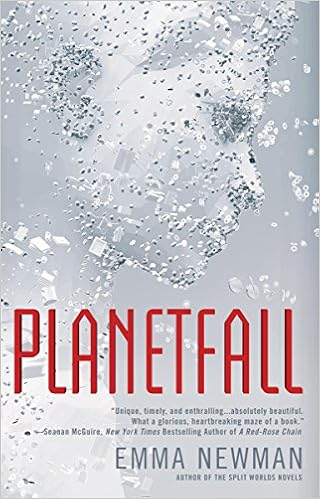
Emma Newman’s Planetfall was one of those books and damn was it an intense look at a person suffering from PTSD among other mental disorders on a newly colonized alien planet

Planetfall is at once a fascinating character study through Ren’s first person narrative and a novel that examines how secrets, no matter how buried they are, can be extremely damaging things especially in a small colony in a seeming utopia. Ren spends much of her day as the colony’s printer, responsible for overseeing an advanced 3-D printer which is used to repair damaged items or create them when necessary. Any items. Ren’s obsession with repairing things is a mask for trying to repair the damages left in the wake of Lee’s disappearance and burying her own guilt in the tragic events which transpired nearly two decades ago.

The Unreliable Narrator is quite common in genre, but Newman has effectively dropped the mic on that narrative tool. Ren is a fractured woman who gives new depth to the meaning “unreliable,” and as the story progresses, Ren becomes less of an empathetic character from her fellow colonists’ perspective. If anything, the feeling that grows as more is revealed is pity and frustration.


The other review is from the Tor.com imprint and the first book acquired by my pal Justin Landon. The book? The supremely fun and engaging short novel The Builders by Daniel Polansky,


The story begins in a bar where the Captain (just the Captain, no other name is needed) awaits the return of his allies. As each of the players are introduced, Polansky reveals small details about each character. After the Captain, Polansky introduces perhaps the most over-the-top character: Bonsoir the stoat. Because a talking mouse with an eye-patch named simply the Captain isn’t over-the-top enough. As the narrative indicates, there are many animals like a stoat, but stoats are unique. To say the stoat has a flair for the dramatic is to say the sun gives off light; the sun is unavoidable in life and Bonsoir is unavoidable in this story. As it should be.

There’s a philosophical question at the heart of this story too, can people change? Are we always going to revert to our baser natures? Can an individual who was once a killer ever escape that violent past and eschew any violent impulses? The Captain is hoping his former team members can’t, because that is what is required to see this revenge plan to its end. Polansky brings life to that essential question brilliantly through the characters, some give in easily to their past behaviors, others struggle against it.

I was part of the last two Mind Melds over at SF Signal (and will be posting the one I’m curating next week). Last week, my pal Paul Wiemer organized a Mind Meld around Audio books. I gushed about the audible adaptation of Joe Hill and Gabe Rodriguez’s Locke & Key, Dominion by C.S. Friedman, and Jonathan Maberry’s Patient Zero.

This week, one of the men behind the curtain of SF Signal, JP Frantz, corralled a few of us Mind Melders and asked what our favorite recent reads were. I shouted out Jim Butcher’s The Aeronaut’s Windlass, Cherie Priest’s Borden Dispatches, Bradley P. Beaulieu’s Twelve Kings in Sharakhai, Jason M. Hough’s Zero World, C.J. Cherryh’s Foreigner, and Updraft.

A couple of days ago, something long in the simmering posted. A few months ago, Fred Kiesche, Joe Sherry, Paul Wiemer, Jonah Morse, and The G (of Nerds of a Feather, Flock Together), and I were involved in a twitter conversation about Katherine Kurtz’s Deryni novels, specifically the first one Deryni Rising.

We all decided that we’d do something more formal, like a round-table blog discussion. Well, the G went and posted that mega roundtable discussion over at Nerds of a Feather, Flock Together.

[The G] I think it’s fair to say we all really liked Deryni Rising by Katherine Kurtz--I know I did. But what is it, exactly, that makes this novel hold up so well? I mean, it’s more than 40 years old, but it feels quite modern in many ways. Am I right? Why or why not?

Rob Bedford: In large part, it is Kurtz’s ability to build up the narrative tension as the novel ramped up to the confrontation with Charissa. Good, gripping storytelling survives and continues to draw people in because it keeps people from stepping away from the story. I think it is the simplicity of the story and how elegantly Kurtz constructs the story.


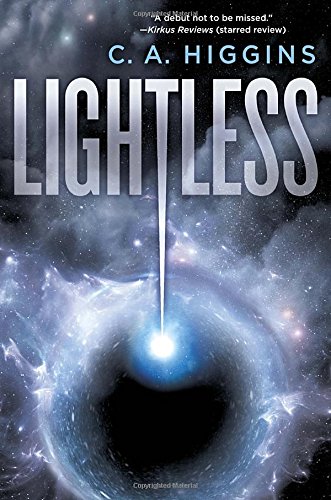
Last, but not least, I reviewed C.A. Higgins’ debut novel Lightless, which really impressed me:


The crew of the Ananke is quite small. Surrounding Althea are Domitian, ship’s captain and Gagnon, the senior scientist. The crew grows by one when Ida Stays, an interrogator from the System, arrives to determine Ivanov and Mattie’s links to Mallt-y-Nos, a galactic terrorist…well, just Ivanov now since Mattie escaped (or was killed according to Althea’s superiors aboard the Ananke). After that chess-board is set-up (about ¼ to 1/3 of the novel), Higgins begins to maneuver her characters in expert fashion. Her characters begin to question what they have come to know and how they view their situation – especially Althea – which makes for a great puzzle of a novel to decipher.

Higgins plays these characters off of each other extremely well with all the interactions floating on an undercurrent of distrust and anger. While Domitian plays a very authoritative figure, he becomes a shadow of a man in the presence of both Ida and Ivanov. He treats Althea as little more than an inexperienced child throughout much of the narrative, perhaps because she is the only person over whom he can hold power.

Friday, September 04, 2015

Friday Round-Up: Dawson @SFSignal and Wexler & Beaulieu @SFFWorld

Friday Round-Up Time, you know what that means….

Last week, my review of Django Wexler’s third Shadow Campaigns novel, The Price of Valor posted to SFFWorld:


The third book in a five book series is the exact middle book of the series and while there are some elements of the novel that give it a feel of treading water (the Winter/Jane relationship seemed a bit drawn out), on the whole, Django Wexler manages to reveal more layers of the plot of the antagonists and more about his characters. Janus has been an enigma for much of the series thus far, a character who immediately commands respect and awe from those who serve him, and frustration to those who either oppose him or find themselves at odds with him (even if Janus doesn’t realize it). His air of always knowing what to do and being several steps ahead of the opposition have given him a well-earned reputation as a master tactician. The person most frustrated by him is Jane, and specifically, what an important fixture he is in Winter’s life. Winter, oh Winter, what a great character you are. She is surrounded by a cabal of well-rounded characters who don’t blend into each other and for their “minor” status in the cast of characters, manage to have their own stand-out voices.

Some closure here, but dammit, the unresolved elements and giant hints of things to come have the next installment in The Shadow Campaigns quite high on my I NEED TO READ WHEN IT PUBLISHES list. With The Price of Valor, Django Wexler continues to prove that he’s got a great story to tell. Great characters painted on a fascinating backdrop with military and political conflict make for an excellent novel, and an excellent installment in a thoroughly entertaining Military/Flintlock Fantasy saga.

Also last week, Friday to be specific, my audio book review of Delilah Dawson’s Hit was posted to SF Signal.


Hit is the first of a series and Delilah Dawson does a fantastic job of introducing Patsy as the protagonist and first person narrator. The young girl is forced into her situation; becoming a bounty hunter for Valor National because if she doesn’t take a gun (and leave the cannoli), they’ll kill her and her mother because of overwhelming debt Mom built up after job losses and cancer treatments. Patsy gets her list, is assigned a painted-over mail truck and plays the role of delivery person in order to get her targets. When Patsy greets the target, she gives them something to sign as “confirmation of delivery” of the “fruit basket” she has. Once the agreement is signed (and never read before it is signed), Patsy offers each target the same choice: pay off the debt, become a bounty hunter, or eat a bullet. 
The natural dystopic comparison is to The Hunger Games, if only because both novels feature a very head-strong, likeable, engaging, young female protagonist. If anything, the America and world revealed in Hit could be seen almost as a precursor to the fractured and realigned national boundaries of Panem. There’s a certain South Park episode that served as partial inspiration to the novel/series/world, but the story takes off from the notion set forth in that episode with Dawson’s wonderful pacing and character development.

Lastly, and most recently, my review of the stunning Twelve Kings in Sharakhai by Bradley P. Beaulieu posted to SFFWorld this week:


We begin in the fighting pits, witnessing 19-year old Çeda (pronounced Chayda) Ahyanesh’ala – known to many as the White Wolf – defeat a champion pit fighter, an opponent much larger and more experienced than her. An opponent of her own choosing. This opening was perfect, we get a sense of Çeda as a strong, deceptively imposing physical presence, a flavor of Sharakhai itself, and as the fight ends, a hint of her character and motivations. I dare say that if you aren’t drawn in by Bealieu’s powerful and magnetic opening, you should check yourself.

There’s also a nice interplay of fantasy flavors here, the more intimate and personal elements closely associated with Sword and Sorcery against the larger scale (worldly) elements associated with Epic Fantasy. Through Çeda’s introduction in a fighting/gladiatorial pit, the feel is initially Sword and Sorcery, something that could very easily be compared to a Robert E. Howard Conan story.

Friday, August 14, 2015

Friday Round-Up: An Announcement and Hobb & Jemisin Reviews @SFFWorld

In this week’s edition of Friday Round-Up I bring you new reviews of Robin Hobb and N.K. Jemisin. But first, a little announcement.

As some folks already know, I’ve been in a job predicament for a few years. Back in 2011, I was in a job/position I really enjoyed at a company for which I enjoyed working. Things were going well, in 2010 my group (of which I was the manager), far exceeded our goals for the program we had re-launched the previous year and everybody in the group received one-time bonuses for exceeding those goals. Then the company did some reorganization and as a result of “corporate restructuring,” I was squeezed out in February 2011. What helped to slightly soften the blow is that my supervisor (the Vice President of the group), left the company shortly after I was let go because he saw the writing on the wall.

A few months later, a very good friend of mine who works for A very large Telecommunications & Technology company helped me out big time. Some of the groups at the company where he worked were looking to bring in people (as contractors) to help build up a product line. So, for the past four years (which was only supposed to be a temporary stop) I’ve been working there in what is essentially a digital assembly line capacity. To be honest, it was pretty good money, but the job has very, very little in common with my Marketing & Marketing Proposals and Publishing background. That, plus the associated instability of being a contracted employee led me to continue my job search. About a year ago, the company brought me (and a handful of folks who began as contractors the same time I did) more fully into the fold, converting me from contractor to Term Employee (essentially a hybrid between Contractor and Full-Time Employee, but working directly from the company). As I said, all this time, I was still looking for a more stable (i.e. permanent and not contractor) position more closely aligned with my decade and a half of Marketing and/or Publishing experience.

After a slew of interviews over the years (many phone interviews, which led to some face-to-face interviews) with different companies, my search has ended and I will be starting on Monday August 18 doing work much more in line with my past experience (marketing proposals) for a very impressive company with great leader at its helm and a culture (based on the interviews I’ve had, research into the company and coming to realize a friend has a relative at the company) that will help me grow and further my career along a stable path. I’m very excited for this slight career reboot and cannot wait to join the new company on Monday. For more specifics on what that is and the company, I’ll be updating my LinkedIn profile to reflect the new position once I officially begin the new job.

One thing I've learned in my job searching the past few years compared to job searching even 8 to 10 years ago is that EVERYTHING is automated and it is challenging to level up in the process for one job and actually communicate with a human being rather than an automated interface.

Back to the SFF stuff, with my reviews of two highly anticipated Fantasy releases. Last week, I posted my review of the powerful, challenging, and stunning novel from N.K. Jemisin, The Fifth Season:


The narrative, is initially, very chaotic. Jemisin employs multiple character points of view, one for each chapter, give the feel of a dangerous world were nobody is safe. The novel is post-apocalyptic, but takes place on a secondary world. A world where the planet is extremely unstable, where magicians (Orogenes) with powers based on geology work with technology in the hopes of keeping the world, on a literal, tectonic level, stable.
...
We are introduced to this world through the eyes of Essun, and damn does Jemisin get the emotional ball rolling very quickly. Upon returning home, she realizes her husband has brutally murdered their son. This shocking moment informs Essun’s tale. The other narrators, Damaya and Syenite/Syen, travel a road no less wrought with heartbreak and sorrow and undergo changes of their own over the course of their own narrative journeys, not unlike the geological cataclysms that strike their world. Jemisin marvelously portrayed women whose changes in demeanor, and person, mirror the global changes. Not only does the story come across through these three women’s eyes/voices, each of the three story threads is told in a different narrative voice, third person narrative for Syen and Damaya, while Essun’s story is told through the rare second person present, as if we the reader are Essun. As I said, there’s some chaotic elements in the story and the narrative reflects this chaos. It takes some acclimating, but is an ultimately very rewarding storytelling technique.

This week (Tuesday, the day of the book’s launch), I posted my review of perhaps my most anticipated 2015 Fantasy novel, Robin Hobb’s Fool’s Quest:


Fool’s Quest is the second installment of The Fitz and the Fool Trilogy, which itself is the most recent in a long line of stories set in Robin Hobb’s Realm of the Elderlings (three trilogies, a quartet, and now this in-progress trilogy for a total of 15 books up to now). To say Fool’s Quest might be a tough sell for new readers is an understatement. Much of the action is predicated on events that have transpired in previous volumes of this mega-series, and most importantly on the previous installment Fool’s Assassin. But…but…before I launch into my thoughts on this volume, I’ll preface it with this. If readers have any doubt that Robin Hobb is one of the finest writers in the Fantasy genre, then they haven’t read any of her work. From the beginnings of Assassin’s Apprentice in 1995 to this most recent novel, few can balance, character, prose, and story so well. So do yourself a favor, go read Assassin’s Apprentice (the novel that started it all) or Fool’s Assassin, the first novel in this new trilogy which does work well for new readers. (This preamble also provided ample spoiler space because talking at any length about Fool’s Quest is impossible without spoiling events of Fool’s Assassin).
...
The sense of urgency in the novel is extremely heightened, despite the same reserved pace that made Fool’s Assassin such a joy to read and experience. Fool’s sense of urgency to strike back at his tormentors, combined with Fitz’s desperation to find his stolen daughter made for incredible tension. Fitz’s experience; however, makes him realize rushing into their situation will only be a detriment to their success. Robin Hobb balanced their tension with a quiet reserve during many of the court scenes and meetings that Fitz was obliged to experience very well, giving both frustration and hope. Hobb’s magnetic, captivating prose completely wrapped itself around me.