Tuesday, January 04, 2011

2010 Reading Year in Review ... and a Dog

Here's the obligatory, I've-got-a-blog-and-talk-about-books-on-it-so-here's-my-best-of/year-end-summary-post.

I read a lot of books in 2010, but considerably less than 2009. 68 in 2010 compared to 82 the previous year. Getting that puppy in July really cut into the reading time, but I wouldn’t change it at all. I said last year I’d “be cutting back on the number of reviews I post” for various reasons and on that count, I suppose I was accurate.


The first picture I have of the dog, when she was 10 pounds (above)


In 2010, I posted 32 reviews to SFFWorld and 6 to the Sacramento Book Review /San Francisco Book Review, plus a couple here at the blog.

I also read more non-review books, too. Books I’d wanted to catch up with for some time, like Jim Butcher’s Dredsen Files and begin a re-read of Glen Cook’s Black Company, which I did. I also embarked upon something I’ve been wanting to do for a couple o years – a re-read of Robert Jordan’s Wheel of Time. At this point, I’m more than one third, but not quite half-way through the series and have enjoyed the revisit quite a bit. As I mentioned in my overview last year, David Weber was my top "new to me" author of the year, so I plowed through books 2 and three of his Safehold, series which has a Battlestar Galactica vibe to it for me, and I'm currently reading his late 2010 release Out of the Dark.

Here are some stats:
  • 25 can be considered Fantasy
  • 22 2010/current year releases
  • 20 books by authors new to me
  • 16 can be considered Science Fiction
  • 18 Graphic Novels
  • 8 debut novels (this includes books not released in 2010 like Ariel)
  • 6 Books by women (plus stories in the anthologies by women)
  • 5 Omnibus volumes (which if broken out into single novels, can bring my annual total up to 75 books)
  • 2 Anthologies
  • 3 can be considered Horror
  • 1 Non-fiction

All that said, on to the categories for the 2010 … Robloggies? ManBearPiggies? Stuffies? Sullys? I don’t know! This isn’t a typical top 10 or 12 or anything, but whatever you want to call them, here are some categories for what I read in 2010 and what I put at the top of those categories.


Rob Favorite Science Fiction Novel(s) Read in 2010


I loudly proclaimed David Louis Edelman’s debut novel Infoquake “…a stunning debut novel by a lucid, precise, and talented new voice in the genre…. This may be THE science fiction book of the year.” Well, with Geosynchron the concluding volume in the trilogy having published this year, it should come as no surprise it gets my top spot in SF for 2010.
Geosynchron is a book that was very high on my 2010 anticipated reads list, I found Infoquake to be one of the most impressive SF debuts I’ve ever read and the sequel, MultiReal continued the trend and impressed me just as much. So, it was with this anticipation that I opened the first pages of the book and was immediately swept into Edelman’s intricately constructed future. Although Edelman provides a summary of the first two novels in the trilogy as an appendix, his fluid style and ability to draw the reader into the story helped to stir the memories of the two earlier books very well.

One of the things I’ve really enjoyed about Edelman’s writing throughout the trilogy is how he straddles the line between plausible futuristic technology and a sense of history bordering on myth. Between the lost time preceding the era of the novel, and the legendary family of the Surinas, Edleman has informed his world with an authentic and seamless sense of history. When characters talk of the Surinas, it is with reverence. When Natch begins to see visions of the deceased Margaret Surina, the feeling Edleman elicits is revelatory, almost like an epiphany. It comes across both mysterious and profound, and ultimately effective,

The next book I’ll mention in the SF section of our program can be categorized in many ways: horror, post-apocalyptic, vampire, and science fiction. Since the premise is science fictional in nature and the post-apocalyptic setting is also SFnal, I’m mentioning Justin Cronin’s The Passage here:
It begins in the year 2017 with a young girl who is born of an affair between a waitress and a traveling salesman. The novel then turns to a scientific research mission, then to a chase-thriller and finally to a post-apocalyptic novel with civilization clinging to life as humanity protects itself against the virals of the night. In many ways, Justin Cronin’s epic doorstopper, with its continual shifts in narrative voice, shouldn’t work. But these various methods of laying out the story give The Passage its backbone and authenticity as a chronicle of what might happen if Vampires were genetically engineered and run roughshod over humanity.


While the early portions (about ¼) of the novel set the foundation for the new world, the remainder focuses on a stronghold in California where the people have been able to survive for the intervening 92 years since the original breakout. Here Cronin focuses his story on a group of people born after the outbreak - our heroes Peter, Michael, and Alicia. In this compound, Cronin steps back from the shifting narrative of the first third of the book and slows down the pace, and while it may seem a stretch that such an abrupt shift would work, the opposite is indeed true. By illustrating the daily life people of the barren United States have to endure, Cronin establishes a good slice of life and exactly what the stakes are for the world and more importantly, the people.

Rob’s Favorite Fantasy Novel(s) Read in 2010


As is often the case, my reading patterns fall into the fantasy end of things. 2010 was a year with no shortage of quality fantasy novels (despite books from Martin, Rothfuss, Bakker, and Lynch still not appearing). A number of strong novels rated closely, but the one I enjoyed the most was The Desert Spear, the second book in Peter V. Brett’s Demon Cycle which began with last year’s The Warded/Painted Man. Here’s a snippet of what I had to say about Brett’s 2010 release:

Mr. Brett set the bar pretty high for himself, and perhaps unsure of whether or not The Desert Spear could live up to the promise of The Warded Man, I did not read The Desert Spear immediately upon the book’s publication. I shouldn’t have hesitated because Brett follows his superb debut with a novel that is at least the equal of its predecessor in The Desert Spear and in other cases, improves upon the foundation he initially laid.


I found The Desert Spear to be a gripping read, a novel that built upon its predecessor in many good ways, as well as adding new elements to the growing story. In short, The Desert Spear is just about everything one could ask for in the second volume of a fantasy series. Because of Brett’s narrative style and how he chose to tell the story in this book, it might work without having read the previous volume. Regardless, I recommend the novel without reservation and hope that Brett continues to produce the remainder of the series with both the timeliness and great storytelling ability he has with The Desert Spear.


Probably the strongest opening volume to a fantasy series I read this year is Brandon Sanderson’s The Way of Kings, which is the first novel in his 10-volume Stormlight Archives:

Set on Roshar, a world with a harsh climate, Sanderson’s novel is a tale of war on a grand scale and the effects of that war on a personal level. For a novel that tops out over 1,000 pages, Sanderson’s tale does not falter in its narrative pull nor does his ability to evoke tension waiver. His narrative switches effortlessly between these three characters. Kaladin’s portion of the story is told with a particular flair for the epic, Sanderson switches between his current timeline as he goes from slave to leader of Bridge Four – a crew of bridgemen; and how Kaladin, whose skill and natural leadership abilities at war emerge over the course of the novel, went from being a doctor’s son set to follow in his father’s footsteps to a slave at the beginning of the novel. Though reminiscent of both the legendary Spartacus and Maximus from Gladiator, Sanderson’s skill at making familiar and resonant elements his own shines through greatly over the course of Kaladin’s journey as a character.

As intimated earlier in this review, the world itself is much of a character. The depth of the world’s history is a thing to behold, not in the way Sanderson simply lays out the facts, but in the way the characters reveal the history of the world. Or rather, how they reveal what they think they know of the world. Rent by powerful storms on one portion of the world, the rich are comforted in a scholarly setting in another, but both environs evoke a past obfuscated by the rage of years, storms, war, and lost historical records. Hints of demonic monsters in ash and red prophesized to destroy the world, chasmfiends – large insectoid monsters hunted for the shards and jewels in their bodies, men encased in what amounts to power armor, are just a few of the things that give this world a depth of character. I hesitate to go into more depth mainly because the joy of this novel is discovering and connecting with Sanderson’s powerful novel as it is laid out on the pages. There’s a mystery underlying much of what Sanderson reveals in The Way of Kings that only hints at what he has in store in the future 9 volumes of this projected 10-volume saga.


Rob's Favorite Debut(s) of 2010

Last year it was Orbit Books who impressed me with their debut novels, this year it is Tor, who published: Anthony Huso’s The Last Page which I thought “In the end though, Huso’s pure writing strength and ability to convey his imagination won out over any minor quibbles I had with the novel. The Last Page is another strong debut novel for the year, powerful in its breadth of imaginative setting, engaging in its characters, and impressive across the sum of its parts.”

Tor also published Spellwright, which I thought that was a notch above standard fantasy fare with a nicely developed magic system … but Charlton’s inventive magic and likeable characters help to raise the quality of the novel. One way I would describe might be “Perfectly Acceptable Entertaining Epic Fantasy.”

My favorite debut of the year, also published by Tor; was easily Ian Tregillis’s Bitter Seeds, the first The Milkweed Tryptich. This book just took a hold of me and was a terrifically fun mash up of Lovecraft, alternate history, superheroes, WWII, horror, magic, and science fiction.
World War II is one of the most widely used historical periods in any genre, including Science Fiction. Ian Tregillis, a veteran short story writer, uses this setting to depict a familiar war fought with arcane weaponry and soldiers. The Nazis have bred, for all intents and purposes, supervillains similar to the Fantastic Four, the X-Men or even the Justice League. These superpowered beings are fully under the control of the Nazis and specifically Herr Doktor von Westarp, the man who used his twisted science to genetically engineer these super soldiers. The English have, through knowledge and lore passed down over several generations, access t o the Eidolons, beings outside of time and space which essentially grant the allies the power of dark magic.

All told, Tregillis takes some familiar things – World War II, Metahumans (a.k.a super heroes/super villains), spy fiction, dark magic, secret societies, horror, Science Fiction – and weaves a damned entertaining novel. If Bitter Seeds is any indication of what’s to come, then Tregillis will have a fertile writing career. The novel receives my highest recommendations and will likely be very close to the top of my best of 2010 list.


Favorite Author Whose Work I Revisited in 2010


This one is also very easy. I’ve kind of strayed from his work over the past couple of years, but did a major catch up of his current series, which just concluded in December. I’m, of course, writing about Tad Williams. In big fashion, he concluded Shadowmarch what was once a trilogy and is now a quartet. For my part, I read books 2 ( Shadowplay, Shadowrise, and Shadowheart [review forthcoming]) through 4 this year and thoroughly enjoyed all books. Let’s put it this way, I came to realize again why I’ve placed Tad Williams so high in my echelon of favorite writers. I was also lucky enough, with the help of the great Hobbit of SFFWorld (aka Mark Yon) to interview Mr. Williams for SFFWorld this year.

A bit from my Shadowplay review:
One of Tad Williams best qualities as a writer and storyteller is his ability to create worlds that feel real and with the Shadowmarch saga, that ability is on full display. Each faction of civilization or race inhabits a unique part of the greater world. From the castle of Southmarch, to the dark caverns of the Funderling town, to the ethereal and hazy world of the Twilight Lands, each portion of the world is a character unto itself. Subsequently, the society we see the most of in their homeland in Shadowplay is probably the Funderlings, and by doing this Williams only further enriches that world and those people. The Funderlings are modeled, in many ways it seems, on Hobbits with a flavor of down-home goodness. In other words, there’s both an air of familiar to them, with a decent amount of freshness.

Forum members here at SFFWorld know I’m a very big fan of Tad Williams’s writing and on that basis, Shadowplay worked very well for me. I did; however, crack open the book with some trepidation. I’d seen a few less than overwhelmingly positive reviews around the Internet and it had been quite a long time since I read the first volume – five and half years when Shadowmarch first published. Maybe that time away did help me enjoy the novel more than I might have if I had read it immediately. Despite the lack of “what came before,” something the majority of Tad Williams’s multivolume novels include, I was able to ease back into the magical, chaos ravaged world of Southmarch and the world beyond the Shadowline – the Twilight Lands.


A bit from my Shadowrise review:
Where to start with a review of the third book in a four-book sequence? A third book that was thought to be the concluding volume of a trilogy, but was then split so the author could comfortably tell his story in four volumes? With questions like that, I suppose. Fortunately for readers of Tad Williams’s sequence begun with Shadowmarch, the questions are less ambiguous and are answered, if not definitively, then with an eye towards an answer.

Though in concept, one of the conceits revealed in this novel can be considered a bit cliché, it is the process through which this conceit comes to light in the characters eyes that makes the novel so great and enjoyable. In a sense, this is one of Williams’s strongest traits as an Epic storyteller, familiar story beats told in a refreshing and entertaining manner. For all the mythic action and world building, Williams never skimps on his characters. The whole cast is relatable, engendered a sense of empathy, and general concern-for-what-happens-to-them in me. With each chapter that brought a close to that particular episode in the characters story arc, I was frustrated it ended, but conversely comforted by the movement of the story to another character about whom I cared.

MVP Author of 2010


Quite a few authors managed to have multiple books on the shelves in 2009, but few had the impact and reach of who I’ve dubbed the MVP author of 2009 and it should come as no surprise since he was named as such in my year-ender last year:

Brandon Sanderson

Continuing to pick up the reigns of revive The Wheel of Time, the defining Fantasy Saga of this generation and dropping a rat-killer sized book on shelves The Way of Kings, both of which reached the New York Times best seller list (hitting #1 with Towers of Midnight) will help to do that.

Favorite ‘New To Me’ Author(s) of 2010


This year, I’ll mention one SF and one Fantasy

For the SF, it was Mark L Van Name. I’d seen good things about his writing, particularly from Liviu at FantasyBookCritic, so when Baen put together an omnibus, entitled Jump Gate Twist of the first to novels (One Jump Ahead and Slanted Jack), I pounced on the opportunity to review it for the Sacramento Book Review /San Francisco Book Review

Jon is the human protagonist and first person narrator while Lobo is the living, space-faring warship who provides dry responses to Jon’s rhetorical questions. The dialogue between Jon and Lobo is entertaining and provides a strong narrative current. I was reminded a bit of Steven Brust’s assassin Vlad Taltos and his familiar Loiosh in that both duos communicate on a silent, mental wavelength.

While the setting of the books is a vast galaxy, Van Name does a great job of making these stories personal and intimate deftly balancing character and action. One of the cooler SF-nal elements allowing for such widespread travel are the Gates, which allow quick travel across galaxies and are thought by some to be relics of an ancient civilization or even gods. All told, I highly recommended this book both as an introduction to Van Name’s work and a great value for containing two flat-out entertaining science fiction novels.


For Fantasy, it was Elizabeth Moon. I know she’s a veteran and award-winning author, but with the release of Oath of Fealty I really became a fan of her work. Like Tad Williams, Mark and I interviewed her for SFFWorld, thought quite honestly Mark did more of the legwork on this one. I’ve got two of her omnibus volumes on the ‘to read’ pile staring at me, The Deed of Paksenarrion and Heris Serrano, that keep making me feel guilty for not reading them. In 2011, I will read at least one of them!

Elizabeth Moon is one of the brand names writing Science Fiction and Fantasy today who has shown the ability to easily jump between the sibling sub-genres. She’s received awards, sold a lot of books, and has an impressive fan base. While her recent novels have firmly been of the Science Fiction variety, the trilogy that launched her career is the popular and acclaimed Deed of Paksenarrion trilogy. This latest novel, Oath of Fealty is set shortly after the events that closed out the trilogy, published over twenty years ago.

Oath of Fealty is enough of a fresh start in the world Moon created over twenty years ago to keep new readers (like myself) engaged throughout without having to rely on the history told in those books. I expected more action and sword-fighting (although action and physical altercations are present and engaging), but the story deals more with political and courtly maneuvering and is an engrossing read nonetheless. I will even say it is a case of expectations not being met, but in an entirely satisfying manner and I don’t think I’d want to book to have worked any other way. I was very pleased to meet characters who were well rounded, strong, admirable, believable and engaging. In this respect, Mrs. Moon met (and at points exceeded) the expectations I had based on the reputation for strong characters that preceded her.

I'm noticing a pattern between the two "new to me" authors of this year and one from last year, the authors are currently publishing with Baen, or have published significantly with Baen in the past. Hmm...

Most Disappointing Reads of 2010


I don’t mark these books as disappointing with any pleasure, since in one way or another, I was very much looking forward to reading them.

At the top of these The Evolutionary Void by Peter F. Hamilton. I really enjoyed the first two in the series and was very much anticipating this book. However, the narrative wasn’t strong enough to keep my attention throughout the duration of the novel as well as the previous two books. This isn’t to say I dislike the book, just that my high hopes were not met.

Following on that theme of “I-didn’t-dislike-the-book-,-just-that-my-high-hopes-were-not-met” would be Adrian Tchaikovsky’s Empire in Black and Gold. I really wanted to enjoy the book, and parts of it I did, but I think a lot of the positive attention the book garnered when it initially published in the UK may have raised my expectations a bit higher than was fair. That said, I’ll be continuing the series at some point:
While I did have some issues with the novel and didn’t quite remain consistently connected to the narrative throughout, it is clear to me that Tchaikovsky has something interesting going on with this series. This novel could be considered a prelude to something greater, a larger movement to come. What’s more, for all the richness of the world building on display in Empire in Black and Gold, I don’t get a sense that Tchaikovsky has revealed all the cards in his hand. This could be a series to watch here in the States as folks who’ve read the UK editions have been watching with anticipation for a couple of years.


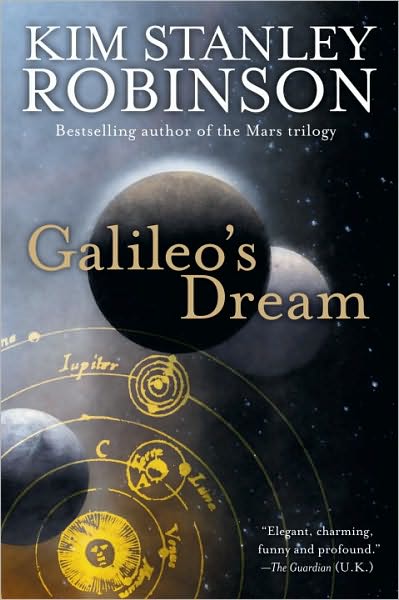
Galileo’s Dream by Kim Stanley Robinson was another major reading disappointment of 2010. I figured after a couple of aborted attempts at his landmark Mars trilogy, this would be a good fresh start for me. Unfortunately, I think I just don’t connect with KSR’s fiction

Odds and Ends of 2010


The Walking Dead, which came to TV Screens this year in the US prompted me to burn through the first four hardcover releases of the series, essentially the first four years worth of comics. Great, terrific comic book series.

Inception was hands down the best movie I saw in 2010

Mrs. Blog o’ Stuff gave me a PS3 for our 10th Wedding Anniversary and I became addicted to God of War III and am now addicted to Batman: Arkham Asylum. I’ve also got Dragon Age and Bioshock on the docket as well.

Batman or rather, Bruce Wayne, came back from the dead in grand fashion this year at the hands of Grant Morrison. I’ve been enjoying what Grant’s been doing with the Bat family and particularly like Dick Grayson as Batman.


Regrets of 2010

These are the books released in 2010 I didn’t get a chance to that I wanted to read. This just goes to show how many good books are released each year. I’m not including books that are more than a book or two away from the most recent book in the series I read, i.e. Towers of Midnight by Robert Jordan and Brandon Sanderson

  • Songs of the Dying Earth edited by George R.R Martin and Gardner Dozois
  • The Wolf Age by James Enge
  • Firedrake by Nick Kyme
  • Surface Detail by Ian M. Banks
  • Echo by Jack McDevitt
  • The Habitation of the Blessed by Catherynne M. Valentine
  • Twelve by Jasper Kent
  • Out of the Dark by David Weber (I’ll be reading it very soon, though)
  • The Strange Affair of Spring-Heeled Jack by Mark Hodder
  • The Black Prism by Brent Weeks
  • Discord’s Apple by Carrie Vaughn
  • Kraken by China Miéville
  • Shadow’s Son by John Sprunk
  • Speculative Horizons edited by Pat St-Denis
  • Distant Thunders by Taylor Anderson
  • Who Fears Death by Nnedi Okorafor
  • Under Heaven by Guy Gavriel Kay
  • Prince of Storms by Kay Kenyon
  • The Starfishers Trilogy (reissue) by Glen Cook
  • Heretics by S. Andrew Swann
  • State of Decay by James Knapp
  • Empire by Graham McNeill (and it’s predecessor Heldenhammer from the previous year for that matter)

Oh yeah, as I may have stated, Mrs. Blog o’ Stuff and I got a dog in the summer. Sully’s (that's the dog's name) been a handful, but a furry fun, handful at that. Here are a couple of pictures of the puppy, now 8 months old and over 70 pounds.


Sunday, January 02, 2011

Books in the Mail (W/E 2011-01-01)

These are the books that arrived between Christmas and New Year’s Eve/Day. I’m surprised to have even received these since publishing generally closes during that week.


Agatha H. and the Airship City (A Girl Genius novel) by Phil and Kaja Foglio (Nightshade Books Hardcover 01/12/2011) – The popular steampunk Web comic from husband and wife creative team Phil and Kaja Foglio comes to prose fiction thanks to the fine folks at Nightshade. Though Tom Kidd does great work, I wonder why the Foglios didn’t provide the cover art.

The Industrial Revolution has escalated into all-out warfare. It has been eighteen years since the Heterodyne Boys, benevolent adventurers and inventors, disappeared under mysterious circumstances. Today, Europe is ruled by the Sparks, dynasties of mad scientists ruling over--and terrorizing--the hapless population with their bizarre inventions and unchecked power, while the downtrodden dream of the Hetrodynes' return.
At Transylvania Polygnostic University, a pretty, young student named Agatha Clay seems to have nothing but bad luck. Incapable of building anything that actually works, but dedicated to her studies, Agatha seems destined for a lackluster career as a minor lab assistant. But when the University is overthrown by the ruthless tyrant Baron Klaus Wulfenbach, Agatha finds herself a prisoner aboard his massive airship Castle Wulfenbach--and it begins to look like she might carry a spark of Mad Science after all.

From Phil and Kaja Foglio, creators of the Hugo, Eagle, and Eisner Award-nominated webcomic Girl Genius, comes Agatha H and the Airship City, a gaslamp fantasy filled to bursting with Adventure! Romance! and Mad Science!


The Best SF and Fantasy of the Year Vol 5 edited by Jonathan Strahan (Nightshade Books, Trade Paperback 03/07/2011) – Strahan’s anthologies are often some of the most acclaimed, and his Best of the Year series does a great job of bringing all the best short fiction of the year into one volume.

A poet and a bear journey toward the ruins of a city in search of answers; a diminutive man seeks satisfaction within a secluded mountain cave; an elderly widow enjoys the company of a collection of robotic cowboys; the Boy Who Never Grew Up becomes an agent of Her Majesty's Secret Service; a werewolf girl joins the cast of a musical revue; a group of hardened mercenaries takes on a foolish job; a young man learns the ways of the world in the arms of a Sylvanian maiden; a teenage girl attempts to escape her domineering mother’s influence aboard a cargo spaceship; an impossible flying machine departs on its maiden voyage...

The depth and breadth of science fiction and fantasy fiction continues to change with every passing year. The twenty-nine stories chosen for this book by award-winning anthologist Jonathan Strahan carefully map this evolution, giving readers a captivating and always-entertaining look at the very best the genre has to offer.

Jonathan Strahan has edited more than twenty anthologies and collections, including The Locus Awards (with Charles N. Brown), The New Space Opera (with Gardner Dozois), and The Starry Rift. He has won the Ditmar, William J. Atheling Jr. and Peter McNamara awards for his work as an anthologist and reviewer, and was nominated for a Hugo Award for his editorial work. Strahan is currently the reviews editor for Locus..


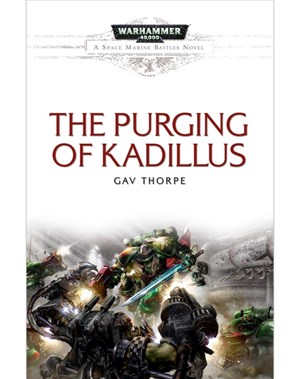
The Purging of Kadillus (Warhammer 40K/Space Marines Battle) by Gav Thorpe (Black Library, Trade Paperback 2/14/2011) – Thorpe is one of the rising stars on the Black Library’s roster, having written both in the fantasy and far future of the Warhammer universe.

Faced with an ork invasion of Piscina IV, the 3rd Company of the Dark Angels believes the threat to be minimal. As enemy numbers continue to increase, their commander, Captain Belial, insists that his Company are strong enough to resist. But Scout-Sergeant Naaman knows just how dangerous this foe can be, and when a renewed greenskin offensive takes the Dark Angels by surprise, the orks swarm towards Kadillus Harbour. Little do the Dark Angels know of the technological power available to the xenos, and the true scale of the threat they face. Belial, Naaman and their fellow Astartes fight a desperate siege at Kadillus, knowing that they must hold out until Imperial reinforcements arrive or the planet will be lost.

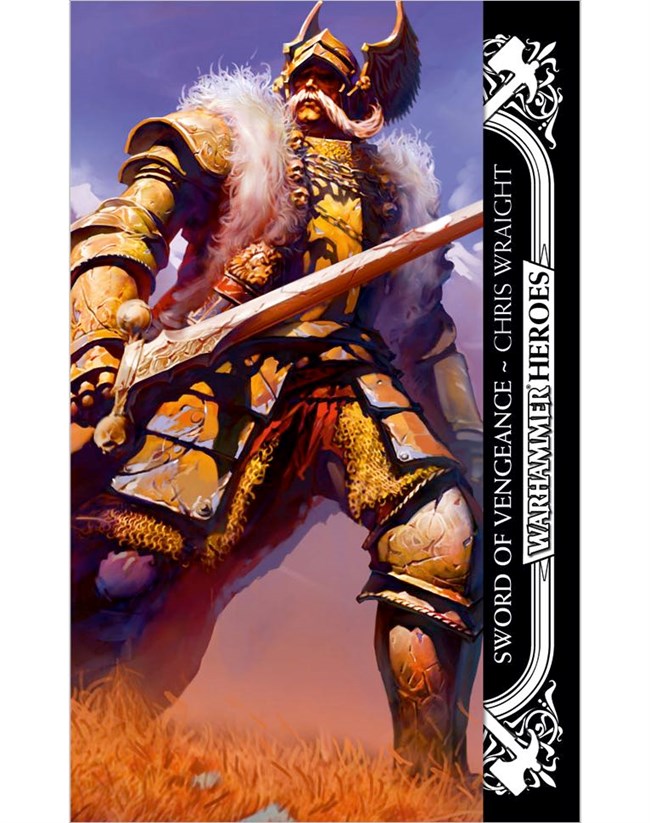
Sword of Vengeance (Warhammer Heroes) by Chris Wraight (Black Library, Mass Market Paperback 2/14/2011) – The is the second in Wraight’s trilogy focusing on Ludwig Schwarzhelm, one of the early heroes of the Warhammer fantasy universe.

Averland is aflame. An army of cultists rises in the corrupted city of Averheim. The Theogonist Volkmar marches towards the city in a race to snuff out the rebellion before it grows too widespread to defeat. Schwarzhelm races to return to the site of his recent battles, as does the spy Pieter Verstohlen, evading assassins while trying to discover the truth of the conspiracy that drew him away. But none of these holds the key. Out in the wilderness is Kurt Helborg, Grand Marshal of the Reiksguard. Only he has the indomitable strength of will to hold together the province in its hour of need. Only he can rally the terrified citizens of Averland to resist the infernal powers that beset them.

Thursday, December 30, 2010

Huso and Moorcock - Closing out SFFWorld's 2010 Reviews

Two last reviews to mention before the year closes at SFFWorld one from me and one from Art. Both novels happened to have been published by Tor.

I’ll lead of with my review of a debut novel that has generated a heaping of praise thus far: The Last Page by Anthony Huso:


The world inhabited by these characters is believable with all its sense of wonder. Stonehold, the land ruled by Caliph in many ways, fits the mold of a standard patriarchy – scheming nobles, courtly intrigue, and dark secrets – elements which unfold before Caliph’s eyes and through the people close to him. Where things admirably stray from the norm is the intermingling of steampunk elements like Zepplines, the morphing of science/mathematics and magic into singular disciplines to study and manipulate the world like holomorphy. Elements of Voodoo magic enter the equation, further differentiating Huso’s imaginative backdrop from his peers and predecessors.

Where I did have some minor problems was the plot itself. While I loved the milieu, thoroughly enjoyed the inventive language (and simultaneously felt pity for the poor copyeditor who had to keep track of the strangely spelled words) and found the characters engaging, the plotting of the novel didn’t move as smoothly as those other strong elements. This isn’t to say The Last Page is plotted badly, just that the narrative pull wasn’t as strong as I would have liked and felt the book dragged at times.


Art wrapped up his review of Michael Moorcock's classic Hawkmoon series with The Runestaff


Everything moves at an incredible pace in The Runestaff, with all of the plotlines converging in an action-packed finale. As with the rest of the series, Moorcock covers in two hundred pages what many of today's authors would spread out over a thousand. This is not to say that Moorcock's prose is sparse – or that the George R.R. Martins, Tad Williamses and Steven Eriksons of fantasy pad their stories – but rather that whereas some other writers spend a great deal of time adding details so that readers may savor their worlds at the risk of slowing the plot to a standstill, in a "mere" eight hundred pages Moorcock takes readers on an exhilarating thrill ride in a world no less fantastic.

Monday, December 27, 2010

Books in the Mail (W/E 2010-12-25)

A couple of these are leftovers from the previous week which got lost in the mix.


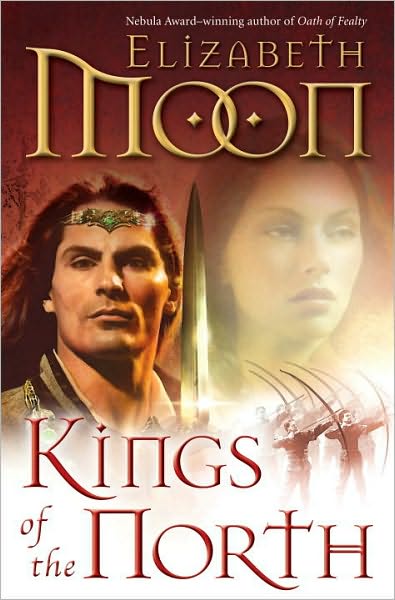
Kings of the North (Book Two of Paladin’s Legacy ) by Elizabeth Moon (Del Rey Hardcover 03/12/2011) – Last year, when I read Oath of Fealty it was the first book I read by Mrs. Moon and I quickly became a fan. Mark and I also interviewed her for SFFWorld last year.

Elizabeth Moon returns to the fantasy world of the paladin Paksenarrion Dorthansdotter—Paks for short—in this second volume of a new series filled with all the bold imaginative flights, meticulous world-building, realistic military action, and deft characterization that readers have come to expect from this award-winning author. In Kings of the North, Moon is working at the very height of her storytelling powers.

Peace and order have been restored to the kingdoms of Tsaia and Lyonya, thanks to the crowning of two kings: Mikeli of Tsaia and, in Lyonya, Kieri Phelan, a mercenary captain whose royal blood and half-elven heritage are resented by elves and humans alike.

On the surface, all is hope and promise. But underneath, trouble is brewing. Mikeli cannot sit safely on his throne as long as remnants of the evil Verrakaien magelords are at large. Kieri is being hounded to marry and provide the kingdom with an heir—but that is the least of his concerns. A strange rift has developed between him and his grandmother and co-ruler, the immortal elven queen known as the Lady. More problematic is the ex-pirate Alured, who schemes to seize Kieri’s throne for himself—and Mikeli’s, too, while he’s at it. Meanwhile, to the north, the aggressive kingdom of Pargun seems poised to invade.

Now, as war threatens to erupt from without and within, the two kings are dangerously divided. Old alliances and the bonds of friendship are about to be tested as never before. And a shocking discovery will change everything.


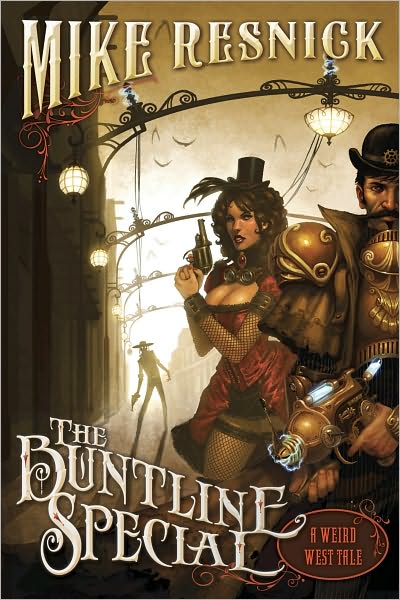
Mike Resnick (Pyr, Trade Paperback 12/07/2010) – Resnick’s manages to write with both quick quantity and quality. This latest is a steampunk/sf/western hybrid. .

The year is 1881. The United States of America ends at the Mississippi River. Beyond lies the Indian nations, where the magic of powerful Medicine Men has halted the advance of the Americans east of the river.

An American government desperate to expand its territory sends Thomas Alva Edison out West to the town of Tombstone, Arizona, on a mission to discover a scientific means of counteracting magic. Hired to protect this great genius, Wyatt Earp and his brothers.

But there are plenty who would like to see the Earps and Edison dead. Riding to their aid are old friends Doc Holliday and Bat Masterson. Against them stand the Apache wizard Geronimo and the Clanton gang. Battle lines are drawn, and the Clanton gang, which has its own reasons for wanting Edison dead, sends for Johnny Ringo, the one man who might be Doc Holliday's equal in a gunfight. But what shows up instead is The Thing That Was Once Johnny Ringo, returned from the dead and come to Tombstone looking for a fight.

Welcome to a West like you've never seen before, where "Bat Masterson" hails from the ranks of the undead, where electric lights shine down on the streets of Tombstone, while horseless stagecoaches carry passengers to and fro, and where death is no obstacle to The Thing That Was Once Johnny Ringo. Think you know the story of the O.K. Corral? Think again, as five-time Hugo winner Mike Resnick takes on his first steampunk western tale, and the West will never be the same.


The Cloud Roads by Martha Wells (Night Shade Books, Trade Paperback 4/14/2011) – I read a couple of novels by Marth Wells a few years ago The Wizard Hunters and Death of the Necromancer and enjoyed both of them. Wells is one of those writers whose work I have every intention of returning to in the future, so perhaps this is the one. I think her Fall of Ile-Rein which began with The Wizard Hunters deserves a bit more attention these days, considering it’s strong steampunk feel and the popularity of steampunk.

Moon has spent his life hiding what he is - a shape-shifter able to transform himself into a winged creature of flight. An orphan with only vague memories of his own kind, Moon tries to fit in among the tribes of his river valley, with mixed success. Just as Moon is once again cast out by his adopted tribe, he discovers a shape-shifter like himself... someone who seems to know exactly what he is, who promises that Moon will be welcomed into his community. What this stranger doesn't tell Moon is that his presence will tip the balance of power... that his extraordinary lineage is crucial to the colony's survival... and that his people face extinction at the hands of the dreaded Fell! Now Moon must overcome a lifetime of conditioning in order to save and himself... and his newfound kin.


Wednesday, December 22, 2010

Four Reviewers Reviewing...Bujold, Cook, Dresden, and Vance

With Christmas ‘round the corner, the reviewers at SFFWorld (including yours truly) have, over the past few days, gifted you all with a nice fresh batch of reviews.

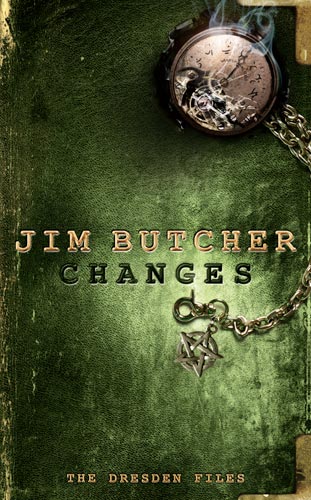
I’ll lead of with Mark’s review of Changes, the 12th installment in Jim Butcher's superb and popular Dresden Files:


... as you might expect from previous Dresden’s, Jim does do epic battles well. Here there is an epic battle at Chichen Itza, where Maggie is to be sacrificed, between Harry and his friends and the might of the Red Court. We discover that Arianna’s aim is to sacrifice Maggie in a blood ritual which would release a death curse which would travel up the family tree from the sacrificial victim to all her siblings, then to her parents, then to all their siblings (like Harry’s half brother, Thomas), to the grandparents, to the grandparent’s siblings, ad infinitum.


What works best here is that the book has jaw-dropping moment after jaw-dropping moment. We have the appearance of an ancient God, the emergence of the Red King, and Harry visits the domain of the ErlKing. Most importantly, here’s where a lot of those plot lines previously told comes together: Harry’s past, Harry’s responsibilities, the Vampire-Wizard War, Harry’s friendships.

My review, is of a Darkwar another in an impressive line of omnibus reissues of Glen Cook’s back-list from by Night Shade Books:


Glen Cook is a rare beast of a writer – he can vacillate between military fantasy, space opera, epic fantasy, mystery, and science fantasy with great ease. His writing is often marked by a purity; that he is depicting life in its most real sense, from the thoughts in a character’s mind to the wind rushing across his or her face. Despite the characters in this novel not being human, Cook still pulls off this purity, this realness with great effect

Darkwar is an interesting book and shows a contrast in themes. A traditional story dressed up in different clothing, one might say. In other ways, the setting hearkens to some early planetary romances. As the pages were turning and I was becoming more acquainted with Marika, I couldn’t help but compare her to another harsh protagonist – Hekat from Karen Miller’s Empress. While I was not a fan of that book, the similarities between the two protagonists who appear nearly 25 years apart was not something I could ignore – both ‘heroines’ are easy to anger, easy to dislike, and very strong willed. Only that last character trait could be considered attractive.


Art had a look at a monumental anthology edited by George R.R. Martin and Gardner Dozois in honor/homage to Jack Vance: Songs of the Dying earth by


As for the stories, this collection is a dream come true for anyone who wanted to know more about the Dying Earth that we only get glimpses of in Vance's original tales. Not only is the world's geography more fully explored, but we even get to enjoy more tales featuring Cugel the Clever, Rhialto the Marvelous, Chun the Unavoidable, Turjan, Guyal, and Lith, not to mention twk-men, leucomorphs, pelgranes, deodands and sundry demons. I'd say about half of the stories feature one or more of Vance's characters, while the other half of the stories have completely original characters but are still unmistakably in Vance's world. Of the latter, one story may not feature Rhialto or Ildefonse, but will have bickering wizards with their heads full of spells. Another may not star that rogue Cugel, but will feature characters with bloated egos and dubious reputations. Pervading all of these tales is the entropic beauty of a world nearing its end and the fatalism of its inhabitants who wonder whether the Sun will rise tomorrow. And though many of these authors admit that Jack Vance's writing style is inimitable, they make a praiseworthy effort at mixing Vance's epic tone with the humorous situations characteristic of the later Dying Earth stories.


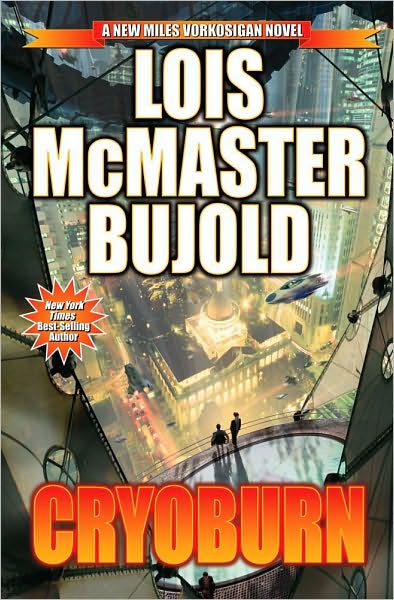
Mark’s other review, much like the first one highlighted in this post, is the latest installment of a popular and acclaimed series. I’ve read the first couple featuring Miles, so I’ve clearly got some catching up to do. The series is Lois McMaster Bujold’s Space Opera/Military Science Fiction/SF Romance Vorkosigan Saga, Cryoburn:


But now we have this new novel, set six or seven years after Diplomatic Immunity. Miles is now nearly forty, still an Imperial Lord Auditor in the Barrayaran Empire, but when visiting the planet of Kibou-daini/New Hope, he has been kidnapped. In just five days Miles now finds himself trying to escape the clutches of people hoping to hold the Lord Auditor to ransom.


So here we have Miles ‘meddling’ again, in events off-world from his home on Barrayar. There’s lots of underhanded political machinations by the cryo-corporations with designs on setting up on Miles’ homeworld, the recovery of Jin’s mother, an activist frozen to keep her out of the way, and attempts to dispatch the off-worlders who interfere with the companies plans.

Sunday, December 19, 2010

Books in the Mail (2010-12-18)

Only a few books this week, two of which are from Black Library.


Horus Rising (Audio) (Horus Heresy) by Dan Abnett and read by Martyn Eliis (Black Library, Abridged CD 1/4/2011) – Last week when I received the most recent Horus Heresy novel, I remarked that I haven’t read the first in the series. Well, here it is in CD-Audio format. 6 hours of what I hope is SF goodness. I’ll be listening to this one for sure, my first review of an audio book.

It is the 31st millennium. Under the benevolent leadership of the Immortal Emperor, the Imperium of Man hasstretched out across the galaxy. It is a golden age of discovery and conquest. But now, on the eve of victory, the Emperor leaves the front lines, entrusting the great crusade to his favourite son, Horus. Promoted to Warmaster, can the idealistic Horus carry out the Emperor’s grand plan, or will this promotion sow the seeds of heresy amongst his brothers? Horus Rising is the first chapter in the epic tale of the Horus Heresy, a galactic civil war that threatened to bring about the extinction of humanity.


God King (Book Three of The Sigmar Trilogy /Time of Legends) by Graham McNeill (The Black Library Mass Market Paperback January 2011) – I now have all three books in this trilogy which will bump it up the pile even more. McNeill won the David Gemmell Legend Award in 2010 for Empire, which further helps to bump it up the pile.

Sigmar, the first Emperor, is a god amongst men, a peerless leader and an unbreakable warrior. Having defeated the Chaos invasion of Middenheim, the Empire knows a measure of peace. But in the vast deserts of Nehekhara, another empire is rising. Nagash, the most feared of necromancers, is determined to claim dominance over the Old World, crushing all before him with an unstoppable and nightmarish army. Legions of unnatural creatures swarm the Empire. Sigmar must defend the lands of the living from the hordes of the dead and prevent Nagash's terrible vision of power coming true.


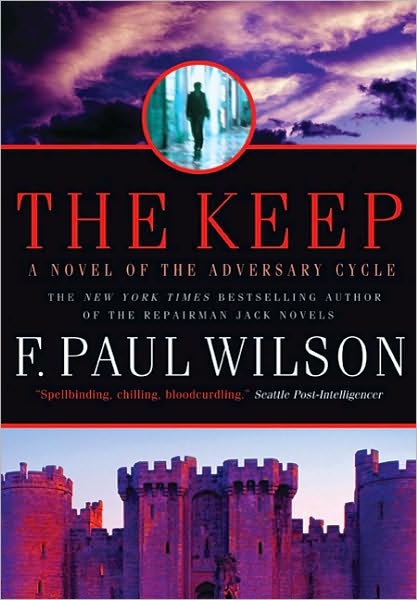
The Keep (Adversary Cycle #1) by F. Paul Wilson (Tor, Trade Paperback 12/07/2010) – F. Paul Wilson is a consistent, engaging writer who flies under the radar. Whether horror or dark/urban fantasy, his style is very smooth. This is the first novel in his Adversary Cycle and a modern classic of the horror genre.

“Something is murdering my men.”

Thus reads the message received from a Nazi commander stationed in a small castle high in the remote Transylvanian Alps. Invisible and silent, the enemy selects one victim per night, leaving the bloodless and mutilated corpses behind to terrify its future victims.

When an elite SS extermination squad is dispatched to solve the problem, the men find something that's both powerful and terrifying. Panicked, the Nazis bring in a local expert on folklore--who just happens to be Jewish--to shed some light on the mysterious happenings. And unbeknownst to anyone, there is another visitor on his way--a man who awoke from a nightmare and immediately set out to meet his destiny.

The battle has begun: On one side, the ultimate evil created by man, and on the other...the unthinkable, unstoppable, unknowing terror that man has inevitably awakened


Tuesday, December 14, 2010

The Hunger Games by Suzanne Colllins

With the holidays I figured I’d post a review I’ve held for a while since I feel it would make a good Christmas gift for readers of all ages. It is the first of a trilogy and one can purchase this first book by it’s lonesome or the whole trilogy in a gift pack.


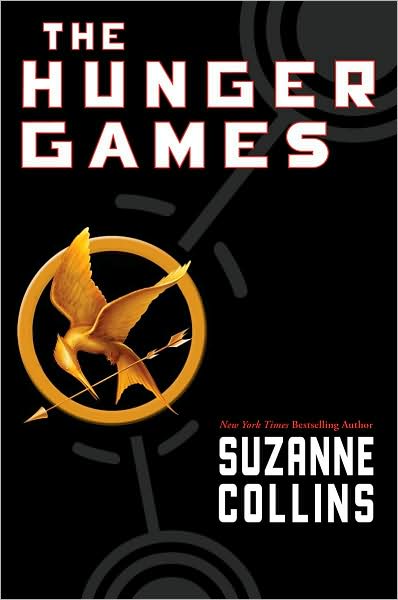
The book is Suzanne Collins’s The Hunger Games, a book originally published in 2008. I know I'm a bit late in catching onto this book, but it is very good. Here's a snip of my review:

The plotting throughout the novel is brisk and Collins’s style has that page-turning quality that proves ever more addictive the deeper into the story one delves. Through Katniss, we learn bits and pieces of how the world crumbled – at least North America – and rose into the nation of Panem. What makes Collins method of informing the reader about the world is that we don’t know much more than our protagonist, and this puts the reader ever more into the story.

We also learn of the hybrid creatures that populate the world – mockingjays, which are a cross between a mockingbird and a genetically created jabberjay; Muttations and Wolf Mutts – creatures that can best be described as synthetically engineered werewolves; and trackerjays, wasps that make killer bees seem as painful and harmful as a baby moth. Moreso than the creatures, where Collins succeeds in posting this future world is in the everyday life of its characters and how it is a reflection of the world at large.

Sunday, December 12, 2010

Books in the Mail (2010-12-11)

A varied mixed of authors, publishers and books have arrived on my doorstep/in my mailbox/in front of my garage. Since I can't read all of them, I can at least post here what those books are. Here goes...


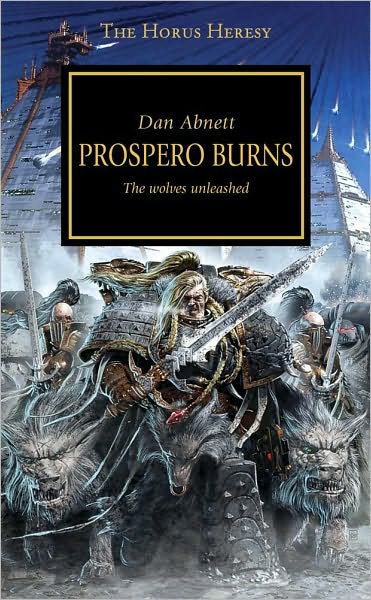
Prospero Burns (Horus Heresy) by Dan Abnett (Black Library, Mass Market Paperback 12/28/2010) – Abnett is the king of Warhammer fiction and his work in the Horus Heresy sub series s considered some of his best work. I haven’t read any of the HH books, but this could be the first.

The Emperor is enraged. Primarch Magnus the Red of the Thousand Sons Legion has made a terrible mistake that endangers the very safety of Terra. With no other choice, the Emperor charges Leman Russ, Primarch of the Space Wolves, with the apprehension of his brother from the Thousand Sons home world of Prospero. This planet of sorcerers will not be easy to overcome, but Russ and his Space Wolves are not easily deterred. With wrath in his heart, Russ is determined to bring Magnus to justice and bring about the fall of Prospero..


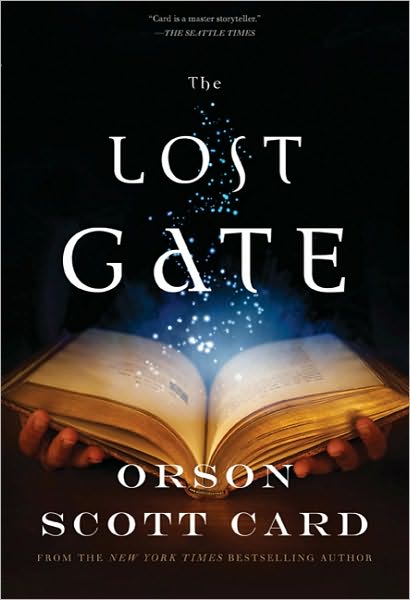
Passion Play (Mithermages #1) by Orson Scott Card (Tor, Hardcover 01/04/2011) Although I thoroughly enjoyed a lot of OSC’s work (early Ender books, Homecoming, Alvin Maker , Pastwatch, The Worthing Saga,it’s been a few years since I read anything by OSC, and it was an older title of his at that, maybe Wyrms or one of his later milkings of the Ender saga. 


Danny North knew from early childhood that his family was different, and that he was different from them. While his cousins were learning how to create the things that commoners called fairies, ghosts, golems, trolls, werewolves, and other such miracles that were the heritage of the North family, Danny worried that he would never show a talent, never form an outself.

He grew up in the rambling old house, filled with dozens of cousins, and aunts and uncles, all ruled by his father. Their home was isolated in the mountains of western Virginia, far from town, far from schools, far from other people.

There are many secrets in the House, and many rules that Danny must follow. There is a secret library with only a few dozen books, and none of them in English — but Danny and his cousins are expected to become fluent in the language of the books. While Danny’s cousins are free to create magic whenever they like, they must never do it where outsiders might see.

Unfortunately, there are some secrets kept from Danny as well. And that will lead to disaster for the North family.


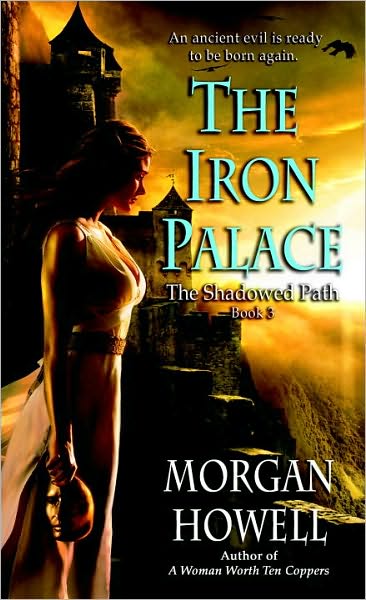
The Iron Palace (The Shadowed Path #3) by Morgan Howell (Del Rey Mass Market Paperback 12/28/2009) – The following dilemma lies at the heart of The Shadowed Path: if evil is fueled by violence, how can violence overcome it? This trilogy is set in the same world as Queen of the Orcs, but the action takes place two centuries later when all humanity is threatened by a fanatical cult that “harvests souls” for a bloodthirsty god.

Seventeen years have passed since Yim, an ex-slave blessed by the benevolent goddess Karm, sacrificed her body—and perhaps her very soul—to Lord Bahl, avatar of the evil Devourer. In that selfless act, Yim stripped Lord Bahl of his power but became pregnant with his son. Now that son, Froan, is a young man. And though Yim has raised him in the remote Grey Fens and kept him ignorant of his past, the taint of the Devourer is in his blood.

Even now an eldritch call goes out—and the slumbering shadow stirs in Froan’s blood, calling to him in a voice that cannot be denied. Armed with a dark magic he barely understands, Froan sets out to claim his destiny. When Yim seeks to stop him, her sole hope is that Honus—the love she abandoned—will take up the sword again for Karm’s sake and hers. Only then can she hope to face the impregnable bastion of unspeakable evil: the Iron Palace.


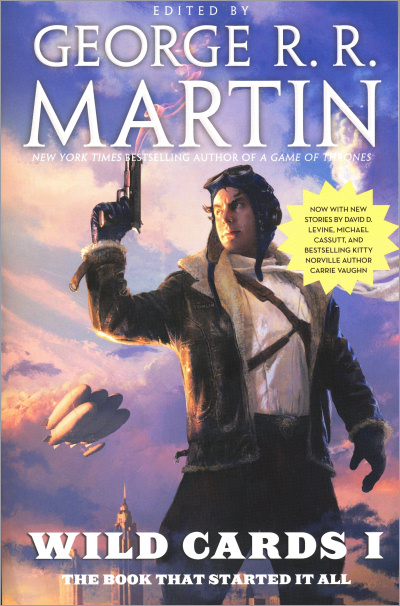
Wild Cards I (Wild Cards #1) edited by George R.R. Martin (Tor, Trade Paperback 01/04/2011) – Before GRRM was dabbling in multi-volume fantasy sagas, he was overseeing this popular shared world, one of the earliest examples of superheroes (or as GRRM coined the term, metahumans) in prose. .

Back in print after a decade, expanded with new original material, this is the first volume of George R. R. Martin’s Wild cards shared-world series

There is a secret history of the world—a history in which an alien virus struck the Earth in the aftermath of World War II, endowing a handful of survivors with extraordinary powers. Some were called Aces—those with superhuman mental and physical abilities. Others were termed Jokers—cursed with bizarre mental or physical disabilities. Some turned their talents to the service of humanity. Others used their powers for evil. Wild Cards is their story.

Originally published in 1987, Wild Cards I includes powerful tales by Roger Zelazny, Walter Jon Williams, Howard Waldrop, Lewis Shiner, and George R. R. Martin himself. And this new, expanded edition contains further original tales set at the beginning of the Wild Cards universe, by eminent new writers like Hugo–winner David Levine, noted screenwriter and novelist Michael Cassutt, and New York Times bestseller Carrie Vaughn.


Never Knew Another (Dogland Trilogy #1) by J.M. McDermott (Nightshade Books, Trade Paperback 2/22/2011) – McDermott’s debut novel Last Dragon published through the short-lived Wizards of the Coast Discoveries program, was praised when published two years ago. This is his latest novel.

Fugitive Rachel Nolander is a newcomer to the city of Dogsland, where the rich throw parties and the poor just do whatever they can to scrape by. Supported by her brother Djoss, she hides out in their squalid apartment, living in fear that someday, someone will find out that she is the child of a demon. Corporal Jona Lord Joni is a demon's child too, but instead of living in fear, he keeps his secret and goes about his life as a cocky, self-assured man of the law. The first book in the Dogsland Trilogy, Never Knew Another is the story of how these two outcasts meet.


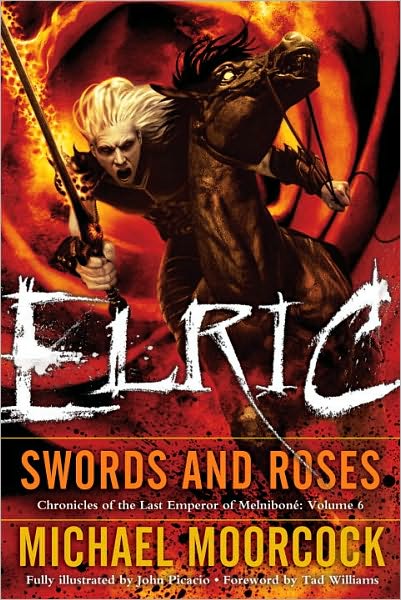
Elric: Swords and Roses (Chronicles of the Last Emperor of Melniboné: Volume ) by Michael Moorcock (Del Rey Trade Paperback 10/27/2009) – This is the sixfth volume in Del Rey’s terrific looking repackaging of Moorcock’s iconic Anti-hero, Elric. Each volume has had a different artist, this one’s cover and interior is by John Picacio. There’s also an introduction by Tad Williams. I’ve read most of the Elric stories in various forms, either in the Science Fiction Book Club omnibuses or the White Wolf versions.

Feared by enemies and friends alike, Elric of Melniboné walks a lonely path among the worlds of the Multiverse. The destroyer of his cruel and ancient race, as well as its final ruler, Elric is the bearer of a destiny as dark and cursed as the vampiric sword he carries—the sentient black blade known as Stormbringer.

Del Rey is proud to present the sixth and concluding installment of its definitive omnibus editions featuring fantasy Grand Master Michael Moorcock’s most famous—or infamous—creation. Here is the full text of the novel The Revenge of the Rose, a screenplay for the novel Stormbringer, the novella Black Petals, the conclusion to Moorcock’s influential “Aspects of Fantasy” essay series and other nonfiction, and an indispensable reader’s guide by John Davey.

Sumptuously illustrated by John Picacio, with a Foreword by Tad Williams, Elric: Swords and Roses is a fitting tribute to the most unique fantasy hero of all time.


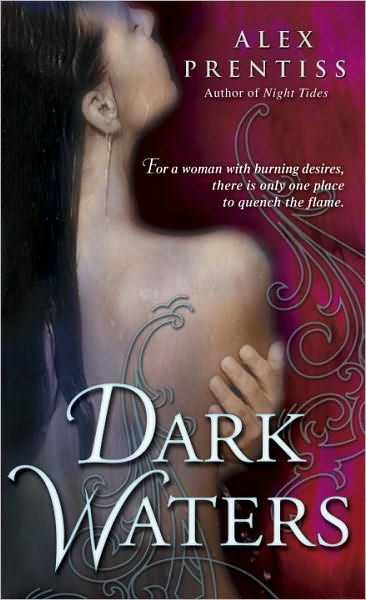
Dark Waters by Alex Prentiss (Bantam, Mass Market Paperback 12/28/2010) – The second in the series about a mysterious Lady of the Lake. What I find most odd is that this author doesn’t have a Web site, an anomaly in this day and age.


DARK WATERS

By day, Rachel Matre runs a hip diner in downtown Madison, Wisconsin. By night, she slips naked into the waters of a lake whose spirits speak to her, caress her, and take her to a place of indescribable pleasure.

But now the machinations of a greedy developer have summoned another force from the depths—a strange, beautiful man with a dark agenda. Soon there is a murder by the lake. During the hunt for the killer, Rachel is pulled into a torturous limbo where all she can feel is her raging erotic lust—and never a release. A crime, an ancient curse, and a confluence of thoroughly modern relationships have plunged Rachel into the ultimate mystery: one whose solution will emerge only out of pain, desire, and a passion for the most forbidden truth of all.


Galileo's Dream by Kim Stanley Robinson (Spectra Trade Paperback 12/29/2010) – When I received the hardcover exactly a year ago, I said, “ Although I couldn’t get through Red Mars, I’m definitely giving this one a try and maybe, just maybe I’ll revisit his Mars books one more time.” Well, I gave it a try and couldn’t finish the book. KSR’s style just doesn’t match up with my reading tastes.

The winner of every major science fiction award, Kim Stanley Robinson is a novelist who looks ahead with optimism even while acknowledging the steep challenges facing our planet and species: a clear-eyed realist who has not forgotten how to dream. His new novel offers his most audacious dream yet. At the heart of a brilliant narrative that stretches from Renaissance Italy to the moons of Jupiter is one man, the father of modern science: Galileo Galilei.

To the inhabitants of the Jovian moons, Galileo is a revered figure whose actions will influence the subsequent history of the human race. From the summit of their distant future, a charismatic renegade named Ganymede travels to the past to bring Galileo forward in an attempt to alter history and ensure the ascendancy of science over religion. And if that means Galileo must be burned at the stake, so be it.

Yet between his brief and jarring visitations to this future, Galileo must struggle against the ignorance and superstition of his own time. And it is here that Robinson is at his most brilliant, showing Galileo in all his contradictions and complexity. Robinson's Galileo is a tour de force of imaginative and historical empathy: the shining center around which the novel revolves.

From Galileo's heresy trial to the politics of far-future Jupiter, from the canals of Venice to frozen, mysterious Europa, Robinson illuminates the parallels between a distant past and an even more remote future—in the process celebrating the human spirit and calling into question the convenient truths of our own moment in time.


Sunday, December 05, 2010

Books in the Mail (2010-12-04)

Probably the last big haul of the year, a bunch from the three headed monster of the Penguin imprints – Ace/Roc/DAW and a some from TOR.

Passion Play (College of Magica #1) by Beth Bernobich (Tor, Hardcover 10/12/2010) – Debut novel from a respected short story writer. This seems part of the growing trend of “Fantasy of Manners” I’ve been seeing lately.


Ilse Zhalina is the daughter of one of Melnek’s more prominent merchants. She has lived most of her life surrounded by the trappings of wealth and privilege. Many would consider hers a happy lot. But there are dark secrets, especially in the best of families. Ilse has learned that for a young woman of her beauty and social station, to be passive and silent is the best way to survive.

When Ilse finally meets the older man she is to marry, she realizes he is far crueler and more deadly than her father could ever be. Ilse chooses to run. This choice will change her life forever.

And it will lead her to Raul Kosenmark, master of one of the land’s most notorious pleasure houses…and who is, as Ilse discovers, a puppetmaster of a different sort altogether. Ilse discovers a world where every pleasure has a price and there are levels of magic and intrigue she once thought unimaginable. She also finds the other half of her heart.

Sure to appeal to fans of Jacqueline Carey’s
Kushiel’s Legacy series.


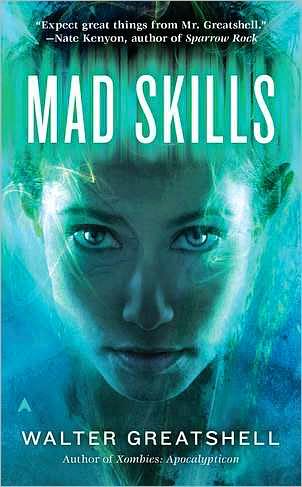
Mad Skills by Walter Greatshell (Ace, Mass Market Paperback 12/28/2010) – SF Thriller from the author of a couple of zombie novels.

Unconscious for fourteen months after a debilitating accident, Maddy Grant awakens at the Braintree Institute, where scientists have successfully implanted her with a radical technology designed to correct her brain injury. But Maddy is more than cured. Her intellect has been enhanced to process information faster than a computer-an ability that's sending her emotions into overdrive.

To monitor her condition, the institute sends Maddy to the nearby village of Harmony, where she will be free to interact with the community. But Braintree's scientists are not only monitoring her behavior, they're modifying it, reprogramming her personality to become someone else.

A killer..


Songs of the Dying Earth edited by George R.R. Martin and Gardner Dozois (Tor, Hardcover 12/7/2010) – This is a massive tribute (and trade version of the Subterranean Press version published last year) anthology with an immensely impressive list of contributors I’ve ever seen: Dan Simmons, Robert Silverberg, Kage Baker, Terry Dowling, Phyllis Eisenstein, Glen Cook, Elizabeth Hand, Matt Hughes, Tanith Lee, George R. R. Martin, Elizabeth Moon, Mike Resnick, Lucius Shepard, Jeff Vandermeer, Paula Volsky, Howard Waldrop, Liz Williams, Walter Jon Williams, Tad Williams, and John C. Wright.

To honor the magnificent career of Jack Vance, one unparalleled in achievement and impact, George R.R. Martin and Gardner Dozois, with the full cooperation of Vance, his family, and his agents, have created a Jack Vance tribute anthology:Songs of the Dying Earth. The best of today's fantasy writers to return to the unique and evocative milieu of The Dying Earth, from which they and so many others have drawn so much inspiration, to create their own brand-new adventures in the world of Jack Vance’s greatest novel.

Half a century ago, Jack Vance created the world of the Dying Earth, and fantasy has never been the same. Now, for the first time ever, Jack has agreed to open this bizarre and darkly beautiful world to other fantasists, to play in as their very own. To say that other fantasy writers are excited by this prospect is a gross understatement; one has told us that he'd crawl through broken glass for the chance to write for the anthology, another that he'd gladly give up his right arm for the privilege. That's the kind of regard in which Jack Vance and The Dying Earth are held by generations of his peers.

This book contains original stories from George R. R. Martin, Dan Simmons, Elizabeth Moon, Tanith Lee, Tad Williams, Kage Baker, and Robert Silverberg, along with fifteen others--as well as an introduction by Dean Koontz.


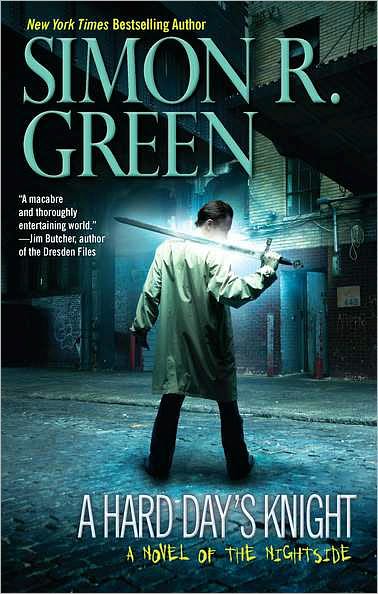
A Hard Day’s Knight (The Eleventh Novel of the Nightside) by Simon R. Green (Ace, Hardcover 01/05/2011) – Green is automatic – you can count on at least one book by him a year, and this is the first one of his books to publish in 2010.

John Taylor is a P.I. with a special talent for finding lost things in the dark and secret center of London known as the Nightside. He's also the reluctant owner of a very special-and dangerous-weapon. Excalibur, the legendary sword. To find out why he was chosen to wield it, John must consult the Last Defenders of Camelot, a group of knights who dwell in a place that some find more frightening than the Nightside.

London Proper. It's been years since John's been back-and there are good reasons for that.


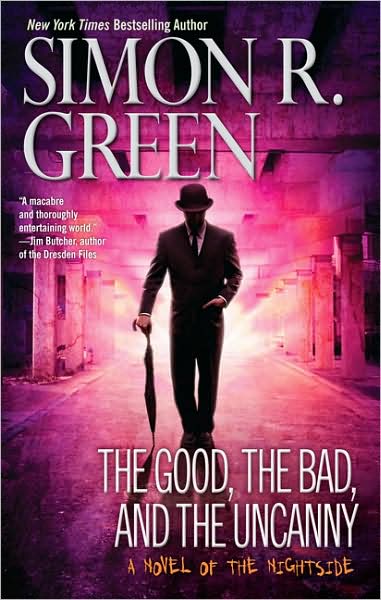
The Good, the Bad, and the Uncanny (The Tenth Novel of the Nightside) by Simon R. Green (Ace, Mass Market Paperback 01/04/2011) – Green is automatic – you can count on at least one book by him a year, and this is the first one of his books to publish in 2010 and this is the paperback version of the hardcover I received exactly one year ago.

Things were going so well for P.I. John Taylor, that it was only a matter of time before everything hit the fan. Walker, the powerful, ever-present, never­to-be-trusted agent who runs the Nightside on behalf of The Authorities, is dying. And he wants John to be his successor-a job that comes with more baggage, and more enemies, than anyone can possibly imagine.

Starbound by Joe Haldeman (Ace, Hardcover 12/28/2010) – This is the mass market paperback version of the book I received a year ago. Haldeman is a living legend and will be named Grand Master by the SFWA next year. I read and enjoyed both The Forever War and Forever Peace this is his latest novel and the synopsis sounds pretty interesting..

A New from the Hugo, Nebula, and John W. Campbell Award-winning author of Marsbound.

Carmen Dula and her husband have spent six years travelling to a distant solar system that is home to the enigmatic, powerful race known as "The Others," in the hopes of finding enough common purpose between their species to forge a delicate truce.

By the time Carmen and her party return, fifty years have been consumed by relativity-and the Earthlings have not been idle, building a massive flotilla of warships to defend Earth against The Others. But The Others have more power than any could imagine-and they will brook no insolence from the upstart human race.


Boondocks Fantasy> by Jean Rabe and Martin Greenberg (DAW, Mass Market Paperback 01/05/2011) – Here comes the monthly themed anthology from DAW. I get a “You might be a redneck” feel, but what really makes it stand out are contributors Gene Wolfe, Steve Savile, and Jay Lake..

Here’s the snippet:

From vampires in the Appalachians and leprechauns in the Smokies to mermaids in the Mississippi and bloodthirsty trolls in an Alabama trailer park the South makes a unique setting for the 20 stories in this anthology of redneck vampires, werewolves, wizards, elves, and other creatures.

Featuring original stories by Gene Wolfe, Timothy Zahn, Chris Pierson, Mickey Zucker Reichert, Steven Savile, Elizabeth A. Vaughan, Jay Lake, Anton Strout, and many more.


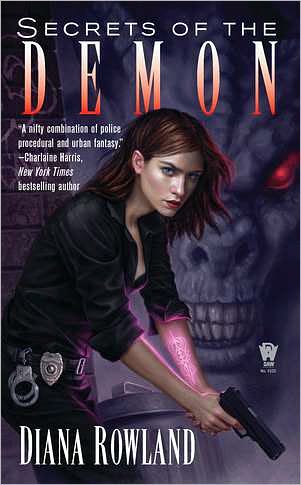
Secrets of the Demon (Kara Gillian, Book 3) by Diana Rowland (DAW Mass Market 1/4/2011)– Third in series about vampire hunter on the police force

Homicide detective Kara Gillian has a special talent: she can sense the "arcane" in our world, and there's quite a bit of it, even in Beaulac, Louisiana. She's also a summoner of demons, and works on a task force that deals with supernatural crimes. Her partners are attractive and smart FBI agents, but they're not summoners, and they're not telling Kara why they are on this special force with her.

TO make things worse, Kara has pledged herself to one of the most powerful of demons-a Demon Lord-who helped save her partner's life, but now expects things in return. Meanwhile, she's trying to solve a string of murders that are somehow tied together by money, sex, rock music and...mud. But how can she concentrate on the case when she's not even sure who-or what-her partners are?


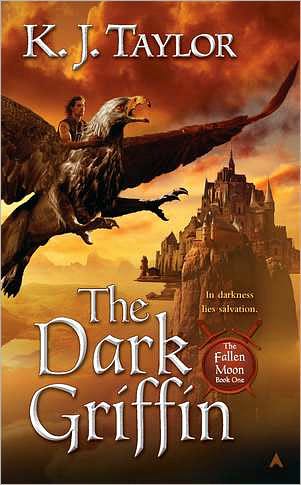
The Dark Griffin (Fallen Moon Series #1) by K.J. Taylor (Ace, Mass Market Paperback 12/28/2010) – Taylor was a bestseller in Australia and now her books are hitting US shores. Ace is employing the book-per-month release schedule that has become proven success.


Being chosen as a griffin's companion has allowed Arren Cardockson to gain a place of status within the land of Cymria. But Arren can never escape the prejudice that comes with his Northerner slave origins. For chained within the Arena where rogue griffins battle to entertain the crowds, there lies another soul crying out to be freed-a kindred spirit that will allow Arren to fulfill his destiny and release the darkness in his heart.


Friday, December 03, 2010

Bear, Hamilton, Willis - 3 SF reviews at SFFWorld

Things are trucking along at SFFWorld , with one of my reviews posted and two from Mark.


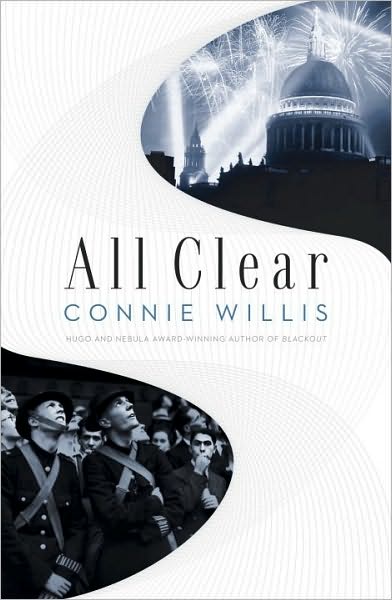
I’ll lead of with Mark’s review of the latest novel from Connie Willis - All Clear, which finishes off what she started in Blackout,:


After the cliff-hanger ending of the first part, we get straight back into the tale. There’s a little bit of reminding of what went before (note: do read the first book first!) but pretty soon we’re back into the WW2 dilemma of Polly, Mary, and Mike. This can be a little confusing if it’s been a while since you read Black Out: you really do need to read this as one continuous novel.

The complexities of the time travel element become a little more involved here as the apparent changes in Black Out have their effect. We now find that there is a great deal of slippage: over four years, when the longest previously was about six months. Mr Dunworthy finds himself entering the fray from 2060, Mary finds herself involved with an RAF officer, whilst Mike, in his search for Gerald Phipps, finds himself at Bletchley Park and intermixing with the mathematicians involved in the ultra-secret Enigma code-breaking project. There’s also the welcome return of a character from the beginning of Black Out who has a pivotal part to play in this tale.

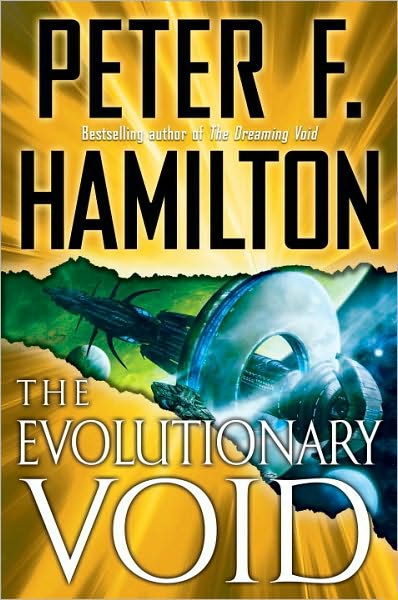
My review, also finishes off a larger story, The Evolutionary Void by Peter F. Hamilton:


Throughout the three volumes of the trilogy, Hamilton has juxtaposed two societies – the inhabitants of the Void who are of a medieval level society against those who live outside the void in the universe at large. The people outside the Void are divided and many of them find inspiration from one man’s dreams of the world inside the Void, specifically a young, powerful psychic by the name of Edeard, whom people have anointed the Waterwalker. A religious movement, The Living Dream, has arisen and is looking to make a pilgrimage to the inside of the Void. Problem being is the Void is expanding exponentially and threatening the integrity of the universe. In order to prevent the Living Dream from completing its pilgrimage and further endangering the universe, humanity has tried to prevent this religious cult, for lack of a better term, from completing their pilgrimage.

Hamilton continues to jump around the galaxy in his narratives, from Paula Myo’s investigative track, to Araminta’s storyline of continued discovery, to Edeards’ heroic journey of ascension in Makkathran, to the conflict between humans who have and have not chosen a post-physical existence. Through all of it, the most defined narrative for me was Edeard’s story. While Hamilton invested a great deal of time into many of characters, like Myo who has been bouncing around his books for thousands of years and pages, it is Edeard who comes across as the most clearly defined and genuine.


The last review of the day is also Mark’s s review is of a reissued recent classic by Greg Bear, The Forge of God


What these are in actual fact are two spaceships. In the case of the spacecraft crashing in the Californian Mojave desert, there is a dying alien, in its own words, ‘a flea’, hitchhiking a ride with superior beings. In English, it tells its discoverers that it is very sorry to bring bad news but that the Earth is doomed.

...

The truth is sadly more sinister. What is happening is that the aliens, attracted by radio signals emitted from Earth, have brought with them two ‘bullets’ of neutronium and anti-neutronium that are eating through the interior of the Earth. Their meeting will be the end of the Earth as we know it. Moreover there is the scary realisation that this is deliberate: it is this that creates the matter used to birth more alien spaceships, a force created by a mechanical alien species who look at humans as if they are a lower lifeform. (Saberhagen’s Beserkers are mentioned as a sf-nal reference point.)

Sunday, November 28, 2010

Books in the Mail (2010-11-27)

This is the post where I tell my loyal readers what arrived the previous week


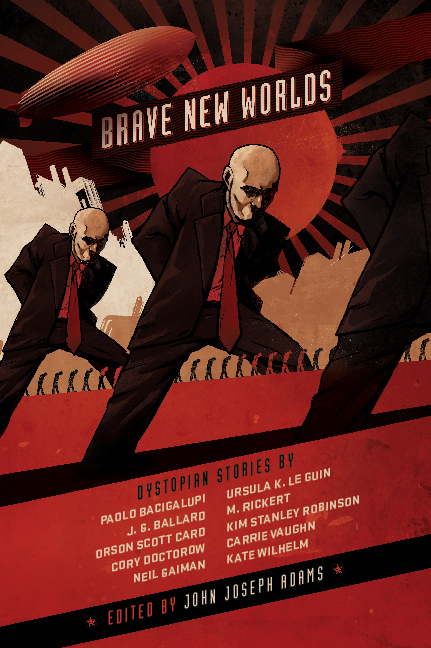
Brave New Worlds by John Joseph Adams (Trade Paperback 1/11/2011 Night Shade Books) – Mr. Adams is one of the preeminent anthology editors in the genre, he has a real knack for pulling together great stories on a specific theme.

YOU ARE BEING WATCHED.

In his smash-hit anthologies Wastelands and The Living Dead, acclaimed editor John Joseph Adams showed you what happens when society is utterly wiped away. Now he brings you a glimpse into an equally terrifying future — what happens when civilization invades and dictates every aspect of your life? From 1984 to The Handmaid’s Tale, from Children of Men to Bioshock, the dystopian imagination has been a vital and gripping cautionary force. Brave New Worlds collects the best tales of totalitarian menace by some of today’s most visionary writers, including Orson Scott Card, Kim Stanley Robinson, and Ursula K. Le Guin.

When the government wields its power against its own people, every citizen becomes an enemy of the state. Will you fight the system, or be ground to dust beneath the boot of tyranny?


The Horns of Ruin by Tim Akers (Trade Paperback 11/19/2010 Pyr) – This is Akers; second novel and a book that looks like a lot of steampunky fun.


Eva Forge is the last paladin of a dead God. Morgan, God of battle and champion of the Fraterdom, was assassinated by his jealous brother, Amon. Over time, the Cult of Morgan has been surpassed by other gods, his blessings ignored in favor of brighter technologies and more mechanical miracles. Eva was the last child dedicated to the Cult of Morgan, forsaken by her parents and forgotten by her family. Now she watches as her new family, her Cult, crumbles all around her.

When a series of kidnappings and murders makes it clear that someone is trying to hasten the death of the Cult of Morgan, Eva must seek out unexpected allies and unwelcome answers in the city of Ash. But will she be able to save the city from a growing conspiracy, one that reaches back to her childhood, even back to the murder of her god?


Elfsorrow (Legends of the Raven #1) by James Barclay (Pyr Trade Paperback 11/15/2010) – First novel in The Legends of the Raven the second trilogy of James Barclay’s mercenary heroes. As Pyr did with James’s first trilogy, the publisher is releasing this series in successive months

Another action-packed adventure from the new master of fantasy. The Raven travel to a new continent in search of mages to help the ruined college of Julatsa rebuild and find themselves in the midst of an ancient curse—a curse that has unleashed a plague that threatens to wipe out the elven race. Barclay excels with another tale that pitches The Raven against the clock and unseen foes. Full of desperate fights and secret betrayals, the story also fills in more of Balaia's history and delves deeper into the ancient emnities between the colleges. Barclay has created a wonderfully appealing group of heroes, and with every book their history grows and the land they live in becomes wider and richer. This is landmark fantasy in the making.


Shadowheart (Legends of the Raven #2) by James Barclay (Pyr Trade Paperback 12/15/2010) – What I said above, except this is the second in the second series. Like the previous, you can see the great cover by Raymond Swanland.

James Barclay has rapidly established himself as one of the leading lights of the genre with his two linked trilogies starring fantasy's most popular new heroes in many years: The Raven. The first trilogy was the Chronicles of The Raven and introduced the heroes and the world of Balaia. The second trilogy, The Legends of The Raven, began with Elfsorrow which served as an introduction for new readers. Now, with his fifth book, he tests The Raven to the point of destruction and unleashes a savage war across his world as the magical colleges of Balaia tear the land apart in their struggle for supremacy. Barclay has never been scared of killing off favourite characters, and this has given his books their unique edge. Now he threatens to destroy everything they have known. Can The Raven even survive, let alone triumph?


Of Blood and Honey by Stina Leicht (Night Shade Books Trade Paperback 03/17/2011) – Debut novel and first of a trilogy.

Fallen angels and the fey clash against the backdrop of Irish/English conflicts of the 1970s in this stunning debut novel by Stina Leicht.

Liam never knew who his father was. The town of Derry had always assumed that he was the bastard of a protestant--His mother never spoke of him, and Liam assumed he was dead.

But when the war between the fallen, and the fey began to heat up, Liam and his family are pulled into a conflict that they didn't know existed. A centuries old conflict between supernatural forces seems to mirror the political divisions in 1970s era Ireland, and Liam is thrown headlong into both conflicts.

Only the direct intervention of Liam's real father, and a secret catholic order dedicated to fighting "The Fallen" can save Liam... from the mundane and supernatural forces around him, and from the darkness that lurks within hi