Showing posts with label Audio Book. Show all posts

Thursday, November 07, 2024

Book Review (Audio Book): The Sword of Kaigen by M.L. Wang

Author/Publisher: M.L. Wang
Narrator: Andrew Tell
Length: 24 Hours, 24 Minutes
Publication Date/Year: 2020
Genre: Epic Fantasy


Over the past dozen years or so, the term self-published has transformed from a negative connotation to the term “independently published,” which is almost a badge of honor. With that shift in nomenclature, books that writers set out to publish outside of traditional paths have gained wider recognition, acclaim, and respect. Which brings me to The Sword of Kaigen: A Theonite War Story by M.L. Wang.

I’d seen this book generate a lot of good response over the last couple of years and finally decided to use one of my audible credits to read/consume this novel. I tried not to read too much about the plot details when skimming over reviews from folks whose opinion I trust aside from the generalities…a Japanese-influenced military fantasy/family saga which takes place on the Kusanagi peninsula. And full transparency, I recently watched the incredible FX mini-series Shōgun and I was blown away. I was looking for something with a similar flavor/influence. 


First, a little bit about the world-building while the novel is Eastern Asian influenced, it most definitely is not traditional. This world has telecommunications, airplanes, high-rise building, and modern technology. The language is Japanese, but the world is not Earth, it is called Duna. The people of the Kaigenese Empire very much live near the water and as such, the magic is water/ice based and is depicted as extremely powerful. Case in point, an ice sword conjured by a powerful manipulator of the magic can rival the sharpest metal sword. The rival empire, the Ranganese, utilizes a fire-based magic.


Very high marks for the world building because Want makes her world feel like a character. But a character we only know a little bit about. The world in this novel is fascinating on so many levels, I haven’t read too many fantasy novels where spells sit alongside airplanes and telecommunication infrastructure. Well, sure, quite a few Urban Fantasy novels, but not very many Epic Fantasy novels. Want wraps all these seemingly disparate elements together masterfully.


From a character perspective Wang focuses her story on the Matsuda family, eldest son 14-year old Mamoru and his mother Misaki. Told from their points of view, Wang evokes a world of strict rules with regard to class, gender, and age. In Mamoru, we see a young man coming of age, on the cusp of manhood, trying to be as good a fighter like his legendary father and uncle. Mamoru still has a lot to learn about combat and the world at large. But he, like many teenagers transitioning to adulthood, begins to question the history he’s been fed over the years. As a citizen of the Kaigenese Empire, he is told to believe everything the Emperor disseminates to the populace. But Mamoru has questions about the Ranganese enemies, he is more open to what they might be and how powerful they truly are.  Mamoru is desperate to prove himself to his father and his uncle and himself, as well. Mamoru has been training to be a Sword of Kaigen, a great defender of the Kusanagi peninsula. Mamoru is a well-drawn, believable character.


Misaki was betrothed to Mamoru’s father Takeru when she was 19 in an arranged marriage, uniting two prominent families. As such, Misaki was forced to leave her life behind and it turns out, she had quite a robust life before becoming wife to Takeru. She had an identity, she had friends, she felt she had a purpose with those friends as a crime-fighter. Misaki also has the power to control blood, which she can use to heal herself or others and increase her strength. But that life, once she’s married to Takeru, is all gone and her only purpose was to essentially be a baby-making machine for the Matsuda line. As much as I liked Mamoru and felt him to initially be the protagonist, I felt much more drawn to Misaki the more I got to know her. Wang played a deft hand with both of these characters.


Wang gives readers chapters from her POV from her early life before being married all the way to being married and a mother. This provides a fascinating and ultimately enthralling view into one character’s major lifespan. A great deal is given over to being a mother, not something you’d typically see in an epic fantasy novel.


When war arrives on the doorstep of the Matsuda family, the novel takes a turn as the tension gets even higher. A good portion of the novel is dedicated to the major conflict and the fallout. This major conflict takes place with a great deal of narrative in the rearview mirror, but there's a lot ahead as well. That's my fancy way of saying I can't recall exactly how closely to the middle it takes place, maybe the arrival of war takes up the middle third of the novel?


I’m a fan of books told with parallel narratives, whether those narratives take place in different time lines of from different points of view. My favorite instance of this, at least with parallel character narratives might in Scott Lynch’s Red Seas Under Red Skies but I think M.L. Wang topped that here in The Sword of Kaigen. There comes an instant (and this isn’t too much of a spoiler, I think) when Mimoru’s storyline intersects with that of his mother, Misaki and it was a genuine “a-ha” moment for me.

I have to give kudos to narrator Andrew Tell. At first, I wasn’t exactly connecting with his performance, if I’m being honest. I felt some of the pauses were a little off. Soon enough, I was hooked and realized what a masterful job he did. He portrayed each character distinctly, and helped to build tension through his pacing and voice.


The Sword of Kaigen is a very powerful Epic Fantasy novel, a familial saga, a novel of war. Epic in its magic, epic in its scope even though it focuses primarily on one nation of a world, and most definitely epic in scope of the family. Not just one of the best “self/independently” published novels I’ve ever read, but a top single-volume fantasy novel I’ve ever read.

Wednesday, March 30, 2022

Book Review: The Return (Audio Book) by Rachel Harrison / Women in Horror Month


Title
: The Return
Publisher: Audible/Berkeley
Page Count: 304 Pages / 9 Hours, 34 Minutes
Publication Date/Year: 2020
Narrator: Sara Scott
Genre: Horror

Rachel Harrison’s debut novel, The Return, has been on my radar, probably since it published a couple of years ago. Three friends are surprised when their friend, Julie, disappears. Julie went hiking and never returned. Many people think she’s dead, but not Elise. Elise assumes Julie will return. She goes through the motions of attending the funeral (which happens a year after Julie disappears), but she also loses touch with Mae and Molly. Until Julie does return exactly two years after she vanished, Julie’s friends, Elise, Molly, and Mae, organize a weekend getaway at the Red Honey Inn, an exclusive, new, themed hotel in upstate New York. Julie is the last to arrive and this weekend is her friends to see her. Julie is much thinner, she looks sickly, a pale imitation of her former self. Julie is also acting strangely, for example, she now eats meat. Before she disappeared, she was a vegetarian. There are only occasional flashes of Julie’s former self.

Harrison frames her story through the voice of Elise, who as I suggested above, was the least concerned of her three “living” friends about Julie’s fate largely because she was closer to Julie than her other friends. Elise is a loner, somewhat self-imposed, compared to Mae and Molly. It was pretty easy to identify with Elise for me, Harrison did a nice job of making her situation grounded. For example, I thought it was a very nice touch that Elise expressed concern over the weekend getaway. First she thought it might be too much too soon, but second, and what gave the story that much more of a genuine feel is that Elise was concerned with the cost of going away to a fancy hotel. A seemingly small detail like that goes a long way to allowing the reader to “buy in” to what is happening in the story. Of course, with Elise as the narrator of the story, we only get her opinions on her friends and the situation.

Elise’s trepidation is a hint of the unsettling nature of the story that will unfold. A sense of dread slowly creeps into the story. The hotel is eerie, for starters. While it isn’t as haunted as say, the Overlook, it does give off a vibe of not quite being normal. The mountain setting doesn’t help, either. The limited number of staff, as Elise relays to us, come across as almost too perky. Each of the four characters is in their own themed room, each room feels like it could be in a Tim Burton movie.

As I said, the three friends realize Julie is very different. There’s an odor about her, Julie’s teeth are falling out, and she only seems to have an appetite for raw meat and alcohol. Elise soon thinks she’s seeing shadows moving, adding to her unease and an overall sense of being haunted. Julie’s presence continues to unnerve the three friends, with Mae and Molly urging Elise confront Julie about her memories and her appearance.

I don’t want to go too much further with plot details, but suffice it to say, Harrison does a fantastic job with an unsettling narrative. The creep factor increases as the novel heads to its inevitable conclusion, with some of the elements being explained, others not so much.

At times, Elise explained things that didn’t require explaining. But in the little moments, the intricacies of the friendship of these four women, Harrison excels. As I said, sometimes the smaller “devil in the detail” elements can pay it forward for the larger narrative. Overall, Harrison manages to infuse her narrative with a very strong pull that was difficult to deny.

An impressive horror debut. I’ve seen this novel labeled as a feminist horror and I suppose with the majority of characters being women (Tristan, Julie’s husband is the lone significant male character) I suppose that could be true. What The Return wound up being for me was a gripping, horror novel that was told with well-measured reveals. I guess I’d say folks who enjoyed the film The Descent would likely find a lot to like in this novel.

Highly Recommended

Wednesday, March 09, 2022

Book Review: The Winter People (Audio Book) by Jennifer McMahon / Women in Horror Month

Publisher: Audible
Narrated by: Cassandra Campbell & Kathe Mazur
Lenth: 10 hrs and 45 min
Publication Date/Year: 2014
Genre: Horror

Jennifer McMahon is a best-selling writer of suspense novels, some of which easily fall into the horror genre, like this particular novel, The Winter People. I’ve been wanting to give her work a try for a short-while now and have been wavering on which book would be my first from her and decided on this one, the creepy description was intriguing. I’m also a fan of stories told in parallel timelines, which is a feature of this novel.

While both storylines take place in West Hall, Vermont, one timeline is told in 1908, during an uncompromising and difficult winter. Sara Harrison Shea’s* daughter Gertie dies during that winter and unfortunately, Gertie isn’t the first child of Sara and her husband Martin to lose. In denial, Sara puts the full blame for Gertie’s death on her husband Martin. She is driven beyond the bounds of sanity to do anything to see her daughter one more time, she is convinced her daughter hasn’t died.

* I'm always wary of characters with three names like that, who are constantly referred to by their first, middle, and last name. Lots of serial killers go by the three names and characters with three names tend to not be the most...stable?

In the “current timeline” there are additional parallel stories occurring: Ruthie and her kid sister wake up one day and their strict mother Alice has disappeared. Oh, by the way, these folks live in Sara Harrison Shea’s old home. There have been a spate of missing people in the West Hall area, specifically where Ruthie and her family live, and Ruthie is worried her mom might be the latest victim of some cruel and twisted presence. Adding to the creepiness is the dark history surrounding Sara Harrison Shea. She was labeled a witch, and supposedly had a book that could bring the dead back to life. These living dead people have been dubbed, by the local populace, as Winter People.

Adding another layer of parallel story is the arrival of a woman named Katherine, who is mourning the recent loss of her husband as well as the death of her son not so recently. She is drawn to West Hall when she learns her husband made an unannounced visit there just before he died.

McMahon has a great knack for compelling narrative. She switches between the parallel stories in a deliciously powerful manner. What do I mean? We’ve all had that “oh just one more chapter” thought cross our minds when we’re invested in a good book. McMahon is really good at implanting that thought in readers’ heads.

Of course one of the most enjoyable elements of stories told in parallel narratives is trying to figure out how those narratives cease to become parallel and intertwine. McMahon does a great job with this storytelling element as well, and is a complement to that whole “just another chapter” thought.

I felt ingrained in these character’s heads with each switch of viewpoint, Jennifer McMahon built a solid foundation for them that allowed for a great deal of empathy. I will say; however, I found Ruthie’s little sister somewhat annoying, but I suppose that is kind of the purpose of the character.

My issue; however, is with the audiobook edition which has two performers/narrators. The present day narrator is fine, excellent actually. The narrator who performed the story in the past sounded strained as if she were trying to whisper, or whisper shout. I wish audiobook narrators and producers would stop with this trick, which is not dissimilar in annoyance to how darkly streaming shows are shot these days.

In the end, The Winter People was a thrilling, creepy, compulsive read. It’s no wonder Jennifer McMahon is a best-selling writer, she spins a compelling, tale. I'll be seeking out more of her work in the future. This book should appeal to horror readers and thriller fans, as well.

Recommended


Thursday, November 01, 2018

Hallowe'en 2018 Recap

Looky here, another post on the old 'o Stuff.

October is obviously a great month for Horror and dark stories and this past October, I had a pretty good fill of darkness. The month started with Seanan McGuire’s enormously fun, Boneyard, a weird western/horror novel set in the world of the Dead Lands RPG. I reviewed that for SFFWorld so you can head over there for my full thoughts, but bottom line: engaging, harrowing, and entertaining.

But backtracking a little, September ended and October began with a vampire novel, but not an ordinary vampire novel. The late Octavia Butler’s contribution to the vampire mythos, Fledgling is more science fiction than horror, although there are of course some dark elements to the novel. Butler is never one to shy away from uncomfortable elements in her fiction and making her vampire appear to be a young girl leaves a great deal of room for many uncomfortable scenes. I love her Lilith’s Brood / Xenogenesis series and this one is pretty good, too. I really like her concept for the Vampire and how even the “vampires” themselves are unsure of their own history at times. This was an audio read.


Right about the time I was juggling those two books, I watched You Might be the Killer the movie based on the entertaining twitter conversation between Sam Sykes and Chuck Wendig. The film was at Fantastic Fest in late September and premiered on the SyFy network on the first Saturday in October, which also happened to be the Saturday of New York Comic Con. The movie was a lot of fun and works as sort of a mash up of Scream and Cabin in the Woods. The film stars Fran Kranz (who also starred in Cabin in the Woods, which happened to air just before You Might be the Killer premiered on SyFy) as an out of breath, on the run camp counselor named Sam who calls his friend Chuck, a video store clerk portrayed by Alyson Hannigan. The movie doesn’t waste time with revealing the obvious – that Sam is the killer. From there, it is a fun 90 minutes or so. I’ll be making this a re-watch come every October. The film worked for me on a few different levels, I like horror, I like humor, and I like both Chuck Wendig and Sam Sykes. Beyond that, the film is a fun send up of the Slasher subgenre of horror movies.

I finally started and finished a Clive Barker novel - Damnation Game, his first novel, in fact. The novel was a bit slow, but a very nuanced novel I thought. More subtle, at least in some parts and through some plot movements, than I would have expected from the man who gave us Hellraiser. Simon Vance is a renowned narrator and he did bring a nice level of class to the performance. The story tells the tale of an ancient man who is in debt to an even older creature. This is very much in the vein of the classic Faust tale and mixes in some pretty gruesome imagery.

Another solid page turner for the moth was Sarah Pinborough’s Breeding Ground. This is a horrific post-apocalyptic tale of women randomly giving birth to spider like creatures. Some great character stuff throughout against gorrific imagery. I would have liked a clearer explanation of the how and why of everything, if I’m being honest. Nonetheless, a good page turner.


The Witch is a movie that’s been on my radar since it hit theaters in 2015 and I finally watched it in the middle October. In the early 1600s of New England, a family of 6 (Mother, Father, baby, young twins, and eldest daughter) is banished from their church. They are left to make a home at the edge of a forest that holds dark secrets. Immediately, the baby of the family disappears and because eldest daughter Tomasin is last seen with the baby, she is blamed for the disappearance and even called a witch by the twins of the family. The film is extremely tense, has a wonderful atmosphere which lends such an immersive feel to the film, and leaves much of the terror to build on the raw emotions of the family. It was a fairly slow-moving film, but that pace was a deliberate effect that worked to reward patience. A modern classic, one might say about The Witch.


As the month changes to November, I’m in the middle of the audiobook of Within These Walls by Ania Ahlborn narrated by R.C. Bray. I am thoroughly enjoying this novel which tells the story of a down on his luck true crime writer who is given a golden ticket to interview an infamous mass murderer. Think Charles Manson, except this killer never talks to the press. The catch – protagonist Lucas Graham has to live in the house where the murderer committed his heinous acts. As of this post, I'm about a third to halfway through the book. The novel is filled with negative emotions and anger, but that combination makes for an extremely compelling read especially from the great performance by R.C. Bray.

Cover design by Doogie Horner

The absolute standout Hallowe’en thing for me, and book/novel that is on my top 10 of the year and one of my instant classic favorite horror novels of all time was We Sold Our Souls by Grady Hendrix. In a brief amount of time, Grady’s become a leading voice in the horror genre and although I’ve only read one other novel (the outstanding My Best Friend's Exorcism) by him, it is clear to me he’s a writer with great skill and honesty in his fiction. I also adore his Paperbacks from Hell book, an appreciation of Horror fiction of the 1970s, 80s, and 90s as well as his Great Stephen King Re-Read at Tor.com.

In We Sold Our Souls Grady managed to combine two of my favorite things in the world with this novel: heavy metal music and horror fiction. To that combo, he added a phenomenal protagonist in Kris Pulaski, the lone woman in the band Dürt Würk and our primary P.O.V. character. Kris is at the bottom of her rope despite having a once moderately successful gig as the guitarist for 1980s Metal band Dürt Würk. That all changed when her one-time best friend and lead singer of Dürt Würk Terry Hunt broke away from the band on “Contract Night.” This was a night few can remember, but changed the fate of the band forever. Grady does a masterful job immersing the reader in the heavy metal world and playing with some dark elements like Black Iron Mountain, the driving force behind Terry’s new band Koffin.

Grady takes readers on a cross-country journey that never falters, never takes a guitar solo of a break and is a relentless novel. Highly, highly recommended.

So there you have it, a recap of Hallowe'en fictional adventures for 2018.  

Thursday, March 03, 2016

February 2016 Reading: Elliott, Schwab, Gannon, Sutter, & Akers

February was a short month, but longer than usual as it was a Leap Year (yay!) and like every month for the past forever, I read a handful of books. I'll cover the books I didn't review in more detail than those I did.  I’ve been much more inclined to pick off books from the older slopes of Mount Toberead as of late than the Newer Releases. 

That said I did post a couple of book reviews in February, the first of which was for Tim Akers’s The Pagan Night, posted to SF Signal at the beginning of February. I thought this one had some good ideas, but ultimately was weighed down by an overly bulky middle and a muddling of secondary characters. Loved the monsters Tim created for this Historical Epic Fantasy.

From there I jumped into Trial by Fire the second installment in Charles Gannon’s Terran Empire series. This is a fun space opera saga that is leaning towards Military Science Fiction as the series progresses. 

Fun stuff, great aliens and Gannon mixes traditional SF with modern sensibilities quite nicely. His characters feel real, for the most part, and behave in a plausible fashion in the galactic society he’s constructed for this series.

 My only real complaint with this one is that the protagonist, Caine Riordan, seems to not feature in the book quite as prominently as he did in Fire with Fire. This book was sitting on Mount Toberead for quite a while, I picked up at the Baen Books booth back at New York Comic Con in October 2014.

I listened to two audio books in February, one of which was James L. Sutter’s Akers’s Death’s Heritic which I thoroughly enjoyed. More about that one at the link to my review, but I’ll again stress that an excellent story and a superb narrator make for a great story experience.

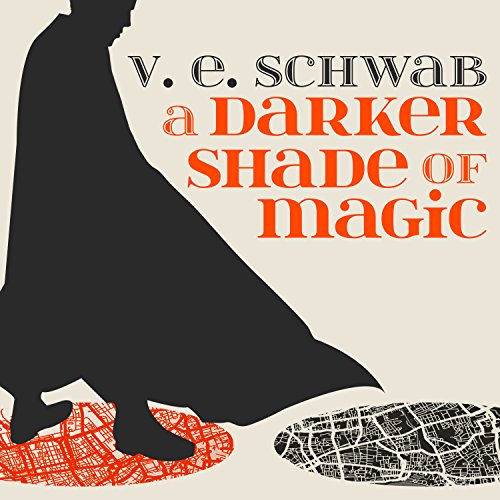
That story + narrator combination was full effect in V.E. Schwab’s A Darker Shade of Magic, the audio book which kept my ear-holes happy for the early part of February. A couple of years ago, I read Schwab’s Vicious which is one of the best superhero (supervillain) prose stories I’ve ever read. For A Darker Shade of Magic, Schwab turns her pen to a mix of magic and parallel worlds. As a long time comic book reader, I love parallel world stories and what Schwab with the concept is fantastic. Schwab’s concept of a magical multiverse is, if not exactly a new concept, but one that feels very fresh in how magic exists in each of the parallel worlds.

The characters were very well drawn, Kell as a pressured and roguish magician who can travel between worlds. Delilah (Lila) Bard is his co-protagonist, well initially she felt like a sidekick, but grew as the story grow. I also was slightly annoyed by her at first, but Schwab did a wonderful job of endearing the character to me by the end of the novel.

Steven Crossley is the narrator for this audio version and he’s got a very pleasant style. His narration, combined with Schwab’s at times poetic and lyrical storytelling, made me feel as if I was listening to a Dr. Seuss story. This is not a bad thing.

Continuing with my re-read and catch-up of Kate Elliott’s Crown of Stars series, I stormed through Prince of Dogs. Elliott does such great things with the characters in this one, introducing a couple of new players and continuing a Robin Hobb-esque method of torturing her characters. I’m glad I still have five more books to read in this series because this is such a fun, comfortable, and enjoyable series that hits every one of my check-boxes for epic fantasy. I’m still debating if I’m going to do a full write-up of each book in the series.

Yes, that is my copy signed
  
I loved the new character of Rosvita, especially her interactions with Liath and how she comes to an understanding of the events unfolding around her. I hope Rosvita sticks around and becomes more involved because she feels like an important person. Of course, to counter her wonderful appearance is the return of a character from King’s Dragon who was thought to be gone.


Next up was an impressive debut novel, Katherine Bonesteel’s The Cold Between. I’ll be posting my review of this one on the day it publishes (March 8), but I’ll just say right now that I was impressed with the book and Bonesteel’s novel.


Friday, October 30, 2015

Friday Round-Up: Hallowe'en Edition (Featuring Hill, Maberry, King, Priest, & Zelazny)

Time for a preemptive Friday Round-Up for Hallowe’en weekend, since the few books I’ve covered  recently have been very much horror, as has much of my October reading.

Earlier this week, my review of the audio version of Jonathan Maberry’s Patient Zero read by Ray Porter posted to SFFWorld. This is Maberry’s first Joe Ledger novel and I am hooked. I think this is the first series I'm going to "consume" audio-only.


Zombie stories are a dime a dozen, they come in all shapes and sizes and are very much a pop-culture phenomenon that have transcended the horror genre. Military Science Fiction is one of the most popular of subgenres of speculative fiction. Take those two great tastes, mash them up and add a wonderful amount of wit and you’ve got Jonathan Maberry’s Joe Ledger novels, which begin with Patient Zero.

Maberry masterfully crafted the character of Joe Ledger, a tough-as nails, smart character who epitomizes what it means to be an ultimate “warrior.” While he is a rugged wise-ass, he doesn’t come across as a macho asshole, either. That trap is one many a writer/storyteller has fallen into, but Maberry assimilates many archetypical elements of the hero in his construction of Ledger. Joe is a guy you immediately want to have a beer with, want in your foxhole, and don’t want to piss off. His comradery with Rudy comes across as a friendship that has seen a great deal; his interaction with Church is entertaining for Joe’s wise-ass snark against Church’s dry humor; and his introduction / assumption of Echo Team leader is pure gold.


The next day, my first Completist column in a few months posted to SF Signal. In it, I gush about two novels that climbed very quickly up my top horror reads, Cherie Priest’s Borden Dispatches, a superb Lovecraftian duet:


Lizzie Borden and her axe is as much of an American myth as she is an historical figure, but what if those forty whacks she took were in self-defense against creatures that bore a stronger resemblance to H.P. Lovecraft’s aquatic Cthulhu monstrosities than her father and step-mother? That idea serves as the launch pad for Cherie Priest’s darkly delicious “Borden Dispataches,” which is comprised of Maplecroft and Chapelwood. Priest magically mixes historical figures and events with the horror of Lovecraft’s Cthulhu mythos in an elegant concoction that seems so logical that it almost begs the question why hasn’t it been done before? Well, Priest’s storytelling skills and lyrical, completely convincing voice elevate these books to greatness.
..
The Borden Dispatches aren’t simply great horror tales (and they are at the top of the list of horror novels I’ve read in the past decade), but an examination of some less savory social structures. The primary protagonists are all women, with Lizzie/Lisbeth at *the* protagonist and inMaplecroft, her relationship with her lover Nance is central. Dr. Seabury, in his “diaries” expresses disapproval of such a relationship, but he is able to get past that and still help Lizzie. In Chapelwood, there’s a layered examination of the racism and gender bias of the day, Ruth’s marriage to a Puerto Rican man is not viewed kindly, and the aura of racism haunts Birmingham nearly as strongly as does the Lovecraftian monstrosities. Those two evils work quite well together under the roof of the Chapelwood Church.

In addition to those three books, I’ve spent much of my October reading on Horror. The fine folks at audible put together a marvelous audio adaptation of Joe Hill and Gabriel Rodriguez’s Locke & Key graphic novel series. (My favorite thing Hill has done and a top 5 all time comic/graphic novel series for me).

That one was free to audible members and will be for a few more days (until November 3), so I highly, highly recommend downloading it.

With my October audible credit, I went for a big, deep cut. A horror novel I read twice before, but many years ago (at least 20 years ago was the last time I read it). I’ve been wanting to revisit IT for a few years, but the piles of review books kept pushing it away, so I finally jumped back to Derry, Maine for Stephen King’s largest book, but with the shortest (and most un-Google-able title), IT. I am thoroughly enjoying it IT even if I can see some “issues” throughout (if Bill Denbrough isn’t Stephen King, then I don’t know what writerly character is)


Over the course of a couple of days, I read through Roger Zelazny's classic A Night in the Lonesome October and had a lot of fun playing the literary guessing game. Snuff might be a new favorite literary canine. 

In the end, this October for my All Hallows Reads, I revisited two big-time favorites and found two new writers whose backlist I need to go through.

Friday, July 31, 2015

Friday Round-Up: McClellan, Gladstone & Frohock @SFFWorld, Mind Meld @SFSignal

Here it is, the Friday Round-up you have all be waiting to read!

Last week, two new things at SFFWorld. First off, my review of The Autumn Republic the spectacular finale to Brian McClellan’s Powder Mage Trilogy:


The Autumn Republic picks up where The Crimson Campaign left the characters: Tamas thought dead, yet still working on his return home, his son Taniel thought dead and desperate to find his lost companion Ka-Poel, the gods Kresimir and Mihali thought dead, and forces are occupying Adopest. Add to that the investigator Adamat separated from his family as he tries to finish the one last job so he can return to his family. But before that, much of the early narrative focuses on Nila and Borabor in their search for Taniel. Taniel once saved Borabor from being executed and Nila the former laundry girl is developing powers she fears, but must learn to harness for the greater good.
…
The gods in this world took a not-so-passive role in world events in the previous two volumes. However, though it may have seemed all the gods were dead or contained by the end of The Crimson Campaign, Brian shows that may not be the case. Beings thought of as gods don’t die easily; in this world they have lived for many years and have gained a great deal of experience in surviving. There are cards yet to be shown in this poker game and the reveal of some of those cards is both surprising at the outset of the reveal, and completely logical once the reveal settles.

The following day, my interview with Max Gladstone went live.


You’ve been lucky with the covers Chris McGrath has provided for your books; not only are they striking images, but there’s no whitewashing and each cover manages to provide insight to the diversity and wonder of your books. How important do you think cover art is in general and do you think McGrath’s imagery has helped your books? 
Cover art is life. Art and design—and all the other sub-arts people talk about as “book packaging”—bring the reader into the story. They prime reader expectations, and present the particular book and the genre in general both to core readers and the wider public. (Think about deckled edges—yes, they’re sort of goofy and impractical, as Hank Green’s pointed out, but by evoking the bad old days when readers had to cut open the pages of their books themselves, they inspire a bit of subconscious awe even in readers who don’t know that history! This is a real book, they think as they struggle to turn the pages.) Whitewashing in cover design is such a big problem because of the message it sends about who is, and who is not, present, or welcome, in our weird conceptual playground. 
I have been really fortunate in Chris McGrath’s covers. He has a great eye for character and expression; when I first talked through the cover for Three Parts Dead with Tor, I was really nervous about what we’d get—I had visions of bare midriffs if not skull bikinis—and Chris just knocked the Three Parts Dead cover out of the park. Combined with Irene Gallo’s amazing creative direction on the project, we ended up with a book—four books, now!—that I love holding in my hand.


My most recent review (posted this past Tuesday), Teresa Frohock’s wonderful debut novel, MISERERE: An Autumn Tale:


Much of the novel reads like a legal thriller, except that the legality involves a revolutionary and an 8-foot tall skeleton god. That may sound outrageous, but Gladstone makes the premise supremely natural and plausible. The city-state of Dresdiel Lex has not quite recovered from its liberation from the gods, despite their wards still being present. Enter three parties with great interest: The King in Red afore mentioned 10-foot skeletal god (what a simple, effective and cool name with gravitas, and yes, I gave two measurements for him, his size fluctuates); a local figure named Tan Batac; and a holy man named Temoc. A lawyer named Elayne Kevarian tries to keep the peace between the conflicting parties and ensure a peaceful deal can be had.
…
Gladstone keeps the tension high throughout the novel in scenes between the King in Red and Elayne as they try to reach some kind of agreement about what is best for the city. There is also palpable tension in scenes featuring Temoc and his family, especially after the lengths to which he goes in the hopes of securing some kind of peace for the city while striking at the heart of his enemies. Through these characters, Gladstone shows the weight of the changing world on their shoulders, how much a war in the past affects the survivors and informs their every action. Max does a great job of setting a relatively measured pace for the middle portion of the novel – the fall out of that aforementioned event – until the novel builds to a powerful climax that was pure fantasy adrenaline.

On Wednesday, my second Mind Meld for July went live at SF Signal, (second simply due to how the Wednesdays fall o the calendar)

Also at SF Signal, my July Mind Meld went live, wherein I ask Renay, Marc Turner, Ilana C. Myer, Kenny Soward, Marion Deeds, Eric Christensen, and Delilah S. Dawson the following:


Maybe you picked up the book and thought it might be a fun distraction and it really made you think. Maybe a friend kept recommending it and you kept putting it off and it blew you away. Maybe the book exceeded the hype. So tell us about it/them.

Friday, July 17, 2015

Friday Round-Up: Gladstone & Kurtz @SFFWorld, Anders @SFSignal

Here it is, the Friday Round-up you have all been waiting to read!

A couple of weeks ago, I posted my review of a classic fantasy novel that definitely fits the bill of being “oldie but a goodie.” I refer to Deryni Rising by Katherine Kurtz, books which have long been back-burner books I anticipated reading, but some Twitter conversations with Fred Kiesche, Joe Sherry, Paul Wiemer, and Jonah Sutton-Morse pushed me to get the audible version:


Much of the action presented in the novel takes place in a short time and focuses on a relatively small cast. With Kelson’s coronation looming, he is aided by his father’s close advisor Alaric Morgan and Morgan’s cousin Duncan (a Monsignor). Unfortunately, because of Morgan’s Deryni blood, Brion’s widow Jehanna has no trust for the man who acts as a paternal figure to Kelson and seeks to have him tried for Brion’s murder. People of the Deryni heritage possess magical and psychic powers, causing many to fear them and, over the years, drive them out of Gwynedd. As of Deryni Rising and the years since they’ve been driven out, people of Deryni blood have come to be viewed as something akin to demons.

Despite the novel knocking on the door of the 50-year old mark, Deryni Rising manages to hold its own in terms of tone and style. In other words, for my reading tastes, it has aged quite well and perhaps that is why the novel remains in print and so well-regarded. What also came across, and perhaps this is aided by the wonderful narration performed by Jeff Woodman, is the characterization. His subtle tone and voice changes for each character went a long way in helping to make each character distinct, accentuating the strong characterization imbued by Kurtz herself.

This week, two new reviews were posted, on the same day no less, since they were both officially published on Tuesday, July 14. Let’s go alphabetically, which leads to Nightborn, the second novel in Lou Anders’ Thrones and Bones series for younger readers. I liked this one a lot and breezed through it in a couple of days:


In Nightborn, Anders wonderfully expands both the world and the cast in an organic fashion – the characters are a product of their world and the world is a character in and of itself. Because Karn and Thianna were such well-constructed people in Frostborn, Anders was able to provide a solid foundation for Desstra’s character and her ongoing internal conflict which was primarily who she was becoming versus the cultural expectations placed on her as a member of the Underhand-in-training. As wonderful as Anders infused his Karn and Thiann with life, doubt and believable, youthful humanity, I think he’s done an even more admirable job with Desstra here in Nightborn. Like Karn and his uncle in Frostborn, Desstra struggles under the shadow of a less than savory mentor figure, the selfish and self-centered elf Tanthal.

While Nightborntells a full story within its pages, it seems evident Lou is building something more. He could have easily brought these three characters together and set them on an adventure. But instead, he builds a strong basis for their burgeoning relationship; if they aren’t exactly friends by novel’s end they at least have a good understanding of each other and how their strengths build upon each other and finding out how these characters interact down their adventurous road is something I look forward to reading.

Last, and certainly not least (except that the word “Last” is in the title), is Max Gladstone’s fourth (published, but first chronological) Craft Sequence novel, Last First Snow:


Much of the novel reads like a legal thriller, except that the legality involves a revolutionary and an 8-foot tall skeleton god. That may sound outrageous, but Gladstone makes the premise supremely natural and plausible. The city-state of Dresdiel Lex has not quite recovered from its liberation from the gods, despite their wards still being present. Enter three parties with great interest: The King in Red afore mentioned 10-foot skeletal god (what a simple, effective and cool name with gravitas, and yes, I gave two measurements for him, his size fluctuates); a local figure named Tan Batac; and a holy man named Temoc. A lawyer named Elayne Kevarian tries to keep the peace between the conflicting parties and ensure a peaceful deal can be had.
…
Gladstone keeps the tension high throughout the novel in scenes between the King in Red and Elayne as they try to reach some kind of agreement about what is best for the city. There is also palpable tension in scenes featuring Temoc and his family, especially after the lengths to which he goes in the hopes of securing some kind of peace for the city while striking at the heart of his enemies. Through these characters, Gladstone shows the weight of the changing world on their shoulders, how much a war in the past affects the survivors and informs their every action. Max does a great job of setting a relatively measured pace for the middle portion of the novel – the fall out of that aforementioned event – until the novel builds to a powerful climax that was pure fantasy adrenaline.