Showing posts with label Robert Jackson Bennett. Show all posts

Wednesday, January 02, 2019

2018 Reading Year in Review

Been a few years since I did a reading year in review here at the Blog o’ Stuff, the most recent being 2015. For completeness sake, here are the previous years I’ve put up a reading year in review, 2014, 2013, 2012, 2011, 2010, 2009, 2008, 2007, 2006. Much of my writing has been divided between about twice-per-month book reviews over at SFFWorld and one or two posts per week at my beer blog, The Tap Takeover. So, without further adieu, of the 80 or so books I read in 2018, below are those I enjoyed the most.

OK, back to the books. I’ll start with some stats as I do every year: I read 80 books in 2018.  In 2018, I posted 28 reviews to SFFWorld and 3 to The Tap Takeover.

Here are some stats:
  • 34 2018/current year releases
  • 43 can be considered Fantasy
  • 24 can be considered Science Fiction
  • 25 can be considered Horror
  • 19 audiobooks
  • 14 total debut
  • 3 Non fiction

The first two (three if you consider slot #1 to be two books) on the list below are easily the top two reads of the year for me, the remainder can pretty easily swap places as they all were fantastic so I’m going alphabetical by author’s last name. Rather than a top 10 list of entries, like in year’s past, I went with 12. Because there are 12 months in the year.

The Calculating Stars and The Fated Sky by Mary Robinette Kowal. 

I’m lumping these two together because they form a single story and were published in back to back months. These are the two of the best Science Fiction novels I read this year, and some of the best Science Fiction I’ve ever read.


A wonderful, seamless blend of character study, hard science fiction, and alternate history. In 1952, the space race is in its infancy and the world is changed, one may say shattered, when a meteor crashes into the ocean off the East Coast of the United States. Told from the first person point of view of Elma, Mary Robinette Kowal gives a personal, bird’s eye view of the global catastrophe and humanity’s efforts to survive. Elma and Nathaniel are directly involved in the salvation efforts; Elma was a WASP (the Women Airforce Service Pilots) in World War II who also happens to be a physics and mathematics genius. Her husband is no slouch either, Nathaniel is chosen to become the lead engineer in the space program.

I was completely absorbed and enthralled with Elma York, a character who immediately leapt to the uppermost reaches of favorite first-person narrators. She’s a hero, a person we can all look up to for the “faults” in her character and how forward-thinking she is. I almost think of her as Leslie Knope (from the great TV show Parks and Recreation) with Nathaniel as her Ben for their hopeful attitude as individuals and their complementary, supportive, and empowering relationship as husband and wife. Hell, if this wonderful novel ever makes it the screen, there’s your stars.


In The Calculating Stars, Kowal takes an exciting time in human history, shakes it up on a global scale, makes it more exciting, and on top of that, takes us on an extremely, intimate personal story. This is the type of Science Fiction we all need right now, such a wonderfully forward-thinking and smart novel told through the voice of an immediately classic protagonist.

The characterization is remarkable throughout. Nathaniel, Elma’s husband, isn’t in the novel as much as he was in The Calculating Stars. This is logical and understandable, Elma spends much of her time in space while Nathaniel is back on Earth. However, their relationship, through their coded letters, is still a highlight and a backbone of who Elma is. As I said in my review of The Calculating Stars, their marriage is probably one of the strongest, most realistic, most loving, and supportive relationships I’ve ever read in any novel.


This book turned out to be the one I was most looking forward to reading and the one that absolutely delivered on the promise. I reviewed this over at my beer blog, here's an excerpt of the review:

As the title suggests, the book is quite evenly divided between “Barrel-Aged Stout,” which chronicles the rise of Goose Island and “Selling Out,” which chronicles Anheuser-Busch InBev’s purchase of the brewery. Soon after that purchase, AB InBev itself launched into a spending spree gobbling up regional craft/independent breweries that in hindsight, seems like a very calculated move, but at the time was a very jarring few years.
Candid, factual, gripping, emotional, educational, eye-opening, fascinating – all these things and more. Anybody who appreciates well-crafted beer will enjoy this book. Readers looking for a unique peek into how a multi-billion dollar conglomerate operates (regardless of your beer preferences) will be fascinated to see how an economic landscape can change in just a few short years.
Barrel Aged Stout and Selling Out is an un-put-downable book that tells a gripping story of perhaps the most important post-Prohibition handful years of Beer History in America. This is definitely a book that will remain within easy reach for reference and for re-reads.


From my SFFWorld reviews (linked above):

Our protagonist, accomplished thief Sancia Grado, is hired to steal a highly-sought after box. She also receives instructions not to open this box but of course curiosity gets the better of her. When she opens the box, she sees a key. It doesn’t seem like much until she grabs it and it speaks to her. Literally. This key, whose name is Clef, connects with Sancia very strongly in large part because of the plate in her head that makes her a scrived human. That “modification” is also part of why she’s such a good thief, she is able to gain a fundamental, almost elemental understanding of anything she touches. Sancia had no choice in this “modification” so naturally seeks revenge against the larger powers that be who allowed this to happen. Those powers are the four houses, or “campos” that run everything in the Venetian inspired city of Tevanne.
Foundryside is a deft combination and weaving of story that was incredibly difficult to set aside. With heist and crime fiction elements that are reminiscent of Scorsese’s The Departed, mythic, fantastic world building that reminded me of both Brandon Sanderson and Rachel Aaron*, and characters that both shine on their own and echo some iconic characters (I found myself comparing Gregor to Batman in some scenes), Bennett has once again unleashed an imaginative epic that is a reading delight.

What Does this Button Do? by Bruce Dickinson


For those not in the know, Bruce Dickinson is the lead singer of legendary British Heavy Metal band, Iron Maiden. Maiden happens to be one of my 3 or 4 favorite bands so this was a delightful book to “read.” I consumed this via audio book, with Bruce Dickinson providing the narration, that seemed the best way to read it and I think I was correct. In addition to having a powerful singing voice, Bruce is a charming fellow. Through this autobiography, a little light is shed on Bruce’s early years, with much of the book focusing on his time in the limelight with Iron Maiden. A must read/listen for anybody who enjoys music biographies and especially Heavy Metal music.


Sure, I’m grouping these two together, but I read them both this year and separated only by a few short months. From my two reviews (linked above): Heavy Metal/Hard Rock and Fantasy have long been intertwined, just look at some album covers from the 1970s and 1980s from bands like Iron Maiden, Manowar, or Ronnie James Dio (whose first band was called Elf) to more recent bands like Blind Guardian or Rhapsody. You’d think there’d be a novel like Kings of the Wyld years ago. You’d be wrong and sure a band of mercenaries and a world described in Rock/Heavy Metal metaphors is a neat hook, Eames has such great humor and storytelling chops that the novel rises above even that great idea.

Although Bloody Rose is set in the same world as Kings of the Wyld six years after the conclusion of the novel and features some of those characters (i.e. a major plotline in Kings of the Wyld was Gabe’s quest to save Rose), the novel can work on its own.


Eames’s tells his story in a very easy-going fashion which ultimately, exudes a great sense of fun. That said, Eames tackles some headier themes, of bad parents, PTSD, abuse, becoming a parent, and how responsibility can be smoothed over. Sure, he’s having a lot of fun with the story, but the story also has Some Things To Say.

Into the Drowning Deep by Mira Grant


As most folks know, Mira Grant is a pen name for Seanan McGuire. I’ve become a convert to all of her fiction over the past year and this is a very strong, creepy, science-fueled novel. Mermaids are real in this novel, and a deep sea expedition is trying to find them. This novel is equal parts horror and science fiction and quite simply a powerful, wonderful novel. I consumed this one via audio book and that added to the creepiness. As much as we all know mermaids are likely not real, McGuire packs enough real-life science into so much of the plot that the mermaids might just be believable. Great characters and a wonderfully brisk pace make this a fantastic read. I’m cheating a bit on this one because it first published in November 2017, but I read the audio early in the year and the paperback published in May 2018.

Scourged by Kevin Hearne


This book is the finale in Hearne’s long(ish) running Iron Druid Chronicles series. 10 books in total (9 novels and a collection of short stories as well as randomly released short stories) over the course of about 8 years, I’ve found these books immensely enjoyable. Hearne does a wonderful job of throwing as many world mythologies into the stew of this series with Atticus O’Sullivan at the heart of the story, especially as he’s become the lynch-pin of the Norse Ragnarok. This one may have made me shed a tear or two, but not in ways I expected it to do so.

We Sold Our Souls by Grady Hendrix


This was an absolute blast for me, especially given that my favorite genre of music is Heavy Metal. Over the course of a very short time, Grady Hendrix is becoming one of the preeminent horror writers.

In a brief amount of time, Grady’s become a leading voice in the horror genre and although I’ve only read one other novel (the outstanding My Best Friend's Exorcism) by him, it is clear to me he’s a writer with great skill and honesty in his fiction. In We Sold Our Souls Grady managed to combine two of my favorite things in the world with this novel: heavy metal music and horror fiction. To that combo, he added a phenomenal protagonist in Kris Pulaski, the lone woman in the band Dürt Würk and our primary P.O.V. character. Kris is at the bottom of her rope despite having a once moderately successful gig as the guitarist for 1980s Metal band Dürt Würk. That all changed when her one-time best friend and lead singer of Dürt Würk Terry Hunt broke away from the band on “Contract Night.” This was a night few can remember, but changed the fate of the band forever. Grady does a masterful job immersing the reader in the heavy metal world and playing with some dark elements like Black Iron Mountain, the driving force behind Terry’s new band Koffin.

Grady takes readers on a cross-country journey that never falters, never takes a guitar solo of a break and is a relentless novel. Highly, highly recommended. This novel as dark, cynical, fun, and a wonderfully paced vision quest.

October Daye by Seanan McGuire


For the series binge that brought me the most reading enjoyment, I have to go with this series. I traveled quite a bit in 2018 and what helped through many of those plane rides were books 2 through 7 of McGuire’s best known series. These are mysteries wrapped up in an urban fantasy setting that are wonderful page turners and a long-game of a character study on the eponymous Toby Daye. McGuire has a deft hand with character and an equally smart vision of world-building for a world that seems like our own, but is actually connected to the world of Fae.


Swan Song by Robert R. McCammon.
I’ll subtitle this as my favorite re-read of 2018


McCammon was up there with King, Straub, and Koontz in 1980s horror and this is his biggest, most audacious novel. Often compared to King’s The Stand, I would argue Swan Song is a stronger novel. I’d been wanting to re-read this novel for years and finally sucked it up and read it via audio. I do love using just one credit for these big audio books, especially when as masterfully performed as this one was by Tom Stechschulte. Nuclear War/World War III happens and the remaining bits of humanity are scattered across the world. Some make it out of the war OK, but not many, and all are changed in some way. Either by their experiences, but trinkets they pick up, or scarred “Job’s masks” they grow. This is a powerful, dark, yet hopeful look at the end and how humanity might claw its way back to life.

Blackwater: The Complete Saga by Michael McDowell


I blame Grady Hendrix for this one, who featured the old paperbacks in his Paperbacks From Hell overview of the Horror Genre of the 1970s-1990s. Counter to that, I did this one via audio since audible had the 6 short books of the series as one volume masterfully narrated by Matt Godfrey. This masterful, gothic, familial saga traces the legacy of the Caskey family from the appearance of a strange women named Elinor Dammert during the disastrous flood that struck Perdido, Alabama in 1919. The Caskeys have long established their place in Perdido’s lumber tycoons. What unfolds is pure beauty and joyful reading experience. I’d love to see Guillermo del Toro focus his film-making lens on this gothic saga.


Speed of the Dark by Elizabeth Moon


Moon is a master storyteller, having written what is arguably a very definitive Military Fantasy series in The Deed of Paksenarrion as well as a finely crafted Military SF series, Vatta’s War. While those novels are very good, Moon turns to something a bit more grounded – Autism and a potential corrective/cure for it. Set “twenty minutes from now,” Moon tells the story of Lou Arrendale and wonderfully captures his voice and the struggles he deals with on a daily basis. A powerful novel that deservedly received the Nebula Award for Best Novel

Sunday, January 03, 2016

Books in the Mail (W/E 2016-01-02)

The first post of 2016 brings five books in the mail from the prior week, three of which arrived yesterday (Saturday). One I will be reading next and the others, I'm not so sure, if and/or when.

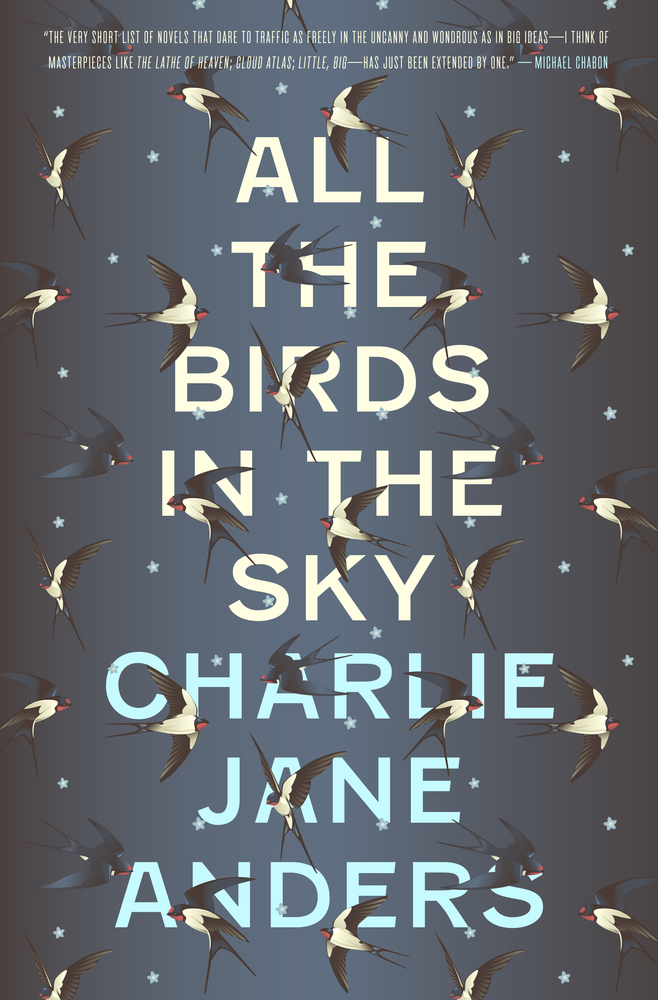
All the Birds in the Sky (by Charlie Jane Anders (Tor , Hardcover 01/26/2016) – As editor of io9, Anders is one of the most prominent voices in the genre, this is her debut novel. I read her short storie ”Six Months, Three Days and loved it.

From the editor-in-chief of io9.com, a stunning novel about the end of the world--and the beginning of our future

Childhood friends Patricia Delfine and Laurence Armstead didn't expect to see each other again, after parting ways under mysterious circumstances during middle school. After all, the development of magical powers and the invention of a two-second time machine could hardly fail to alarm one's peers and families.

But now they're both adults, living in the hipster mecca San Francisco, and the planet is falling apart around them. Laurence is an engineering genius who's working with a group that aims to avert catastrophic breakdown through technological intervention. Patricia is a graduate of Eltisley Maze, the hidden academy for the world's magically gifted, and works with a small band of other magicians to secretly repair the world's every-growing ailments. Little do they realize that something bigger than either of them, something begun years ago in their youth, is determined to bring them together--to either save the world, or plunge it into a new dark ages.

A deeply magical, darkly funny examination of life, love, and the apocalypse.


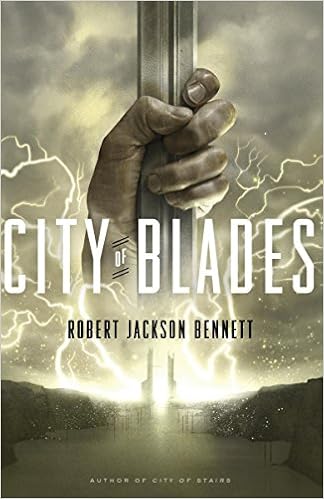
City of Blades (The Divine Cities #2) by Robert Jackson Bennett (Crown Trade Paperback 01/26/2016) – The first installment in this now trilogy was my favorite novel of 2014 and was recently shortlisted for the World Fantasy Award. Were it not for some puppy sadness, City of Stairs would have made the shortlist for the Hugo Award. So yeah, I’m reading this one.


A triumphant return to the world of City of Stairs.


A generation ago, the city of Voortyashtan was the stronghold of the god of war and death, the birthplace of fearsome supernatural sentinels who killed and subjugated millions. 

Now, the city’s god is dead. The city itself lies in ruins. And to its new military occupiers, the once-powerful capital is a wasteland of sectarian violence and bloody uprisings.

So it makes perfect sense that General Turyin Mulaghesh— foul-mouthed hero of the battle of Bulikov, rumored war criminal, ally of an embattled Prime Minister—has been exiled there to count down the days until she can draw her pension and be forgotten. 

At least, it makes the perfect cover story. 

The truth is that the general has been pressed into service one last time, dispatched to investigate a discovery with the potential to change the world--or destroy it. 

The trouble is that this old soldier isn't sure she's still got what it takes to be the hero.


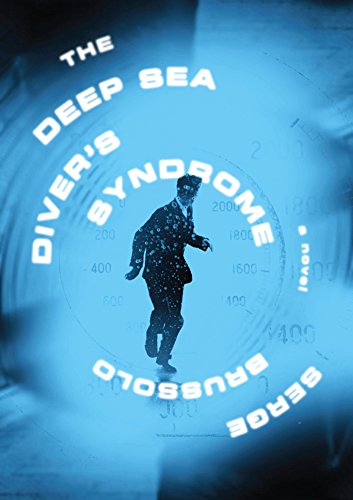
The Deep Sea Diver’s Syndrome by Serge Brussolo (Melville House Hardcover 01/19/2016) – This author of this French novel, translated for the first time into English, gets comparison to Stephen King & Philip K. Dick. Not bad company


In The Deep Sea Diver’s Syndrome, lucid dreamers called mediums dive into their dreams to retrieve ectoplasms—sticky blobs with curiously soothing properties that are the only form of art in the world. The more elaborate the dream, the better the ectoplasm.


David Sarella is a medium whose dream identity is a professional thief. With his beautiful accomplice Nadia, he breaks into jewelry stores and museums, lifts precious diamonds, and when he wakes, the loot turns into ectoplasms to be sold and displayed.

Only the dives require an extraordinary amount of physical effort, and as David ages, they become more difficult. His dream world—or is it the real world?—grows unstable. Any dive could be his last, forever tearing him away from Nadia and their high-octane, Bond-like adventures.

David decides to go down one final time, in the deepest, most extravagant dive ever attempted. But midway through, he begins to lose control, and the figures in the massive painting he’s trying to steal suddenly come to life . . . and start shooting.


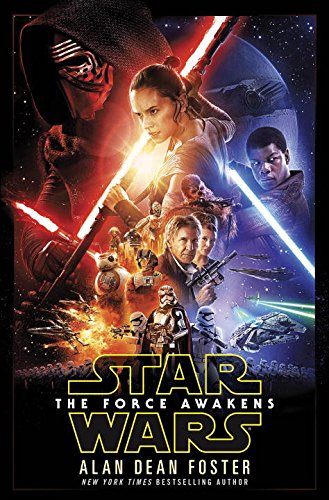
Star Wars: The Force Awakens by Alan Dean Foster (Star Wars Books / Del Rey, Hardcover 01/05/2016) – This book arrived yesterday (Saturday) and was waiting for me after I saw the film for the second time. In a nice nod, Foster was chosen to write this and Foster ghost wrote the novelization of A New Hope.


The official novelization of Star Wars: The Force Awakens, the highly anticipated blockbuster film directed by J. J. Abrams, featuring an 8-page color photo insert of thrilling images from the hit movie.

More than thirty years ago, Star Wars burst onto the big screen and became a cultural phenomenon. Now the next adventures in this blockbuster saga are poised to captivate old and new fans alike—beginning with the highly anticipated Star Wars: The Force Awakens. And alongside the cinematic debut comes the thrilling novel adaptation by New York Times bestselling science fiction master Alan Dean Foster.

Set years after Return of the Jedi, this stunning new action-packed adventure rockets us back into the world of Princess Leia, Han Solo, Chewbacca, C-3PO, R2-D2,and Luke Skywalker, while introducing a host of exciting new characters. Darth Vader may have been redeemed and the Emperor vanquished, but peace can be fleeting, and evil does not easily relent. Yet the simple belief in good can still empower ordinary individuals to rise and meet the greatest challenges.

So return to that galaxy far, far away, and prepare yourself for what happens when the Force awakens. . . .


The Bands of Mourning (A Mistborn Novel) by Brandon Sanderson (Tor, Hardcover 01/26/2016) – Third “Wax and Wayne” novel, I haven’t had the opportunity to read the second one yet.

The #1 New York Times bestselling author returns to the world of Mistborn with the follow-up to Shadows of Self

With The Alloy of Law and Shadows of Self, Brandon Sanderson surprised readers with a New York Times bestselling spinoff of his Mistborn books, set after the action of the trilogy, in a period corresponding to late 19th-century America.

Now, with The Bands of Mourning, Sanderson continues the story. The Bands of Mourning are the mythical metalminds owned by the Lord Ruler, said to grant anyone who wears them the powers that the Lord Ruler had at his command. Hardly anyone thinks they really exist. A kandra researcher has returned to Elendel with images that seem to depict the Bands, as well as writings in a language that no one can read. Waxillium Ladrian is recruited to travel south to the city of New Seran to investigate. Along the way he discovers hints that point to the true goals of his uncle Edwarn and the shadowy organization known as The Set.

Friday, October 23, 2015

Friday Round-Up NYCC 2015, Jim Butcher & Kameron Hurley @SFFWorld, Mind Meld @SFSignal

Big Friday-Round up this week, although nothing else new from me this past week. However, but last week was quite busy indeed. Last weekend (10/9-10/11), I attended New York Comic Con with a Press Pass. I was granted this Press Pass for the third year in a row (2013, 2014) largely because of my writings for SF Signal and SFFWorld. So, it was only fitting that I posted conference reports to both of those fine sites.


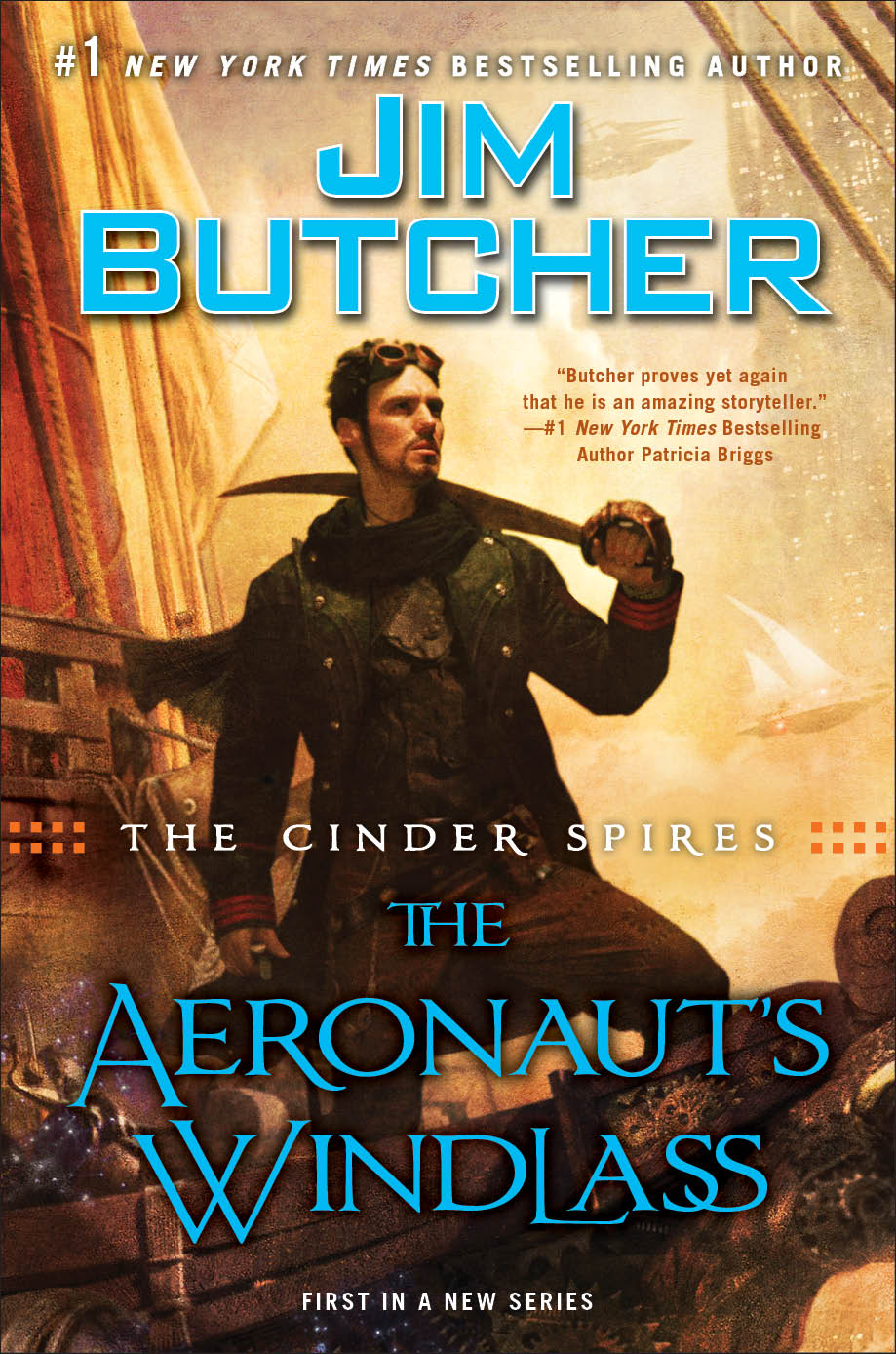
In between those two Con reports, on Tuesday, at SFFWorld a “conversational review” of Jim Butcher’s The Aeronaut’s Windlass was posted. The Marks Yon and Chitty and I all loved the book so this back and forth was quite fun.


Mark Y: As you’ve said already, Rob, Rowl is a wonderfully realised character, and I think my favourite – I can see a lot of fans for him. I must admit that I also noticed what Rob has said here, that the characterisation is dominated by females, not that that’s a bad thing. I liked it! But bearing in mind Jim’s previous female leads (Karrin Murphy, Molly Carpenter, for example) how do Gwendolyn, Bridget and even Folly stand up for you by comparison here?
Rob B: Have I mentioned that I like Bridget? Gwen was a great character, too. Very headstrong and I really empathized reading the scenes written with her as the POV. I don’t think she was as frustrating to the extent that her co-characters did, I got a sense that some thought she was a bit of a nuisance but again I didn’t see her that way at all. She was just a very headstrong, youthful character who acts before thinking. Folly is a lot of fun, too, even if she was more of a secondary character. I see big things down the road for her in terms of moving up to be more of a primary player. (Or maybe if the series is popular enough, a story from her POV would be fun).
Mark C: Gwen is definitely fierce and headstrong, and her view of the world is somewhat annoying at times, though her cousin Benedict certainly balances her out. Folly is also great fun, a character that could grow massively as the story progresses. I also liked Bridget (perhaps not as much as Rob… ), and her development through the novel is perhaps the best of the bunch – it’s great to see her take such a prominent role. I’d perhaps go as far to say that it is the male characters that fall behind here, or certainly don’t have the same level of development that the female characters have.


On Wednesday, my October Mind Meld posted to SF Signal wherein I asked Michael J. Martinez, one of my SFFWorld pals Victoria Rogers, Tim Pratt, Rhiannon Frater, Nick Sharps, Priscilla Spencer, Larry Ketchersid, Shana Dubois, Kristi Charish, and Helen Lowe:

Q: Who Has Your Back when Monsters Attack
We all know the monsters are coming, whether they are zombies, vampires, orcs, dragons, or aliens, they are coming – it is known. So who would you want by your side when they arrive?

We also posted an interview at SFFWorld with Kameron Hurley wherein she answered questions from Dag, Luke, and me.

Sunday, October 11, 2015

Books in the Mail (W/E 2015-10-10)

Here's the rundown of what arrived at Casa de Bedford this week..


City of Blades (The Divine Cities #2) by Robert Jackson Bennett (Crown Trade Paperback 01/26/2016) – The first installment in this now trilogy was my favorite novel of 2014 and was recently shortlisted for the World Fantasy Award. Were it not for some puppy sadness, City of Stairs would have made the shortlist for the Hugo Award. So yeah, I’m reading this one.


A triumphant return to the world of City of Stairs.

A generation ago, the city of Voortyashtan was the stronghold of the god of war and death, the birthplace of fearsome supernatural sentinels who killed and subjugated millions. 

Now, the city’s god is dead. The city itself lies in ruins. And to its new military occupiers, the once-powerful capital is a wasteland of sectarian violence and bloody uprisings.

So it makes perfect sense that General Turyin Mulaghesh— foul-mouthed hero of the battle of Bulikov, rumored war criminal, ally of an embattled Prime Minister—has been exiled there to count down the days until she can draw her pension and be forgotten. 

At least, it makes the perfect cover story. 

The truth is that the general has been pressed into service one last time, dispatched to investigate a discovery with the potential to change the world--or destroy it. 

The trouble is that this old soldier isn't sure she's still got what it takes to be the hero.


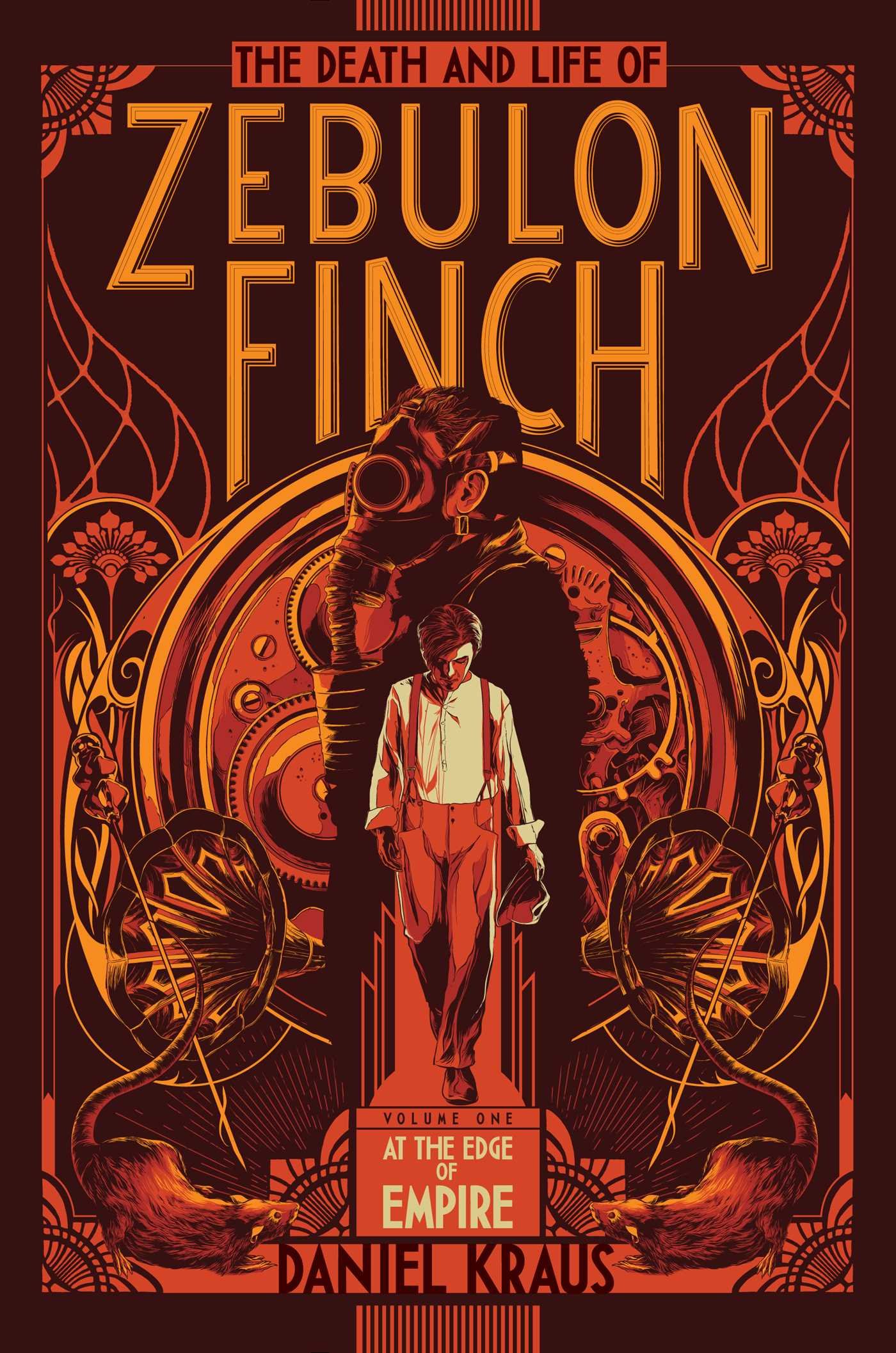
The Death and Life of Zebulon Finch, Volume 1: At the Edge of Empire by Daniel Kraus (Simon & Schuster Books for Young Readers 10/27/2015) – An ambitious looking young adult novel, bit and meaty with a snazzy looking cover, this is the final/hardcover of the ARC I received a few weeks ago.


May 7, 1896. Dusk. A swaggering seventeen-year-old gangster named Zebulon Finch is gunned down on the shores of Lake Michigan. But after mere minutes in the void, he is mysteriously resurrected.
His second life will be nothing like his first.

Zebulon's new existence begins as a sideshow attraction in a traveling medicine show. From there, he will be poked and prodded by a scientist obsessed with mastering the secrets of death. He will fight in the trenches of World War I. He will run from his nightmares—and from poverty—in Depression-era New York City. And he will become the companion of the most beautiful woman in Hollywood.
Love, hate, hope, and horror—Zebulon finds them. But will he ever find redemption?

Ambitious and heartbreaking, The Death & Life of Zebulon Finch, Volume 1: At the Edge of Empire is the epic saga of what it means to be human in a world so often lacking in humanity.


Monday, January 05, 2015

Reading Year in Review - 2014

I’ve done this for a few years now (2013, 2012, 2011, 2010, 2009, 2008, 2007, 2006), so in order to maintain my flailing credibility as a a genre blogger/book reviewer I have, I'm doing it again for 2014.

As I have in the past, I’ll start with some stats: I read (or at least attempted* to read) 74 books in 2014, depending on how you count omnibus editions. I say attempted because a few books I simply dropped because nothing about the book compelled me to keep reading. About one third of what I read were new/2014 releases.

In 2014, I posted 34 reviews to SFFWorld and 6 to Tor.com. In addition to the book reviews I posted to Tor.com, I published 7 posts in my Locke & Key reread (6 review/recaps of the Graphic Novel “chapters” plus intro post).

I did more for SF Signal in 2014, too. My Completist column continued with 15 installments in 2014. Keeping with the gender theme, 6 of the 15 Completist columns featured books by women. Still short of a fair and balanced 50%. I also became a regular wrangler of the popular Mind Meld feature, having organized 6 in 2014. Lastly, two of my book reviews appeared at SF Signal.

So all of that said, I think it was a fairly productive year, in terms of what I wrote/edited and posted – a total of 70 things I wrote were posted to those three Web sites. Plus whatever I rambled on about here on my blog. Whew…

Aside from the regular gamut of current year releases, some of my ‘catching up’ reads included a couple of installments of Butcher’s Dresden Files, a re-read of Tad Williams’s Memory, Sorrow and Thorn Trilogy, and a couple of installments of Elizabeth Moon’s Paladin’s Legacy series that fell by the wayside over the past couple of years.

Here are some stats:
  • 31 2014/current year releases
  • 45 can be considered Fantasy
  • 28 books by authors new to me
  • 28 books by women
  • 20 can be considered Science Fiction
  • 13 can be considered Science Fiction
  • 13 can be considered Horror
  • 6 can be considered 2014 debuts
  • *4 books I started and did not finish
I made a concerted effort to read more books by women, and on a quantity basis, I’ve doubled and almost tripled the number for past years, which amounted to 38% of my reading. I’d like to do better than that, but I feel as if I’m on a good path to getting closer to a 50/50 divide.

All that said, on to the categories for the 2014 … which,  I'll continue to call the Stuffies. As I said last year, this isn’t a typical top 10 or 12 or anything, but whatever you want to call them, here are some categories for what I read in 2014 and what I put at the top of those categories.


Rob’s Favorite Fantasy 2014 Novel(s)


I’m lumping Horror into Fantasy because (a) we do that at SFFWorld and (b) the two categories often overlap, at least more than Horror and SF. With all of that having been said, a fair number of novels I read, and those I enjoyed the most, had a mixture of horror and fantasy / dark fantasy.

Determining the Fantasy novel to take my very top spot is probably the toughest nut to crack in years of tallying up my favorite reads so I’ll just call it a draw because these two books worked so well for different reasons.

I’ll go alphabetical, which means for the third year in a row, Robert Jackson Bennett makes an appearance on this list. His offering for this year is set in the imagined city of Bulikov, the novel is the first Bennett has penned which does not take place in a version of our world (although the parallels and echoes are there), but rather a fully realized secondary world., City of Stairs by Robert Jackson Bennett and is one of those two I mentioned splitting the top vote.

Bennett seamlessly brings together elements of spy fiction and epic/secondary world fantasy together in City of Stairs. Think a female James Bond set in a novel of Steven Erikson/Ian Esslemont’s Malazan. Right, that’s not exactly an exact “high-concept” for City of Stairs but rather a jumping off point into something much more complex. In some parts of the world, Bennett’s world feels more technologically advanced even if parts of Bulikov seem to be stuck in time while much of it could be analogous to one or two hundred years in our past. There’s a steampunk/clockpunk feel to the world in places, but I wouldn’t say that is a dominant aesthetic of the setting; Bulikov seems to be at a nexus of many things. I couldn’t help but feel a strong resonance between City of Stairs and the landmark graphic novel Watchmen by Alan Moore and Dave Gibbons. Both begin (as superficially), politically charged mysteries, only to unfold into a story with more globally affecting ramifications. While there was only one (two if you include Adrian Veidt) godlike beings in Watchmen with many of the heroes no longer active, the sense of their absence and the void of power left in the wake of their absence felt similar here in City of Stairs in a way that worked very well for this reader.

There’s a lot to unpack in the novel and Bennett is such a smart and engaging writer that none of what he packs really bursts the seams; instead, City of Stairs is a smooth novel of near perfection. I cannot recommend this novel highly enough.

Myke Cole brought his Shadow OPS ‘trilogy’ to a close with the extremely satisfying Breach Zone:

With Breach Zone being the third installment of the Shadow OPS trilogy, Cole can focus on action and physical conflict since much of the character foundation for the protagonists (Alan Bookbinder, Jan “Harlequin” Thorsson, and to a lesser extent, Oscar Britton) and support characters was laid down so strongly in the first two volumes. This physical conflict is the complete war zone the island of Manhattan becomes when the rogue Probe Scylla makes a bold comeback after disappearing in Fortress Frontier to make war against the human (mostly American) government.


In many ways (as I said on twitter while reading the book), Scylla is like a sexier, younger (maybe more dangerous) version of the Marvel Comics/X-Men ‘supervillain’ Magneto. Over the fifty or so years since the X-Men first appeared, Max Eisenhardt aka Erik Lehnsherr aka Magneto has been cast in many different lights (Evil Overlord, Leader of the X-Men, Misunderstood Social Activist), but the one thing that has always remained was the character’s pursuit of mutant rights and that mutants were the next step in human evolution. He was the less peaceful counter-argument to Professor Charles Xavier. Like Magneto, Scylla was wronged by the system and is seeking retribution on a global (or even multi-planar) level. Her clash of ideals with Harlequin both as “Grace” and as “Scylla” is equally fascinating as the dialogue in the past is a strong parallel to her actions in the “present.”


Another top read of the year for me is technically partially a 2013 release, since it is a trade paperback compilation of comics published in 2013. I speak of course of Locke & Key: Alpha & Omega:

I think my copy of “Alpha & Omega” had a lot of dust mites in it or maybe I’m allergic to the glue used on the binding because my eyes kept watering up. Seriously though, it isn’t always the case that storytellers can promise something in the early stages of a story and not only deliver on that promise, but surpass the hopes of what may come. Hill and Rodriguez, for me, far surpassed my expectations.


The final issue, as mentioned, is a coda. Hill and Rodriguez aren’t letting readers go without some more tugging of the heart strings. In some of my earlier posts on the series, I mentioned the potential for redeeming Lucas’s character. I wrote those thoughts that without having read this volume, and I’m more than pleased with how the scenario played out. Tyler truly learned from his father and is not doomed to repeat the mistakes Rendell mad.


Fool’s Assassin by Robin Hobb is the other fantasy novel sitting atop all others I read in 2014, splitting the number one spot with City of Stairs:

Years have passed since readers were last privy Fitz’s thoughts, he is now married to his boyhood love Molly, his daughter Nettle (whom Molly’s first husband Burrich raised as his own and is now very much enmeshed in the life of Buckkeep court) has appointed him the Holder of the Withywoods Estate she’s been bequeathed. In short, life for the man many know as Tom Badgerlock is far more bucolic than the courtly intrigue in which he spent much of his life embroiled. Then one Winterfest, a traveling group of minstrels and performers arrive; these strangers are very different indeed and bear little resemblance to any folk to have passed through Withywoods as far as any of the staff and people can remember. Life soon returns to its leisurely pace for Molly and Fitz until Molly boldly proclaims she is pregnant. This is something she and Fitz always wanted for many of the children she bore were from Burrich, her first husband and the man who served as a father figure to Fitz.

I suspect this novel might be a bit divisive for readers, if a few twitter conversations I had can be insightful. When examined from afar, not very much happens in the novel over the course of the many wonderful words Hobb spins into the story. As such, the pacing of this novel is deliberate and because of Hobb’s delightful prose I never felt as if the events needed to be moving at a different pace. That said, the only elements that I found a little problematic is how certain events were recounted multiple times in Fitz’s internal dialogue with himself. Those were the few spots for me that slightly impeded the lovely stroll through our narrators’ voices..
Kameron Hurley’s The Mirror Empire, was also a standout and while not perfect, really blew me away:

Another aspect of Epic Fantasy Hurley plays with in The Mirror Empire (and likely The Worldbreaker Saga) is the trope of Destiny. With two of the main characters, Roh and Lilia, Destiny comes into play over the course of the story arcs. For Roh, he is fighting against his destiny of being a meager farm boy, he wants to be more. For Lilia, she has a destiny, that for most of the novel, which does not become clear to her despite what other people know of her.
Hurley is one of the most brutally honest writers spinning words in the genre today whom I’ve read; nothing is safe in her fiction (or her non-fiction for that matter). The world is uncompromising to a degree surpassed only by some of the more steadfast characters in the novel (Zezili, I am pointing my finger at you, and don’t think I’ve forgotten how much you are sticking to your guns with your promise to your mother Lilia). The world building here is nothing short of imaginative and eye-opening. In addition to the recast genders, Hurley leaves no leaf unturned. Well, rather, some leaves are best left unturned in this world because they’ll eat you, the plant life gets hungry. Some leaves and plant life are fashioned into swords and other weapons; bears are used as draft and mount animals, dogs are used as mounts, too.


Although I read both of Django Wexler’s Shadow Campaigns novels this year back-to-back and enjoyed the first one a great deal (The Thousand Names) the second in the series, which published this year, really took a hold of me - The Shadow Throne
 
One of the things that Wexler does so well in both of these novels is to really lay down a level playing field for gender and sexuality. The groundwork was laid in The Thousand Names with Winter’s character and again, the theme continues when she is reunited with her friend / companion / lover Jane, whom she last saw in the women’s prison from which she escaped prior to the beginning of The Thousand Names. What I found most effective in this point is how matter-of-factly Janus works with Winter and Jane to bring their female-only battalion into the military fold. In fact, Winter is the one who made the biggest deal out of it and was surprised at how amenable (and frankly figured into his plans) Janus was to Winter’s plan. Janus places the same rules and restrictions as he would on any military unit, but adds the caveat that the men alongside whom they serve may not be as friendly.

The Shadow Throne is an extremely successful second-in-a-series book, and nearly perfect in that regard. Wexler takes the characters we know from the previous volume and puts them in challenging situations which allows them to grow along the track charted in the first novel, with some surprises as well. Things hinted at in book one come more into the light as fully formed developments in the world / series and Wexler expands the cast in a smart and exciting fashion. It is a novel that, a week after finishing it, still has me thinking strongly about it, realizing upon reflection how very good it was/is, and anticipating the third book in the series.

Other fantasies that really stood out to me were:

  • Words of Radiance by Brandon Sanderson - "Brandon’s storytelling managed to transport me to Roshar quite quickly and would have done so even had I opened the pages of Words of Radiance without scanning those posts at Tor.com. … Words of Radiance was a thoroughly enjoyable reading experience for me, it delivered what I’d hoped it would deliver, and has me very excited for where Brandon is taking this series. Much as I thought The Way of Kings was an excellent Epic Fantasy novel, Words of Radiance is even better."
  • The Gospel of Loki by Joanne Harris - "Through a first-person narrative, Loki tries to convince us that, even if he isn’t the hero, he shouldn’t be considered the villain history and mythology have cast him. At best, Loki is a misunderstood being and one who is thrust into a situation that provided little chance for him to be anything other than a heel. At worse, he is the Father of Lies. … The story begins when Loki’s wildfire essence is extracted from Chaos by Odin, who bonds Loki as a brother. When Odin brings Loki back to Asgard, the distrust Odin’s people have for Loki is immediate, and most strongly exhibited by Heimdall, the watcher who sees all who not only distrusts Loki, but shows a great hate for the trickster. "
  • Sworn in Steel by Douglas Hulick - "One could easily say of Sworn in Steel, compared to its predecessor: more of the same. I don’t intend that to be a reductive back-handed compliment because I enjoyed Among Thieves a great deal and I was hoping for just that, more of the same. However, by expanding Drothe’s world, plumbing the depths of its history, and revealing that fact has been glossed over by years of assumption Hulick has brought more to the table. Two books into the Tales of the Kin and Hulick is building something quite enjoyable. The easiest comparisons is Steven Brust’s Vlad Taltos novels; as both authors employ a first person, intimate narrative with a healthy dose of snark."
  • Revival by Stephen King – Although this one hit some familiar King beats, I was enthralled from the very beginning of the novel. King rarely does first person narratives but after this, I’d love to see more. A fine balance in the story between hinting and revealing.


Rob Favorite 2014 Science Fiction Novel(s)


Rachel Bach / Rachel Aaron brought her Paradox series to a close (hopefully not permantly) with the thrilling Heaven’s Queen is the first installment of Paradox:

Bach builds each novel upon its predecessor extremely well. We start out in a personal story on an intimate level about the adventures of one character (and what a character Devi is) in the first book and by the third book the scale has expanded greatly (though the intimate nature of the narrative is still present). While the story begun in Fortune’s Pawn comes full circle here in the final novel, the universe has plenty of room for more stories about Devi or many for the characters who inhabit the world. If anything, the closure at the end of the novel, which acts as the closure to the series as a whole, was a little too neat and clean. This isn’t to say that Devi didn’t earn her ending, because she did.


All told, The Paradox Trilogy is edge-of-your seat science fiction that is fun and entertaining. The characters struck a great balance between believable and over-the top. The setting felt fleshed out and rich, Bach revealed enough to both make for a fascinating backdrop and also leave room for conjecture. In short, Wherever Rachel (Bach or Aaron) spins her tales, I’ll follow.

The fantastic two-headed writing machine James S.A. Corey (AKA Daniel Abraham and Ty Franck) continue the best space-based science fiction series on the shelves with the fourth installment of The Expanse; Cibola Burn (The TV show kicks off next year!)

Corey has always populated these novels with strong characters. We’ve come to know Holden fairly well over the course of these four novels, and while it is great to see returning characters (Bobbie Draper was a POV character and she returns as a POV character in the prologue here), meeting new people is always a feature. The standout here was Elvi, a determined scientist who fits the mold of ‘scientist hero’ in the same vein as many protagonists from the Golden Age aside from her gender. One of the most telling things we learn through her is how the “life” on New Terra cannot be really measured by any known means.


While Cibola Burn is the fourth book of an ongoing series, it is really can also work as an entry point for new readers; perhaps the best example of a series novel that can work as such. In other words, the book is set on a new world, with new characters and starting with a relatively new status quo from the previous novels. Not bad timing considering The Expanse is quickly going to be a television show.


The next in my batch of favorite SF is a mash-up of a parallel worlds tale and post-apocalyptic tale Extinction Game by Gary Gibson:

Through Jerry’s first person voice, we get an intimate portrait of a man losing his sanity despite surviving the initial apocalypse. He speaks with his dead wife, he wants to make sure the people responsible for her death, Red Harvest, get their just desserts. When Jerry finally ventures out of his ramshackle hovel, he finds other people.


One of the many strengths of Extinction Game is Gibson’s well-rounded, inclusive cast. While the protagonist is male, the two most prominent supporting characters are women. Those two women are in a romantic relationship with each other; and other characters come from diverse backgrounds, as well. This is only logical (and a logic many writers might be blinded to seeing) since by definition the characters pulled into the Pathfinder organization are literally from all over not just one Earth, but multiple Earths. Gibson portrays each character quite well and with an emphasis on how important their relationships are, especially how important trust is between them as the novel rushes forward.


I read about half as much SF as I did Fantasy this year, which is a slightly lower percentage than usual. There were a few standouts, but the one that stood out the most was Defenders by Will McIntosh:


What makes Defenders such an incredible novel is McIntosh’s pure elegance, the beauty of its simplicity. Each element of the novel, the characters, the situations, the world, the results of the world’s actions, organically feed into each other as the novel progresses. Oliver could very easily have been the typical geeky scientist and there are elements of that in him; he’s a bit socially awkward for example. However, it isn’t a defining trait. Wiewall could, in the hands of a writer with lesser skill at fleshing out characters, been the proverbial bitch on wheels so many women in power are painted as with shallow strokes.
However, in the (relative to other characters) small amount of space we are in Wiewall’s head, she comes across as a woman who is admirably head-strong, as well as flawed and nervous. In other words, she’s reads like a real, living and breathing person.


Rob's Favorite 2014 Debut(s)


My favorite debut of the year was from Tor in the US and was surrounded with a fair amount of hoopla Brian Staveley’s The Emperor’s Blades, the first installment in his Epic series Chronicles of the Unhewn Throne:

As is par for the course in many fantasy stories, the Emperor is murdered leaving the Unhewn Throne somewhat vacant with Kaden, the next in line, half a world away with the monks. Each of the Emperor’s three children must deal with conflict and pressure in their training; though the majority of the plot focuses on Valyn and Kaden’s training. Like many Epic Fantasies before it, so begins The Emperor’s Blades, the first installment of Brian Staveley’s Chronicles of the Unhewn Throne.

A recommended debut that brought, if not a sense of closure, a sense of completion to the first stage of Kaden, Valyn, and (to a much lesser extent) Adare’s journey at filling their father’s shoes and determining why they are required to fill his shoes prematurely. Staveley pushed many of the buttons I like to see pushed in Epic Fantasy with The Emperor’s Blades while living ample room to take the story in directions and paths of his own charting. What readers enjoy most about Epic Fantasy and why it is such a successful subset of the greater Science Fiction & Fantasy genres, is that they look for “more of the same but different, and done well.” Here, Staveley has delivered on what this reader seeks; an embracing of what is enjoyable about the genre in a fun, very engaging debut and launch book for Chronicles of the Unhewn Throne.

Another debut which I enjoyed is a slight nudge for 2014; the ebook published in August 2013 and the physical book published in December, which in the publishing world pushes the book to a 2014 copyright year. I wanted any excuse to highlight the very engaging debut from Jacqueline Koyanagi, Ascension, which is the first book of the Tangled Axelon series. Koyanagi takes many of the gender and identity issues highlighted in Anne Leckie’s award winning debut, I found Koyanagi’s storytelling far more engaging.


Alana Quick dreams of the sky and working on starships, she is a sky surgeon. She understands machinery much better than people, especially better than she understands her sprit guide sister Nova. One of Alana’s many complications is the rare illness that can be crippling if left unchecked. People come looking for Nova, and when Alana leaves her world and stows away on a ship at the suggestion of a member of the ship’s crew, Alana gets far more than she expected. Her job doesn’t pay well, so she hopes that stowing aboard the star vessel, the Tangled Axon, will allow her to connect the crew with her sister to help Alana get the money she needs to help bring her disability under control. Alana is also not white and prefers women to men, additional characteristics that set her very much apart from the typical Space Opera protagonist, and this is just one standout element in Ascension, Jacqueline Koyangi’s debut novel.

So ultimately, what do we have here with Ascension? Well, lots of good things and many of which are what Science Fiction needs. We’ve got a very unique perspective and voice in the main character – a disabled woman of color who finds herself attracted to the same sex. That alone sets the novel apart, and fortunately, the novel is not simply about what makes Alana stand out from a gender/sexuality/disabled perspective. If that were the case, the novel wouldn’t have been so engaging for me. Koyanagi doesn’t use Alana’s uniqueness to be the lone standout element of the novel and tells a good, engaging story, with great character interaction and plot momentum, and sets up a potential foundation for more stories to be told.


Favorite Backlist / Book Not Published in 2014 Read in 2014

Elizabeth Moon has really been impressing with her fantasy writing for the past few years so I shouldn’t have been surprised with how much I enjoyed Trading in Danger, which is the first book of the Vatta's War series. I have the four remaining books on Mount Toberead and I hope to get to them soon.


In Trading in Danger, Elizabeth Moon introduces readers to Kylar “Ky” Vatta as she’s being discharged from the military. Ky, fortunately, is a member of the Vatta family, owners of Vatta Transport Ltd a powerful space trading corporation based on the rich planet Slotter, so she can fall back on her family’s company as a means to an end. However, her heart was in the military and in the first chapter, Moon’s depiction of the Ky’s discharge is one of the strongest novel openings which immediately generates empathy and sympathy for the protagonist. It may seem a simple thing and with little introduction to or knowledge of Ky, but a great sense of emotional turmoil and shock is conveyed through what Ky experiences and how she deals with it through her internal dialogue. I immediately began rooting for Ky to succeed and felt that way over the course of the novel. I think I like the character of Ky Vatta even more than Moon's more famous character Paks.

Overall, I enjoyed the novel a great deal and plan on reading through the remaining books in the series sooner rather than late, which I define as ‘within the next year.’

A late entry to this section is a book I finished in December, a debut I've been meaning to read for the past couple of years.  Three Parts Dead by Max Gladstone was such a novel filled with a wonderful mix of inventiveness and familiarity, a novel that worked for me on many levels.

http://www.sffworld.com/2014/12/three-parts-dead-max-gladstone-craft-sequence-1/
The spine of the plot is fairly straight-forward as a whodunit/legal thriller, but like a great batch of chili, it is the subtle, evocative spicing ingredients where the novel shines. The back-history which informs the current day events evokes a rich tapestry, especially when characters continually refer to events like the God Wars as a defining time in the world. As the world is powered by gods, the church surrounding the faith to these gods plays a large role in the governing and politics of the world.
...
There’s a great balance in the characters who comprise the main cast; our protagonist is female, as is her boss. Another supporting character, Cat, has a strong character arc that parallels and intertwines with the main plot. These women have power in this world, or are the most forthcoming in their quest to gain a foothold with it. Despite the church’s power being represented by a man, Elayne exhibits no qualms about dealing with him and these people if not on an equal level, then a level on which she has a moral high ground. What makes these women such great characters, especially Tara and Elayne, is that they have agency of their own and are not defined by their relationship to men in the novel. Granted, Tara’s relationship with her former professor at college is an integral element in the novel, but it isn’t the only defining aspect of who she is. Cat, on the other hand, is a bit of a dependent character, but that dependency is not intertwined with her gender. She is, in essence, an addict.

I’ve been reading The Dresden Files by Jim Butcher since about 2006, shortly before the first and only season of the TV show premiered on the then SciFi Channel, but I loved the hell out of Cold Days the installment (14th overall) of the series published in 2013 


This is the closest thing resembling a review I’ve put to words for this, or any of The Dresden Files books, but I was grinning the whole time I was reading the book.


I’ve enjoyed every book in the series and this one seemed to increase the speed at which Butcher is driving towards that hinted at Epic Apocalyptic Trilogy set to close out The Dresden Files.

Plus, this one has more Odin in it and I’m a sucker for fun depictions of Odin and Butcher's depiction of Odin as Donar Vadderung is one of my favorites.

Also, Harry pals around with Santa Claus a wild hunt

Butcher often closes out his books with panache and that was no exception for this one.


Favorite ‘New To Me’ Author(s) of 2014

Disclaimer: I’m only considering writers from whom I read more than one book this past year…. There were a couple of writers who could fit this category, the first of whom is Django Wexler – and not because he’s a colleague over at Douglas Hulick published in is Tales of the Kin series: Among Theives and Sworn in Steel and look forward to where he takes these characters next.


Favorite Publisher of 2014


This is a three-way tie and one and the same, because Ace/ROC/DAW although separate imprints, and especially DAW being separate in many ways from Ace & ROC, still is marketed with the other two. So, in other words, I’ll say the SFF Publishing arm of Penguin. Granted, I may have received more books from them than other publishers, but the percentage of those titles which appealed to me, which I read and enjoyed I think is a bit higher, too. (I’m only mentioning my re-read of Memory, Sorrow and Thorn by Tad Williams, but not really counting it towards this MVP designation). Of course I’ve already mentioned Django Wexler and Doug Hulick in some detail, as well as Breach Zone the closing novel Myke Cole’s Shadow OPS ‘trilogy.’ Ace published two debuts excellent debuts I enjoyed:

The Bloodbound by Erin Lindsey - “The majority of the novel is told from Alix’s point of view, with some scenes through her King’s eyes. Alix comes across as an honest, almost-too-good-for-her-own-good protagonist torn between duty and passion. She finds her passion and romantic feelings for her closest companion Liam growing, so she acts upon it. The thing that throws a monkey-wrench into their relationship is the king himself. Rather, Alix acting as headstrong as ever; she goes against the orders of her superior Allan Green and breaks formation to save the King’s life. He wakes to find Alix draped over her. That physical interaction leads to more emotional interaction between the two.…I liked this one a great deal. Lindsey does a fine job of building tension as in the narrative and while I was hooked into the novel early on, I felt much more invested and glued to the page as the novel progressed. I genuinely liked the characters and want to read more about them. In a genre landscape where darkness in characters and grimdark tone seem to be rather prevalent, The Bloodbound was a refreshing change from that. There’s a great sense of hopefulness and positivity in the characters and paths through which the plot drives.”

The Midnight Queen (Noctis Magicae Book 1) by Sylvia Izzo Hunter - “Set in an alternate England somewhat reminiscent of the Regency era, where Magic is taught to young men at Oxford’s Merlin College, Sylvia Izzo Hunter’s debut novel wastes no time introducing the protagonist, Graham (nicknamed Gray) Marshall, and the situation which propels his plight through The Midnight Queen. Specifically, some of his college friends encourage Gray to join them in a night time escapade, a heist of sorts, which ends in tragedy and Gray receiving a forced dismissal from the school. Gray is taken by Appius Callender, the Professor who sent Gray and his friends on the ill-fated mission to Callender’s estate where Gray is something of a prisoner and indentured servant. The only thing that gives him respite during his dreary days is young Sophie Callender, the Professor’s middle child…. Hunter pulls off the affected and mannered speech very well, both in dialogue and narrative. Early in the narrative, Gray has a stammer that could indicate a genuine speech problem or simply nervousness. The more he interacts with Sophie; however, the less prominent his stammer becomes. Sophie also has a difficulty of her own to overcome, a block is placed on her magic while she was under the Professor’s roof. As the novel’s plot progresses, we (and Sophie herself) learn Sophie is much more than she initially appears to be.”

I will always sing the praises of DAW for doing such a fine job of ensuring their authors work remains in print and / or available for new readers. This is best exemplified in the Species Imperative omnibus they published in celebration of Julie Czerneda’s fantastic trilogy (comprised of Survival, Migration, and Regeneration.


I would also be remiss if I didn’t once again call out Orbit Books for continuing to publish great books (a few of which I called out earlier in this post, Cibola Burn and Defenders by Will McIntosh, as well as a great second book in Brian T. McClellan’s Powder Mage Trilogy, The Crimson Campaign; The Widow’s House, the fourth installment of Daniel Abraham’s hugely enjoyable Dagger and the Coin series.

Other Stuff

2014 saw the second anthology I helped edit (i.e review stories for inclusion and provide editorial comments) publish – Wars to End All Wars: Alternate Tales from the Trenches, featuring a reprint of an Elizabeth Moon story as well as the following new stories: “The Girl with the Flaxen Hair” by Igor Ljubuncic; “Wormhole” by Lee Swift; “Jawohl” by Wilson Geiger; “On the Cheap” by Dan Beiger; “One Man’s War” by G.L. Lathian; and “The Foundation” by Andrew Leon Hudson.

I also appeared not only on a podcast for the first time (SF Signal about Upcoming 2014 books), but three more after that. I suppose my voice isn’t as annoying to other people as it is to me:

I did another series review/catch up for Tor.com this year. Whereas last year I rewatched Orphan Black, in January and February of this year, I did a re-read of the dark, twisty and fantastic Locke & Key by Joe Hill and Gabriel Rodriguez.

I also re-read Tad Williams’s Memory, Sorrow and Thorn, but more about that next year except to say that its place as my favorite completed fantasy series was reaffirmed after finishing all three/four books.