Showing posts with label Military SF. Show all posts

Tuesday, January 20, 2015

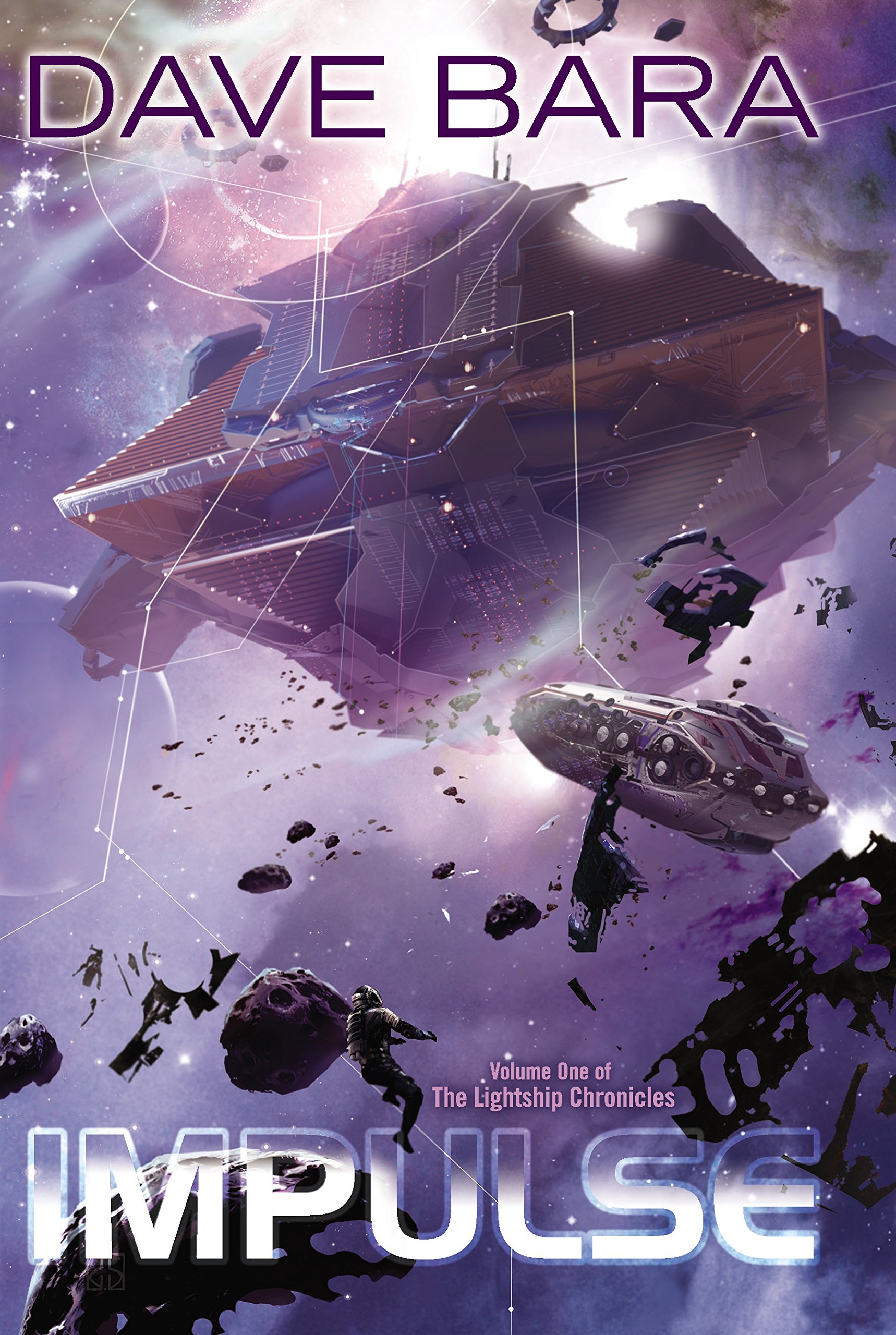
100 Page Thoughts: IMPULSE by Dave Bara

In what has become a regular feature here (this is the third such post, natch), here are my thoughts on a book after hit the 100 page mark.  The other two posts on this "feature" also highlighted debut novels.


Impulse, Dave Bara’s first novel is a Space Opera/Military Science Fiction novel set in the far future. Far enough into the future that “Old Earth” is not the focal planet for humanity in the story…at least after the first 100 pages. Like many Military Science Fiction novels, Impulse is told in the first person. In the case of Impulse, the viewpoint character is Peter Cochrane, who is assigned to the titular ship to investigate a disaster in space which claimed the lives of fellow military personnel, including his girlfriend.

Peter received this news from his father, initially, though the assignment comes from his superior. The orders he’s given are not 100% standard operating procedure as he is going into the mission under one set of orders and he’s told to “disobey your superior if that means being loyal to the Navy.”

Much of the narrative is laying groundwork for the novel, setting up the conflict Peter must face, introducing Peter and his supporting characters, and giving a hint of the future history of the human race out in the stars.

At the outset, the best ‘high-concept’/mash-up description I can give is Jack Campbell’s Lost Fleet plus James S.A. Corey’s Expanse with a slight dash of Fringe thrown into the mix. I like the future Bara has mapped out for this one and look forward to where the story goes and what Dave reveals about this future history.

Friday, June 27, 2014

Friday Link-Wrap: Wexler @SFFWorld and Lowachee @SF Signal

Here's the (seemingly now) weekly round up of reviews and assorted geekery which I've posted this week....

Tuesday my review of Django Wexler's The Thousand Names, first of his Shadow Campaigns military / flintlock fantasy series went up at SFFWorld:


War is raging between the Vordanai Empire and the Khandar; a rebelling colony led by a religious group known as the Redeemers. Into this fray (after a prologue, natch) we follow two characters; soldiers, who are embroiled in the military campaign. The first in Django Wexler’s The Shadow Campaigns, The Thousand Names is a military fantasy novel cut from a different swath of cloth. It involves guns and magic, falling into what has now come to be known as Flintlock Fantasy. The story is told primarily from the point of view of two soldiers: Marcus d’Ivoire and Winter Ihrenglass and their experiences in different parts of the military campaign, whose command is taken over by Colonel Janus bet Vhalnich, an enigmatic figure to say the very least.
...
A magical / supernatural backdrop is mostly hinted at through the majority of the novel until the denouement. Much comes to a head when the titular MacGuffin, The Thousand Names comes more intricately woven into the plot. At this point, the novel took a bit of a pleasant and surprising turn. It felt to me as if Django was channeling a bit Lucas and Spielberg because the story veered a bit into pulpy Raiders of the Lost Ark territory.


Military Science Fiction is and has been one of the most popular sub-genres in science fiction, but the books here are quite different from the typical first-person Soldier-in-Training-Then-Fighting-a-War story. Karin Lowachee made something of a splash with her debut novel, Warchild. It won the second WarnerAspect (Hachette’s SF imprint prior to Orbit) first novel contest, sported a glowing blurb on the cover from Tim Powers, and a terrific cover from Matt Stawicki.

Much of Military SF is written by white guys, and here we have a decidedly non-white guy (Karin grew up in South America and is a woman) giving us some excellent Military SF. In the military depicted in the novels, there is no real demarcation between men and women who serve, both serve and it is barely noted (especially in Warchild). In other words, the men and women fighting together is a seamless feature of the world rather than a stand out bug. Lowachee also broaches topics not often seen in Military SF like homosexuality and the damaging effects on children.

Wednesday, June 12, 2013

SFFWorld Review Round up - Stephen King, T.C. McCarthy, and Seth Patrick

We've got some new reviews over at the SFFWorld Blog!  Two from Mark, one from me. I'll do this alphabetically by author last name, which leads us to Mark's review of Joyland by the great Stephen King:


By using evocative language and vivid imagery on the cover (shocked red-headed girl in a green outfit), Stephen’s made sure that readers are aware that it’s a pastiche. It’s meant to have the tone and physical properties of a cheap pulp novel from the 1950’s, although as it’s from Stephen, the style and intelligence of the plot elevate it a little from those potboilers of yesteryear.

With such elements in mind, the plot’s pretty simple. It’s a coming of age tale, a story of a young man (Devin Jones), with a broken heart, who takes on a summer vacation job in Heaven’s Bay at a rather seedy and run-down amusement park called Joyland. There’s an old tale of murder (for what old Amusement Park doesn’t have a tale of murder in its shadows?), and Devin has to deal with some hard and deep life-truths along the way. There’s also a touch of psychic prediction - “There’s a shadow over you”, the fortune teller Madame Fortuna tells Devin – which is reminiscent of other King tales, although much of the beginning of the book is Devin working through the summer, learning the carny ‘Talk’, nursing his destroyed ego and making new friends before deciding that he likes the carny life. He decides to stop on instead of going to college, which means that he stays at Joyland after the main summer season, as the park begins to wind down to season closure and refurbishment.


Yesterday, I reviewed Chimera, the concluding installment of T.C. McCarthy's superb Military Science Fiction series, The Subterrene War:


Bleak, dirty, confined, stressful, uncomfortable… these words only begin to hint at the type of story McCarthy tells in Chimera, the concluding volume of the trilogy. Keeping these rather unpleasant themes together was the compelling power of McCarthy’s narrative. In Chimera, Stan is our first person narrator and the angst he feels throughout the novel is palpable. He resents his wife, he initially blames himself for his old partner’s death, and he hates the germline soldiers (genetically engineered super soldiers) most of all. Stan immediately dislikes his new partner whom who Stan gives a racially derogatory nickname/callsign of Chong. About the only characters with which he gets along are his wife’s son (who is the result of an affair with a nameless man from the factory where the genetically engineered soldiers are created) and the artificial intelligence housed in his body armor, Kristen.

When ‘out’ of the theater of war, at home, or in civilian life, Stan, like all citizens, is constantly monitored. He is unable to have any private discussion with his estranged wife and only when he is in the deepest, least civilized sections of the jungles does Stan come close to feeling unsurveilled. This ratchets up the paranoia level and the theme of no privacy is something the great Philip K. Dick returned to often in his fiction.

Over the weekend, Mark posted his review of Seth Patrick's debut, Reviver, one of the best debuts he's read in a while:

Wow. I wasn’t expecting this one to be that good. But it draws you in from the rather visceral and very chilling first chapter. Reading like a TV series script (and admittedly, it would make a great TV series), the reader is soon getting to know Jonah, his soon-to-be-retiring boss, Sam Deering, Jonah’s reviver colleagues and his friends as he tries to uncover the big conspiracy. They develop into characters the reader is interested in and then concerned about, using the idea of ‘What-if?’ and applying it to the logical consequences within a contemporary time-frame. It’s fast, surprisingly accessible and easy to read, and was a difficult-to-put-down novel in the first thirty pages. Whilst the ideas aren’t that new, the way they’re written is engaging and exciting. Most of all, the majority of the decisions the characters make and the actions they take are sensible and logical, although it does go a little ‘action-hero’ at the end.

This one really worked for me. The set-up’s great, the characters are likeable and easily differentiated. Though we do drag in the odd cliché along the way, there’s enough new revelation as well to make the story work.
Tuesday, April 09, 2013

Campbell and Crompton Reviewed at SFFWorld

Two weeks in a row for new reviews? Say it ain’t so! Seriously, I catch up with a late 2012 SF release and Mark reviews a book that provides a somewhat depressing snapshot of the UK’s most important and renowned comic artists.


I’ve been enjoying Jack Campbell’s Military SF/Space Opera hybrid novels set in The Lost Fleet universe for a couple of years now. He turns the tables a bit with The Lost Stars the series which kicks off with  Tarnished Knight  and takes a look at the "other side" of the war depicted in The Lost Fleet.


The narrative focuses on two individuals who form an uneasy alliance at the outset of the novel. Reeling from the defeat at the hands of the Alliance and “Black Jack” Geary, Artur Drakon and Gwen Iceni, once CEOs in the Syndicate hierarchy, must find a way to trust each other and rebuild their broken government. In addition to trying to recover from such a serious blow to their worldview and egos, Iceni and Drakon must quell any uprisings on Syndicate ruled worlds, while deflecting their Internal Services group – arguably the most powerful governmental organization in the Syndicate – as they rebuild their government.


…


The Tarnished Knight is a fine enough starting place for readers unfamiliar with Campbell’s Lost Fleet novels, for it can easily be read as a story about the issues surrounding post-war rebuilding on the side of the defeated. Campbell alludes to enough of what he’s created in this milieu not to exclude the newer readers. On the negative side, Iceni and Drakon, continually repeat how they must “do things differently than in the past, the Syndicate failed” both in their internal dialogue and to each other and other characters to the point where I was saying to myself “OK, I get it, we all get it.”

Alastair Crompton’s Frank Hampson: Tomorrow Revisited is a retrospective of the popular comic artist. Here’s part of what Mark had to say:


Though not a name many know well these days, his work in the 1950’s until the 1970’s, in particular in the UK, was instantly recognisable and iconic. Although Frank drew Westerns, adventure stories and even Biblical tales, it is his drawings of Dan Dare for the Eagle comic that set a phenomenally high standard, influencing contemporary artists such as Dave Gibbons, Graham Bleathman and Chris Foss. The first edition of the Eagle comic, published on the 14th April 1950, sold a previously unheard of number of copies – widely recognised to be about 900 000 – when comics in the UK typically sold less than 100 000 in a very good week* – and Hampson’s front page spread of Dan Dare, in colour, was seen to be a key factor in the comic’s continued success for the next twenty years. At its peak the Eagle has been estimated to have sold around one million copies a week.


…


In his engagingly honest Introduction Alastair explains his take on the issue and tries to keep things as even-handed and as accurate as possible through presenting many interviews and transcripts from details at the time. With rare photos and interviews throughout, the book shows what an innovative and inspirational place the offices of the Eagle must have been in the 1950’s and 60’s, although ultimately relentless and unforgiving.

Tuesday, December 04, 2012

The Red Knight by Miles Cameron and Embedded by Dan Abnett

Mark takes a look at a hot new Epic/High Fantasy from an established non-genre author trying something new under a slightly changed name and I pull a review from the (not so old) archives. Let’s take a look, shall we?


A book that’s been generating a fair amount of buzz on both sides of the Atlantic is the subject of Mark’s review. While The Red Knight; the first installment of Miles Cameron’s The Traitor’s Son Cycle publishes in the US in early 2013, Mark reviewed the UK edition (logically since he lives there) which published this past October (2012):


In essence we have a siege tale that starts simply but becomes increasingly more epic, both in scale and complexity. The book begins with The Red Knight setting out with his company of men and women to help people in need. A convent has been attacked and the people inside killed by something monstrous.
…

In terms of characters there is an impressive range, from the King and his knights to the lower class mercenaries, and from those in court to those living in the Wild. Fantasy readers usually enjoy such a complicated setup, as such a technique does give that impression of a broad canvas. However, some may find the stylistic conceit used here of moving from one character’s perspective to another, often after a mere paragraph, can be a challenge. I must admit that initially with each change it did take me a while sometimes to remember who each character was, what they were doing, and where a character had got to and why. It was a little annoying to find that sometimes once I had then remembered all of this, I was whisked off to another character to start the process again, although given time the characters become recognizable.


I pull a review from the archives today since I don’t yet have a review for the book I’m currently reading (The Coldest War by Ian Tregillis). Last year I read Dan Abnett’s original SF debut and the short review I wrote disappeared from its original place on teh intarwebs so rather than let it be relegated to The Nothing, I beefed up a bit for SFFWorld. Here's the standard linkage, cover, and review preview for Embedded:


In this milieu, the United Status (US) has settled worlds far beyond Earth, and it is on one of these planets in which the action in Embedded takes place. The planet designated Settlement 86, where conflict has existed between the US and the Central Bloc (Russian powers) for 300 years is where protagonist Les Falk has his consciousness literally embedded in the body of Nestor Bloom, a soldier on the front lines of the conflict. When Bloom’s body is shot, then Falk personality becomes the dominant mind in the body. This gives the first person narration familiar to many military SF novels a new twist and one that works very well over the course of the rather than just a change to the norm for change’s sake.
…
Abnett’s greatest skills in this novel are two fold –his ability to keep the tension high through minimal details. Not that the novel isn’t layered and detailed, but Abnett manages to hold enough information from the reader to keep the curiosity level very high, which translates into rapid page turns. The other skill that is readily apparent was his pacing, although the mystery/tension did help to build great pace.

Tuesday, September 18, 2012

Lovegrove's Aztecs and Smith's Vampires

Mark and I have a review each this week, which as all my millions and millions of readers know by now, is the norm here at the o’ Stuff. Mark takes a look at a novel that’s a bit of a turn for the writer whilst my review concerns itself with the (at the time of this blog post) latest in a popular mythologically-infused Military Science Fiction series.


James Lovegrove’s Pantheon sequence is growing in popularity and the latest in the series (book four) drops the “The” from the title and simply goes with Age of Aztec:


Two characters form the center of the novel, Stuart Reston – a rich, powerful man whose wife and child gave themselves over as sacrifices to the Great Speaker, the leader of the world. The other protagonist is Chief Inspector Mal Vaughn, who due to her superiors’ ritualistic deaths because of the inability to capture the Conquistador, becomes head of the investigation to learn the identity of the Conquistador and capture him. She suspects Stuart is her man and after a drug induced spirit-dream confirms his identity.

The first half of the novel, then, is much of a cat and mouse game between Stuart and Mal and all the while, Lovegrove does a good job of providing a believable background for the characters and the world in which they inhabit. The Aztec presence is everywhere, subverting what was once the culture’s societal norms and mores, as well as art and technology. Religion and science have become one under the Aztechnology banner as the gods (Quetzalcoatl, Huitzilopochtli, Tezcatlipoca, etc) granted the Aztec people much of the technology (flying discs, their weapons) that power their empire.

Mark takes a look at a vampire/mystery novella from L. Neil Smith and the book is Sweeter Than Wine:


The story set up’s pretty straightforward. J Clifford is the sort of guy you wouldn’t notice much about if you bumped into him in the street. No major debts, (in fact, all bills paid), nice to children and his small-town neighbours.

In reality, he’s a ninety-year old who was turned into a vampire in World War Two after a sexual liaison with a fantastic looking young girl. Now, in the twenty-first century, he’s a twenty-something-looking guy living a seemingly-respectable life as an unlicensed private investigator in New Prospect, Colorado, with a cat named Fiddlestring.
…

Neil’s vampire keeps some of the traditional vampire tropes and ignores the rest. J prefers to use a syringe, rather than a bite. In the manner of Matheson’s I Am Legend, vampirism is a symbiotic virus. Here it protects the vampire from disease, aging and injury, makes them strong and allows them to grow parts of the body back. In Smith’s version of vampirism, being bitten can actually improve the victim’s life: they become healthier and less prone to disease, and usually remember nothing about being the vampire’s meal.


Tuesday, July 03, 2012

McCarthy & Wilson Reviewed at SFFWorld

Just because today might be like a Friday here in the US with tomorrow being Independence Day, doesn’t mean the weekly reviews from Rob and Mark are skipped.

Mark takes a look at an SF novel marketed to the mainstream to much buzz in 2011 which just received its UK release. I review the sequel to an award winning debut novel that ranked very highly for me last year. The topic of my book review is Exogene, the second novel in T.C. McCarthy’s Subterrene Ware Military SF sequence


Germline introduced readers to T.C. McCarthy’s bleak future through the first person narrator Oscar Wendel war correspondent on the frontlines of the Subterrene War. Exogene is a return to that world and first person narration, but McCarthy shows us the war from a soldier on the frontline, Catherine. As the novel begins, Catherine is beginning to spoil, though McCarthy flashes back in many scenes to her life before she goes on the battle-lines. This is an effective way to parallel where her character is going with how she came to be who she is.

…

McCarthy storytelling takes a leap in Exogene, on a thematic level. Here, through the characters a greater examination of what makes a soldier on the front line comes to light – the morals, the stress, the anguish all from the point of view of a soldier. Bringing religion and faith is nothing new to war, as many a historian have said more men/women/soldiers were killed in the name of god than anything else, so it would seem a logical thing for artificially created soldiers to be molded by faith in God with their ultimate purpose is to fight and die for that God.…

More excitingly, this edition includes Living Night, a two page poem, and more than a dozen other rarer story fragments, including James’s only novel, The Five Jars (1920) a tale written possibly for, but felt to be too scary for, children in 1920. Some of the other extras here – Speaker Lenthall’s Tomb, Merfield House for example - are the only remaining fragments of the writing, a tantalising glimpse of some of James’ unfinished material. To be frank, the additions are interesting but not essential and Five Jars is a slim novel, but they are worth a read and do give the reader a better idea of James’ canon.


Are Robots the new zombies? Maybe, maybe not. Last year (2011), Daniel H. Wilson made a splash with his debut Robopocalypse , when the book that was sold to Hollywood before it was published, gets a UK release and a review from Mark:


Whilst borrowing heavily from SF tropes - the near-future zeitgeist of Michael Crichton, Cameron’s The Terminator franchise, or perhaps even D.F. Jones’ Colossus - this story of how humans created robots, were deemed unworthy by robot intelligence and eventually fought against their robot creations, is a fast-paced tale of endurance and survival.

…

Written by a robot programmer, it is as you might expect - enthusiastic, and efficient, yet in the end surprisingly unemotional and even rather clinical. Whilst the variety of the different points of view in each chapter is potentially interesting and the ideas in the novel are often great, there’s actually not a lot of depth behind the action, and the dialogue and narrative in particular generally leaves a lot to be desired in its banality and predictability, especially in the last sections where the book concentrates around the viewpoint of Wallace. I suspect many readers will balk at this aspect of the novel.


Tuesday, May 15, 2012

The Rob and Mark Show continues, but it converges with the continuing Jack Campbell show as one of my reviews is of Campbell’s latest installment in The Lost Fleet saga.

You folks know the drill by now, I give a bit about each book, insert the cover image and link to the review.

Mark’s review is one of those scientific examinations of a fictional world. In this case, Stephen Baxter is the author and the book is The Science of Avatar:


Mixing scientific facts with space exploration history, extrapolated to the Avatar universe and using the odd sprinkling of SF fiction to illustrate its points, this is a surprisingly entertaining book.

Though I’m not convinced that the target readership is big enough to make this book a best seller (but what do I know?), for fans of the film who want to look at the background behind the film using real science, this will be an interesting read.

Though there is science here, and that may initially put some readers off, it is written in such an accessible way that the book rarely lectures and mainly entertains. Thirty five short chapters mean that a topic or idea rarely becomes boring. Eight pages of colour images from the production drawings of the film help readers in understanding, or perhaps just reminding, what the spaceships, machinery and characters of the film look like.

As I said, the running theme here at the blog lately seems to be Jack Campbell’s Lost Fleet so I’ll close out this little spate of posts with my review of the second installment of the sequel series Beyond the Frontier Invincible:


Jack Campbell has been writing novels following the exploits of John “Black Jack” Geary and the Lost Fleet for well over a decade. Invincible is the second installment of the sequel series, Beyond the Frontier and the eighth novel in the sequence as a whole. With all that said, is it possible for such a well-established series to surprise readers and shuffle its well-established status quo? Campbell answers that question with a resounding yes in Invincible.
…

What drove the story the most for me; however, was the introduction of the two new alien races. In a universe – prior to this installment – Campbell only hinted at possible aliens in the form of the mysterious ‘enigmas,’ but with the introduction of two additional alien races, the status quo has changed drastically. Perhaps readers who have been following the series through the previous seven books feel introducing these aliens may have taken too long, but the impact was still not lost on this reader. The aliens themselves, at least the manner in which they are described on one hand, seems a bit trite but on the other, the characters can only identify these alien species in comparison to creatures/animals they know and with which they are familiar. Like much of Campbell’s novel, this element danced a fine line between being hokey and believable, but in the long run, worked for me.

Thursday, May 10, 2012

Jack Campbell Interview, Part the Second


I posted the second half of my interview with Military SF author Jack Campbell yesterday.  I also finished Lost Fleet: Beyond the Frontier Invincible on Tuesday and liked it very much, near the top of my favorite SF reads so far this year.  Without further ado, here's the link and a bit from the interview:

With the mythic feel you’ve injected into The Lost Fleet do you see yourself ever turning your pen to fantasy or is Military SF where you’ll be spending the forseeable future?

I have done a few fantasy stories. "Highland Reel" was recently accepted for the upcoming anthology Rip Off! edited by Gardner Dozois. "Mightier Than the Sword" was in the anthology Turn the Other Chick, and I've done a variety of short fiction in other magazines, especially Analog. Many of those stories have involved time travel of one sort of another, like my last story in Analog ("Betty Knox and Dictionary Jones in the Mystery of the Missing Teenage Anachronisms").

I also have a series ready to go that I call "steampunk with dragons." The Dragons of Dorcastle is SF, but with a fantasy feel in many ways. That series let me play with horse cavalry, steam locomotives, sailing ships and (yes) dragons. I just need a publisher to snap it up. One of the odd things in that respect is that I believe that readers are interested in seeing different things from a writer they enjoy, but publishers tend to want an author to keep doing the same thing that worked last time. I just need to convince a publisher that I really do know what I'm doing when it comes to writing stories.

Monday, January 30, 2012

Dauntless by Jack Cambpell, the First Lost Fleet Novel

It looks as if my appreciation of Jack Campbell's Dauntless (Lost Fleet #1) is closing out the book appreciations of Military Science Fiction Appreciation at Tor.com. I'd read Dreadnaught, the first in the sequel series last year and after having read Dauntless, I plan on reading the whole series.


I'm really glad to have been a part of this whole thing, considering the books included and some of the contributors (Myke Cole, David Drake, John Scalzi, and Jo Walton) who wrote thought-provoking and highly debatable topics.

Friday, January 20, 2012

March Upcountry by Weber & Ringo - My First Post at Tor.com

Last year, I became an official blogger/contributor at Tor.com and today, the first post I contributed (written a little over a month ago) went live! The cover of the book below gives away the nature of my post, which is part of the Military Science Fiction Appreciation theme at Tor.com, a review/appreciation of March Upcountry by David Weber and John Ringo. So click the cover or the title of the book and comment away!

Tuesday, November 22, 2011

Sullivan's Theft of Swords and Campbell's Stark's War @ SFFWorld

We’ve got another couple of reviews up at SFFWorld this week, one I’ve been reading / seeing very good things about for a while and a re-issue of an author’s earlier work under his current pen-name.

We’ll kick off this week with my review. Michael J. Sullivan’s Riyria series has been garnering praise and sales over the past few years of its eBook/Small Press life. Recently (as in within the past year) Orbit signed Michael to a contract and is, with the launch of Theft of Swords, is republishing the six books as three omnibuses over the course of the next three months. Here’s my thoughts on the first omnibus, officially releasing today::


Theft of Swords contains The Crown Conspiracy and Avempartha, the first two novels in the series. Both books are just over 300 pages. In The Crown Conspiracy, readers are introduced to the anti-heroic duo of Royce Melborn, thief, and Hadrian Blackwater, mercenary. The two call themselves Riyria and are known as a competent duo, working outside the thieves’ guild taking on jobs for nobles who would otherwise not want to get their hands dirty. Off the bat, Sullivan gives readers fully formed protagonists who are mature and not the typical farmboys of epic fantasy. In fact, the feel I got throughout The Crown Conspiracy was more of a Sword and Sorcery adventure rather than Epic Fantasy. Of course, the comparison many people have made to Royce and Hadrian is to Fritz Leiber’s Fafhrd and the Grey Mouser. The relationship between Royce and Hadrian comes across as something that is long-standing, but as of yet, Sullivan has yet to reveal how the two rogues became partners. This is good, and a pattern of storytelling which Sullivan employs throughout The Crown Conspiracy and a method at which he excels.

…

Orbit was very smart to (1) snap up these books, (2) pair up two books into one omnibus, and (3) publish the three books in three months. Sullivan’s story fits in great with some of the recent books published by Orbit– I’d recommend the books to people who enjoyed the ‘old-school fantasy’ aspect of Daniel Abraham’s The Dragon’s Path and Brent Weeks
Night Angel Trilogy. Outside of books published by Orbit, readers who enjoyed the modern sensibilities and characters of Scott Lynch’s Gentleman Bastard sequence and/or readers looking for something to remind them of the fun, adventurous romps associated with Fritz Leiber’s Fafhrd and the Grey Mouser sword and sorcery tales will find a lot to like in The Riyria Revelations.


In my review, I take a look at Jack Campbell has really been getting a lot of attention for his Lost Fleet Military SF saga this past year and more: sales and good buzz/reception. So what do the publisher’s do? Re-release the back list written under his real name, John G. Hemry, under his better known pen name Jack Campbell. Mark has a review of the first in Stark’s War series, which is also the name of the first book Stark’s War:


For books over a decade old they are pretty good mil-fic that Space Opera fans will like. Ethan Stark is the sergeant of a squadron in a future where people (well, Americans) have returned to the Moon and are establishing a network across the solar system. There is conflict between the corporate businesses of America and other countries, though the actual fighting takes place using multinational sponsored troops and materiel. There are ‘regular’ soldiers but the command groups, being too valuable to risk, are away from the battle-zone, directing actions through the lieutenants. All of this is shown live on television, which contributes by paying the costs of the engagements.
…
This is a solidly written, action-packed mil-SF novel. The action scenes are very well done, the main characters fairly straightforward, the motivations for the characters clear. There’s the odd misstep – a scene where an infantryman has to explain World War One to his fellow soldiers seemed a little far-fetched to me, and later an explanation of the Spartans, for example – but really most readers will probably know what to expect and have bought it to meet those criteria: heroism, difficult odds, impossible situations, they’re all here, but in the end it is the loyalty and bravery of the soldiers and their camaraderie against all complications (usually of the bungling officer kind), and their function to get a difficult job done, that makes this a worthwhile read. In these days of Big Brother television, it’s interesting to see a possible consequence in future war.

Tuesday, August 30, 2011

Firedrake, Realms of Fantasy, and The Departure at SFFWorld

We’ve been averaging two to three new reviews per week at SFFWorld lately, and this week is no exception, one from me, one from Erfael/Joey, and one from Mark/Hobbit. I’ll do the link/cover/review blurb in that order.

I returned to the worlds of Warhammer 40,000 with the second book in Nick Kyme’s Tome of Fire Trilogy, Firedrake

Nick Kyme continues the story of a group of Salamanders, a unit of Space Marines in the military force of the Emperor’s Imperium of Man, in Firedrake, the middle book of the Tome of Fire Trilogy. Picking up not quite immediately from the events of Salamander, Kyme follows two storylines throughout the novel, one of which continues Da’Kir’s story, whose dreams and past continue to haunt him as he becomes initiated as a Lexicanum in the Librarium, in other words, the lowest rank of a military Librarian responsible for overseeing communications, memoirs, history of the chapter, as well as providing support in psychic battles against enemies of the Imperium of Man. As a Da’Kir undergoes the initiation rituals under Pyriel, Da’Kir’s dreams may have a large meaning, and Da’Kir himself may be the one prophesized in the legendary Tome of Fire, the bible for the Salamanders.
…
As he follows two storylines, Kyme plots them in different fashions. For Da’Kir’s story, it is a very mythic and singular journey. Da’Kir searches within himself, takes part in a symbolic, mental, and metaphysical struggle to become a member of the Librarium. I thought these scenes provided a sense of power, not just for Da’Kir, but for the overall mythology of the Salamanders themselves. This ‘hero’s journey’ also served to show how, even though the Salamanders are part of the overall Imperium of Man, they have a unique almost nationalistic identity that is their own.

Another review of short fiction from Joey/Erfael, this time the August 2011 Realms of Fantasy
This issue contains 5 short stories, an article on female fantasy artists, a Folkroots column on monsters, and a full complement of reviews of fiction (epic fantasy, urban fantasy, YA fantasy), games (PnP and electronic), graphic novels, and movies.…

The final short story of the issue, Alan Smale's "Leap of Faith" brings us an other-dimensional retelling of the fall of Sodom, or in this case Shadom. The main character, Levi, seems to be some sort of engineer or construction worker doing God's work in helping to shape the world. While his exact role is never made clear, the impacts of his work are: He leaves his family for months at a time, and when he comes back he has difficulty adjusting back to normal life. This story picks up just as he's returning from one of his times away from home when he's approached by a pair of "angels", bluish fellows who seem to know that the town is in trouble. In fact, they're there to save Levi and his family because they're the only good people in Shadom and God has further work for them. The family drama here and the way it fits into the Biblical story is interesting. There are some turns of phrase that feel very out of place in the setting until one realizes that this may not be a world quite like our own. This was an engaging, enjoyable story on which to close the issue's fiction section. RECOMMENDED


Mark returns to a favorite, Neal Asher, for a review of what turns out to be a new series titled The Owner, the first of which is The Departure:

Things in this dystopia are generally not good. A too-large population using too many of its finite resources without the luxury of expansion means that life for many is arduous. The idea that ‘Power Corrupts’ is important here, and there’s clearly something rotten in the socio-political structures of the 22nd century. The world government administrators live in luxury, whilst the ZA (Zero Asset) people, who contribute nothing to the economy, exist on a bare minimum with limited health care and facilities.
…
It’s all pretty fast, dramatic stuff. We have city riots, shootings, space planes destroyed, the deliberate bombardment of the Earth from space, and combat in space aided by construction robots. As you might therefore expect, the body count is very high (though that is something that you rather expect with Neal’s books.) This is definitely not one for the faint hearted in that respect, with body parts flying around and blood splashing many a wall.

Similarly, like many of Neal’s other books there’s also lots of cool gadgets: the robot-like Shepherds ensuring control, spider guns (robotic tanks), readerguns (that can recognise their targets before shooting them), space planes with scram jets and lots and lots of lethal guns.

Sunday, July 24, 2011

Books in the Mail (W/E 2011-07-23)

A nice mix of books from the Penguin imprints in this week’s batch of books.

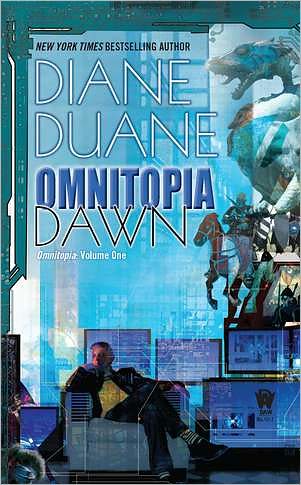
Omnitopia: Dawn by Diane Duane (DAW Paperback 08/02/2011) – Mass Market Paperback re-issue of the SF Near Future Thriller with a hint of fantasy from Duane, which is a bit of a departure from her recent Young Adult fantasy series and a return to the Adult SF side of things which is where Ms. Duane first hit the NY Times Bestseller list. This is the first of a series of books. I skipped it when I received the hardcover last year, but may remedy that decision with the paperback.

A near-future techno-thriller from New York Times bestselling author Diane Duane.

It's the first quarter of the twenty-first century, and "massively multiplayer" on-line games have been around for a couple of decades. In an increasingly wired and computer-friendly world they've become a form of entertainment so popular they're giving television and films a run for the money. And the most popular gaming universe of all is Omnitopia, created by genius programmer Dev Logan.

For millions of people around the world, Omnitopia is an obsession, a passionate pastime, almost a way of life. Omnitopia is a virtual place where dreams come true-players can create their own universes within the game's structure, and participate in the profits if their piece of the universe is a hit. Ten million players routinely play in Omnitopia, and at any given time, nearly a million of them are on-line, living in a world more real to them then their own.

Worldwide, Omnitopia is now as much a culture as a game. Participants can become involved in it in a hundred different ways. Some game as if their lives depended on it, spending thousands of hours, or thousands of dollars, or both, on quests in search of "game glory" among their fellow players. Some game only to acquire sufficient in-game "value" to become entitled to become subcreators themselves, able to build new levels and start raking in the so-called "one percent of infinity" which is the leveler's share of the profits. But there are also people who don't game at all, preferring to use the massive platform simply to explore its worlds, or to interact with other participants. Some people do nothing but design on-line weapons and other items for Omnitopia gamers, and sell them-or act as brokers, buying and selling game artifacts to order. Some subcreators do the same kind of design and creation, but for tailored Microcosms or slices of them: these are the "unreal estate" dealers. Some players speculate in game "gold" on the success or popularity of Microcosms, rather than actually playing in them. And of course there are thieves and swindlers, cheaters who live to find the loophole in the game that will outside it in the real world.

Now Dev and his people are preparing to rollout a major new expansion to the Omnitopia system. And even as players, staff, the media, and the heavy hitters on the world financial scene wait eagerly for this fast-approaching and momentous event, there are others preparing to play a very different game-one that is meant to strike at the heart of Omnitopia and bring the entire system crashing down....


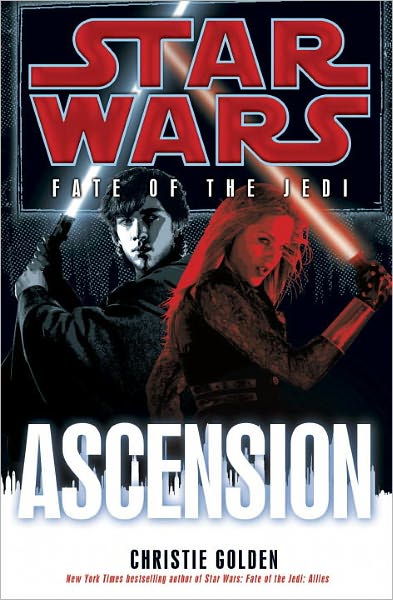
Ascencion: (Fate of the Jedi Book Eight) by Christe Golden (Hardcover 8/16/2011 Del Rey). Eight and penultimate book in the latest series involving that pesky Skywalker clan.

How long can the Jedi remain in power? How far will the Sith go to rule supreme? What chance do both stand against Abeloth?

As Luke and Ben Skywalker pursue the formidable dark-side being Abeloth, the Lost Tribe of the Sith is about to be sundered by an even greater power—which will thrust one Dark Lord into mortal conflict with his own flesh-and-blood.

On Coruscant, a political vacuum has left tensions at the boiling point, with factions racing to claim control of the Galactic Alliance. Suddenly surrounded by hidden agendas, treacherous conspiracies, and covert Sith agents, the Jedi Order must struggle to keep the GA government from collapsing into anarchy.

The Jedi are committed to maintaining peace and ensuring just rule, but even they are not prepared to take on the combined threats of Sith power, a deposed dictator bent on galaxywide vengeance, and an entity of pure cunning and profound evil hungry to become a god.


Dearly Departed by Lia Habel (Del Rey Hardcover 10/18/2011) – Debut novelist Lia Habel gives readers a cool-sounding mash up of future SF, steampunk, romance and the ever-popular zombies.

Love can never die.

Love conquers all, so they say. But can Cupid’s arrow pierce the hearts of the living and the dead—or rather, the undead? Can a proper young Victorian lady find true love in the arms of a dashing zombie?

The year is 2195. The place is New Victoria—a high-tech nation modeled on the manners, mores, and fashions of an antique era. A teenager in high society, Nora Dearly is far more interested in military history and her country’s political unrest than in tea parties and debutante balls. But after her beloved parents die, Nora is left at the mercy of her domineering aunt, a social-climbing spendthrift who has squandered the family fortune, and now plans to marry her niece off for money. For Nora, no fate could be more horrible—until she’s nearly kidnapped by an army of walking corpses.

But fate is just getting started with Nora. Catapulted from her world of drawing-room civility, she’s suddenly gunning down ravenous zombies alongside mysterious black-clad commandos and confronting “The Laz,” a fatal virus that raises the dead—and hell along with them. Hardly ideal circumstances. Then Nora meets Bram Griswold, a young soldier who is brave, handsome, noble . . . and dead. But as is the case with the rest of his special undead unit, luck and modern science have enabled Bram to hold on to his mind, his manners, and his body parts. And when his bond of trust with Nora turns to tenderness, there’s no turning back. Eventually, they know, the disease will win, separating the star-crossed lovers forever. But until then, beating or not, their hearts will have what they desire.

In Dearly, Departed, steampunk meets romance meets walking-dead thriller, spawning a madly imaginative novel of rip-roaring adventure, spine-tingling suspense, and macabre comedy that forever redefines the concept of undying love.


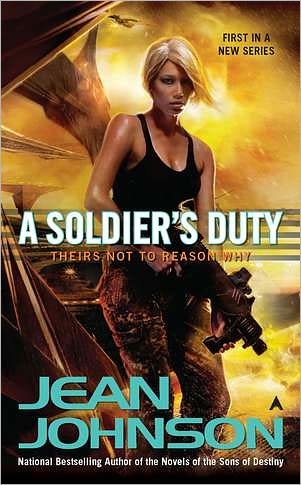
A Soldier's Duty: (Book One of Theirs Not to Reason Why) by Jean Johnson (Ace Mass Market Paperback 09/26/2010) – Johnson is a popular and accomplished romance novelist who decided to try her hand at Military SF, the story sounds interesting enough.


Ia is a precog, tormented by visions of the future where her home galaxy has been devastated. To prevent this vision from coming true, Ia enlists in the Terran United Planets military with a plan to become a soldier who will inspire generations for the next three hundred years-a soldier history will call Bloody Mary.


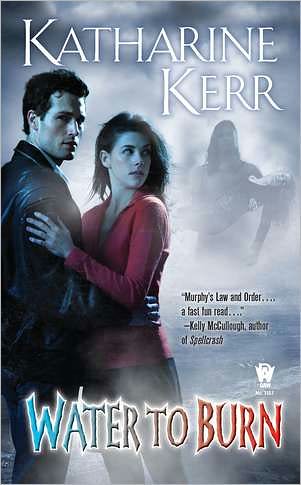
Water to Burn (Nola O’Grady Book 2) by Katherine Kerr (DAW Mass Market Paperback 08/02/2011) – The second book in the urban fantasy/paranormal romance series Kerr launched this past January. Two books in the same series in one year is a nice thing for fans of a series and Kerr knows how to draw in readers.

Secret agent Nola O'Grady is back and ready to save San Francisco from all evildoers, alien and otherwise. With the aid of her bodyguard and lover Ari Nathan, Nola's new mission is to track down and apprehend the mysterious "Brother Belial," head of the now-dispersed Chaos cult-and a possible invader from another dimension.


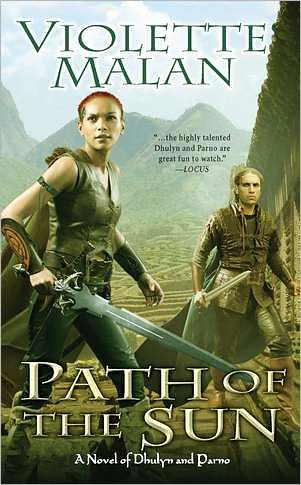
Path of the Sun (Dhulyn and Parno #4) by Violette Malan (DAW Paperback 08/02/2011) – This is the fourth book in a series about a couple of rogues…

Mercenary partners Dhulyn Wolfshead and Parno Lionsmane think they're escorting the Princess of Arderon to her wedding with the new Tarkin of Menoin, but the Mercenary Brotherhood has a secret mission for them: find out what happened to the two Brothers who were sent on assignment to Menoin a year ago-and vanished.

Once in Menoin, they discover that the Brothers' disappearance is linked to a series of killings. And when the Princess of Arderon's corpse is found mutilated in the same way as the others, Dhulyn and Parno track the killer into the Path of the Sun, an ancient labyrinth from which people sometimes never return...


Friday, May 13, 2011

Ruminations on Various Books

No new review from me this week, at least yet, but quite a few from other SFFWorlders, which I'll mention below. I finished up On Basilisk Station by David Weber a while back and put together a review, which I'll post to SFFWorld next week. Right now I'm in the middle of Leviathan Wakes and really enjoying it. It started out well, then summarily began to kick serious ass about 150-200 pages into the book. I'll be posting the review to that the following week.

Before jumping aboard Leviathan Wakes, I finished up The Keep by F. Paul Wilson and thoroughly enjoyed the book. Creepy, moody, realistic, great sense of secret history and a true page-turner. Discussion is still relatively light over at the SFFWorld Book Club.

As for this week's reviews, Mark reviewed a plethora of older books. The first of which is a reissue of a book from about a decade ago, Kristin Britain's debut novel Green Rider
In 1998, Kristen Britain had her first novel published. Now reissued in a lovely re-covered edition, along with the two sequels, First Rider’s Call and The High King’s Tomb (and with the fourth, Blackveil, due in paperback later in 2011), now’s a good time to catch up with the series.

Being over a decade old, perhaps unsurprisingly, my first impression was that Green Rider is determinedly old-fashioned, albeit smoothly written and charmingly positive. Its heroine, Karigan G’ladheon, is clearly heroic in the traditional fantasy sense that she is a young merchant’s daughter with a destiny, to be a Green Rider. Green Riders are King’s Messengers, the fantasy equivalent of the Pony Express, which powers of access above and beyond the normal.


Mark reviewed another, older and perhaps forgotten classic of the genre The Lincoln Hunters by Wilson Tucker
The Lincoln Hunters is one of those worth resurrecting. The tale itself is now seen as rather mundane perhaps, but at the time of its original publication it must have been a great entertainment.

It is essentially a time travel tale. In the rather sterile future of 2578, the company Time Researchers sends people (called ‘Characters’) back in time to record or transcribe famous events for home museums.

On this occasion Benjamin Steward is sent as part of a team to audio-record President Lincoln’s so-called ‘Lost Speech’ of May 19, 1856 in Bloomington, Illinois. This was a speech about slavery that, according to history, was so impassioned that the reporters there forgot to write it down. (Alternatively, it has been suggested that the speech was conveniently lost afterwards due to its controversial content.)


Newly christened SFFWorld Moderator PeterWilliam took a look at up-and-coming author Liane Merciel's Heaven's Needle, her second novel
Liane Merciel released a well-crafted debut effort (The River Kings' Road) a little over a year ago, it was a fine effort, in fact an effort that left an indelible imprint which served as a reminder to acquire and read her next work as quickly as reasonably possible. After having just completed the final, and stunning, four hundred and seventy-three pages, I am rather relieved. Perhaps a fear of the worst prevailed as I approached this new work, but happily it can be said that Merciel suffered no sophmore jinx. Heaven's Needle is everything one might have hoped for, and certainly everything Merciel promised it would be in previous interviews.


In Heaven's Needle, Merciel brings back a couple of characters from the first book, Kelland and Bitharn, and a host of new characters. The new characters include a Thornlord of Ang'arta, a sigrir warrior woman of the far northern seas, some novices of Celestia, some tragic, if ethically challenged, victims and a Mad God. Based upon the ending of the first book, it was expected that the next novel of Ithelas was due to take a darker turn - and it sure did that.


The last book Mark/Hobbit reviewed is Greybeard another reissue of a Brian Aldiss Classic:
Much of the tale is therefore what we see and what happens to them along the way. Britain’s aging population is now pretty much made up of isolated enclaves, people huddled together to maintain their survival with little or no interest in the outside world.

This might sound depressing and morbid, yet the pages turn quite nicely. There’s a nice combination of things happening in the now and flashbacks to earlier times. I was surprised to recognise a very similar approach and style echoed in what I’ve recently read in David Wingrove’s Chung Kuo series, Son of Heaven. (Though perhaps that should not be too much of a surprise - Wingrove and Aldiss worked together on their non-fiction history of SF, Billion Year Spree in the 1970’s and later Trillion Year Spree in the early 2000’s.)

The context of Greybeard is quite interesting in that Aldiss has been widely quoted as a critic of the popular author of the time, John Wyndham, stating that The Day of the Triffids author was writing ‘cosy catastrophies’.