Showing posts with label 2012 Book Review. Show all posts

Sunday, February 14, 2016

Books in the Mail (W/E 2016-02-13)

Three books this week at the o' Stuff. It seems there's a general down swing in review copies circulating, at least for those arriving at my house. No complaints here as Mount ToBeRead is quite large at this point.
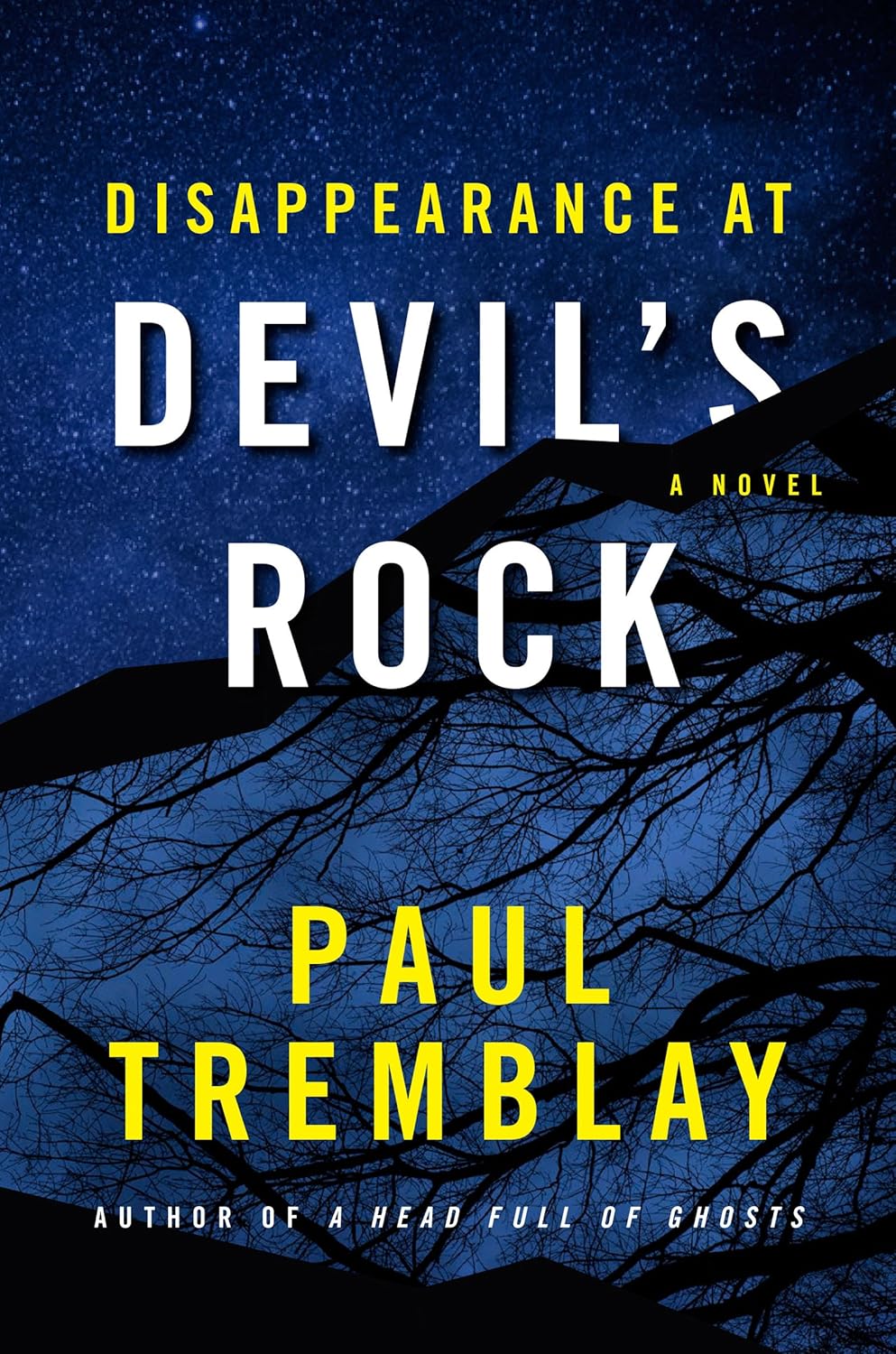

Disappearance at Devil's Rock by Paul Tremblay (William Morrow Hardcover 06/21/2016) – This one follows a year after Tremblay’s extremely well-received A Head Full of Ghosts

A family is shaken to its core after the mysterious disappearance of a teenage boy in this eerie tale, a blend of literary fiction, psychological suspense, and supernatural horror from the author of A Head Full of Ghosts.

“A Head Full of Ghosts scared the living hell out of me, and I’m pretty hard to scare,” raved Stephen King about Paul Tremblay’s previous novel. Now, Tremblay returns with another disturbing tale sure to unsettle readers.

Late one summer night, Elizabeth Sanderson receives the devastating news that every mother fears: her thirteen-year-old son, Tommy, has vanished without a trace in the woods of a local park.

The search isn’t yielding any answers, and Elizabeth and her young daughter, Kate, struggle to comprehend Tommy’s disappearance. Feeling helpless and alone, their sorrow is compounded by anger and frustration: the local and state police have uncovered no leads. Josh and Luis, the friends who were the last to see Tommy before he vanished, may not be telling the whole truth about that night in Borderland State Park, when they were supposedly hanging out a landmark the local teens have renamed Devil’s Rock.

Living in an all-too-real nightmare, riddled with worry, pain, and guilt, Elizabeth is wholly unprepared for the strange series of events that follow. She believes a ghostly shadow of Tommy materializes in her bedroom, while Kate and other local residents claim to see a shadow peering through their windows in the dead of night. Then, random pages torn from Tommy’s journal begin to mysteriously appear—entries that reveal an introverted teenager obsessed with the phantasmagoric; the loss of his father, killed in a drunk-driving accident a decade earlier; a folktale involving the devil and the woods of Borderland; and a horrific incident that Tommy believed connects them.

As the search grows more desperate, and the implications of what happened become more haunting and sinister, no one is prepared for the shocking truth about that night and Tommy’s disappearance at Devil’s Rock.
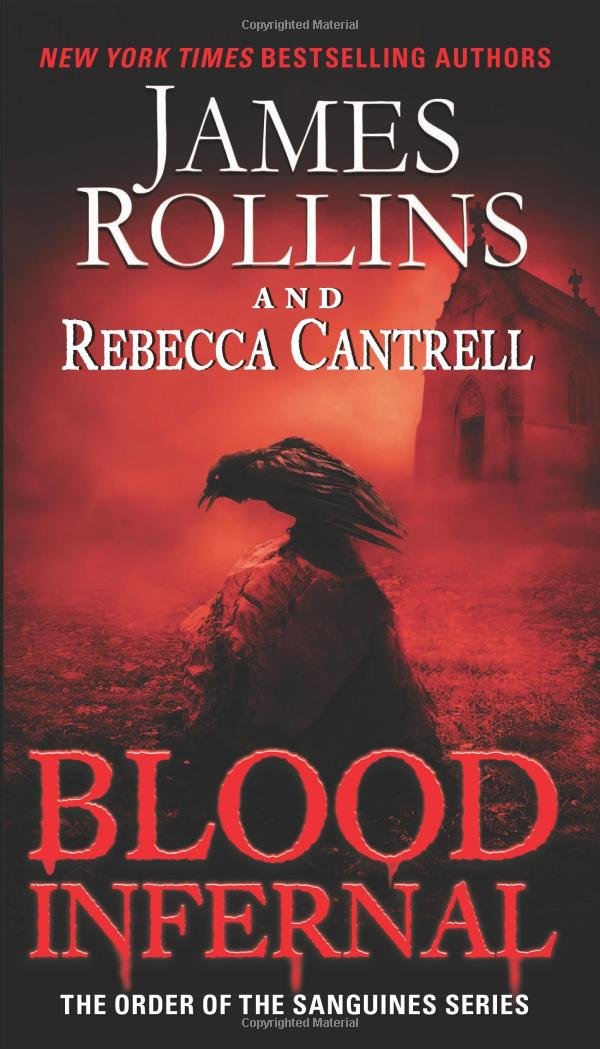

Blood Infernal (The Order of the Sanguines #3 by James Rollins and Rebecca Cantrell (William Morrow Mass Market Paperback 01-26-2016) - Rollins and Cantrell wrap-up their vampire trilogy.


What price will we pay for true salvation?


As an escalating scourge of grisly murders sweeps the globe, archaeologist Erin Granger must decipher the truth behind an immortal prophecy, one found in the Blood Gospel, a tome written by Christ and lost for centuries. With the Apocalypse looming and the very foundations of our world crumbling, Erin must again join forces with Army sergeant Jordan Stone and Father Rhun Korza to search for a treasure lost for millennia, a prize that has already fallen into the hands of their enemy.


The forces of darkness have crowned a new king, a demon named Legion, who walks this Earth wearing many faces. His reach is beyond measure—even the walls of the Vatican fall before him. To have any hope of saving the world, Erin must uncover the truth behind man's first steps out of the Garden of Eden, an event wrapped in sin and destruction, an act that damned humankind for eternity.
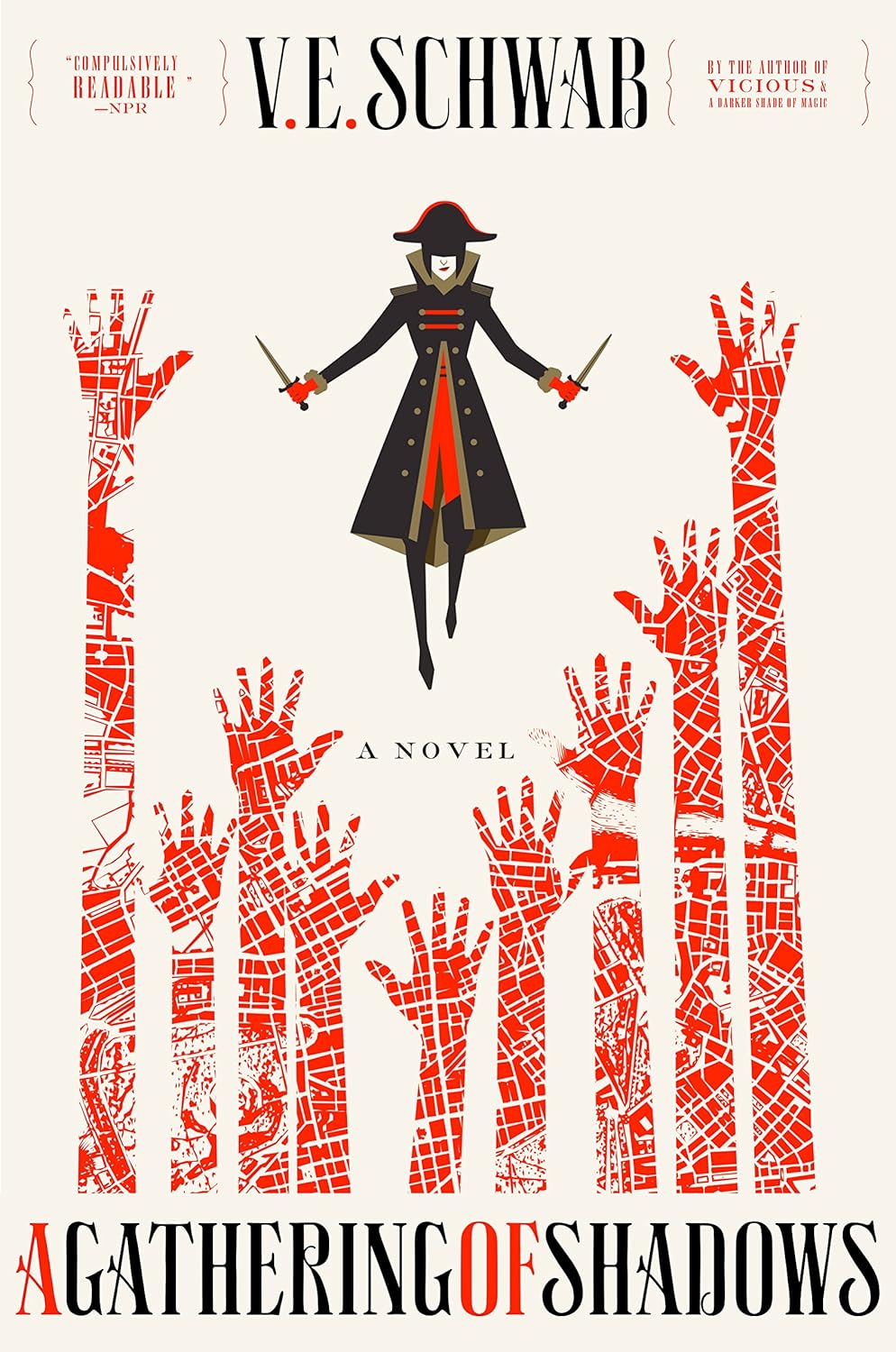

A Gathering of Shadows (A Darker Shade of Magic #2) by V.E. Schwab (Tor Hardcover 02-23-2016) – I just finished listening to the audio edition of A Darker Shade of Magic the first in the series a couple of days ago, which was excellent. I’m looking forward to diving into this one.


Four months have passed since the shadow stone fell into Kell's possession. Four months since his path crossed with Delilah Bard. Four months since Rhy was wounded and the Dane twins fell, and the stone was cast with Holland's dying body through the rift, and into Black London.

In many ways, things have almost returned to normal, though Rhy is more sober, and Kell is now plagued by his guilt. Restless, and having given up smuggling, Kell is visited by dreams of ominous magical events, waking only to think of Lila, who disappeared from the docks like she always meant to do. As Red London finalizes preparations for the Element Games-an extravagent international competition of magic, meant to entertain and keep healthy the ties between neighboring countries-a certain pirate ship draws closer, carrying old friends back into port.

But while Red London is caught up in the pageantry and thrills of the Games, another London is coming back to life, and those who were thought to be forever gone have returned. After all, a shadow that was gone in the night reappears in the morning, and so it seems Black London has risen again-and so to keep magic's balance, another London must fall.

Thursday, December 20, 2012

Ahmed and Cobley Reviewed at SFFWorld

A couple of days later than usual, but we’ve got another debut for Mark’s review and my review is (as it was for last week) the second installment of a trilogy. Our reactions from last week (Mark thumbs down and me big thumbs up) are a bit reversed, though my thumbs aren’t quite as drastically down as Mark’s thumbs.

Mark’s review concerns the Saladin Ahmed’s debut novel Throne of the Crescent Moon, which recently appeared in the UK after appearing in the US earlier in the year (and leaving me very impressed):


Crescent Moon taps into an area of Fantasy that seems to have fallen out of favour in recent years. With the genre’s concentration on Western pseudo-Medieval type tales, the ancient Arabian Nights type tales, based less on European culture, is ripe for revisiting.

There’s certainly enough here. We have Kingdoms, rebellion, canny thieves and honourable heroes, combined with mystical supernatural elements. It reminded me of those Arabian stories from Weird Tales in the 1930’s, but with a contemporary re-imagining.

In talks of gods and religion, ancient evils and older spells, Saladin has tapped into the well-stone of good old-fashioned storytelling in an old established setting of ancient Arabia. This is Arabian Nights meets Clark Ashton Smith but with less purple prose and more adventurous actions.


I enjoyed The Orphaned Worlds the second novel of Michael Cobley’s Humanity’s Fire trilogy, but not quite as much as the first book:


With the universe a-flutter about the discoveries on Darien of potential ancient races and the reuniting of two of humanity’s lost colonies, Cobley paints his story on a very wide canvas and delves further into the past of Darien and the ancient races who may or may not still have their fingers in affairs. While Seeds of Earth focused primarily on the planet Darien and the inhabitants from the seed ship Hyperion and a bit of a focus on the planet of Pyre, populated by of the seed ship Tenebrosa, as well as the final seed ship Forrestal on the planet Tygra.

One of the smaller plot strands, at least thus far, is that of Robert Horst, an ambassador from Earth and the artificial intelligence that has taken the form of his daughter. Horst is a tragic and sympathetic character at times, at others desperate to change the past. These sequences show something larger at play than any of the characters, especially Robert himself, could imagine. What I also found intriguing was how Robert’s ‘daughter’ aged as quickly as she did, not remaining at a static age as one would expect a simulated intelligence based on one’s memories to be. Here, I thought, Cobley’s playing with the A.I. trope of SF handled very well and differently than I’d previously seen.


Tuesday, December 11, 2012

Malice, The Coldest War, and Redshirts Reviewed at SFFWorld

Another high fantasy debut for one Mark’s review, I take a look at the (long-delayed) second installment in an ambitious alternate history/SF/horror hybrid, and Mark's review of the UK release of a popular SF novel round out this post.


A book that’s been generating a fair amount of buzz on both sides of the Atlantic is the subject of Mark’s review. While Malice; John Gwynne’s debut novel. Mark wasn’t quite as happy with this debut fantasy as he was with the previous


For all its length, and, to be fair, the pages can turn, my feeling at the end was that it doesn’t bring anything new to the table that I haven’t read before. Nor indeed anything I couldn’t see coming. For new Fantasy readers, this may be fine. If it helps, I will say that I had similar issues with Brent Weeks’ Night Angel series and Michael J Sullivan’s Riyria Revelations series. (And, conversely, that might mean that if you enjoyed those two series, you might like this novel.)


In addition, whereas books of this type usually show a progression towards an epic climax to create tension and anticipation, in Malice it didn’t. Instead, I found myself wanting to hurry things along, not because I wanted to read what happens, but because I wanted it to finish, never a good sign when reading a book.


I’ve had The Coldest War on Mount To'be-Read (© Fred Kiesche) for quite a few months and finally read it last week. Tregillis really managed to render sorrow and anger in this volume and has me very anticipated for book three Necessary Evil:


In The Coldest War, Ian Tregillis picks up the story threads from his debut novel Bitter Seeds to bring readers back into the lives of Raybould Marsh and Will, the former British spies who worked for the Milkweed group. In the twenty years since, Marsh married Liz and had a son, John, while Will married Gwendolyn and is a prominent member of society. All is not rosy; however. Will has been working for the Soviets providing information on the warlocks whose contact with the eldritch Eidolons allowed for the British victory. With the help of Gretel and Klaus, two of the super soldiers created by Nazi mad scientist von Westarp Marsh attempts to halt the growing power and influence of the Soviets.

While I enjoyed The Coldest War a great deal, the overall tone of darkness, anger, and bitterness was inescapable. As a result of the efforts of Marsh and Will during the war, their lives have changed irrevocably. Tregillis does an amazing job of conveying the stress of post-war trauma on both of these men, especially with Marsh and his wife Liz. The two were very happy and hopeful at the conclusion of Bitter Seeds, but here in The Coldest War there is nothing but blame and hatred in their marriage and the primary symbol of this is their despondent, (seemingly) mentally handicapped son John.

Last week, Mark posted his review of John Scalzi's Redshirts:


Here Scalzi follows it through to a logical literary development. Andrew Dahl is a newly assigned crew member to the Universal Union Capital Ship Ensign. Working in the Xenobiology Department, he soon realises that the ship has a fast turnover of crew, often in bizarre and quite imaginative ways. He soon realises that being assigned to an away team is not a privilege but a means of making up the numbers, with the chances of coming back increasingly unlikely. Most of the story is about how Dahl and his other newly-assigned friends survive, and avoid being put on an Away Mission.

The main problem is that Scalzi can’t keep it all quite going at the very end. What he does about 80 pages in is do something that is either ‘crazy’ or ‘genius’. There is a moment for what many readers will be where the story ‘jumps the shark’ and fiction in another medium is connected to this literary tale. Dahl has a Truman Show moment, and he and his colleagues become aware that they are slaves to the Narrative in an alternate timeline.

Tuesday, November 27, 2012

King's Blood by Abraham & A Feast Unknown by Farmer at SFFWorld

We are winding down 2012 with only a few weeks remaining and while I’ve enjoyed a good portion of what I read, the book which I review in today’s post is my top Epic Fantasy for 2012.

Readers of my blog would like surmise that if any author has impressed me this year, based on the quantity of books I’ve read by him in 2012, it would be Daniel Abraham. Though published in the spring, I read The King’s Blood; the second installment of The Dagger and the Coin:


The King’s Blood builds on the strengths and foundation Abraham has thus far displayed in The Dragon’s Path, the first installment of The Dagger and the Coin. The races and politics of these divergent children of the dragon can be seen in greater detail; the threat hinted at in the first volume of the Spider Goddess gains more traction; the conspiracy against the nation of Antea becomes more of a plot element. As characters discover the deeper conspiracy taking root, it isn’t always easy to uncloud one’s judgment to find the heart of the conspiracy. Small thoughts lead to larger decisions, which can lead to war. Something Geder, Dawson (and his family) learns as The King’s Blood builds momentum with each page and chapter.


Through Geder’s eyes, Abraham evokes a great deal of sympathy for his plight, that ultimately, Geder seems to be trying to do what is best for the Prince under his watch and the land the Prince rules through him. His motivations come across as plausible outgrowths, particularly the less-than-savory aspects of his persona – his frustration, his anger, his jealousy, and his inadequacies. I’m not sure quite what Abraham is building with Geder, it is possible he is being whittled into something of a Big Bad for the series. On those aspects, I find a great deal of similarity between Geder and Walter White of Breaking Bad. Both characters are initially meek and weak, both characters struggle to overcome their fears in what might not be the best of fashions, and through various developments grow out of that shadow into something much more menacing.


Mark reaches into the past through the help of a re-issue of one of the early novels of the late Philip Jose Farmer with A Feast Unknown:


The story, as you might expect from its pulp foundations, is fairly simple and straightforward. Told as if from Volume Nine of the journal of Lord Grandrith (a surrogate Lord Greystoke), it tells of the conflict between Grandrith aka ‘the Apeman’, and the Lord of the Jungle, and Doc Caliban, Man of Bronze. They are clearly two opposites – the Lord of the Jungle is the epitome of man based on Nature, whilst Doc Caliban is a man of Science – although with the same father, Jack the Ripper. Both have been given an elixir that makes them near-immortal through the secret society known as The Nine. .

Farmer doesn’t stint on the details of this. There’s explicit sex, homosexual rape, bestiality, lots of talk about men’s genitalia, ejaculation, blood-drinking and cannibalism, castration, and throughout some quite odd sexual habits. Farmer’s clearly having a lot of fun with this. Through the Man of Bronze and He-of-the-Apes, we see a difference between rational Science and more emotional irrationality. Part of this is claimed to be because of the longevity elixir, though really perhaps what Farmer is emphasising is that often unspoken societal link between sex and violence, and that the two can be related.


Tuesday, November 20, 2012

Almasi, Palma & JAWS reviewed at SFFWorld

It is the week of Thanksgiving here in New Jersey and we’ve got three new reviews at SFFWorld for which I hope you, my millions …. and millions of readers will be thankful. We’ve got a translation/international bestseller, reflection on film masterpiece and a debut novel today


G.T. Almasi is a graphic designer turned writer, with Blades of Winter; he launches both his novel writing career and a the inventive Alternate History/Spy Thriller/Cyberpunk Shadowstorm series


Set in the 1980s, the United States’s greatest enemies, at least the threats against which Alix and Ex-Ops defend the US against are Greater USSR, Greater Germany, and China. This imagined balance of power brings Germany out of defeat from World War II because of one critical event – the successful murder of Adolf Hitler by his own men, allowing the Nazi party to flourish. This tenuous balance of power reminded me a bit of the changing enemies of George Orwell’s 1984.


Presented in both Alix’s voice as the first person narrator and ‘official’ government communiques and news clippings, Almasi achieves a great level of authenticity in
Blades of Winter. The dialogue between Alix, her colleagues, her lover, and her mother all ring true. The slight changes, or ripples in the lake, Almasi’s world posits lends a more plausible feel. History and urban legend have combined in the Shadowstorm saga to give the Nazis a greater level of technological prowess allowing for the advancements in biomechanical enhancements employed by Alix and her peers. The novel brings things a bit more contemporary with conflict in the Middle East taking center stage towards the end of the novel.


Nila is on tap with the translation/international bestseller in the form of Félix J. Palma’s Map of Time: 


Told in three parts, we are welcomed to the world of The Map of Time by an unnamed narrator, a sort of ring-master, who tells us, “Your emotion and astonishment are guaranteed.” After raising an eyebrow to that, the reader might pause to think upon this bold statement, but once you turn the page, there’s no looking back, because we immediately meet Andrew Harrington, a young, well-to-do gentlemen in a bit of predicament: He can’t decide which of his father’s pistols he should use to kill himself.

Though The Map of Time is well-written, it needed a much stronger editor. There were large passages where the same information was re-told (I imagine a holdover from when the stories stood on their own), overly long letters dump the story on the reader (yes, I know, that’s a literary style), and moral and philosophical tangents, while interesting, were entirely superfluous. The book could have been cut in half and made much better for it – in my opinion.


With the debut and translation out of the way, that leaves Mark’s review as the one focused on a memoir whose subject is the first Summer Blockbuster Jaws. The book is Jaws: Memories from Martha’s Vineyard by Matt Taylor:


The book is more than a reminder of the film. It is a record of the making of a classic film on the New England island of Martha’s Vineyard. Not only do we have a foreword by Spielberg on the importance of the location in setting the scene for the movie, but the book has interviews with production designer Joe Alves and screenwriter Carl Gottlieb about how the film was developed. For this new second edition, there are sixteen pages of photos never seen before, including storyboards from Joe Alves and photos from crew members’ private photos.


The film was, by many accounts, not an easy one to make, with problems on location and with the mechanical shark prop, budget overruns and scheduling issues, amongst many others. The book does not gloss over these issues, and as a result shows how difficult such a film can be to make. (It also made me realise how difficult making any film involving the ocean can be, which is probably why we don’t see that many!) In the days of filmmaking before ‘everything was done in a computer’, it is a summation of the craft of old-fashioned filmmaking.


Tuesday, November 13, 2012

Red Country & Unholy Night at SFFWorld

As is often the case, Mark and I will both receive copies of some of the larger titles and such is the case with the book for which I’ve posted today’s review. Meanwhile, Mark looks at another genre mash-up from one of the first purveyors of the mash-up.

Few authors not with the initials GRRM are as popular in the SFFWorld Forums as Joe Abercrombie. Mark reviewed it a couple of weeks ago and now it’s my turn to catch up with Joe’s Red Country:


A man’s past can’t always stay in the past, it affects his decisions and how he lives his life. Sometimes, that past comes knocking and despite how a man may hide from that past, it may or may not go away. When that past helps the man reach an important goal – such as saving his adopted children from kidnappers – then that past is even more difficult to keep buried. The past…just one of the themes that proves very informative for Joe Abercrombie’s sixth novel, Red Country.


Many have likened the feel and plot to a western novel, and indeed, it is easy to see why. The sparse land, the grey-and-black morality of the characters and the revenge theme all share much in common with some of the classic Western films like The Unforgiven and True Grit. That having been written, the story/film that continued to resonate with the most me as I addictively kept turning the pages was A History of Violence, coincidentally enough, two stars of that film (Viggo Mortsensen and Ed Harris) were in a recent western film Appaloosa.

Familiar themes are powerful, but for me what’s often worked best with Joe’s novels is the dialogue. Each character has a distinct voice, even without the qualifying …Lamb said or Shy asked, it would be pretty easy to determine which character is speaking. It is this quality that separates, among others qualities, Joe from his peers in the genre.

Seth Graham-Smith mashes up “history” with fantasy in Unholy Night and Mark liked the results.


As we approach Christmas 2012 (It’s really not that far away!), the ever-so-busy author turns his trademark mash-up style to the Nativity. The book tells of the ‘real’ story of the three Kings of the Magi. Led by Balthazar, it seems that, at least according to Seth, these enigmatic heralds of the birth of Jesus are not quite the wise old men scriptures would have us believe.

At first the idea of a Fantasy based Nativity story sounds quite preposterous. Yet, if you take away most of the religious connotations, it does make quite an exciting adventure tale. The discovery of the manger is not because the Three Kings followed a star (although there is one of great luminosity over Bethlehem in this tale, heralding the Messiah), but rather because they accidentally came across it whilst attempting a jailbreak. The ‘wise men’ the Bible would have us believe in are, in fact, petty thieves who spend most of their time trying to get out of trouble, rather than the benefactors of gifts to the Messiah.


Wednesday, October 31, 2012

Abercrombie, Cobley & Aaronovitch Reviewed at SFFWorld

Nila joins the crew (Mark and me) again this week for three reviews. Thanks to Hurricane Sandy, I’ve no power and had to wait until I was able to get somewhere with power to post these reviews. Mark looks at one of the top fantasy releases of the year, I review a solid, exactly-what-Space-Opera-should-be Space Opera and Nila continues her back-and-forth jaunt with Peter Grant. …


Members of the SFFWorld Forums (as well as readers of fantasy in general) tend to rate Joe Abercrombie very highly, with each new book being one of the most anticipated in the fantasy genre in the year of its initial publication. Mark was the first of us to review Red Country is a great success:


If you’ve read Joe before, there’s a lot here you’ll like. Red Country is as dark, as cynical, as violent and as grimly-humorous as we have come to expect. The characters are as un-stereotypical as ever. The ‘heroes’ are not your clean-cut type, your ‘villains’ are at times worthy of your sympathy, even when they are quite horrendous elsewhere. For example, Shy is that Abercrombean archetype of ‘feisty female’, a damaged person with a troubled past, a murderer and a thief, but perhaps younger and without the total cynicism of Monzcarro Murcatto (of Best Served Cold). If nothing else, Red Country is the tale of her rite of passage.


Interestingly, this is a shorter novel than most of the Abercrombie canon. (The Heroes is about 50 pages longer, at a quick glance.) This is to the book’s benefit. Red Country reads quickly and well, and, although it dips a little in the middle, is tighter and more focused than many of the previous novels. Here, rather like The Heroes, the events written are relatively small scale – important to those involved, but unlike The First Law books, not exactly world-changing. Which is perhaps Joe’s point, in the same way that The Heroes was one small battle in a bigger picture. Violence is violence, regardless of scale. Red Country should quell those complaints about ‘bloated fantasy novels’ often leveled at genre writers.

Sometimes you are hoping for a specific kind of story when you open a book, in this case, I was hoping for an exciting galaxy-spanning Space Opera. With Seeds of Earth the first installment of Michael Cobley’s Humanity’s Fire, I was very pleased:


What makes Seeds of Earth a novel full of that grand sense of wonder, in part, is the many non-human races who comprise the galaxy. Humans (and the Swarm) are far from the only sentient beings in the galaxy. On Darien, humanity has befriended the Uvovo, a race with mystical, symbiotic ties to their world. Our point characters with the Uvovo are Greg, the scientist who’s been studying the race and its history and Chel, his Uvovo Scholar friend and advisor. The two become friends and confidants before, during and after Chel undergoes a Uvovo ritualistic transformative ceremony called husking (which bears some similarities to the transformative race of the Piggies (aka Pequeninos) in Orson Scott Card’s Speaker for the Dead).

Seeds of the Earth is a vast-canvas galactic space opera that exemplifies the qualities readers so enjoy in this space opera renaissance – multi-planetary society, dependence on artificial intelligence, alien horde as the enemy, mystical/mysterious alien allies, colonization of humanity, and more importantly he uses these familiar ingredients in a way that is fresh. Cobley packs a lot of ideas and elements into the novel which flows fairly organically. For example, the artificial intelligence utilized by Earth humans is considered the Dreamless by he spirit of the planet Darien.


Working backwards through the Peter Grant series by Ben Aaronovitch, Nila reviews Moon Over Soho:


Much like in Rivers of London, Peter Grant gets caught up in the magical underworld of London all over again in Moon Over Soho. We are introduced to a new nefarious wizard that I predict we’ll see more of in the third book, we encounter sexy (and almost sparkly) vampires, and the river gods make a token appearance, as does Peter’s old partner, Leslie – the one with a busted face. The fledgling wizard/constable also has to deal with chimera – the unholy mix of human and animals – sex slaves. Oh, yeah, and there’s something biting off men’s penises.


With that said, Moon Over Soho delivers in magical punch what it doesn’t in the series’ recurring characters. We get to meet shadowy figures in a sinister plot, and a new adversary that will keep Peter on his toes. The relationship between he and Leslie is evolving, and I’m anxious to see where Leslie does with her time off to heal. All in all, a lot of new story questions that will keep you coming back for more..

Tuesday, October 23, 2012

Newman & Kiernan Reviewed at SFFWorld

Vampires (Mark) and ghosts (me) are the theme of this week’s reviews, appropriate enough one week or so away from Hallowe’en.

Mark is a professed fan of Kim Newman’s Anno Dracula series and he checks in with the reissue of the third installment, Dracula Cha Cha Cha:


Old Vlad (Count Dracula) is still around and at the start of the book due to marry again – this time to Asa Vajda, Princess of Moldova. Kate Reed, vampyrric super-reporter and erstwhile secret-agent for the mysterious Diogenes Club, is in Rome to meet old friend Charles Beauregarde, now-dying ‘warm blood’ and his vampire lover Genevieve Dieudonne as well as cover this select event.

The writing is as lively as ever, the culture references throughout. You don’t have to have read the earlier books to get a gist of what’s going on but I found I did enjoy reading about characters met before and what happens to them here. It is a tale of three women and how events have led to this. It is also a book with a great deal of closure. Originally the last book in the series, there are major developments here, with the death of some key characters and the consequences of those deaths clearly impacting upon the others. This highlights the need to move on and to change, in a world that was rapidly changing anyway. The point is made that the elder vampires are finding this faster, brighter world with global media coverage difficult to live in.

Caitlín R. Kiernan is a writer admired greatly by many, including myself. She weaves stories that blend the dark fantastic and the real seamlessly. Her latest novel, The Drowning Girl, (March 2012) is a tale of haunted people:


To say that Imp is an unreliable narrator is an understatement and settling down into the novel is not an easy task. Imp writes her stories, tells them to us, but occasionally a person will argue with her about whether or not certain elements of what she wrote should have been included. It isn’t clear to the reader who this argumentative person is, initially, which further enhances the fractured sanity of Imp. The bulk of the story is told from Imp’s point of view; she relates her past, her family all the while moving through a period of her life where she takes in a woman thrown out by her roommate, meets a ghost/mermaid/wolf-girl, and continues to paint. Kiernan also intersperses stories written by Imp into the main narrative.

Kiernan explores many heady themes in this novel; perception of reality, gender identification, hereditary legacies, art & the creation of story, the nature of sanity, modes of narrative, and accepting one’s place in the world. The Drowning Girl is a multilayered novel that is by no means linear despite Imp’s attempts to convey her story as such. It isn’t a novel that can be or should be taken at face value.


Tuesday, October 16, 2012

Katya's World, Martian War & The Dead of Winter at SFFWorld

Going on two weeks in a row, here are three reviews from the same gang as last week …


Jonathan L. Howard has published a few adult fantasy novels and now with Katya’s World
he launches a new young adult series for the fine folks at Strange Chemistry:


Jonathan L. Howard’s Katya’s World tells the story of the human colony world Russalka; a world whose surface is primarily water. As such, much of the action takes place on a submarine and focuses on Katya Kuriakova, a young cadet in the navy. Evoking the juvenile novels of Robert A. Heinlein and the claustrophobic atmosphere of Tom Clancy’s The Hunt for Red October, it has been suggested that Howard is starting a submarine-punk trend with Katya’s World. Be that as it may, and whatever one wishes to label the novel, Howard has given readers a fun, engaging novel that is the tip of an iceberg of a series.

Katya is a smart young girl whose sense of loss and detachment is cloud that covers her character, but pleasingly, this element of her character is just one fraction. From her interactions with her uncle to the even more engaging discussions she has with Kane, Katya is bright young girl. She’s headstrong but Howard smartly keeps her on the positive side of too plucky. Her smarts are evident in her actions and it becomes clear her promotion at the beginning of the novel is justified.

Mark takes a look at another mash-up from sorts from Kevin J. Anderson. This time, Anderson’s The Martian War recasts H.G. Wells’s The War of the Worlds:


Kevin’s version combines fiction with ‘real’ people. Not only is the author HG Wells a key character, but the evolutionist and scientist Professor TH Huxley, who, as a mentor of Wells, introduces HG to a covert symposium of like-minded scientists, working for the British government against an impending war versus Germany. The sudden arrival of Doctor Moreau (see Wells’ The Island of Doctor Moreau) raises their awareness to a possible invasion from Mars. Moreau has been working for astronomer Percival Lowell in the Sahara Desert recreating the Martian canals to let the Martians know of intelligent life on Earth. Lowell doesn’t realise that letting others know of human intelligence can make the humans a threat rather than an ally, something Lowell comes to regret...

As before, with Nemo, one of the great fun things about such a novel is the way it combines real people with fictional characters. Here, as well as TH Huxley, astronomer Percival Lowell, and Giovanni Schiaparelli, (the original cartographer of the ‘canals’ on Mars), we have the fictional Dr. Moreau, Hawley Griffin (from The Invisible Man) and Selwyn Cavor (from The First Men in the Moon) amongst others. It is great fun spotting the references, some subtle, others less so. Even ol’ Jules Verne gets a mention.


Nila reviews The Dead of Winter, the first in a vampire/western hybrid from Lee Collins


The Dead of Winter is about Cora Oglesby; spook hunter, devoted wife, drunk, and faithful minion of a Christian God. She’s also a damn good shot. She and her husband, Ben Oglesby, arrive in Leadville, Colorado in the dead of winter (imagine that) after the local sheriff and his deputy run across something that just don’t sit right in their minds.

In the forest around town, something took down two wolf hunters, making a bloody mess without leaving a trace of the bodies. After negotiating terms with Cora and Ben, the sheriff hands over responsibility to the spook hunters and off they go into the woods to catch their monster..


The Dead of Winter is an interesting and entertaining story about a hard and flawed woman who must face her own sins to beat her arch-enemy. A well written story, with good pacing, the story is told in the third person. The novel is written primarily from Cora’s point of view, but the author takes occasional forays into other characters’ heads in a fashion that can be a bit disconcerting. Though Mr. Collins maintains the point of view shifts more steadily in the second half of the book, he does a bit of jumping during the first part. Just bear with it, Mr. Collins eventually settles the ride for you (sorry, it’s a western, I can’t seem to shake the vernacular).


Tuesday, October 09, 2012

Dirty Streets in the Future Underground - 3 New SFFWorld Reviews

Three, count ‘em three reviews to mention this week! Joining Mark and I once again is the great N.E. White (aka tmso in the SFFWorld Forums. We’ve got two urban fantasies and one alternate future history…


People who have been reading my blog for a while or have come to know me through the SFFWorld Forums are likely aware that Tad Williams is one of my favorite writers of the fantastic. So it was cautious optimism that tempered my initial reaction to the news Mr. Williams was trying something new, paring down from large-scale epic to the more slim Urban Fantasy of The Bobby Dollar Novels. The Dirty Streets of Heaven is a great success:


Dolorious, a.k.a. Bobby Dollar, is our first person narrator and one of many ‘Advocate’ angels who argue against the denizens of Hell for recently deceased souls. As an advocate, Bobby often appears just as people die and similar to the role a lawyer plays, he must argue for the soul’s place in Heaven. What becomes evident is how not all souls who may have seemed virtuous get immediate entrance to the pearly gates. Hell’s advocates are vicious and much like prosecutors whereas the angelic Advocates seem to be more of the defense. Shortly into the meat of the novel, a soul whose owner committed suicide vanishes as Bobby and his antagonists from Hell arrive to argue for the man’s soul. This has never happened before and sets in motion what becomes a layered and entertaining plot.

I’ve long been a fan of the of biblical themes receiving the “gritty” treatment, making Heaven and Hell much deeper than their biblical indications would lead one to believe. After all, my senior thesis in college was on such a topic. In that essay, I recall mentioning the comic book Spawn which depicted the conflict between heaven and hell in a similar light as does Tad Williams with an emerging third faction. In The Dirty Streets of Heaven, this conflict between Heaven and Hell is more of an underneath the surface thing and informs the characters and setting more so than actually being a primary plot point. In one interview with Tad Williams, the great writer Michael Moorcock came up as an influence, specifically the similarities between Moorcock’s depiction of the eternal conflict between Chaos and Order. I’d also point to Steven Brust’s To Reign in Hell which also grittifies the conflict between Heaven and Hell and even the great Tim Burton film Beetlejuice in how the afterlife is a bureaucratic extension of the real world dictated by unseen higher ups down to street walking ‘grunts’ and pencil-pushing desk jockeys.

Mark has long been a fan of David Wingrove’s Chung Kuo series and is following along with the major re-release of the series. The latest installment is The Middle Kingdom which is now book three but was originally book one:


After the setting of the scene in Son of Heaven, and the seriously violent events at the conclusion of Daylight on Iron Mountain, here’s where the story begins to move up a gear and many of the epic story’s main characters are introduced.

Beginning in 2190, the book briefly recaps on the events outlined in Daylight on Iron Mountain: the fall of the US, the nuking of Japan and the subjugation and ethnic cleansing of Africa. These events alone would make an epic story, though they are dealt with here in the matter of a few pages.

With such a list of characters it should be obvious that this is a complex and lengthy scenario where the reader is expected to be in for the long game and therefore and not everything is resolved here in The Middle Kingdom. What keeps the reader’s interest is the juxtaposition between all these disparate and often conflicting elements. The cultural values of the Han are very different to what we see in our Westernised society today, and the way that the old traditional values are combined with the new way of progress is jaw-dropping in their implementation. (Think of the film Blade Runner for such a similarly intriguing mix of Western and Eastern values.) The Han regime is harsh, from their point of view necessarily so, but the promise for the bright and glorious future makes it potentially worthwhile. Not all in positions of power see it this way, of course, and there are secret plans and counterplots a-plenty in order to both overthrow and maintain the current positions of power.


Nila reviews Whispers Underground, the third Peter Grant series by Ben Aaronovitch, an urban fantasy series that has been gaining some good buzz over the past couple of years.

 
The story begins with a ghost, of course. An offbeat, neighborhood kid named Abigail has found a ghost living in an old tunnel beneath her school. She decides to tell Peter, whom she knows deals with “weird magic stuff”. Together with his partner, Leslie May, whose face fell off in the first book, the three head on down to investigate. Mr. Aaronovitch sets the book’s mood with this opening scene, and while not the focus of the book, we learn a bit about the magic Peter can wield and the new, tenuous relationship he has forged with his new magic-constable partner, Leslie.

As is customary of this series, the reader is in for an educational treat on the history of one of London’s neighborhoods, and police procedurals. In this case, we get a peek into the BTP (British Transport Police) and the underground system that is vast and just might include secret tunnels and a race we’ve never seen before. Maybe.

Tuesday, October 02, 2012

Nightglass and The Soddit at SFFWorld

I dip my toes into a newish fantasy world with a tie-in novel and Mark gets some laughs….


The Pathfinder universe is fairly new in the RPG world, at least compared to Warhammer and Dungeons and Dragons. Like those two; however, the folks at Paizo have started publishing original fiction set in the Pathfinder univers, which leads me to Liane Merciel’s mixed bag of a novel Nightglass:


Nightglass tells the story of a wizard coming of age; though in atypical fashion, the young wizard Isiem isn’t exactly a member of House Gryffindor at Hogwarts and the magic of the Midnight Lord might even make Slytherin whimper. At that core, Merciel explores preconceived notions of good and evil and tries to illuminate a character on the dark side of the divide. His initiation into the dark magic of the Midnight Lord of Nidal comprises the first half of the novel. During these ‘training’ sessions Isiem proves to be very adept at learning and there isn’t much of a concern of whether or not he’ll pass his trials, just the stress inherit in being young and experiencing peer pressure. The second half entails his journey out into the world as an emissary investigating the attacks of the strix – winged humanoids – on a mining village. Here also the ‘accepted’ notion of the nature of these creatures comes into scrutiny through Isiem’s experience. Where the emotional tension was stronger in the first half, the sense of frustrating and physical confinement were stronger in the second half of the novel.

Fantasy parodies have been around since well…Bored of the Rings and an author whose been penning quite a few in recent years is Adam Roberts (A.R.R. Roberts). Most recently, his parody of The Hobbit was re-released and SFFWorld’s own Hobbit Mark reviewed it The Soddit:


The Soddit tells the tale of Bingo ‘Sac’ Grabbins, the titular soddit. Happy with his life in Hobbld-Ahoy! at Grab End, he is sitting on his comfortable sofa when he is disturbed by the arrival of a wizard, Gandef, the ancient magician who is hard-of-hearing.

150 000 book buyers can’t be wrong. Surely? Well, as if you didn’t work it out from the above, it is very silly, and like all ‘humorous’ books of this nature, some will find it hilarious whilst others will be distinctly unmoved, nay, disdainful of its efforts to entertain. Professor Roberts (no, really!) at Royal Holloway, London University never misses a chance to set up and run with a gag here, and, as you might expect, if one doesn’t quite work for you there’s another along a few sentences later to try again. There is actually some semblance of an intelligent mind at work behind all this tomfoolery, though some may be hard-pressed to see it. These books usually work best with a degree of rational thought behind them, and as a Tolkien Scholar Prof. Roberts has an understanding of the mythology.


Tuesday, September 11, 2012

Libriomancer and BookStore-BookBlogger Interview

Only one review this week (mine), but Mark posted an interview which I’ll mention after I call out my review.

I’ve been following Jim C. Hines since about the time I joined twitter last year and reading his blog fairly regularly. Though I have a few of his novels, I haven’t read any yet. Well, after reading Libriomancer that will definitely change. Here’s a bit of my review:


Told in the first person (like the majority of Urban Fantasies), Jim wastes little time in getting the ball rolling. While Isaac is cataloguing books at the Copper River Library, a group of Sanguinarius Meyerii, “informally known as sparklers” (vampires conjured through Stephenie Meyers’s Twilight novels) comes blasting through, attacking Isaac. The library is damaged and in the fight, Isaac is assisted by his pet fire-spider Smudge and last minute aid from Lena Greenwood, a nymph. (Readers of Jim’s fiction might also recognize Smudge from a certain set of novels about a goblin.) Isaac soon realizes the Porters are being targeted; especially when he discovers his mentor Ray is killed. Lena’s lover, Dr. Nidhi Shah, the psychiatrist who helps libriomancers keep their sanity after they expend energy to draw out objects from books, is also missing and a hostage of the vampires. She’s an easy target since she likely knows many of the Porter’s secrets.

Libriomancer is an engaging, quickly paced novel that doesn’t shy away from examining the deeper elements that make up the whole of the novel (Gutenberg’s true intentions and nature, the problems of a large secretive organization overseeing something extremely powerful, the moral ambiguity of whether one should take advantage of a creature created specifically to serve). What a lot of this proves is that Jim C. Hines is a very smart, careful writer and one whose fiction I’ve overlooked far too long.


Mark interviewed Andrea Johnson and Elizabeth Campbell, the fine ladies behind BookstoreBookblogger Connection, of which SFFWorld is a participating site:


You both have a blogger’s background. Was this an important factor in your creation of BookstoreBookblogger Connection? Is it just for bloggers?


E: The blogging background is important I think because of the connections you end up making as a blogger, specifically an SF/F book blogger. These bloggers put so much work and love into doing these reviews, it’s important that they get more recognition for the hours of labor that goes into the reviews.


A: One of our goals for Bookstore Bookblogger Connection is to further promote bloggers and the book review blogging community. How cool would it be to walk into your favorite bookstore and see them promoting a book you like with a quote from a review blog you frequent, or even your own?

Blurbs submitted do need to be part of an existing review on your blog, or a group site that hosts reviews by many reviewers, such as SFFWorld.


Tuesday, August 21, 2012

Hamilton, Abraham & Anderson/Peart at SFFWorld

Mark happened to post a couple of reviews since last week (one the day after last Tuesday’s post), so I’ll sandwich my review of second installment of Daniel Abraham's The Long Price Quartet between his reviews.


Being in the UK, folks like Mark get to read UK authors like Peter F. Hamilton before folks like myself here in the US. Here’s what he had to say about Great North Road:


To deal with the crime issues, instead of Paula Myo, superspy, we have the slightly less active but still quite effective Sidney Hurst. Sid is basically the new Paula Myo, although whereas Paula was a kind of James Bond super-spy with a broad jurisdiction, Sid is more of a super-cop, a family-man following the same type of actions in a much smaller pool (even allowing for the large planet of St Libra.) I suspect his down to earth approach dealing with crime in a systematic fashion will make him quite popular and he’s about as solid a hero as we’re going to get here.


I was pleased that the book is a standalone, although there are many themes from Peter’s Commonwealth books than fans will recognise. There’s lots of big machinery around, with plenty of what I call ‘Thunderbirds’ type moments: huge (and perhaps improbable) pieces of technology that are there for display and explained in enormous detail. People are still able to lengthen their life-spans. Cloning is possible. Crime still happens. Old men still lust after young women (see Misspent Youth.) Aliens (and nasty ones at that) do exist (see the Commonwealth Saga /Pandora’s Star books). Clearly there are ideas here Peter likes, and his typical readers do too, and they are dealt with as well as we would expect.


I trek ahead with my first read through of Daniel Abraham’s The Long Price Quartet, and it continues to impress me a great deal. Another subtle, yet engaging volume in a series that grows in my estimation with each volume: A Betrayal in Winter


So, taking a bit of a step away from the first volume, Daniel Abraham gives readers what is essentially a fantastically infused murder mystery set in the imagined city of Machi. Though the events in the previous volume were indeed climactic, Abraham’s story illustrates how far ranging the consequences of one’s actions can be. From the moment Otah renounced the robes of a poet to the events in this novel, nearly everything he’s done has grown out of that one act. Otah is perhaps the character who plays the most roles throughout these first two installments - he’s a prince in exile, Itani the laborer, a courier, father, and lover.


Gender politics become more prevalent in A Betrayal in Winter with the character of Idaan, the Khai’s daughter. Daughters cannot rule in the land of Machi and it is something which Idaan covets knowing it is something she cannot attain. The consequences of her actions as a result of her justifiable frustrations, again, have a very large ripple effect. As those consequences become steeper, Idaan has difficulty coping with all the changes being wrought. The women’s roles were pretty clear in A Shadow in Summer, but though they may be clear in Betrayal, the primary female character is not content by any means.


The band Rush has a long history as one of the most influential and popular rock bands in the past thirty years. Their lyrics have often had the feel and influence of science fictional and fantastic themes. Their drummer Neil Peart enlisted Kevin J. Anderson to bring themes from their latest album Clockwork Angels


Plot Summary: In the world of Albion, Owen Hardy, assistant orchard manager in the small village of Barrel Arbor, is, at the age of sixteen, about to become an adult. In his safe, ordered world, known as the Stability, this means settling down in a secure lifestyle knowing where he is and what he will be, managing the apple orchard and being married to his sweetheart Lavinia.


As a piece of genre fiction, it is as you would expect from that synopsis above – a fairly straightforward tale, well written, that looks at some great big ideas but shouldn’t scare off the casual reader. We’re not talking intense Mieville-ean debate here, more Terry Brooks entertainment. There’s a touch of Ray Bradbury in its use of the carnival as a place of security as well as fear, a smidgen of techno-magic in its coldfire energy, steampunk airships and clockwork guardians, a hint at quantum universes along the way. It would work well for a Young Adult audience, though it’s entertaining enough for adults.

Having these quite well known ideas is not too important; it’s what the authors do with them that counts. Though some of the ideas are used and then dropped without being developed too far, generally it is a great page-turner.


Tuesday, August 07, 2012

Strange Launch & Full Dark - Two New Reviews

Two launch titles in this week’s post. One launch title is the debut from a very promising writer whose book launches an imprint and the other book is from an established author who launched a new on-going supernatural mystery series

Strange Chemistry is the new Young Adult imprint from the fine folks at Angry Robot Books and they’ve (SMARTLY) decided to launch the imprint with Gwenda Bond’s engaging debut novel, Blackwood:


The disappearance of the Roanoke Colony of North Carolina is one of the great American mysteries and one of the largest documented disappearances in the history of the world. 116 people in total disappeared and many theories have tried to account for these missing people. In Gwenda Bond’s debut novel Blackwood she takes the historical fact of the disappearance, fills in with some more history, and adds some conjecture of dark magic to the disappearance. All of that is in the background for most of the novel and instead Ms. Bond focuses her novel on Miranda Blackwood, a young lady who works for the local theater and cares for her drunk father, her mother having passed away long before the novel begins. Phillips* Rawlings, an equally distraught young man who was sent off the island after being caught in a mischievous act, plays as central a role, is the police chief’s song who happens to hear strange voices.
 
Once Phillips gets back to Roanoke, it is left to he and Miranda to solve the mystery of the missing people. Along the way, spirits inhabit bodies, people seemingly return to life, ancient weapons of magic are discovered, and a few red herrings crop up to keep the plot moving. Adding to the tension is the (somewhat obvious) romantic subplot between Phillips and Miranda. Bond plays their budding romance pretty well, thought at times it felt a bit rushed but that’s likely due to the briskly paced narrative.


Mark’s review concerns Christopher Fowler’s first Bryant and May Mystery Full Dark House a mystery/supernatural story hybrid :


It’s a witty, clever little book, written with panache and humour, whilst using Christopher’s horror origins to throw in the odd little shock as we veer slightly into Twilight Zone or X-Files territory. The characters are great (although a little rude in places, so they might shock your typical crime fan) and the setting, both in the past and the present, wholly immersive. The suspects all appear as identifiable as in a game of Cluedo or an Agatha Christie novel, and it’s great fun trying to work out whodunnit. The details of their first case together for the Peculiar Crimes Squad, set in 1940’s Blitz-hit London are wonderfully well written. As richly detailed as Connie Willis’s recent Blackout/All Clear, there’s a palpable sense of being in the city whilst there’s rationing and a war on. With none of the technical gubbins of today’s detectives, Bryant and May have to use good, old-fashioned deduction to make their conclusions work. A knowledge of Ancient Greek mythology is quite useful here. That, and a little understanding of the occult that wouldn’t go amiss from a pulp-fiction 1930’s tale.

I’m sure some readers will be struck by how such tales have recently struck a popular chord. Treading similar ground (or is that a policeman’s beat?) to Ben Aaronovitch’s recent Rivers of London/Peter Grant novels, I must say that as much as I enjoyed Ben’s first novel, I enjoyed this one much, much more. Full Dark House is a more subtle tale, cleverer in its plot twists, sexier and more stylish, although less genre related, perhaps.


Tuesday, July 24, 2012

Tregillis, Brett, & Bergen Reviewed at SFFWorld

Back to Tuesday and back to three reviews – Mark, myself, and Nila..

Mark caught up with a novel I dubbed the most impressive debut I read in 2010, the first novel in The Milkweed Tryptich by Ian Tregillis, Bitter Seeds:

Two narrative threads run here. For the German point of view we are mainly told of events from the perspective of Klaus, who with his twin sister Gretel and a number of other children are being trained by the ‘mad doctor’ Doktor von Westarp. Westarp has been experimenting on the ‘bitter seeds’, in order to enhance select abilities. These include the skill to walk through solid objects, teleport, see the future, levitate, spontaneously combust and so on.


The novel alternates between the two perspectives. In terms of time, the story begins in the 1920’s, before the Second World War, but is mainly based in 1939-41, during what appears to be the first months of Britain’s conflict against the Germans.


In brief, the novel can sound, like the quote I gave at the start, rather sensational. However, after reading, I found it to be surprisingly well researched, and knowledgeable enough so to create a realistic world that enhances that often-desired suspension of disbelief when reading. Though the initial thoughts of the reader might suggest something superficial, it wasn’t long before I was thinking, ‘You know, it might just....’

I’ve been enjoying Peter V. Brett’s Demon Cycle since I first read The Warded Man nearly three years ago. A little over a year ago I had the chance to read Brayan’s Gold, a novella set in the same world. I’ve since re-purposed a very short review into a somewhat short review for SFFWorld (in the absence of a brand new review of a book I’ve more recently read). In short, it was nice novella:


Brayan’s Gold, a novella-length entry in the world of Peter V. Brett’s The Warded Man recounts Arlen Bales’s first major job as an apprentice messenger. His job is to ferry a box of thundersticks to Count Brayan’s Gold Mine which lies atop a treacherous mountain. Being Arlen’s first real mission as a messenger, it of course doesn’t go quite so smoothly, which begins when Arlen buts heads with his mentor, Curk. Arlen is much more strong-headed than Curk would like, but having grown up with a father who lived in fear, Arlen sees much of his father in his mentor. When Arlen and Curk are threatened by raiders, Curk runs while Arlen stands up to the bandits, and he later battles the much feared demons who are humanity’s enemy.


Nila joins the Tuesday (sometimes Wednesday) book review-linkapolooza with another small press title, Tobacco Stained Mountain Goat by Andrez Bergen:

It all begins when Mr. Maquina manages to do what he has avoided in his job as a Seeker of Deviants: he kills one by mistake. In a blundered moment, Floyd kills a young, female Deviant, members of closed society that have been deemed unworthy and in need of Hospitalization. Until this one Deviant, Floyd had managed to avoid killing any Deviant, instead doing his job and bringing them in for treatment (that often killed them anyway). Floyd is haunted by the murder in more ways than one throughout the book, and we learn that until he comes to terms with it, those he loves will be hunted down and killed.


Tobacco-Stained Mountain Goat (TSMG) is a first-person narrated tale, and it took me over half the book to get into the story. Floyd just didn’t do it for me. (Though, to be fair, most first-person narratives don’t.) He was drunk or high more often than not, experienced several blackouts that confused him (and me), and he seemed such a loser it didn’t make sense why he kept succeeding. It seemed there were no consequences for his failures. Sure, other characters paid for his shortcomings, but he didn’t. Couple all that with Mr. Bergen’s penchant to refer to antiquated, foreign, or just plain odd movies throughout the book, and one can understand that TSMG doesn’t score that high for me.


Wednesday, July 18, 2012

Two SF Greats Reiewed at SFFWorld: Brin and Heinlein

A day late since the book I review this week took a tad bit longer to read (a good thing as I feel a more deliberate read allowed me to enjoy it more) and the weekend was extremely busy to the point that I didn’t have the opportunity to even open up the laptop Saturday or Sunday for an extended amount of time. Meanwhile, Mark continues his trek through the genre’s past.


Most readers of this blog are familiar with David Brin. He’s a giant of the SF field despite not having published a novel in over a decade. Well, Existience is his (ready for the cliché) triumphant return to the form and before I leap to the cover and review excerpt, has me eager to read more from him. Here’s part of what I thought about Existience:


The novel begins about a half a century in the future in a world not too dissimilar to our own, save for a slightly changed US, and a world hit with a destructive nuclear event. The Mesh, which is one of the many internets us viewable all times with special glasses like Google Glasses and AI is an every day fact of life. Although the world has suffered catastrophes, like the aforementioned war and a melting of polar ice caps, and changed drastically, Existence is not a dystopian novel even if it is set in a somewhat post-apocalyptic environment. Early on, one of the points Brin makes through his characters and the world-building is that people survive and persevere. Though bad things have happened, people will continue on and adjust. It is both a novel of ends and beginnings, a novel of first contact and a novel that approaches an answer to the question partially framed by the Fermi Paradox “Are we alone in the universe?”

Part of this world-building is achieved through snippets cushioning each relatively short chapter. These snippet chapters range in content from debates about the artifact between two prominent figures, journalistic entries from Tor, and other such passages to give an authentic feel to the world. For my reading sensibilities, this structure worked well to impart authenticity and keep the pace of the novel at a nice level. The structural element that was a bit jarring was the abrupt leap in time in some sections, particularly from the first ¾ or so of the novel to the chapters that conclude the novel.


Mark, the resident genre historian SFFWorld has been reading through his Heinlein Virginia Edition and his latest revisiting of an old Heinlein tale is Sixth Column

  
This one is what they call ‘a fixup’, originally being in three parts in the January, February and March editions of Astounding Magazine, under the editorial tuition of John W. Campbell. It became a slightly revised novel in 1949, with the author’s real name rather than his pseudonym, and a little tidying up.


It’s hard for me to decide whether this tale is a tribute or a criticism of L. Ron Hubbard, who both Heinlein and Campbell knew well. Campbell was an interested party in Hubbard’s development of Dianetics, and the idea of a religion being created to cover up other activities does sound like a veiled criticism that could be equally applied by its decriers to Scientology. It has been suggested by some critics that Calhoun, the stiff and rather disliked scientist who eventually ends up insane, believing himself to be an incantation of the god Mota, is at least partly based on Campbell himself.

Whilst Campbell’s version emphasised the race aspect, Heinlein’s tried to make it more scientific and using the so-called ‘soft sciences’ such as psychology and sociology to make the tale work. It is no accident that Whitey has a civilian background in advertising.


Tuesday, July 10, 2012

King, Heroes, and Blade Dancers - 3 SFFWorld Reviews

Returning to the weekly book review post is Nila White, whose been taking looks at books published. Meanwhile, Mark looks at another Superhero novel and I review the sequel to the most impressive debut novel I read in 2011.


A book I’ve been looking forward to reading ever since finished its predecessor is King of Thorns by Mark Lawrence. The first novel, King of Thorns was the standout debut novel I read last year, does the sequel live up to the promise of the first?


The narrative which is billed as “Four Years Earlier” follows Jorg on a quest across post-apocalyptic Europe and has a similar feel to Prince of Thorns in the travelogue sense. Jorg is humbled by the heroic Prince of Arrow, a man who could be either enemy or ally to Jorg in the Hundred War raging across the known lands. More sign posts and artifacts appear which give credence to the fact that Jorg and his story take place in a far future that has fallen into pseudo-medieval trappings. Continual references throughout the novel to “the Builders” reinforces the awe and wonder of what is likely the current civilization in which we live.

The present narrative is indicated by the chapter heading “Wedding Day” and here we see a wiser Jorg preparing, with a fair bit of anxiety and trepidation, for the day of his betrothal. Unfortunately, a massive army is mounting a siege and the more-mature Jorg who seems to have shaken control of two demons helpers from Prince of Thorns and absorbed the necromancy of a third helper, realizes what a challenge this army will present. Though his bride is much younger than him, she proves not to be innocent and without her own will as we and Jorg get to know her better.


Superhero novels are becoming more prevalent, as evidenced by the fact that Mark reviews the second such novel in only a few months. Samit Basu has been writing for a while both in comics and prose, Mark takes a look at his latest, Turbulence, the aforementioned Superhero novel:


The story’s setup is fairly simple. On a plane journey from London to Delhi, Aman Sen and his fellow passengers (403 of them) experience something strange and the result is that everyone who disembarks in Delhi has superhuman abilities. Each one is different. Aman’s skill is the ability to access global communication networks without equipment. Others on the plane have similar strange powers: we have hopeful Bollywood actress Uzma who seems to charm everyone she meets, Vir who can fly at supersonic speeds without mechanical means, Tia who can be in more than one place at once. Throw in a mad scientist and his crackpot inventions and you have a Justice League team to end all Justice League teams (or rather “World-Changing-Super-Squad” as one of the characters calls themselves.)
...
This is good in itself. But what is most impressive is that the book takes common traditional superheroes themes and then writes about them from a very different perspective. Whilst some of the ideas are not new (see the list of other similarly themed work at the beginning of this review), as most of the action takes place not in the traditional locale of the US, but in Asia, in India, there is a different outlook to the superhero mythology that is quite refreshing and not something you would normally read in, say, a Marvel comic book. Turbulence involves topics as diverse as Bollywood, cricket, media networks, celebrity hype and Hindu god-worship. The characters are of varying social backgrounds, and each has enough variety to be both diverse and engaging.


Nila, reviews a book from one of the members of the SFFWorld forums, Kerry M. Tolan, who is an active and helpful participant in our writing forums. Blade Dancer is his first novel, here’s a bit of what Nila thought:


Blade Dancer is a complicated story set in an alien world rich in military history. The reader is immersed in the life of Mikial Haran, a new soldier in the Qurl Datha sect, while she struggles with her own personal demons and the events in her world that threaten to change the path of all its inhabitants - regardless of how much they hate each other.


This fast paced, military-bent, science fiction tale is Mr. K.T. Tolan’s first book. Epic in scope, Mr. Tolan does a great job at describing the military structure, and combat scenes. He’s also done an excellent job of detailing a rich history for an alien world at the brink of huge change. A winner of the 2009 EPIC (Eppie) Award, Mr. Tolan does know how to weave a grand tale, however, the book did have drawbacks for me.

There were quite a few times when I wished the author would have slowed down. I felt as if he rushed poor Mikial from one disaster after another. In itself, one disaster after another is fine, but there were a few times it felt as if his character went from one emotional extreme to another without enough explanation as to why.


Tuesday, July 03, 2012

McCarthy & Wilson Reviewed at SFFWorld

Just because today might be like a Friday here in the US with tomorrow being Independence Day, doesn’t mean the weekly reviews from Rob and Mark are skipped.

Mark takes a look at an SF novel marketed to the mainstream to much buzz in 2011 which just received its UK release. I review the sequel to an award winning debut novel that ranked very highly for me last year. The topic of my book review is Exogene, the second novel in T.C. McCarthy’s Subterrene Ware Military SF sequence


Germline introduced readers to T.C. McCarthy’s bleak future through the first person narrator Oscar Wendel war correspondent on the frontlines of the Subterrene War. Exogene is a return to that world and first person narration, but McCarthy shows us the war from a soldier on the frontline, Catherine. As the novel begins, Catherine is beginning to spoil, though McCarthy flashes back in many scenes to her life before she goes on the battle-lines. This is an effective way to parallel where her character is going with how she came to be who she is.


McCarthy storytelling takes a leap in Exogene, on a thematic level. Here, through the characters a greater examination of what makes a soldier on the front line comes to light – the morals, the stress, the anguish all from the point of view of a soldier. Bringing religion and faith is nothing new to war, as many a historian have said more men/women/soldiers were killed in the name of god than anything else, so it would seem a logical thing for artificially created soldiers to be molded by faith in God with their ultimate purpose is to fight and die for that God.…

More excitingly, this edition includes Living Night, a two page poem, and more than a dozen other rarer story fragments, including James’s only novel, The Five Jars (1920) a tale written possibly for, but felt to be too scary for, children in 1920. Some of the other extras here – Speaker Lenthall’s Tomb, Merfield House for example - are the only remaining fragments of the writing, a tantalising glimpse of some of James’ unfinished material. To be frank, the additions are interesting but not essential and Five Jars is a slim novel, but they are worth a read and do give the reader a better idea of James’ canon.


Are Robots the new zombies? Maybe, maybe not. Last year (2011), Daniel H. Wilson made a splash with his debut Robopocalypse , when the book that was sold to Hollywood before it was published, gets a UK release and a review from Mark:


Whilst borrowing heavily from SF tropes - the near-future zeitgeist of Michael Crichton, Cameron’s The Terminator franchise, or perhaps even D.F. Jones’ Colossus - this story of how humans created robots, were deemed unworthy by robot intelligence and eventually fought against their robot creations, is a fast-paced tale of endurance and survival.


Written by a robot programmer, it is as you might expect - enthusiastic, and efficient, yet in the end surprisingly unemotional and even rather clinical. Whilst the variety of the different points of view in each chapter is potentially interesting and the ideas in the novel are often great, there’s actually not a lot of depth behind the action, and the dialogue and narrative in particular generally leaves a lot to be desired in its banality and predictability, especially in the last sections where the book concentrates around the viewpoint of Wallace. I suspect many readers will balk at this aspect of the novel.


Tuesday, June 19, 2012

Bennett & Corey Reviewed at SFFWorld

Mark and I have got two Orbit titles in our weekly spot here at the ‘o Stuff.

Robert Jackson Bennett has been making waves with each of the three novels he’s published over the last three years. I finally picked up his third novel, The Troupe, and at this point in June, I think it is my favorite 2012 novel:


Circuses, carnivals and traveling entertainers have been popular elements of fantastic fiction going back to Charles Finney’s Circus of Dr. Lao to Ray Bradbury’s Something Wicked This Way Comes. Placing Bennett’s The Troupe alongside those iconic novels of dark fantasy is an easy thing to do for many reasons. Bennett’s style is both subtle and powerful, he doesn’t often beat the reader over the head with blatant imagery or themes. Rather, the hints and pieces he offers the reader work so effectively to build a collaborative engagement of conversation between writer and reader that it proves all the more powerful. We know there’s a big curtain and behind that curtain, lots of pieces and players are moving around while the performers in front of the curtain waive their hands for the audience. In that respect, Silenus’s Troupe is just the front for much larger events and performances, as well as intimate movements and emotions.


Throughout my experience with The Troupe I felt echoes or resonances with a lot of fiction I’ve read or watched over the years that rang very True. Not that Mr. Bennett was repeating the cadence as much as he was adding to the overall song. Some of these resonances include the aforementioned Ray Bradbury, as well as Stephen King (thematically The Dark Tower and specifically Low Men in Yellow Coats), Carlos Ruiz Zafon’s The Shadow of the Wind, the television show Lost, among other elements. What Bennett cued into is the veneer that much more is going on behind the curtain than what the reader sees on the page or the audience sees on the stage – a grand chess match between powers people can’t comprehend, let alone even realize exist.


Mark’s book is a hotly anticipated releases and sequel to an award-nominated book, Caliban’s War, the second novel in The Expanse sequence by James S.A. Corey the open pseudonym for Daniel Abraham and Ty Franck:


Whereas last time the tale was mainly told from space pilot Holden and detective Miller’s points of view, this time we have just Holden’s but added to that are the characters of Bobbie, a Martian soldier who is the sole survivor of a massacre on Ganymede, Avasarala, a diplomat trying to bring the Earth-Mars-Outer planets dispute to an end, and Praxidike/Prax, a scientist on Ganymede whose daughter is mysteriously kidnapped just before a solar mirror crashed down on the planet-sized moon of Jupiter. It seems that the disaster may have been an attempt to cover the kidnapper’s tracks, and like on Eros in Leviathan Wakes, the actions of multi-corporations are again suspected.


Interestingly, the authors have improved some of the characters we have met before – most especially Holden, who, as less of a Dan Dare type hero this time around, I appreciated much more than I did in Leviathan Wakes. Having got to know the characters in the previous novel, Caliban’s War is where the books build on the friendship between Holden and the rest of his crew to keep things together. This works especially with Naomi, but also Alex and Amos. Their mutual affection reminded me here of Chris Wooding’s Ketty Jay series. Like that series, friendships are tested here, and the outcome is not always pleasant.