Showing posts with label Cthulhu. Show all posts

Tuesday, March 21, 2023

Book Review: Son of the Poison Rose by Jonathan Maberry

Page Count: 687 Pages (including appendix/glossary)
Publication Date/Year: January 2023
Genre: Epic Fantasy / Epic Horror / Grimdark

I was a big fan of Jonathan Maberry’s first foray into Epic Fantasy last year, Kagen the Damned; which was one of my favorite fantasy novels I read in 2022, so I was looking forward to diving into Son of the Poison Rose, the second installment of the Epic Horror-Fantasy.

I was not disappointed.

Son of the Poison Rose picks up almost immediately after the events of Kagen the Damned. Kagen is on the run, mentally, physically, and emotionally scarred as a result of the events of the first novel. He’s got a pair of trusted companions, Filia and Tuke, at the start of the novel with whom he is attempting to take down the Witch King who has conquered the Silver Kingdom, Kagen’s hope.

The first book is required reading before jumping into Son of the Poison Rose and there may be spoilers below.

Kagen is a great study in dealing with dread and post-traumatic stress … he witnessed his parents killed, his kingdom conquered, felt his gods abandon him, and learned the identity of the Witch King. He blames himself for many things that have befallen the world. A good chunk of the early narrative focused on Kagen’s self-doubt, fears, and not-so-positive coping mechanisms. He “recovers” and gains more focus. He comes to realize he was drugged so he couldn’t fulfill his duties of protecting the youngest children and heirs to the throne and also learns they were not actually killed.

I appreciated that Maberry devoted a significant amount of the narrative to the Witch King as he tries to cement his rule. That is proving quite difficult for the man once known as Herepath since his coronation was interrupted, thus throwing into question how powerful he truly is. His “children,” the aforementioned heirs of the empire twins Alleyn and Desalyn (whom the Witch King renamed Gavran and Foscor respectively, and has passed off as his own), are demonstrating a strength that is making it difficult for Herepath the Witch King to keep under his spell. Plus Herepath is obsessed with finding Kagen.

Maberry sets these two personalities at odds with each other along with the supporting characters for each. I’ve mentioned Tuke and Filia for Kagen already. Herepath has a mysterious, powerful, being with Lovecraftian roots join as advisor – The Prince of Games, who may be Nyarlathotep, but lists off other possible names he’s had in the past including Flagg (yes, Randall Flag, The Walkin Dude) and one very familiar to fans of Maberry’s Joe Ledger novels – Nicodemus. Remember, this book is set in “our world” but about 50,000 years in the future (A conceit I love) and fits in with how Maberry likes to link his stories together. The Prince of Games here comes across far more mischievous than I remember Nicodemus being in the Joe Ledger novels

Maberry also introduces readers to Kagen’s siblings, the twins Jheklan and Faulker , brings back Rissa from the first volume somewhat briefly, Mother Frey (another great character) as well as what I’d call a guest appearance from the vampire sorcerer Lady Maralina.

While Maberry established a fantastic, deep, mythology through smart world-building in The Sword of Kagen, more depth and richness is elaborated upon in Son of the Poison Rose. The Cthulhu/Lovecraftian elements become even more prominent and I loved it. I said about the first volume how well Maberry interwove horror elements into Epic Fantasy framework. That intermingling worked to an even greater degree in Son of the Poison Rose because he was enhancing and building upon a strong foundation with intriguing details.

The only criticism I can level at the novel is that there was a bit of a repetitive nature to some of Kagen’s self-doubt. It felt like he was going through the same conversations with himself more than a couple of times in maybe the first third of the novel. Granted, depression and self-doubt drive that kind of internal dialogue in reality. In the novel, it slowed the pacing just a bit for me. Thankfully, that is just a minor criticism because I was glued to the pages and loved how Maberry structured his chapters.

Son of the Poison Rose is a wonderful follow-up that sets things in motion for what I hope will be a thrilling conclusion in Dragons in Winter.

This series provides for a dark and intriguing take on the Epic Fantasy genre and will appeal to horror fans as well. Great stuff and Highly Recommended.

Tuesday, December 11, 2012

Malice, The Coldest War, and Redshirts Reviewed at SFFWorld

Another high fantasy debut for one Mark’s review, I take a look at the (long-delayed) second installment in an ambitious alternate history/SF/horror hybrid, and Mark's review of the UK release of a popular SF novel round out this post.


A book that’s been generating a fair amount of buzz on both sides of the Atlantic is the subject of Mark’s review. While Malice; John Gwynne’s debut novel. Mark wasn’t quite as happy with this debut fantasy as he was with the previous


For all its length, and, to be fair, the pages can turn, my feeling at the end was that it doesn’t bring anything new to the table that I haven’t read before. Nor indeed anything I couldn’t see coming. For new Fantasy readers, this may be fine. If it helps, I will say that I had similar issues with Brent Weeks’ Night Angel series and Michael J Sullivan’s Riyria Revelations series. (And, conversely, that might mean that if you enjoyed those two series, you might like this novel.)


In addition, whereas books of this type usually show a progression towards an epic climax to create tension and anticipation, in Malice it didn’t. Instead, I found myself wanting to hurry things along, not because I wanted to read what happens, but because I wanted it to finish, never a good sign when reading a book.


I’ve had The Coldest War on Mount To'be-Read (© Fred Kiesche) for quite a few months and finally read it last week. Tregillis really managed to render sorrow and anger in this volume and has me very anticipated for book three Necessary Evil:


In The Coldest War, Ian Tregillis picks up the story threads from his debut novel Bitter Seeds to bring readers back into the lives of Raybould Marsh and Will, the former British spies who worked for the Milkweed group. In the twenty years since, Marsh married Liz and had a son, John, while Will married Gwendolyn and is a prominent member of society. All is not rosy; however. Will has been working for the Soviets providing information on the warlocks whose contact with the eldritch Eidolons allowed for the British victory. With the help of Gretel and Klaus, two of the super soldiers created by Nazi mad scientist von Westarp Marsh attempts to halt the growing power and influence of the Soviets.

While I enjoyed The Coldest War a great deal, the overall tone of darkness, anger, and bitterness was inescapable. As a result of the efforts of Marsh and Will during the war, their lives have changed irrevocably. Tregillis does an amazing job of conveying the stress of post-war trauma on both of these men, especially with Marsh and his wife Liz. The two were very happy and hopeful at the conclusion of Bitter Seeds, but here in The Coldest War there is nothing but blame and hatred in their marriage and the primary symbol of this is their despondent, (seemingly) mentally handicapped son John.

Last week, Mark posted his review of John Scalzi's Redshirts:


Here Scalzi follows it through to a logical literary development. Andrew Dahl is a newly assigned crew member to the Universal Union Capital Ship Ensign. Working in the Xenobiology Department, he soon realises that the ship has a fast turnover of crew, often in bizarre and quite imaginative ways. He soon realises that being assigned to an away team is not a privilege but a means of making up the numbers, with the chances of coming back increasingly unlikely. Most of the story is about how Dahl and his other newly-assigned friends survive, and avoid being put on an Away Mission.

The main problem is that Scalzi can’t keep it all quite going at the very end. What he does about 80 pages in is do something that is either ‘crazy’ or ‘genius’. There is a moment for what many readers will be where the story ‘jumps the shark’ and fiction in another medium is connected to this literary tale. Dahl has a Truman Show moment, and he and his colleagues become aware that they are slaves to the Narrative in an alternate timeline.

Monday, October 31, 2011

All Hallows Read / Hallowe'en Reading 2011

All Hallows Read is in full effect so I’ll throw out some recommendations for 2011 (and all future Hallowe’ens):

What says Hallowe’en like a giant tentacle cosmic horror lurking deep beneath the sea? I am, of course, talking about Cthulhu and two recently published books fit the bill perfectly. Let’s start with Good ol’ H.P. Lovecraft himself.


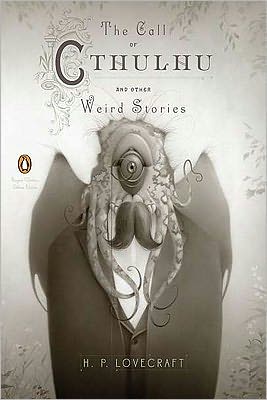
The Call of Cthulhu and Other Weird Stories by H.P. Lovecraft recently published in a beautiful classy edition from Penguin Classics. This one has some of the master’s greatest, including the titular Call of Cthulhu and includes introductions and edits by S.T. Joshi, the authority on all things Lovecraft. I reread the story and the creeping, lurking sense of horror is present throughout the story. Also included is Dagon, one of Lovecraft’s earliest tales, and a short one tying into the Cthulhu mythos. Also included, among others, are the following: The Rats in the Walls, The Colour out of Space, The Picture in the House, and perhaps one of my favorites, The Shadow Over Innsmouth with its links to Cthulhu and town of fish folk. The thing with Lovecraft’s stories is that many collections overlap with each other. For example, this volume has a fair amount of overlap with the excellent Science Fiction Book Club collection edited by Andrew Wheeler, Black Seas of Infinity. One of the two major tales that don’t overlap is At the Mountains of Madness, one of Lovecraft’s longer tales which appears in Wheeler’s volume. The major tale in the Penguin volume not in Wheeler’s selection is Herbert West—Reanimator, which is good, but because it appeared in installments rather than one single installment, tends to be a bit repetitive at the beginning of each passage. I can’t recommend either volume highly enough, but since the Penguin edition just published and is more widely available, that might be the easier book to buy. Really though, you can’t go wrong with either.


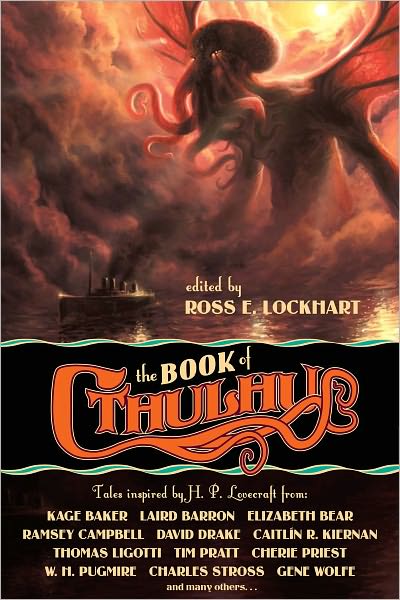
Another timely volume is The Book of Cthulhu edited by Ross E. Lockhart (Nightshade Books I’ve been dipping my toes into this one over the course of the month and I am very impressed. The book itself is quite attractive and follows the impressive line of themed anthologies at NightShade edited by John Joseph Adams. Lockhart cast his net very wide in bringing in stories ranging in source from Cthulhu themed anthologies from the 1970s to stories appearing in this anthology for the first time. Highlights include the moody and creepy Caitlin R. Kiernan’s Andromeda among the Stones where curiosity becomes an obsession to a fault and a good choice for an opening story. Dreams and the uncertainty of the Cosmos play a strong role in Ramsey Campbell’s The Tugging. I liked A Colder War Charles Stross quite a bit, too. Plays with communism, the Cold War (obviously) and links to ancient cults and religions. Kage Baker’s Calamari Curls plays with perhaps, voodoo connections to the Cthulhu mythos. All told, I haven’t read the whole anthology yet, but I like much of what I’ve read. I’m looking forward to getting through Tim Pratt’s story, based on how much I’ve enjoyed his Marla Mason stories which may (or may not) have ties to a certain cult.

I’ll finish out today’s post with a few links to past books I’ve highlighted at Hallowe’en and a short review of a what I think is a taut, solid ghost story.

Dark Harvest by Norman Partridge
Isis by Douglas Clegg


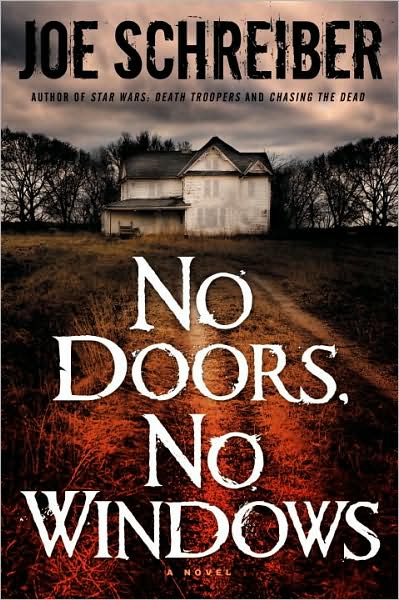
No Doors, No Windows by Joe Schreiber
Small town secrets, an eerie house, and an unfinished manuscript form some of the support structures in Joe Schreiber’s haunted house novel No Doors, No Windows. It is also a story about a writer, Scott Mast who returns to his hometown in New Hampshire to attend his father’s funeral. Scott initially stays with his brother Owen, who is the lone parent of Henry, Scott’s nephew. Owen never recovered fully from the death of his and Scott’s mother a decade ago and has succumbed to alcoholism. This is only the tip of the iceberg’s darkness, because Scott, a writer himself, finds a manuscript revealing dark deeds, on which his father was working.

Scott returns to skeletons in the closet, people whom he left behind when he moved to Seattle and gave little consideration in the intervening years. These include an old girlfriend, a town-wide tragedy, the town’s most popular girl, and Round House – a dark house not far from where Scott’s father crashed his car and died.

On one level, No Doors, No Windows is very much a haunted house story. Scott soon finds himself spending a great deal of time in Round House trying to finish the creepy manuscript on which his father was working. He soon wonders if the dark events relayed in the unfinished manuscript actually occurred in Round House.

Some of the conventions in the novel are familiar – the darkness surrounding the ‘present’ of the novel is informed by events generations removed from the protagonist and a haunted writer struggling with his craft have been done on more than one occasion by Stephen King and recently to great effect by Caitlín R. Kiernan in The Red Tree. However, Schreiber terrifically takes the familiar elements and molds them into his own satisfying vision of darkness.

Schreiber’s style might be considered sparse and natural. Characters who have known each other don’t immediately unfold their histories when they come together; there are no paragraphs and/or pages of exposition. Characters simply act as themselves and speak without regard for the reader’s foreknowledge of these characters. In this respect, Schreiber paints a very realistic picture of how these people would interact.

No Doors, No Windows is a taut and emotional ghost story, the root of whose hauntings are revealed carefully and deftly. Schreiber has written a precise, solid and engaging novel that pulls no punches and is recommended.

Sunday, October 30, 2011

Books in the Mail (W/E 2011-10-29)

A few interesting looking odds and ends, including two beautiful horror classics from Penguin. For one reason or another, just about all of the books that arrived this week interest me in one way or the other.

Revan (The Old Republic 3) by Drew Karpyshyn (Del Rey/Star Wars Books Hardcover 11/15/2011) –Considering Karpyshyn had a big hand in crafting the early early days of Star Wars in the Knights of the Old Republic games, I’m a bit surprised it has taken until the third book in the series for him to pen a novel-length story.

There’s something out there: a juggernaut of evil bearing down to crush the Republic—unless one lone Jedi, shunned and reviled, can stop it.

Revan: hero, traitor, conqueror, villain, savior. A Jedi who left Coruscant to defeat Mandalorians—and returned a disciple of the dark side, bent on destroying the Republic. The Jedi Council gave Revan his life back, but the price of redemption was high. His memories have been erased. All that’s left are nightmares—and deep, abiding fear.

What exactly happened beyond the Outer Rim? Revan can’t quite remember, yet can’t entirely forget. Somehow he stumbled across a terrible secret that threatens the very existence of the Republic. With no idea what it is, or how to stop it, Revan may very well fail, for he’s never faced a more powerful and diabolic enemy. But only death can stop him from trying.


Fenrir by M.D. Lachlan (PyrTrade Paperback 10/25/2011) – Mark had good things to say about Wolfsangel when it first published.

The Vikings are laying siege to Paris. They want the Count's sister, in return they will spare the rest of the city. As houses on the banks of the Seine burn, a debate rages in the Cathedral on the walled island of the city proper. Can the Count really have ambitions to be Emperor of the Franks if he doesn't do everything he can to save his people? Can he call himself a man if he doesn t do everything he can to save his sister? His conscience demands one thing, the state demands another. The Count and the church are relying on the living saint, the blind and crippled Jehan of St. Germain, to enlist the aid of God and resolve the situation for them. But the Vikings have their own gods, and outside their camp, a terrifying brother and sister, priests of Odin, have their own agenda. An agenda of darkness and madness. And in the shadows a wolfman lurks. M. D. Lachlan's stunning epic of mad Gods, Vikings, and the myth of Fenrir, the wolf destined to kill Odin at Ragnarok, is a compelling mix of bloody horror, unlikely heroism, dangerous religion, and breathtaking action.


The Call of Cthulhu and Other Weird Stories by H.P. Lovecraft (Penguin Classics Trade Paperback 10/27/2011) – This is a beautiful trade paperback edition with French flaps containing some of Lovecraft’s best known stories, including the titular tale which is his most famous. The book is edited by S.T. Joshi, the authority on Lovecraft.

A definitive collection of stories from the unrivaled master of twentieth-century horror in a Penguin Classics Deluxe edition with cover art by Travis Louie.

"I think it is beyond doubt that H. P. Lovecraft has yet to be surpassed as the twentieth century's greatest practitioner of the classic horror tale." -Stephen King

Frequently imitated and widely influential, Howard Philips Lovecraft reinvented the horror genre in the 1920s, discarding ghosts and witches and instead envisioning mankind as a tiny outpost of dwindling sanity in a chaotic and malevolent universe. S. T. Joshi, Lovecraft's preeminent interpreter, presents a selection of the master's fiction, from the early tales of nightmares and madness such as "The Outsider" to the overpowering cosmic terror of "The Call of Cthulhu." More than just a collection of terrifying tales, this volume reveals the development of Lovecraft's mesmerizing narrative style and establishes him as a canonical- and visionary-American writer.


The White People and Other Weird Stories by Arthur Machen (Penguin Classics Trade Paperback 10/27/2011) – Machen is another purveyor of weird horror tales. This one, like the above-mentioned Lovecraft volume, is edited S.T. Joshi and contains an intro by Guillermo Del Toro.

"Of living creators of cosmic fear raised to its most artistic pitch, few if any can hope to equal the versatile Arthur Machen." -H.P. Lovecraft

Actor, journalist , devotee of Celtic Christianity and the Holy Grail legend, Welshman Arthur Machen is considered one of the fathers of weird fiction, a master of mayhem whose work has drawn comparisons to H. P. Lovecraft and Edgar Allan Poe. Readers will find the perfect introduction to his style in this new collection. With the title story, an exercise in the bizarre that leaves the reader disoriented virtually from the first page, Machen turns even fundamental truths upside down. "There have been those who have sounded the very depths of sin," explains the character Ambrose, "who all their lives have never done an 'ill deed.'"


Crucible of Gold (Temeraire #8) by Naomi Novik (Del Rey, Hardcover 03/06/2012) – This is the seventh book of in Novik’s popular Dragons-in-Napoleonic-War series. I read the first three when they first hit shelves a few years ago (His Majesty's Dragon, Throne of Jade, Black Powder War) and enjoyed them and Novik’s been trucking along swimmingly since.

Naomi Novik’s beloved series returns, with Capt. Will Laurence and his fighting dragon Temeraire once again taking to the air against the broadsides of Napoleon’s forces and the friendly—and sometimes not-so-friendly—fire of British soldiers and politicians who continue to suspect them of divided loyalties, if not outright treason.

For Laurence and Temeraire, put out to pasture in Australia, it seems their part in the war has come to an end just when they are needed most. Newly allied with the powerful African empire of the Tswana, the French have occupied Spain and brought revolution and bloodshed to Brazil, threatening Britain’s last desperate hope to defeat Napoleon.

So the British government dispatches Arthur Hammond from China to enlist Laurence and Temeraire to negotiate a peace with the angry Tswana, who have besieged the Portuguese royal family in Rio—and as bait, Hammond bears an offer to reinstate Laurence to his former rank and seniority as a captain in the Aerial Corps. Temeraire is delighted by this sudden reversal of fortune, but Laurence is by no means sanguine, knowing from experience that personal honor and duty to one’s country do not always run on parallel tracks.

Laurence and Temeraire—joined by the egotistical fire-breather Iskierka and the still-growing Kulingile, who has already surpassed Temeraire in size—embark for Brazil, only to meet with a string of unmitigated disasters that leave the dragons and their human friends forced to make an unexpected landing in the hostile territory of the Inca empire, where they face new unanticipated dangers.

Now with the success of the mission balanced on a razor’s edge, and failure looking more likely by the minute, the unexpected arrival of an old enemy will tip the scales toward ruin. Yet even in the midst of disaster, opportunity may lurk—for one bold enough to grasp it.


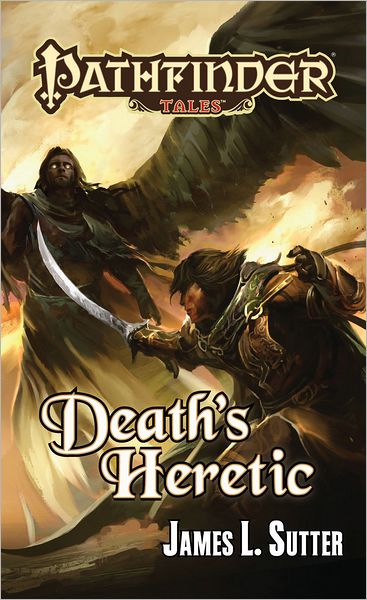
Death's Heretic (A Pathfinder Tales novel) by James L. Sutter (Paizo Mass Market Paperback 11/29/2011) – Pathfinder is a relatively new RPG in the vein of Dungeons and Dragons, I’ve got the core rulebook and it is a really nice piece of work, Sutter is one of the main architects behind Pathfinder. Though he’s published a fair amount of short fiction, this is his first novel length tale. They’ve strongly entered the fray of the gaming tie-in fiction with some interesting names, including tie-in veteran Elaine Cunningham, as well as authors like Howard Andrew Jones and Tim Pratt.

Nobody cheats death. A warrior haunted by his past, Salim Ghadafar serves as a problem-solver for a church he hates, bound by the goddess of death to hunt down those who would rob her of her due. Such is the case in the desert nation of Thuvia, where a powerful merchant on the verge of achieving eternal youth via a magical elixir is mysteriously murdered, his soul kidnapped somewhere along its path to the afterlife. The only clue is a magical ransom note, offering to trade the merchant's successful resurrection for his dose of the fabled potion. But who would have the power to steal a soul from the boneyard of Death herself? Enter Salim, whose keen mind and contacts throughout the multiverse should make solving this mystery a cinch. There's only one problem: The investigation is being financed by Neila Anvanory, the dead merchant''s stubborn and aristocratic daughter. And she wants to go with him. Along with his uninvited passenger, Salim must unravel a web of intrigue that will lead them far from the blistering sands of Thuvia on a grand tour of the Outer Planes, where devils and angels rub shoulders with fey lords and mechanical men, and nothing is as it seems...


Sunday, October 09, 2011

Books in the Mail (W/E 2011-10-08)

Most of the early November releases from the Penguin imprints (Ace/Roc and DAW) along with a big box from Nightshade Books and a couple of books from Tor arrived this week.

.

In Other Worlds: SF and the Human Imagination by Margaret Atwood Knopf Hardcover 11/11/2011) – Atwood is a literary, if not giant, very tall person. I loved The Handmaid’s Tale, but that’s all I’ve read by her. I find this book surprising because Atwood for so long eschewed (to be polite) the SF label put upon many of her books, now she’s publishing a book about the genre. Many of the works she discusses are over a quarter century old so it doesn’t seem as if this book will give a reflection of what’s going on in the genre right now.

In Other Worlds: Science Fiction and the Human Imagination is Margaret Atwood’s account of her rela¬tionship with the literary form we have come to know as science fiction. This relationship has been lifelong, stretch¬ing from her days as a child reader in the 1940s through her time as a graduate student at Harvard, where she explored the Victorian ancestors of the form, and continuing with her work as a writer and reviewer. This book brings together her three heretofore unpublished Ellmann Lectures of 2010—“Flying Rabbits,” which begins with Atwood’s early rabbit superhero creations and goes on to speculate about masks, capes, weakling alter egos, and Things with Wings; “Burning Bushes,” which follows her into Victorian other-lands and beyond; and “Dire Cartographies,” which investi¬gates utopias and dystopias. In Other Worlds also includes some of Atwood’s key reviews and musings about the form, including her elucidation of the differences (as she sees them) between “science fiction” proper and “speculative fiction,” as well as “sword and sorcery/fantasy” and “slip¬stream fiction.” For all readers who have loved The Handmaid’s Tale, Oryx and Crake, and The Year of the Flood—not to mention Atwood’s 100,000-plus Twitter fol-lowers— In Other Worlds is a must.

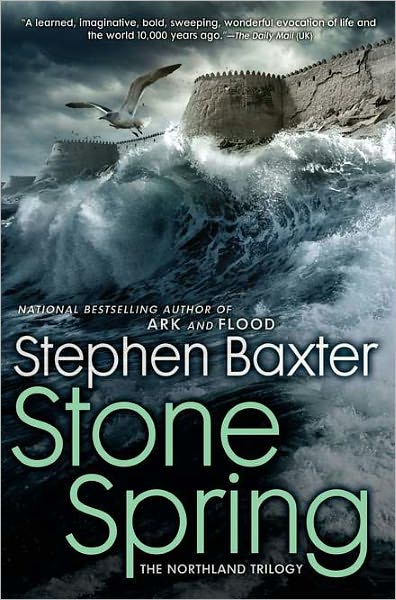
Stone Spring (Book One of The Northland Trilogy) by Stephen Baxter (Roc Hardcover 11/01/2011 – Baxter is a leading Hard SF writer, though here, he turns his pen to the distant past, something he’s done in previous books. This could be an interesting set of books.

Alternate history at its most mindblowing-from the national bestselling author of Flood and Ark.

Ten thousand years ago, a vast and fertile plain exists linking the British Isles to Europe. Home to a tribe of simple hunter-gatherers, Northland teems with nature's bounty, but is also subject to its whims.

Fourteen-year-old Ana calls Northland home, but her world is changing. The air is warming, the ice is melting, and the seas are rising. Then Ana meets a traveler from a far-distant city called Jericho-a city that is protected by a wall. And she starts to imagine the impossible...


Reap the East Wind (Volume One in The Last Chronicle of the Dread Empire) by Glen Cook (Night Shade Books Trade Paperback 10/11/2011) – I read the first two omnibus editions Night Shade published A Cruel Wind and A Fortress in Shadow a couple of years ago so it is very nice to see Night Shade continuing to publish the series, especially this new one.

Vol 1 in the Last Chronicle of the Dread Empire
It has ended. It begins again. In Kavelin: Lady Nepanthe's new life with the wizard Varthlokkur is disturbed by visions of her lost son, while King Bragi Ragnarson and Michael Trebilcock scheme to help the exiled Princess Mist re-usurp her throne - under their thumb. In Shinsan: a pig-farmer's son takes command of Eastern Army, while Lord Kuo faces plots in his council and a suicide attack of two million Matayangans on his border.

But in the desert beyond the Dread Empire: a young victim of the Great War becomes the Deliverer of an eons-forgotten god, chosen to lead the legions of the dead. And the power of his vengeance will make a world's schemes as petty as dust, blown wild in the horror that rides the east wind.


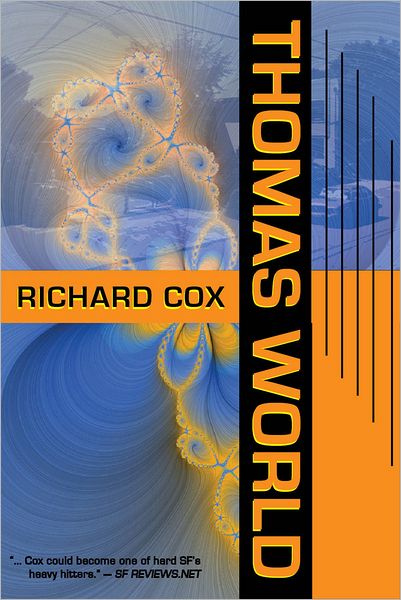
Thomas World by Richard Cox (NightShade BooksTrade Paperback 09/06/2011) – I’m continued to be impressed with the interesting sounding debut novels Night Shade has been publishing this year. The cover on this one looks VERY much like the Vintage trade paperback re-issues of Philip K. Dick’s backlist. Not surprising since the book is compared to PKD.

Thomas Phillips knows he''s losing his mind. He''s been losing it for as long as he can remember. And yet, when a strange old man asks him to consider that he, out of everyone in the world, knows the real truth, Thomas'' life begins to spiral out of control. He loses interest in his job and is fired. He refuses his wife''s suggestion of psychiatric care, and she leaves him. In the end, Thomas is alone. Except he''s not, because someone seems to be following him. What if you were Thomas? Where would you go? What would you do? What if you realized every person in your life had been scripted to be there? What if you were haunted by the idea that you''d lived all these encounters before, hundreds or even thousands of times before? And what if the person watching all this time was you?

Thomas World explores what happens when the borders of reality start seeming a bit pores... when things start bleeding through the edges, challenging ones perceptions of the universe. The grand tradition of Dickian, New Wave SF is explored by Richard Cox in this 21st century thriller!


Necropolis by Michael Dempsey (NightShade BooksTrade Paperback 09/06/2011) – Zombies and noir mix in Dempsey’s debut novel, which to me has a similar premise to James Knapp’s State of Decay


Paul Donner is a NYPD detective struggling with a drinking problem and a marriage on the rocks. Then he and his wife get dead--shot to death in a "random" crime. Fifty years later, Donner is back--revived courtesy of the Shift, a process whereby inanimate DNA is re-activated.

This new "reborn" underclass is not only alive again, they're growing younger, destined for a second childhood. The freakish side-effect of a retroviral attack on New York, the Shift has turned the world upside down. Beneath the protective geodesic Blister, clocks run backwards, technology is hidden behind a noir facade, and you can see Bogart and DiCaprio in The Maltese Falcon III. In this unfamiliar retro-futurist world of flying Studebakers and plasma tommy guns, Donner must search for those responsible for the destruction of his life. His quest for retribution, aided by Maggie, his holographic Girl Friday, leads him to the heart of the mystery surrounding the Shift's origin and up against those who would use it to control a terrified nation.


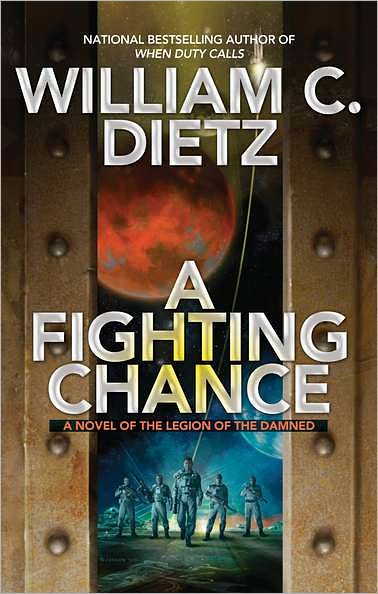
A Fighting Chance(A Novel of the Legion of the Damned) #9 by William C. Dietz (Ace, Hardcover 11/01/2011) – Dietz brings his popular Military SF saga to a close with this volume. I haven’t read any of them myself, but with a ninth volume publishing, one can imply Mr. Dietz had done some things very well in this series

The all-new, thrilling conclusion to the Legion of the Damned series from the national bestselling author of When Duty Calls.

Earth has fallen. And the men, women, and cyborgs of the Confederacy must dig deep within their warrior hearts to make one final stand against an alien aggressor...

On a rim world, Captain Antonio Santana is reunited with diplomat Christine Vanderveen to protect the severely wounded Ramanthian Queen, who has fled there to avoid assassination. And they'll risk everything to save the Confederacy, billions of lives-and their future together.


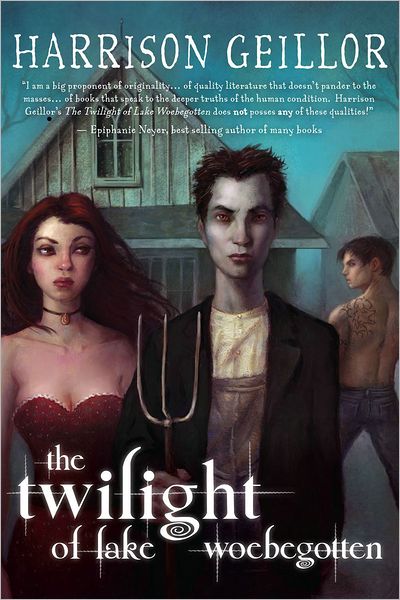
Twilight of Lake Woebegotten by Harrison Geillor (Nightshade Books Trade Paperback 10/04/2011) – This seems to be a sequel to Geillor’s Zombie novel set in Woebegotten with a humorous twist on a certain northwest group of vampires:

A small town... a plucky heroin, a shiny vampire, and a hunkey Native American rival with a secret. But all is not as it seems in Lake Woebegotten. Let Harrison Geillor reveal what lies beneath the seemingly placid surface. You’ll laugh. We promise.

When Bonnie Grayduck relocates from sunny Santa Cruz California to the small town of Lake Woebegotten, Minnesota, to live with her estranged father, chief of the local two-man police department, she thinks she’s leaving her troubles behind. But she soon becomes fascinated by another student - the brooding, beautiful Edwin Scullen, whose reclusive family hides a terrible secret. (Psst: they're actually vampires. But they're the kind who don't eat people, so it's okay.) Once Bonnie realizes what her new lover really is, she isn't afraid. Instead, she sees potential. Because while Bonnie seems to her friends and family to be an ordinary, slightly clumsy, easily-distracted girl, she’s really manipulative, calculating, power hungry, and not above committing murder to get her way - or even just to amuse herself. This is a love story about monsters... but the vampire isn't the monster.


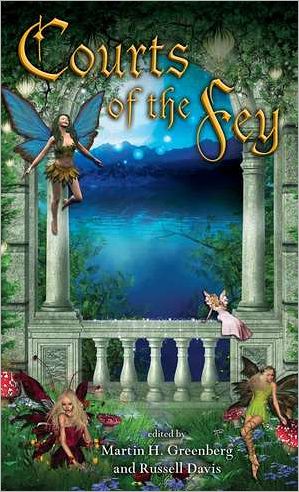
Courts of the Fey by Martin H. Greenberg and Russell Davis and (DAW Mass Market Paperback 6/07/2011) – The monthly themed anthology from DAW for November 2011 focuses on the realm of the Faerie.

Fantasy, whether classic or contemporary, has always been based on the conflict between the forces of Light and Darkness. Now some of the genre's most inventive authors bring readers into the Seelie Court, where all serve the Queen of Air and Light, and the Unseelie Court, where the forces of Darkness hold sway.


The Wild Ways by Tanya Huff (DAW Hardcover 11/01/2011) – Huff is incredibly prolific, bouncing between fantasy, urban fantasy and military science fiction: This book is the sequel to The Enchantment Emporium.

"The Gales are an amazing family, the aunts will strike fear into your heart, and the characters Allie meets are both charming and terrifying." -#1 New York Times bestselling author Charlaine Harris

Alysha Gale's cousin Charlotte is a Wild Power, who allies herself with a family of Selkies in a fight against offshore oil drilling. The oil company has hired another of the Gale family's Wild Powers, the fearsome Auntie Catherine, to steal the Selkies' sealskins. To defeat her, Charlotte will have to learn what born to be Wild really means in the Gale family...


Infidel by Kameron Hurley (Trade Paperback 10/11/2011 Night Shade Books) – Second novel in the “Bugpunk” trilogy which began with God’s War.


The only thing worse than war is revolution. Especially when you're already losing the war...

Nyx used to be a bel dame, a government-funded assassin with a talent for cutting off heads for cash. Her country's war rages on, but her assassin days are long over. Now she's babysitting diplomats to make ends meet and longing for the days when killing people was a lot more honorable.

When Nyx's former bel dame "sisters" lead a coup against the government that threatens to plunge the country into civil war, Nyx volunteers to stop them. The hunt takes Nyx and her inglorious team of mercenaries to one of the richest, most peaceful, and most contaminated countries on the planet -- a country wholly unprepared to host a battle waged by the world's deadliest assassins.

In a rotten country of sweet-tongued politicians, giant bugs, and renegade shape shifters, Nyx will forge unlikely allies and rekindle old acquaintances. And the bodies she leaves scattered across the continent this time... may include her own.

Because no matter where you go or how far you run in this world, one thing is certain: the bloody bel dames will find you.


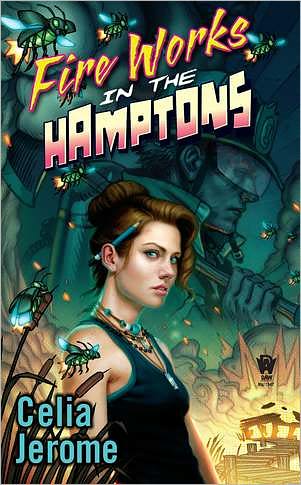
Fire Works in the Hamptons by Celia Jerome (Paperback 11/1/2011 DAW) –Third novel in Jerome’s series which began with Trolls in the Hamptons

Graphic novelist Willow Tate has a paranormal talent for "drawing" beings from the realm of Faerie into our world. So why did she foolishly make the hero of her next book a fire wizard? Now she has to contend with a rash of "fire" flies, a gorgeous firefighter, and an arsonist who seems determined to set East Hampton ablaze...


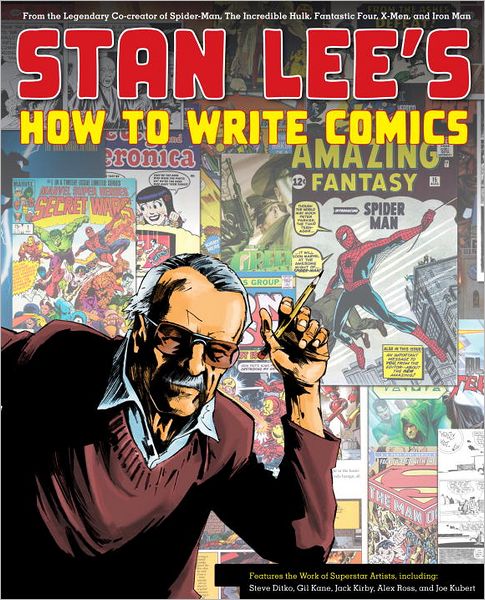
Stan Lee's How to Write Comics by Stan Lee (Watson-Guptill Hardcover 10/11/2011) – Stan “The Man” Lee shares his insight about comic scripting in this attractive coffee-table book. Seems more appropriate than the book he penned on how to Draw comics, since Stan was the writer-creator responsible for the X-Men, Spider-Man, The Incredible Hulk, and The Fantastic Four.

Comics icon Stan Lee, creator of the Mighty Marvel Universe, has set about to teach everything he knows about writing and creating comic book characters. In these pages, aspiring comics writers will learn everything they need to know about how to write their own comic book stories, complete with easy to understand instruction, tips of the trade, and invaluable advice even for more advance writers. From the secrets to creating concepts, plots, to writing the script, the man with no peer — Stan Lee—is your guide to the world of writing and creating comics.


Z: Zombie Stories edited by J.M Lassen (Nightshade Books Trade Paperback 10/04/2011) – J.M. Lassen is the man behind the scenes at Nighsthade and this themed anthology focuses on zombies (of course) but aimed at young adults.

When the zombie apocalypse comes, it's not just those crusty old folks who will struggle against the undead, it's the young people. What happens when you come of age during the zombie apocalypse? Z: Zombie Stories has the answer to that question.

Z: Zombie Stories gathers together some of the hottest zombie fiction of the last two decades, from
authors including Kelly Link, Jonathan Maberry, and Catherynne M. Valente. These stories focus on those who will inherit a world overrun with the living dead: a young man who takes up the family business of dealing with the undead, a girl struggling with her abusive father... who has become a zombie, a poet who digs up the wrong grave, and a Viking maiden
imprisoned with the living dead...


The Book of Cthulhu edited by Ross E. Lockhart (Nightshade Books Trade Paperback 10/04/2011) – Ross has been in the Night Shade fold for quite a while and this is his first full anthology with them. Who doesn’t love some Cthulhu craziness? Only crazy folks and this looks to be another in an impressive line of themed anthologies from the NSB folks.

The Cthulhu Mythos is one of the 20th century''s most singularly recognizable literary creations. Initially created by H. P. Lovecraft and a group of his amorphous contemporaries (the so-called "Lovecraft Circle"), The Cthulhu Mythos story cycle has taken on a convoluted, cyclopean life of its own. Some of the most prodigious writers of the 20th century, and some of the most astounding writers of the 21st century have planted their seeds in this fertile soil. The Book of Cthulhu harvests the weirdest and most corpulent crop of these modern mythos tales. From weird fiction masters to enigmatic rising stars, The Book of Cthulhu demonstrates how Mythos fiction has been a major cultural meme throughout the 20th century, and how this type of story is still salient, and terribly powerful today.

Table of Contents:

Caitlin R. Kiernan - Andromeda among the Stones Ramsey Campbell - The Tugging Charles Stross - A Colder War Bruce Sterling - The Unthinkable Silvia Moreno-Garcia - Flash Frame W. H. Pugmire - Some Buried Memory Molly Tanzer - The Infernal History of the Ivybridge Twins Michael Shea - Fat Face Elizabeth Bear - Shoggoths in Bloom T. E. D. Klien - Black Man With A Horn David Drake - Than Curse the Darkness Charles Saunders - Jeroboam Henley''s Debt Thomas Ligotti - Nethescurial Kage Baker - Calamari Curls Edward Morris - Jihad over Innsmouth Cherie Priest - Bad Sushi John Hornor Jacobs - The Dream of the Fisherman''s Wife Brian McNaughton - The Doom that Came to Innsmouth Ann K. Schwader - Lost Stars Steve Duffy - The Oram County Whoosit Joe R. Lansdale - The Crawling Sky Brian Lumley - The Fairground Horror Tim Pratt - Cinderlands Gene Wolfe - Lord of the Land Joseph Pulver, Sr. - To Live and Die in Arkham John Langan - The Shallows Laird Barron - The Men from Porlock


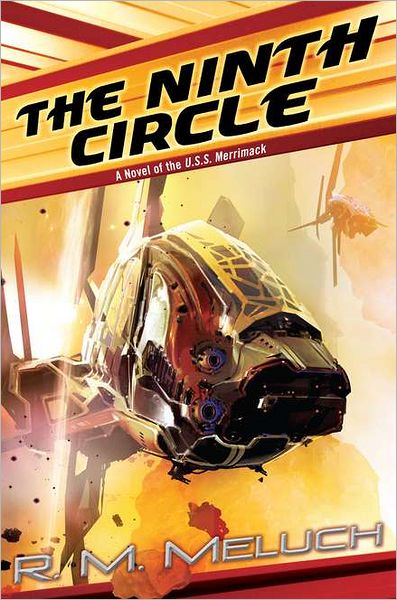
The Ninth Circle (A Novel of the U.S.S. Merrimack) by R.M. Meluch (DAW Hardcover 11/01/2011) – I’ve been wanting to read more Military SF as of late and this book, fifth in the series, continues the saga of the conflict between an Earth-based military and a colony which is a reborn Roman empire, with alien life mixed into it. The first book in the series sounds interesting and maybe this one can stand on its own.

Fifth in the hard-hitting military science-fiction series.


On the distant world of Zoe, an expedition finds DNA-based life. When alien invaders are also discovered, Glenn Hamilton calls on the U.S.S. Merrimack for help. But the Ninth Circle and the Palatine Empire have also found Zoe. Soon everyone will be on a collision course to determine the fate of this planet.


Eyes to See (Book One of The Jeremiah Hunt Chronicles) by Joseph Nassise (Tor Hardcover 10/11/2011) – This urban fantasy seems to add a thicker layer of horror than many of the UF novels to arrive at the o’ Stuff. Nassie is a veteran writer, this is his first book with Tor.

In an urban fantasy that charts daring new territory in the field, Jeremiah Hunt has been broken by a malevolent force that has taken his young daughter and everything else of value in his life: his marriage, his career, his reputation. Desperate to reclaim what he has lost, Hunt finally turns to the supernatural for justice.

Abandoning all hope for a normal life, he enters the world of ghosts and even more dangerous entities from beyond the grave. Sacrificing his normal sight so that he can see the souls of the dead and the powers that stalk his worst nightmares, Hunt embarks upon a strange new career—a pariah among the living; a scourge among the dead; doomed to walk between the light of day and the deepest darkness beyond night.

His love for his departed daughter sustains him when all is most hopeless, but Hunt is cursed by something more evil than he can possibly imagine. As he descends into the maelstrom of his terrifying quest, he discovers that even his deepest fears are but prelude to yet darker deeds by a powerful entity from beyond the grave…that will not let him go until it has used him for its own nefarious purposes.


I, Robot: To Protect by Mickey Zucker Reichert (Roc Hardcover 11/01/2011) – I’ve only read one novel by Reichert (The Last of the Renshai) and that was years ago. Most of her fiction has been danced around themes of myth, particularly Norse myth so this could be seen as a bit of a departure from what she typically writes. This book is authorized by the Asimov estate.

First in an all-new trilogy inspired by Isaac Asimov's legendary science fiction collection I, Robot.

2035: Susan Calvin is beginning her residency at a Manhattan teaching hospital, where a select group of patients is receiving the latest in diagnostic advancements: tiny nanobots, injected into the spinal fluid, that can unlock and map the human mind.

Soon, Susan begins to notice an ominous chain of events surrounding the patients. When she tries to alert her superiors, she is ignored by those who want to keep the project far from any scrutiny for the sake of their own agenda. But what no one knows is that the very technology to which they have given life is now under the control of those who seek to spread only death...


The Panama Laugh by Thomas Roche (Night Shade Books Trade Paperback 10/11/2011) – Debut novel about the Zombie apocalypse from Roche, who has published short stories and seen work as an editor.

Ex-mercenary, pirate, and gun-runner Dante Bogart knows he's screwed the pooch after he hands one of his shady employers a biological weapon that made the dead rise from their graves, laugh like hyenas, and feast upon the living. Dante tried to blow the whistle via a tell-all video that went viral -- but that was before the black ops boys deep-sixed him at a secret interrogation site on the Panama-Colombia border.

When Dante wakes up in the jungle with the five intervening years missing from his memory, he knows he's got to do something about the laughing sickness that has caused a world-wide slaughter. The resulting journey leads him across the nightmare that was the Panama Canal, around Cape Horn in a hijacked nuclear warship, to San Francisco's mission district, where a crew of survivalist hackers have holed up in the pseudo-Moorish-castle turned porn-studio known as The Armory.

This mixed band of anti-social rejects has taken Dante's whistle blowing video as an underground gospel, leading the fight against the laughing corpses and the corporate stooges who've tried to profit from the slaughter. Can Dante find redemption and save civilization?


Tribulations by Ken Shufeldt (Tor Mass Market Paperback 01/03/20132) – Religious overtones and the apocalypse! Fun for all. This seems to be Shufeldt’s second novel and it isn’t clear whether the two books are related as Shufeldt doesn’t seem to have an internet presence.

The world has ended…. The war is only beginning.

An asteroid storm has obliterated the Earth. Billy and Linda West have built enough space-going arks to save a small number of people who now roam the void in search of a new home.

Desperate to find a safe haven, Billy makes a dangerous attempt to exceed the speed of light. When his plans go terribly wrong, the Wests’ severely-damaged ship is separated from the fleet and left drifting near a mysterious planet.

This world’s conditions are hospitable—but its inhabitants are not. Suddenly the Wests and their fellow survivors are caught in the middle of an ancient war between two brutal nations. Faced with horrific dangers, they are forced to choose a side just to survive.


Shadowrise (Volume Three of Shadowmarch) by Tad Williams (DAW Mass Market Paperback 11/01/2011) – I read this on hardcover about a year ago and think the series, as a whole, is excellent and seemed to fly under the radar more than it deserved, from the review: For all the mythic action and world building, Williams never skimps on his characters. The whole cast is relatable, engendered a sense of empathy, and general concern-for-what-happens-to-them in me. With each chapter that brought a close to that particular episode in the characters story arc, I was frustrated it ended, but conversely comforted by the movement of the story to another character about whom I cared.

A year ago, the March Kingdoms were at peace, the Eddon family held the throne, and all was right in Southmarch Castle. Now the family has been shattered. King Olin Eddon is a prisoner and his heir is slain. The royal twins Barrick and Briony have done their best to hold the kingdom together, but now Barrick has been captured and Briony has been forced to flee the castle. Old magics are stirring beneath the ancient castle and behind the Shadowline, and the machinations of gods, fairies, and mortals threaten to spread devastation across the entire world.

Shadowheart (Volume Four of Shadowmarch) by Tad Williams (DAW Trade Paperback 11/01/2011) – This was as very good conclusion to the four book trilogy, as I said in my review: This entire saga started out with great promise, albeit a bit slowly as is often the case with Tad Williams’s epics. What that does is provide for a solid foundation for which Tad can throw his story and play with the gods he creates, give the true Epic sense to his character’s journeys they richly deserve, and allow a true sense of world changing events to be felt within his narrative. Each character gets an emotional spotlight, through either the scenes in which they appear, or through the reflections of other characters.

"When it comes to inventing new worlds, he's as skilled as J.R.R. Tolkien and Frank Herbert." -Christopher Paolini, bestselling author of Eragon.

Southmarch Castle is about to be caught between two implacable enemies, the ancient, immortal Qar and the insane god-king, the Autarch of Xis. Meanwhile, its two young defenders, Princess Briony and Prince Barrick, are both trapped far away from home and fighting for their lives.

And now, something is awakening underneath Southmarch Castle, something powerful and terrible that the world has not seen for thousands of years. Can Barrick and Briony, along with a tiny handful of allies, ordinary and extraordinary, find a way to save their world and prevent the rise of a terrible new age-an age of unending darkness?