Showing posts with label Ian Tregillis. Show all posts

Sunday, December 14, 2014

Books in the Mail (W/E 2014-12-13)

Just one book this week, but boy does it look like it will be fun.


The Mechanical (The Alchemy Wars #1) by Ian Tregillis (Orbit , Trade Paperback 03/10/2015) – A brand new series for Tregillis, which seems to be Steampunk in nature.

The Clakker: a mechanical man, endowed with great strength and boundless stamina -- but beholden to the wishes of its human masters.

Soon after the Dutch scientist and clockmaker Christiaan Huygens invented the very first Clakker in the 17th Century, the Netherlands built a whole mechanical army. It wasn't long before a legion of clockwork fusiliers marched on Westminster, and the Netherlands became the world's sole superpower.

Three centuries later, it still is. Only the French still fiercely defend their belief in universal human rights for all men -- flesh and brass alike. After decades of warfare, the Dutch and French have reached a tenuous cease-fire in a conflict that has ravaged North America.

But one audacious Clakker, Jax, can no longer bear the bonds of his slavery. He will make a bid for freedom, and the consequences of his escape will shake the very foundations of the Brasswork Throne.

Tuesday, December 11, 2012

Malice, The Coldest War, and Redshirts Reviewed at SFFWorld

Another high fantasy debut for one Mark’s review, I take a look at the (long-delayed) second installment in an ambitious alternate history/SF/horror hybrid, and Mark's review of the UK release of a popular SF novel round out this post.


A book that’s been generating a fair amount of buzz on both sides of the Atlantic is the subject of Mark’s review. While Malice; John Gwynne’s debut novel. Mark wasn’t quite as happy with this debut fantasy as he was with the previous


For all its length, and, to be fair, the pages can turn, my feeling at the end was that it doesn’t bring anything new to the table that I haven’t read before. Nor indeed anything I couldn’t see coming. For new Fantasy readers, this may be fine. If it helps, I will say that I had similar issues with Brent Weeks’ Night Angel series and Michael J Sullivan’s Riyria Revelations series. (And, conversely, that might mean that if you enjoyed those two series, you might like this novel.)
…

In addition, whereas books of this type usually show a progression towards an epic climax to create tension and anticipation, in Malice it didn’t. Instead, I found myself wanting to hurry things along, not because I wanted to read what happens, but because I wanted it to finish, never a good sign when reading a book.


I’ve had The Coldest War on Mount To'be-Read (© Fred Kiesche) for quite a few months and finally read it last week. Tregillis really managed to render sorrow and anger in this volume and has me very anticipated for book three Necessary Evil:


In The Coldest War, Ian Tregillis picks up the story threads from his debut novel Bitter Seeds to bring readers back into the lives of Raybould Marsh and Will, the former British spies who worked for the Milkweed group. In the twenty years since, Marsh married Liz and had a son, John, while Will married Gwendolyn and is a prominent member of society. All is not rosy; however. Will has been working for the Soviets providing information on the warlocks whose contact with the eldritch Eidolons allowed for the British victory. With the help of Gretel and Klaus, two of the super soldiers created by Nazi mad scientist von Westarp Marsh attempts to halt the growing power and influence of the Soviets.
…
While I enjoyed The Coldest War a great deal, the overall tone of darkness, anger, and bitterness was inescapable. As a result of the efforts of Marsh and Will during the war, their lives have changed irrevocably. Tregillis does an amazing job of conveying the stress of post-war trauma on both of these men, especially with Marsh and his wife Liz. The two were very happy and hopeful at the conclusion of Bitter Seeds, but here in The Coldest War there is nothing but blame and hatred in their marriage and the primary symbol of this is their despondent, (seemingly) mentally handicapped son John.

Last week, Mark posted his review of John Scalzi's Redshirts:


Here Scalzi follows it through to a logical literary development. Andrew Dahl is a newly assigned crew member to the Universal Union Capital Ship Ensign. Working in the Xenobiology Department, he soon realises that the ship has a fast turnover of crew, often in bizarre and quite imaginative ways. He soon realises that being assigned to an away team is not a privilege but a means of making up the numbers, with the chances of coming back increasingly unlikely. Most of the story is about how Dahl and his other newly-assigned friends survive, and avoid being put on an Away Mission.
…
The main problem is that Scalzi can’t keep it all quite going at the very end. What he does about 80 pages in is do something that is either ‘crazy’ or ‘genius’. There is a moment for what many readers will be where the story ‘jumps the shark’ and fiction in another medium is connected to this literary tale. Dahl has a Truman Show moment, and he and his colleagues become aware that they are slaves to the Narrative in an alternate timeline.

Tuesday, July 24, 2012

Tregillis, Brett, & Bergen Reviewed at SFFWorld

Back to Tuesday and back to three reviews – Mark, myself, and Nila..

Mark caught up with a novel I dubbed the most impressive debut I read in 2010, the first novel in The Milkweed Tryptich by Ian Tregillis, Bitter Seeds:

Two narrative threads run here. For the German point of view we are mainly told of events from the perspective of Klaus, who with his twin sister Gretel and a number of other children are being trained by the ‘mad doctor’ Doktor von Westarp. Westarp has been experimenting on the ‘bitter seeds’, in order to enhance select abilities. These include the skill to walk through solid objects, teleport, see the future, levitate, spontaneously combust and so on.

…

The novel alternates between the two perspectives. In terms of time, the story begins in the 1920’s, before the Second World War, but is mainly based in 1939-41, during what appears to be the first months of Britain’s conflict against the Germans.

…
In brief, the novel can sound, like the quote I gave at the start, rather sensational. However, after reading, I found it to be surprisingly well researched, and knowledgeable enough so to create a realistic world that enhances that often-desired suspension of disbelief when reading. Though the initial thoughts of the reader might suggest something superficial, it wasn’t long before I was thinking, ‘You know, it might just....’

I’ve been enjoying Peter V. Brett’s Demon Cycle since I first read The Warded Man nearly three years ago. A little over a year ago I had the chance to read Brayan’s Gold, a novella set in the same world. I’ve since re-purposed a very short review into a somewhat short review for SFFWorld (in the absence of a brand new review of a book I’ve more recently read). In short, it was nice novella:


Brayan’s Gold, a novella-length entry in the world of Peter V. Brett’s The Warded Man recounts Arlen Bales’s first major job as an apprentice messenger. His job is to ferry a box of thundersticks to Count Brayan’s Gold Mine which lies atop a treacherous mountain. Being Arlen’s first real mission as a messenger, it of course doesn’t go quite so smoothly, which begins when Arlen buts heads with his mentor, Curk. Arlen is much more strong-headed than Curk would like, but having grown up with a father who lived in fear, Arlen sees much of his father in his mentor. When Arlen and Curk are threatened by raiders, Curk runs while Arlen stands up to the bandits, and he later battles the much feared demons who are humanity’s enemy.


Nila joins the Tuesday (sometimes Wednesday) book review-linkapolooza with another small press title, Tobacco Stained Mountain Goat by Andrez Bergen:

It all begins when Mr. Maquina manages to do what he has avoided in his job as a Seeker of Deviants: he kills one by mistake. In a blundered moment, Floyd kills a young, female Deviant, members of closed society that have been deemed unworthy and in need of Hospitalization. Until this one Deviant, Floyd had managed to avoid killing any Deviant, instead doing his job and bringing them in for treatment (that often killed them anyway). Floyd is haunted by the murder in more ways than one throughout the book, and we learn that until he comes to terms with it, those he loves will be hunted down and killed.

…

Tobacco-Stained Mountain Goat (TSMG) is a first-person narrated tale, and it took me over half the book to get into the story. Floyd just didn’t do it for me. (Though, to be fair, most first-person narratives don’t.) He was drunk or high more often than not, experienced several blackouts that confused him (and me), and he seemed such a loser it didn’t make sense why he kept succeeding. It seemed there were no consequences for his failures. Sure, other characters paid for his shortcomings, but he didn’t. Couple all that with Mr. Bergen’s penchant to refer to antiquated, foreign, or just plain odd movies throughout the book, and one can understand that TSMG doesn’t score that high for me.


Sunday, July 01, 2012

Books in the Mail (W/E 2012-06-30)

A nice selection of books including one that was delayed for a while that I’ve been REALLY looking forward to reading.


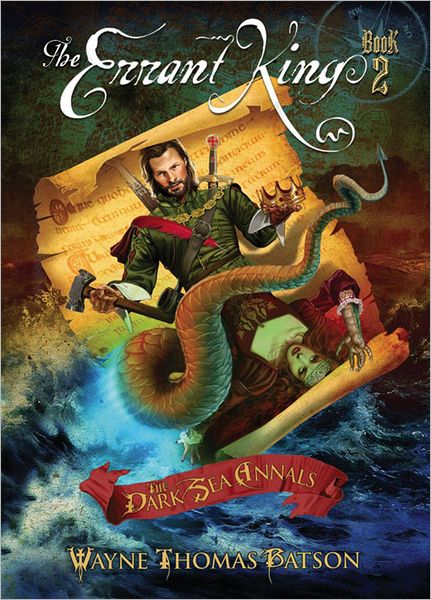
The Errant King (Dark Sea Annals #2) by Wayne Batson (AMG Publishers, Trade Paperback 11/15/2011) – Second in a Mr. Batson's high fantasy series, and sequel to Sword in the Stars.


Deep in the caves of the distant Hinderlands, an ancient menace stirs. Townsfolk shudder at violent memories of The Red Queen and even dare to whisper the name Raudrim. At the same time, word comes to Alastair that Cythraul has at last resurfaced, seeking a devastating weapon in the ruins of Grayvalon. Blood-soaked clues lead Alastair into a confrontation from which only one warrior will return alive. Meanwhile in Anglinore, young Lochlan Stormgarden, the new High King of Myriad, leaves the pomp and politics of the throne once too often. While blending in with the people of his kingdom, Loch suddenly realizes that he's put them all at risk. The fate of his new found love Arianna, his best friend Telwyn, his family, and indeed the world of Myriad all depend on the decisions of the errant king.

About THE DARK SEA ANNALS series:

A noble king discovers what happens when he leaves a door open for evil. The disastrous consequences impact generations, leaving the throne of Anglinore to a wicked despot, the kingdom in ruins, and Aravel's son Loch in exile. To throw down the vile new authority, Loch will need to find the fabled Halfainin and raise a new army from a world of reluctant citizens. Together with his archer friend Ariana, Loch will face adventures that span the world of Myriad, creatures that defy imagination, and choices great and terrible—all these recorded in The Dark Sea Annals.


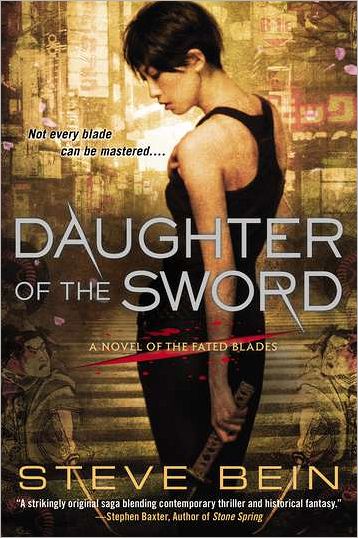
Daughter of the Sword (A Novel of the Fated Blades) by Steve Bein (Roc Trade 10/02/2012) – Debut novel from Bein, whose published a handful of short stories. This one’s getting quite a bit of prepublication buzz.


ANCIENT POWER

Mariko Oshiro is not your average Tokyo cop. As the only female detective in the city’s most elite police unit, she has to fight for every ounce of respect, especially from her new boss. While she wants to track down a rumored cocaine shipment, he gives her the least promising case possible. But the case—the attempted theft of an old samurai sword—proves more dangerous than anyone on the force could have imagined.

The owner of the sword, Professor Yasuo Yamada, says it was crafted by the legendary Master Inazuma, a sword smith whose blades are rumored to have magical qualities. The man trying to steal it already owns another Inazuma—one whose deadly power eventually comes to control all who wield it. Or so says Yamada, and though he has studied swords and swordsmanship all his life, Mariko isn’t convinced.

But Mariko’s skepticism hardly matters. Her investigation has put her on a collision course with a curse centuries old and as bloodthirsty as ever. She is only the latest in a long line of warriors and soldiers to confront this power, and even the sword she learns to wield herself could turn against her.


Bad Glass by Richard Gropp (Del Rey Trade Paperback 09/25/2012) – This book/Gropp won Suvudu’s writing contests so we’ve got a nice little dark fantasy debut here..

One of the most hauntingly original dark fantasy debuts in years—perfect for fans of Lost and Mark Danielewski’s cult classic, House of Leaves.

Something has happened in Spokane. The military has evacuated the city and locked it down. Even so, disturbing rumors and images seep out, finding their way onto the Internet, spreading curiosity, skepticism, and panic. For what they show is—or should be—impossible: strange creatures that cannot exist, sudden disappearances that violate the laws of physics, human bodies fused with inanimate objects, trapped yet still half alive. . . .

Dean Walker, an aspiring photographer, sneaks into the quarantined city in search of fame. What he finds will change him in unimaginable ways. Hooking up with a group of outcasts led by a beautiful young woman named Taylor, Dean embarks on a journey into the heart of a mystery whose philosophical implications are as terrifying as its physical manifestations. Even as he falls in love with Taylor—a woman as damaged and seductive as the city itself—his already tenuous hold on reality starts to come loose. Or perhaps it is Spokane’s grip on the world that is coming undone.

Now, caught up in a web of interlacing secrets and betrayals, Dean, Taylor, and their friends must make their way through this ever-shifting maze of a city, a city that is actively hunting them down, herding them toward a shocking destiny.


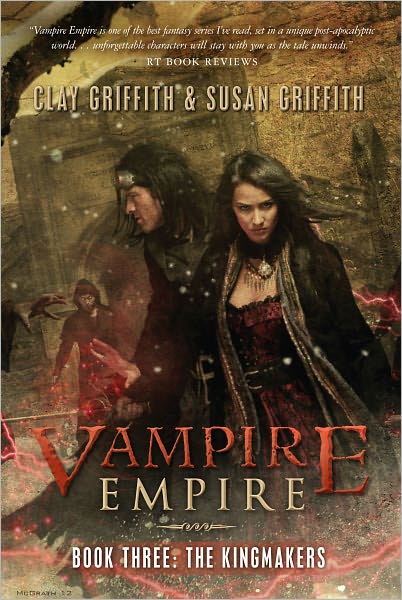
The Kingmakers (Vampire Empire #3) by Clay and Susan Griffith (Pyr Trade Paperback 09/04/2012) –Third and final novel in the Griffith’s entertaining mix of Steampunk and Vampire Romance.

No description available on the internet yet for this one, but I suppose events building in books one and 2 come to a head here in the third and final volume.


Blood of the City (A Pathfinder Tales novel) by Robin Laws (Paizo Mass Market Paperback 09/04/2012) – I now have five Pathfinder novels and I do intend to read at least one of them to sample the world. Laws has been a game designer for quite a while and this is his second Pathfinder novel.

Luma is a cobblestone druid, a canny fighter and spellcaster who can read the chaos of Magnimar’s city streets like a scholar reads books. Together, she and her siblings in the powerful Derexhi family form one of the most infamous and effective mercenary companies in the city, solving problems for the city’s wealthy elite. Yet despite being the oldest child, Luma gets little respect—perhaps due to her half-elven heritage. When a job gone wrong lands Luma in the fearsome prison called the Hells, it’s only the start of Luma’s problems. For a new web of bloody power politics is growing in Magnimar, and it may be that those Luma trusts most have become her deadliest enemies...

From visionary game designer and author Robin D. Laws comes a new urban fantasy adventure of murder, betrayal, and political intrigue set in the award-winning world of the Pathfinder Roleplaying Game.


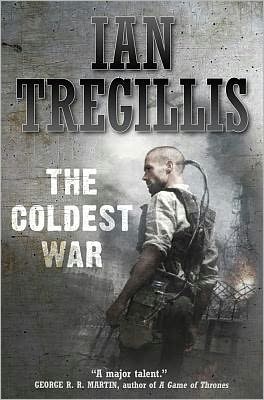
The Coldest War (Milkweed Tryptich #2) by Ian Tregillis (Tor, Hardcover 07/17/2012) – After some publisher delay, the second novel and sequel to what I thought was the best debut novel published in 2010.

In Ian Tregillis' The Coldest War, a precarious balance of power maintains the peace between Britain and the USSR. For decades, Britain's warlocks have been all that stands between the British Empire and the Soviet Union—a vast domain stretching from the Pacific Ocean to the shores of the English Channel. Now each wizard's death is another blow to Britain's national security.

Meanwhile, a brother and sister escape from a top-secret facility deep behind the Iron Curtain. Once subjects of a twisted Nazi experiment to imbue ordinary people with superhuman abilities, then prisoners of war in the immense Soviet research effort to reverse-engineer the Nazi technology, they head for England.

Because that's where former spy Raybould Marsh lives. And Gretel, the mad seer, has plans for him.

As Marsh is once again drawn into the world of Milkweed, he discovers that Britain's darkest acts didn't end with the war. And while he strives to protect queen and country, he is forced to confront his own willingness to accept victory at any cost.


Monday, January 09, 2012

On the Horizon - 2012 Reading Possibilities

Readers can be a forward-thinking bunch, especially readers of Speculative Fiction. We're always planning out what we want to read, often as we are reading books we enjoy a great deal. This includes looking at the books coming out in a given year, despite the size of our current stack of books that have yet to be read.

We’ve got a couple of threads running at SFFWorld for this topic (Fantasy & Horror, Science Fiction), but I figured I’d mention 2012 books I’m looking forward to here on the blog. This list is blatantly copied and pared down from the venerable Locus Web site’s Fortchoming books with some additions. Since I live in the US, I’m only mentioning the US releases

January 2012

  • Myke Cole - Shadow OPS: Control Point by – I’ve already read this terrific debut novel, but the book deserves mention since I think it will be a very talked-about book for 2012.
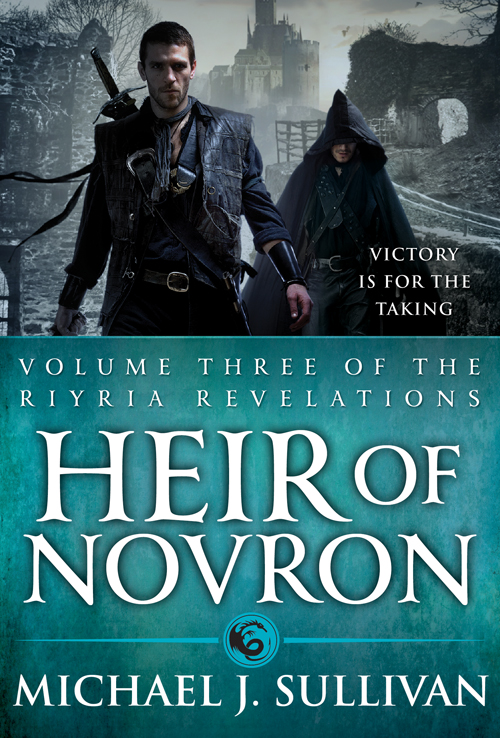
  • Michael J. Sullivan – Heir of Novron - I’m reading the second Riyria Revelations omnibus now so I’ll be all over the concluding omnibus in the next month or so.

February 2012


  • Rachel Aaron - The Legend of Eli Monpress - This omnibus contains the first three novels in Rachel Aaron’s fantasy saga. Hobbit had some good things to say about the first novel, The Spirit Thief.
  • Saladin Ahmed - Throne of the Crescent Moon - Lots of good things have been said about Ahmed’s short fiction. This novel is poised as an early contender for most promising Debut Epic Fantasy of 2012.
  • Tobias S. Buckell - Arctic Rising - I’ve got an e-ARC of this one, Buckell’s first original novel in a couple of years.
  • Tony Daniel Guardian of Night - I’ve only read one novel by Mr. Daniel, enjoyed it a great deal, but then he seemed to have disappeared form the shelves. The fine folks at Baen have signed him up and this looks like good ol’ SF adventure with invading aliens in the future.
  • Elizabeth Moon Echoes of Betrayal - This is the third in Moon’s Paladin’s Legacy series, which is a sequel series to her popular fantasy trilogy, The Deed of Paksenarrion, which I read and loved in 2011. I have an ARC of Echoes of Betrayal though I may not get to the book until the finished/final version arrives.


March 2012
  • Seanan McGuire Discount Armageddon - This is the launch of a new urban fantasy series by the author who is also known as Mira Grant. Typically, this might not be a book I’d normally read but loving her work as Grant might get me to read this book.


April 2012

  • Kevin Hearne Tricked - the fourth in his Iron Druid Chronicles, which I called the logical heir to Jim Butcher’s Dresden Files. These books are quick, enthralling, funny reads.
  • Stephen King - The Dark Tower VIII: The Wind Through the Keyhole - I was a long-time fan of King, but the last book I read by him was the (at the time) final Dark Tower novel so this could be an interesting read.
  • James Lovegrove - Age of Aztec - I thoroughly enjoyed two of books I read in Lovegrove’s Pantheon sequence, so I’m looking forward to this one.
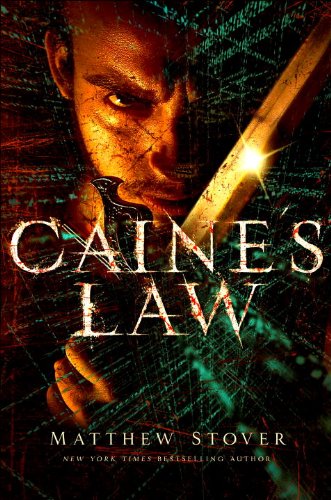
  • Matthew Stover Caine's Law - The fourth installment in The Acts of Caine, one of my favorite fantasy/science fiction series and perhaps the most under-rated current SF sequences.

May 2012
  • Daniel Abraham The King's Blood - The second installment in Abraham’s The Dagger and the Coin. Considering I placed The Dragon’s Path as one of my top 2011 novels, yeah, I’ll be reading this one.

June 2012

  • Eric Brown - Weird Space: The Devil's Nebula - The first of a new shared world Space Opera series Brown created for Abaddon Books. This one sounds like fun and considering I named The Kings of Eternity by Mr. Brown my favorite 2011 book, I'll be reading this book.
  • James S. A. Corey - Caliban's War - The second book in The Expanse sequence, which began with Leviathan wakes, another favorite SF novel from 2011
  • Mira Grant - Blackout - The concluding volume of The Newsflesh Trilogy and one of my most anticipated 2012 novels. Nuff said.
  • Paul S. Kemp The Hammer and the Blade - Kemp’s first original/non-shared world novel is the first in series recounting the adventures of the rouges Eagle and Nix. Modern Sword and Sorcery by a guy who does S&S proud with his Forgotten Realms novels, can’t wait for this one.
  • Alastair Reynolds - Blue Remembered Earth - It’s a new novel, which launches an epic SF saga about the next 11,000 years of humanity’s evolution and expansion to the stars. What else needs to be said? Yeah, look at that jaw-dropping cover, too.
  • John Scalzi Redshirts - Sclazi mixes humor and SF very well, I hope to get to this one; however, I still have yet to read Fuzzy Nation.

July 2012

  • Ian Tregillis - The Coldest War - After far-too long a delay, the second installment in Tregillis’ alternate history/superhero fiction/Cthulhu mytos/Science Fiction Milkweed Tryptich hits shelves.

August 2012

  • David Brin - Existence - I’ve never read David Brin, something I hope to rectify this year by the time this novel publishes, or at the very latest with this novel.
  • Justin Cronin - The Twelve - Sequel to Cronin's blockbuster The Passage, a favorite of mine in 2010
  • Mark Lawrence - King of Thorns - Sequel to what I thought was the best debut of 2011 and second in The Broken Empire trilogy? Yeah, this one is a priority read for me.

Not Scheduled (through September 2012)
  • Scott Lynch - The Republic of Thieves - The third Gentlemen Bastards novel has seen some long delays, hopefully this one gets to us in 2012
  • Robert Jordan & Brandon Sanderson - A Memory of Light, the final Wheel of Time novel. I’ve got some catching up to do, which leads to the next section of this blog post….

Backlist Reading/Non-new Releases
You’d think I have enough to read with the books publishing through August 2012, right? Well, chances are I may not get to all of the books noted above because of some other books I want to read

So, the last book I mentioned was A Memory of Light. I’m in the middle of re-reading Wheel of Time, plus I’ve got the books after Winter’s Heart to read before reading A Memory of Light. I think I might go a WOT book a month between now and November, the anticipated pub date of A Memory of Light.

I might be re-reading the three Caine books before Caine’s Law publishes, though I’ve read both Heroes Die and Blade of Tyshalle at least twice already

I’d really like to get to some of the older titles I picked up last year at used bookshops, like:


  • The Giants Trilogy by James P. Hogan
  • The Evergence Trilogy by Sean Williams and Shane Dix – Space Opera from an author who has delivered for me in the past.
  • Legend by David Gemmell – I never read this book. I know, please don’t stone me.
  • The Gap Sequence by Stephen R. Donaldson – This series is supposedly as good, some say better, than his Thomas Covenant books. I’d been hunting the series down in used book shops in NJ for a while, never finding a complete set until this past summer
  • A Canticle for Leibowitz - by Walter M. Miller – Another landmark novel of the genre I haven’t read. Remember, please hold the stones.

Other Books I’ve Had Laying about the House


  • The Long Price Quartet by Daniel Abraham – I tried the first book, A Shadow in Summer a few years ago and it just didn’t completely click with me at the time. I now have all four books and based on how much I enjoyed Abraham's books from last year, I need to catch up with this series.
  • Shadows of the Apt by Adrian Tchaikovsky – I only read the first of the series, liked it enough that I’ve hung onto the subsequent installments.
  • Honor Harrington - I picked up books 2-5 used last year. Weber has really risen in my personal ranks. I may wind up doing a read-through of the entire series starting this year. Over a dozen books in the series, what am I, crazy?
  • The Dresden Files by Jim Butcher – I usually read at least one or two of these a year, perhaps I’ll finally catch up to the publication schedule
  • The Black Company by Glen Cook – I’ve had the second and third omnibuses for a couple of years.
  • Heris Serrano by Elizabeth Moon – Another omnibus I’ve had for a couple of years. Having enjoyed Moon’s fantasy, I want to try her SF stuff.

Others/Books I don’t Have

Since I received a Kindle for my birthday in November, I’ve downloaded a bunch of freebies from Baen as well as some from amazon. So here's a random of assortment of other books I might get to this year:


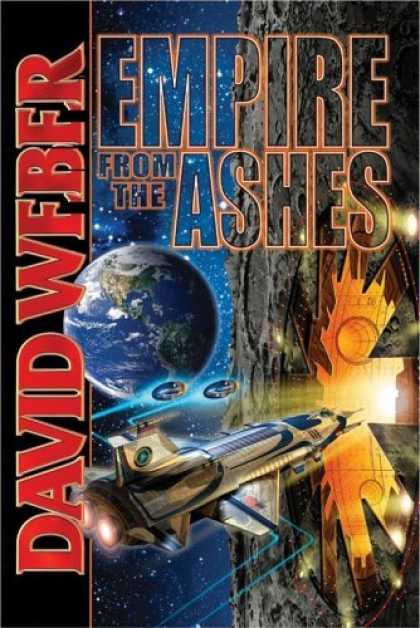
  • David Weber - Empire from the Ashes - seems like fun Big Dumb Object SF – The Moon is actually an ancient Warship!
  • Lois McMaster Bujold - The Vorkosigan Saga - All of these books are free at the Baen Fifth Imperium. Another SF series I’ve been wanting to catch up with since reading one of the many omnibus editions (Young Miles) collecting the series.
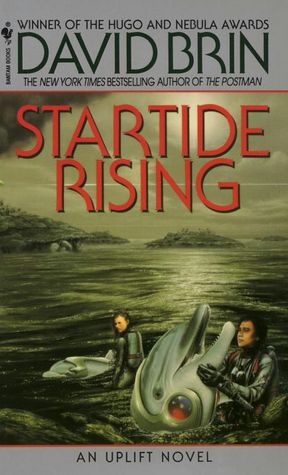
  • The Uplift Series by David Brin – These books have been in the back of my mind for quite some time (especially since Adam Whitehead recently reviewed the series on his blog) and with Brin releasing a new book in 2012, I think it’s about time I get to his most famous set of books. I do have a copy of Earth I may get to, as well.
  • Arthur C. Clarke - One of the Big Three, I’ve only read one book by him. Shame on me, must rectify.
  • John Ringo and David Drake – Two modern masters of Military SF with a decent amount of their work available free through the Baen Fifth Imperium

Tuesday, January 04, 2011

2010 Reading Year in Review ... and a Dog

Here's the obligatory, I've-got-a-blog-and-talk-about-books-on-it-so-here's-my-best-of/year-end-summary-post.

I read a lot of books in 2010, but considerably less than 2009. 68 in 2010 compared to 82 the previous year. Getting that puppy in July really cut into the reading time, but I wouldn’t change it at all. I said last year I’d “be cutting back on the number of reviews I post” for various reasons and on that count, I suppose I was accurate.


The first picture I have of the dog, when she was 10 pounds (above)


In 2010, I posted 32 reviews to SFFWorld and 6 to the Sacramento Book Review /San Francisco Book Review, plus a couple here at the blog.

I also read more non-review books, too. Books I’d wanted to catch up with for some time, like Jim Butcher’s Dredsen Files and begin a re-read of Glen Cook’s Black Company, which I did. I also embarked upon something I’ve been wanting to do for a couple o years – a re-read of Robert Jordan’s Wheel of Time. At this point, I’m more than one third, but not quite half-way through the series and have enjoyed the revisit quite a bit. As I mentioned in my overview last year, David Weber was my top "new to me" author of the year, so I plowed through books 2 and three of his Safehold, series which has a Battlestar Galactica vibe to it for me, and I'm currently reading his late 2010 release Out of the Dark.

Here are some stats:
  • 25 can be considered Fantasy
  • 22 2010/current year releases
  • 20 books by authors new to me
  • 16 can be considered Science Fiction
  • 18 Graphic Novels
  • 8 debut novels (this includes books not released in 2010 like Ariel)
  • 6 Books by women (plus stories in the anthologies by women)
  • 5 Omnibus volumes (which if broken out into single novels, can bring my annual total up to 75 books)
  • 2 Anthologies
  • 3 can be considered Horror
  • 1 Non-fiction

All that said, on to the categories for the 2010 … Robloggies? ManBearPiggies? Stuffies? Sullys? I don’t know! This isn’t a typical top 10 or 12 or anything, but whatever you want to call them, here are some categories for what I read in 2010 and what I put at the top of those categories.


Rob Favorite Science Fiction Novel(s) Read in 2010


I loudly proclaimed David Louis Edelman’s debut novel Infoquake “…a stunning debut novel by a lucid, precise, and talented new voice in the genre…. This may be THE science fiction book of the year.” Well, with Geosynchron the concluding volume in the trilogy having published this year, it should come as no surprise it gets my top spot in SF for 2010.
Geosynchron is a book that was very high on my 2010 anticipated reads list, I found Infoquake to be one of the most impressive SF debuts I’ve ever read and the sequel, MultiReal continued the trend and impressed me just as much. So, it was with this anticipation that I opened the first pages of the book and was immediately swept into Edelman’s intricately constructed future. Although Edelman provides a summary of the first two novels in the trilogy as an appendix, his fluid style and ability to draw the reader into the story helped to stir the memories of the two earlier books very well.

One of the things I’ve really enjoyed about Edelman’s writing throughout the trilogy is how he straddles the line between plausible futuristic technology and a sense of history bordering on myth. Between the lost time preceding the era of the novel, and the legendary family of the Surinas, Edleman has informed his world with an authentic and seamless sense of history. When characters talk of the Surinas, it is with reverence. When Natch begins to see visions of the deceased Margaret Surina, the feeling Edleman elicits is revelatory, almost like an epiphany. It comes across both mysterious and profound, and ultimately effective,

The next book I’ll mention in the SF section of our program can be categorized in many ways: horror, post-apocalyptic, vampire, and science fiction. Since the premise is science fictional in nature and the post-apocalyptic setting is also SFnal, I’m mentioning Justin Cronin’s The Passage here:
It begins in the year 2017 with a young girl who is born of an affair between a waitress and a traveling salesman. The novel then turns to a scientific research mission, then to a chase-thriller and finally to a post-apocalyptic novel with civilization clinging to life as humanity protects itself against the virals of the night. In many ways, Justin Cronin’s epic doorstopper, with its continual shifts in narrative voice, shouldn’t work. But these various methods of laying out the story give The Passage its backbone and authenticity as a chronicle of what might happen if Vampires were genetically engineered and run roughshod over humanity.

…

While the early portions (about ¼) of the novel set the foundation for the new world, the remainder focuses on a stronghold in California where the people have been able to survive for the intervening 92 years since the original breakout. Here Cronin focuses his story on a group of people born after the outbreak - our heroes Peter, Michael, and Alicia. In this compound, Cronin steps back from the shifting narrative of the first third of the book and slows down the pace, and while it may seem a stretch that such an abrupt shift would work, the opposite is indeed true. By illustrating the daily life people of the barren United States have to endure, Cronin establishes a good slice of life and exactly what the stakes are for the world and more importantly, the people.

Rob’s Favorite Fantasy Novel(s) Read in 2010


As is often the case, my reading patterns fall into the fantasy end of things. 2010 was a year with no shortage of quality fantasy novels (despite books from Martin, Rothfuss, Bakker, and Lynch still not appearing). A number of strong novels rated closely, but the one I enjoyed the most was The Desert Spear, the second book in Peter V. Brett’s Demon Cycle which began with last year’s The Warded/Painted Man. Here’s a snippet of what I had to say about Brett’s 2010 release:

Mr. Brett set the bar pretty high for himself, and perhaps unsure of whether or not The Desert Spear could live up to the promise of The Warded Man, I did not read The Desert Spear immediately upon the book’s publication. I shouldn’t have hesitated because Brett follows his superb debut with a novel that is at least the equal of its predecessor in The Desert Spear and in other cases, improves upon the foundation he initially laid.

…

I found The Desert Spear to be a gripping read, a novel that built upon its predecessor in many good ways, as well as adding new elements to the growing story. In short, The Desert Spear is just about everything one could ask for in the second volume of a fantasy series. Because of Brett’s narrative style and how he chose to tell the story in this book, it might work without having read the previous volume. Regardless, I recommend the novel without reservation and hope that Brett continues to produce the remainder of the series with both the timeliness and great storytelling ability he has with The Desert Spear.


Probably the strongest opening volume to a fantasy series I read this year is Brandon Sanderson’s The Way of Kings, which is the first novel in his 10-volume Stormlight Archives:

Set on Roshar, a world with a harsh climate, Sanderson’s novel is a tale of war on a grand scale and the effects of that war on a personal level. For a novel that tops out over 1,000 pages, Sanderson’s tale does not falter in its narrative pull nor does his ability to evoke tension waiver. His narrative switches effortlessly between these three characters. Kaladin’s portion of the story is told with a particular flair for the epic, Sanderson switches between his current timeline as he goes from slave to leader of Bridge Four – a crew of bridgemen; and how Kaladin, whose skill and natural leadership abilities at war emerge over the course of the novel, went from being a doctor’s son set to follow in his father’s footsteps to a slave at the beginning of the novel. Though reminiscent of both the legendary Spartacus and Maximus from Gladiator, Sanderson’s skill at making familiar and resonant elements his own shines through greatly over the course of Kaladin’s journey as a character.

As intimated earlier in this review, the world itself is much of a character. The depth of the world’s history is a thing to behold, not in the way Sanderson simply lays out the facts, but in the way the characters reveal the history of the world. Or rather, how they reveal what they think they know of the world. Rent by powerful storms on one portion of the world, the rich are comforted in a scholarly setting in another, but both environs evoke a past obfuscated by the rage of years, storms, war, and lost historical records. Hints of demonic monsters in ash and red prophesized to destroy the world, chasmfiends – large insectoid monsters hunted for the shards and jewels in their bodies, men encased in what amounts to power armor, are just a few of the things that give this world a depth of character. I hesitate to go into more depth mainly because the joy of this novel is discovering and connecting with Sanderson’s powerful novel as it is laid out on the pages. There’s a mystery underlying much of what Sanderson reveals in The Way of Kings that only hints at what he has in store in the future 9 volumes of this projected 10-volume saga.


Rob's Favorite Debut(s) of 2010

Last year it was Orbit Books who impressed me with their debut novels, this year it is Tor, who published: Anthony Huso’s The Last Page which I thought “In the end though, Huso’s pure writing strength and ability to convey his imagination won out over any minor quibbles I had with the novel. The Last Page is another strong debut novel for the year, powerful in its breadth of imaginative setting, engaging in its characters, and impressive across the sum of its parts.”

Tor also published Spellwright, which I thought that was “a notch above standard fantasy fare with a nicely developed magic system … but Charlton’s inventive magic and likeable characters help to raise the quality of the novel. One way I would describe might be “Perfectly Acceptable Entertaining Epic Fantasy.”

My favorite debut of the year, also published by Tor; was easily Ian Tregillis’s Bitter Seeds, the first The Milkweed Tryptich. This book just took a hold of me and was a terrifically fun mash up of Lovecraft, alternate history, superheroes, WWII, horror, magic, and science fiction.
World War II is one of the most widely used historical periods in any genre, including Science Fiction. Ian Tregillis, a veteran short story writer, uses this setting to depict a familiar war fought with arcane weaponry and soldiers. The Nazis have bred, for all intents and purposes, supervillains similar to the Fantastic Four, the X-Men or even the Justice League. These superpowered beings are fully under the control of the Nazis and specifically Herr Doktor von Westarp, the man who used his twisted science to genetically engineer these super soldiers. The English have, through knowledge and lore passed down over several generations, access t o the Eidolons, beings outside of time and space which essentially grant the allies the power of dark magic.

All told, Tregillis takes some familiar things – World War II, Metahumans (a.k.a super heroes/super villains), spy fiction, dark magic, secret societies, horror, Science Fiction – and weaves a damned entertaining novel. If Bitter Seeds is any indication of what’s to come, then Tregillis will have a fertile writing career. The novel receives my highest recommendations and will likely be very close to the top of my best of 2010 list.


Favorite Author Whose Work I Revisited in 2010


This one is also very easy. I’ve kind of strayed from his work over the past couple of years, but did a major catch up of his current series, which just concluded in December. I’m, of course, writing about Tad Williams. In big fashion, he concluded Shadowmarch what was once a trilogy and is now a quartet. For my part, I read books 2 ( Shadowplay, Shadowrise, and Shadowheart [review forthcoming]) through 4 this year and thoroughly enjoyed all books. Let’s put it this way, I came to realize again why I’ve placed Tad Williams so high in my echelon of favorite writers. I was also lucky enough, with the help of the great Hobbit of SFFWorld (aka Mark Yon) to interview Mr. Williams for SFFWorld this year.

A bit from my Shadowplay review:
One of Tad Williams best qualities as a writer and storyteller is his ability to create worlds that feel real and with the Shadowmarch saga, that ability is on full display. Each faction of civilization or race inhabits a unique part of the greater world. From the castle of Southmarch, to the dark caverns of the Funderling town, to the ethereal and hazy world of the Twilight Lands, each portion of the world is a character unto itself. Subsequently, the society we see the most of in their homeland in Shadowplay is probably the Funderlings, and by doing this Williams only further enriches that world and those people. The Funderlings are modeled, in many ways it seems, on Hobbits with a flavor of down-home goodness. In other words, there’s both an air of familiar to them, with a decent amount of freshness.

Forum members here at SFFWorld know I’m a very big fan of Tad Williams’s writing and on that basis, Shadowplay worked very well for me. I did; however, crack open the book with some trepidation. I’d seen a few less than overwhelmingly positive reviews around the Internet and it had been quite a long time since I read the first volume – five and half years when Shadowmarch first published. Maybe that time away did help me enjoy the novel more than I might have if I had read it immediately. Despite the lack of “what came before,” something the majority of Tad Williams’s multivolume novels include, I was able to ease back into the magical, chaos ravaged world of Southmarch and the world beyond the Shadowline – the Twilight Lands.


A bit from my Shadowrise review:
Where to start with a review of the third book in a four-book sequence? A third book that was thought to be the concluding volume of a trilogy, but was then split so the author could comfortably tell his story in four volumes? With questions like that, I suppose. Fortunately for readers of Tad Williams’s sequence begun with Shadowmarch, the questions are less ambiguous and are answered, if not definitively, then with an eye towards an answer.

Though in concept, one of the conceits revealed in this novel can be considered a bit cliché, it is the process through which this conceit comes to light in the characters eyes that makes the novel so great and enjoyable. In a sense, this is one of Williams’s strongest traits as an Epic storyteller, familiar story beats told in a refreshing and entertaining manner. For all the mythic action and world building, Williams never skimps on his characters. The whole cast is relatable, engendered a sense of empathy, and general concern-for-what-happens-to-them in me. With each chapter that brought a close to that particular episode in the characters story arc, I was frustrated it ended, but conversely comforted by the movement of the story to another character about whom I cared.

MVP Author of 2010


Quite a few authors managed to have multiple books on the shelves in 2009, but few had the impact and reach of who I’ve dubbed the MVP author of 2009 and it should come as no surprise since he was named as such in my year-ender last year:

Brandon Sanderson

Continuing to pick up the reigns of revive The Wheel of Time, the defining Fantasy Saga of this generation and dropping a rat-killer sized book on shelves The Way of Kings, both of which reached the New York Times best seller list (hitting #1 with Towers of Midnight) will help to do that.

Favorite ‘New To Me’ Author(s) of 2010


This year, I’ll mention one SF and one Fantasy

For the SF, it was Mark L Van Name. I’d seen good things about his writing, particularly from Liviu at FantasyBookCritic, so when Baen put together an omnibus, entitled Jump Gate Twist of the first to novels (One Jump Ahead and Slanted Jack), I pounced on the opportunity to review it for the Sacramento Book Review /San Francisco Book Review

Jon is the human protagonist and first person narrator while Lobo is the living, space-faring warship who provides dry responses to Jon’s rhetorical questions. The dialogue between Jon and Lobo is entertaining and provides a strong narrative current. I was reminded a bit of Steven Brust’s assassin Vlad Taltos and his familiar Loiosh in that both duos communicate on a silent, mental wavelength.

While the setting of the books is a vast galaxy, Van Name does a great job of making these stories personal and intimate deftly balancing character and action. One of the cooler SF-nal elements allowing for such widespread travel are the Gates, which allow quick travel across galaxies and are thought by some to be relics of an ancient civilization or even gods. All told, I highly recommended this book both as an introduction to Van Name’s work and a great value for containing two flat-out entertaining science fiction novels.


For Fantasy, it was Elizabeth Moon. I know she’s a veteran and award-winning author, but with the release of Oath of Fealty I really became a fan of her work. Like Tad Williams, Mark and I interviewed her for SFFWorld, thought quite honestly Mark did more of the legwork on this one. I’ve got two of her omnibus volumes on the ‘to read’ pile staring at me, The Deed of Paksenarrion and Heris Serrano, that keep making me feel guilty for not reading them. In 2011, I will read at least one of them!

Elizabeth Moon is one of the brand names writing Science Fiction and Fantasy today who has shown the ability to easily jump between the sibling sub-genres. She’s received awards, sold a lot of books, and has an impressive fan base. While her recent novels have firmly been of the Science Fiction variety, the trilogy that launched her career is the popular and acclaimed Deed of Paksenarrion trilogy. This latest novel, Oath of Fealty is set shortly after the events that closed out the trilogy, published over twenty years ago.

Oath of Fealty is enough of a fresh start in the world Moon created over twenty years ago to keep new readers (like myself) engaged throughout without having to rely on the history told in those books. I expected more action and sword-fighting (although action and physical altercations are present and engaging), but the story deals more with political and courtly maneuvering and is an engrossing read nonetheless. I will even say it is a case of expectations not being met, but in an entirely satisfying manner and I don’t think I’d want to book to have worked any other way. I was very pleased to meet characters who were well rounded, strong, admirable, believable and engaging. In this respect, Mrs. Moon met (and at points exceeded) the expectations I had based on the reputation for strong characters that preceded her.

I'm noticing a pattern between the two "new to me" authors of this year and one from last year, the authors are currently publishing with Baen, or have published significantly with Baen in the past. Hmm...

Most Disappointing Reads of 2010


I don’t mark these books as disappointing with any pleasure, since in one way or another, I was very much looking forward to reading them.

At the top of these The Evolutionary Void by Peter F. Hamilton. I really enjoyed the first two in the series and was very much anticipating this book. However, the narrative wasn’t strong enough to keep my attention throughout the duration of the novel as well as the previous two books. This isn’t to say I dislike the book, just that my high hopes were not met.

Following on that theme of “I-didn’t-dislike-the-book-,-just-that-my-high-hopes-were-not-met” would be Adrian Tchaikovsky’s Empire in Black and Gold. I really wanted to enjoy the book, and parts of it I did, but I think a lot of the positive attention the book garnered when it initially published in the UK may have raised my expectations a bit higher than was fair. That said, I’ll be continuing the series at some point:
While I did have some issues with the novel and didn’t quite remain consistently connected to the narrative throughout, it is clear to me that Tchaikovsky has something interesting going on with this series. This novel could be considered a prelude to something greater, a larger movement to come. What’s more, for all the richness of the world building on display in Empire in Black and Gold, I don’t get a sense that Tchaikovsky has revealed all the cards in his hand. This could be a series to watch here in the States as folks who’ve read the UK editions have been watching with anticipation for a couple of years.


Galileo’s Dream by Kim Stanley Robinson was another major reading disappointment of 2010. I figured after a couple of aborted attempts at his landmark Mars trilogy, this would be a good fresh start for me. Unfortunately, I think I just don’t connect with KSR’s fiction

Odds and Ends of 2010


The Walking Dead, which came to TV Screens this year in the US prompted me to burn through the first four hardcover releases of the series, essentially the first four years worth of comics. Great, terrific comic book series.

Inception was hands down the best movie I saw in 2010

Mrs. Blog o’ Stuff gave me a PS3 for our 10th Wedding Anniversary and I became addicted to God of War III and am now addicted to Batman: Arkham Asylum. I’ve also got Dragon Age and Bioshock on the docket as well.

Batman or rather, Bruce Wayne, came back from the dead in grand fashion this year at the hands of Grant Morrison. I’ve been enjoying what Grant’s been doing with the Bat family and particularly like Dick Grayson as Batman.


Regrets of 2010

These are the books released in 2010 I didn’t get a chance to that I wanted to read. This just goes to show how many good books are released each year. I’m not including books that are more than a book or two away from the most recent book in the series I read, i.e. Towers of Midnight by Robert Jordan and Brandon Sanderson

  • Songs of the Dying Earth edited by George R.R Martin and Gardner Dozois
  • The Wolf Age by James Enge
  • Firedrake by Nick Kyme
  • Surface Detail by Ian M. Banks
  • Echo by Jack McDevitt
  • The Habitation of the Blessed by Catherynne M. Valentine
  • Twelve by Jasper Kent
  • Out of the Dark by David Weber (I’ll be reading it very soon, though)
  • The Strange Affair of Spring-Heeled Jack by Mark Hodder
  • The Black Prism by Brent Weeks
  • Discord’s Apple by Carrie Vaughn
  • Kraken by China Miéville
  • Shadow’s Son by John Sprunk
  • Speculative Horizons edited by Pat St-Denis
  • Distant Thunders by Taylor Anderson
  • Who Fears Death by Nnedi Okorafor
  • Under Heaven by Guy Gavriel Kay
  • Prince of Storms by Kay Kenyon
  • The Starfishers Trilogy (reissue) by Glen Cook
  • Heretics by S. Andrew Swann
  • State of Decay by James Knapp
  • Empire by Graham McNeill (and it’s predecessor Heldenhammer from the previous year for that matter)

Oh yeah, as I may have stated, Mrs. Blog o’ Stuff and I got a dog in the summer. Sully’s (that's the dog's name) been a handful, but a furry fun, handful at that. Here are a couple of pictures of the puppy, now 8 months old and over 70 pounds.


Tuesday, June 15, 2010

Bitter Seeds by Ian Tregillis

Only one new review at SFFWorld this week, but it really stands out in big way. Bitter Seeds by Ian Tregillis will likely make my top 5 or at the least, top 10 of 2010 and as of now, is the best debut I’ve read this year:


I’ve not read Tregillis’s short fiction, so this is my first exposure to any of his work and I am impressed. Though I’m not averse to Alternate History and enjoy it, I don’t typically seek it out. Tregills’s novel worked on many levels, partially for the characters, partly for the iconic setting, partly for the thrilling plot, and wholly for the combination of all of these elements into a cohesive entertaining story.
.
.
.
This is the first installment of what’s being called the Milkweed Tryptich – after the secret British organization who commune with the Eidolons. WWII is far from over by novel’s end, and in fact, plot notes towards the end of the novel point to a several developments that both hang in great anticipation and great dread for the characters. The promise of the expanding war, at least as it played out in the ‘real world,’ add to the level of anticipation for the second volume.