Showing posts with label Kathryn A. Ryan Review. Show all posts

Thursday, December 27, 2012

SFFWorld Reviewers' Top SF, Fantasy, & Horror of 2012

As we do every year at SFFWorld, Mark and I took a look back at what we read and reviewed at SFFWorld. This year, we pulled in KatG, who serves as one of the moderators, and Nila (N.E.) White (aka tmso) who moderates, writes reviews for us and makes sure the folks in the writing forum play nice with each other.

April saw a slew of Fantasy novels reviewed. Rob reviewed The Hammer and the Blade by Paul S. Kemp, his first non-shared world/media tie-in which is a great example of modern Sword and Sorcery, as well as Elizabeth Bear’s ‘first true venture into Epic Fantasy’, Range of Ghosts. Mark read Alchemist of Souls by Anne Lyle and Fire by Kristin Cashore, occasional reviewer Kathryn read Forged in Fire by J.A. Pitts and Nila reviewed the third Mike Shevdon novel, Strangeness and Charm. Rob’s favorite in April was his much anticipated Caine's Law by Matthew Woodring Stover
... 
For the start of June SFFWorld went old-school, with the review of a game-book, Destiny Quest: The Legion of Shadow by Michael J. Ward. Mark found it quite fun. He also reviewed the UK re-release of George R.R. Martin’s Armageddon Rag, expanding on a short review he wrote for The Fortean Times. Rob enjoyed the fast-paced mayhem of Monster Hunter International by Larry Correia, and the Young Adult tale Thief's Covenant by Ari Marmell, but his favourite of the month (and of the year) was The Troupe by Robert Jackson Bennett, a Bradbury-esque tale of strange goings-on in a circus troupe.


January started strongly for Space Opera, with Alastair Reynolds’ Blue Remembered Earth which Mark reviewed. Rob reviewed The Recollection by Gareth L. Powell. We also reviewed something we should do more of at SFFWorld, an audio drama, when occasional reviewer Kathryn Ryan reviewed a Ciaphas Cain story Dead in the Water by Sandy Mitchell. Mark reviewed a superhero reimagining with Empire State by Adam Christopher and an old-fashioned duo of future-colony tales, Tau Ceti by Kevin Anderson and Steven Savile. Elsewhere, Paul Mc Auley’s In the Mouth of the Whale was another Space Opera liked by readers, as too Chris Beckett’s alien planet tale Dark Eden, though Mark was not as impressed. Lavie Tidhar’s Osama was published this month, with an audacious meta-fiction premise and was generally well liked, winning the World Fantasy Award for 2012 later in the year.
...
..
Just as impressive in June was David Brin’s Existence, which Rob loved for its big, bold ideas and complex plot, saying ‘Brin achieved an excellent gestalt of character, big ideas, and narrative energy.’ We also had the US release of John Scalzi’s Redshirts, a book Rob recommended because it ‘succeeded in making me laugh a great deal and had the all-important powerful pull to keep reading to find out what happens next.’ Mark also reviewed the book on its UK release in December.

Tuesday, April 03, 2012

Elizabeth Bear, Anne Lyle & J.A. Pitts Reviewed at SFFWorld

Another slew of reviews have been posted over the past week including reviews by Kathryn (Loewryn), Mark Hobbit, and myself..


Over the years that I’ve been writing these reviews, I’ve received a handful of novels written by Elizabeth Bear. Much to my chagrin, I hadn’t read any of them though I’ve read nothing but good things about her writing. Well, that has changed with Range of Ghosts the first world in a series she’s calling The Eternal Sky:


The basic thrust of the story finds Temur coming out of the aforementioned battle along the Celadon Highway and taken in by Edene’s people. A devotion and attraction grows between Eden and Temur, as they travel across the titular Range of Ghosts, Edene is taken away by the ghosts who haunt the trail. He is devastated and soon crosses paths with Samarkar and they attempt to find Edene. Meanwhile, a cult tries to take over the world through subterfuge and behind-the-scenes devilry.

I mentioned the resonance in this novel that Bear has constructed so wonderfully, I felt the same power reading Range of Ghosts I did reading and enjoying archetypal myths and folktales that have been around for thousands of years such. While I enjoyed reading the novel in the moment, the sense of gravitas in the story settled in with my imagination after I’d set the novel aside for the day’s reading or even when I completed the novel. In a sense, Range of Ghosts, from my reading experience, can be seen as a successful experiment in modern mythmaking. What is even more promising is that this is just the beginning and Bear has more to tell in this resonant story.

The novel is just over 300 pages, which judged against many other novels considered Epic Fantasy, may be considered a bit slight. It’s possibly a worn-out phrase, but not one word, punctuation mark, or letter is wasted in the telling of Range of Ghosts. It is precise, engaging and powerful.


Mark takes a look at a historical/alternate fantasy debut, Anne Lyle’s Alchemist of Souls:

From the start this story feels great and has a tone and presence that feels both natural and of its time, Tudor England. It reminded me very much of Mark Chadbourn’s Will Swyfte novels, which I‘ve read and reviewed before (and perhaps partly explains why Mark has a glowing comment on the front of this book.) Like Mark’s books, the dialogue is appropriately nuanced, the places reeking with the grubby effluvium and gorgeous splendour of Elizabethan life as you would expect.

The book is also slyly about gender and sexuality. Much is about hidden identities. In a subplot, Coby is a girl masquerading as a boy named Hendricks in a troupe preparing for the presentation of a major play held in a competition in honour of the ambassador’s visit. Coby has to not only keep her identity a secret, for to be discovered invites death. She meets Mal in order to train in fighting so that she can fend off the attentions of other males and females in the company, though she harbours a secret love for him. Mal himself has secrets: he once was a member of the Hunters, a secret clan who kill skraylings as part of an initiation ceremony. He has relationships with women but more secretly with his best friend, Ned. Ned himself is forced to betray Mal to people looking for him, which leads to others knowing about Mal’s twin brother, who is insane and secretly kept locked away in a hospital.


Kathryn/Loewryn has been professing her enjoyment of J.A. Pitts’s Norse urban fantasy series Sara Beauhall so she was able to get an early copy of the fourth installment Forged in Fire:


Set immediately after Honeyed Words, Forged in Fire sits in a perfect place to tie up Sarah Beauhall's hectic year. Despite facing and defeating the same dragon twice, becoming a champion of Odin and having her whole world view changed, she remains resolute. Her friends are still nursing the wounds of their initial fight with the dragon Jean-Paul, whilst also working to maintain vigil over the local area, but the stress and fear multiply the tension. To make matters worse, Sarah's life becomes even more chaotic. The core Black Briar group gain new family members, her relationship with Katie hits a slightly rough patch and she has one of the most powerful and influential dragons breathing down her neck. She must work with her friends, and those whom she does not trust, in order to defeat the next wave of terror that swoops down upon them.

However, I found the main strength of the book to be within the more personal moments. For example, I particularly enjoyed the exploration of Sarah's feelings and thoughts, her relationship with Katie and their friends, the addition of some potentially interesting characters (whom I don't wish to spoil), and even just the detailing of the lives of Sarah's friends. We're shown a group of people who are still nursing their wounds, physical or otherwise, and who are getting to grips with a world that's been turned upside down, but who still have their own lives to lead. With this novel, Pitts once again shows that he has a flair for blending both personal and global stories, each complimenting the other yet one thread never becomes dominating.

Tuesday, January 31, 2012

Benjamin Tate and Ciaphas Cain Reviewed at SFFWorld

Another Tuesday, another two-fer. This time, the part of Hobbit will be played by Kathryn…er rather the review comes from her rather than Hobbit. Right…

I’ve been catching up with some books from my to-read stack that have been lingering for a couple of years, the most recent review of which is for Benjamin Tate’s Well of Sorrows which applies fantastical elements (dark magic, elvish and dwarfish creatures, and demons) to the American Colonies and the pioneers who wagon-trained West:


Things go from bad to mildly hopeful when Colin’s father teaches the young boy how to use a sling to defend himself. When Colin confronts Walter and his gang of rouges, he gains a minor victory only to be arrested and grouped in with a bunch of insurgents who started a riot at the docks where Colin’s father is a day worker struggling to get a steady job. As a result of his incarceration and the Lord’s intimations, Colin’s father agrees to help lead a group of families out of the settled area in order to gain Colin’s freedom. Of course, the individual put in charge of the caravan is Walter, Colin’s nemesis. The only true brightspot for Colin during this first chunk of the book is his growing relationship with a girl name Karen, who, as they set out on their pilgrimage, becomes his betrothed.


The world-building, taking the form of a fantasized Colonial America, is realized to the point of being a character on its own. This aspect of the novel is subtle and expertly revealed, Tate introduces the main cast characters and moves them around their small town while they converse about the situation that forced them to make the journey to the New World. As these people leave Portstown and encounter the dangers in the unexplored lands, everything comes across to them as new, which works well to impart the details to the reader.

Kathryn sampled one of the Warhammer 40K audio dramas featuring Sandy Mitchell’s popular Ciaphas Cain, Dead in the Water:


Ciaphas Cain just can't stay out of danger for long. In Dead in the Water, Cain and Jurgen find themselves dispatched to a feral river world occupied by some of the Vostroyan Firstborn. The Firstborn have lost a unit of troops and been unable to recover them, and it's up to Cain to help locate the missing troops, but also to discover who has been at the helm of a wave of killing.

The script is very reminiscent of the short stories that Mitchell has written for Cain, again taking the form of his edited archives, with Inquisitor Vail responsible for turning Cain's post-retirment recollections into coherant stories. I found the similarities with the story made the drama more accessible, as someone new to audio dramas, but it also allowed Toby Longworth and Sandy Mitchell to play to the strengths of the existing Cain stories.

Tuesday, December 20, 2011

DEADLINE, 11/22/63, and Ciaphas Cain Reviewed at SFFWorld

We’ve got a few new reviews up at SFFWorld, three of which I’ll mention in today’s blog post.

I’ll start with my review…which is the second book in a trilogy that has fast become an addictive read that is ranking among my recent favorites. Deadline, is the second novel in Mira Grant’s Newsflesh trilogy:


It isn’t long before the conspiracy hinted at in the first volume comes to the forefront as a supposedly dead scientist, Kelly Connolly, from the CDC comes a knocking asking for Shaun’s help in unraveling the conspiracy that has killed many of the people Shaun loved and is controlling the world. In a world where the zombies are the result of the Kellis-Amberle virus, itself a combination of two virus cures – essentially a disease – the Centers for Disease Control (CDC) is the most powerful organization in the world. With that in mind, Shaun and his team, including Rebecca “Becks” Atherton, Maggie Garcia, Alaric Kwong, Dave, and Mahir are logically a bit skeptical about Kelly’s claims. She was after all part of the organization, and her death was faked with the help of some of her colleagues.

This is most assuredly not a typical Middle Book and to sum it up, partly because of the superb pace, partly because revealing the deepening plot would cushion the impact of the novel’s power. What I found to be very impressive on Grant’s part was how, despite both novels in the Newsflesh Trilogy utilizing the first person narrative, she was able to really set Shaun’s voice apart from George’s. In that respect, Grant’s ability at giving readers engaging, believable and unique characters is superb.


Stephen King needs no introduction. His most recent stuff has been hit or miss for many, but Mark had a good look at 11/22/63 his latest novel involving time travel and the JFK assassination:


In a slight change to most of his other fiction, this time around, 11.22.63 attempts the difficult task of merging real life events as an important element of King’s fictional world. It involves a topic of global significance but one, like the Vietnam War, that still cuts the American psyche most keenly. The assassination of a President is always shocking, but this one especially so when it happened so clearly in the full glare of the media. It also happened in the President’s own country, not whilst visiting somewhere else, at a time filled with optimism.


The story, in its bare outline, is pretty self-explanatory. Told in the first person, it is the story of Jake Epping is a High School teacher in Lisbon Falls, Maine (where else?), who is asked to meet a friend, the local greasy-spoon owner Al Templeton, who wants a favour. Jake goes to the cafe to find that, overnight, Al has aged. What we find out is that this is an older Al, who tells Jake that he’s just spent years in the past, though only two minutes (‘it’s always two minutes’) have gone now. In his larder Al has a portal that links to Lisbon Falls 1958. Jake now has the chance to go back and change history: to stop President Kennedy being shot in 1963. Jake goes back to small-town America of the 1950’s, first as a trial then for real, revelling in the relative simplicity of life there – the look, the sounds, the peacefulness, the politeness – and falls in love with colleague Sadie Dunhill, whilst all the time preparing to alter history.


Last, but not least, Kathryn (aka Loerwyn) dove into Sandy Mitchell’s first omnibus Ciaphas Cain: Hero of the Imperium, and had some good things to say:


In this collection, Cain meets a variety of the Emperor's enemies – The Tau, the Chaos, the Tyranids, the Orks and the Necrons – but he also becomes involved with the most dreaded and destructive of all things, politics. With support from his malodorous aide Jurgen, the Inquisition, a Lord General of the Imperial Guard as well as the Valhallan 597th to which he attached himself, Ciaphas manages to escape a premature death countless times. Despite his self-depreciative attitude, he proves to be more than capable as a Commissar, inspiring those around him and ensuring victory in the name of the Emperor.


Mitchell is quite clear in his writing style, and it fits the book perfectly. I rarely found myself puzzled over the events or the dialogue. The combat scenes, of which there are many, were largely clear and seemed believable in both their length and their brutality, but the descriptions of the violence never went beyond what was necessary. The same applies to the descriptions of characters, in that we weren't told everything about them, just some basics. This meant confusing the different characters' identities wasn't particularly an issue, especially as the core cast was largely the same through the three novels. I can't say I found it perfect, however. Due to the novels being interconnected yet standalone, there's a lot of repetition of basic facts. We are frequently reminded in each novel that Jurgen has a distinctive smell, for example, sometimes to the point of it being reiterated a number of times per archive.


Friday, November 18, 2011

VanerderMeers Interviewed and Emily Gee Reviewed at SFFWorld,

I’ll lead all my faithful readers into the weekend with excerpts/links to a couple of goodies recently posted to SFFWorld.

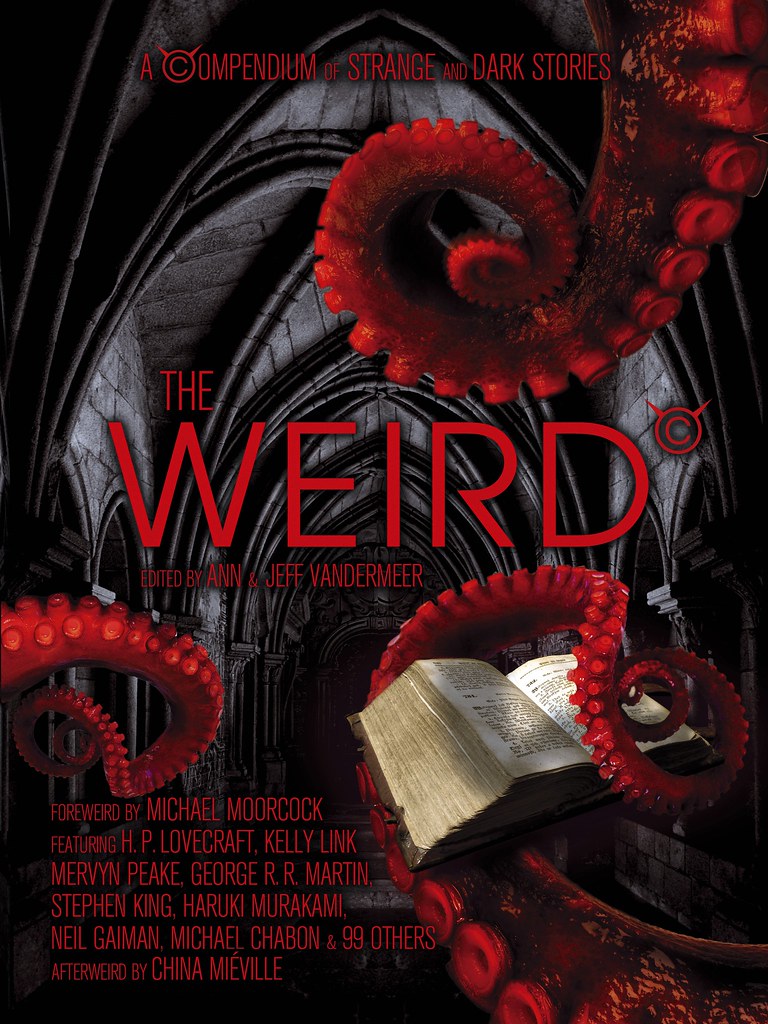
Mark interviewed Ann & Jeff VanderMeer, editors what could be considered a landmark tome: The Weird currently available in the UK via Corvus and available next year via Tor (YAY!), as well as the companion Web site: Weird Fiction Review.


They are sort of the power couple of Fantastic/Weird Literature as of late, Ann having edited Weird Tales, Jeff writing some terrifically imaginative novels (City of Saints and Madmen, Veniss Underground, and Shriek), and the two of them collaborating the Thackery T. Lambshead books.

Here's an excerpt of the interview:

Of the many tales you include, which are your personal favourites and why?

Ann: It’s difficult to pick favourites; in some ways I wish this book could have been twice the size! One story that I keep coming back to is Jerome Bixby’s “It’s A Good Life.” This story was made into one of my all-time favourite Twilight Zone episodes, which was a major influence on my early leanings towards weird fiction. I read this story for the first time in preparation for this anthology and was totally blown away. Keep in mind I know this story backwards and forwards – no surprises here, however, reading the story still gave me the major creeps. And just talking about it now is bringing that creepy feeling straight back to me.

Jeff: That’s so tough...Just being able to include work by Julio Cortazar, Angela Carter, Ben Okri, Shirley Jackson, and Jorge Luis Borges, for example—those were all my heroes growing up and huge influences on me as a writer. So being able to reprint their stories is almost overwhelming. In terms of individual stories, I love some of the more out there stuff like Eric Basso’s “The Beak Doctor”. But I am also a huge fan of Aickman, and I still find his “The Hospice” one of the strangest and at times absurdly funny tales of the supernatural ever written. The Michel Bernanos is one of the greatest weird tales ever written. I also loved that George R.R. Martin’s “Sandkings” held up to a re-reading. Then there are the stories you don’t appreciate until you revisit them. Like Kelly Link’s “The Specialist’s Hat,” which I love now. Murakami’s “The Ice Man” is a great story. Steve Duffy’s “The Lion’s Den.” I could go on and on. It’s so difficult to choose.


Kathryn (aka Loewryn) reviewed the first book in new series (The Cursed Kingdoms Trilogy) by Emily Gee: The Sentinal Mage.


The story is told to us through a moderate number of characters. The larger chapters revolve around Innis, Prince Harkeld and Justen, the prince's armsman, who is one of the shapeshifting mages in disguise. Harkeld's sister, Princess Brigitta or Britta as she is known by those close to her, is used to tell us a little about the politics of the land whilst Jaumé, a small boy, is our link to those directly affected by the spreading curse. These four main points of view compliment each other well and give us some insight into the world and its people. Jaumé and Brigitta elicit a lot of sympathy from the reader, the former for losing his family in a bloodbath at the age of eight, and the latter for being forced into a marriage with an overweight, sweaty man who rapes her multiple times a day. Together, these characters give us the means to view this world and the desperation of its people, but also the sheer amount of devastation that will fall upon the Seven Kingdoms if the curse is not broken.


Gee deals with a lot of themes in this book, and she does it well. Most prominent of all is the shapeshifting magic used by Innis, and how it affects her. Mages are forbidden from taking the form of other humans, but they also run the risk of madness if they hold forms for too long. I also thought that the way mages are seen was well done, as they were discriminated against in ways that are eerily reminiscent of techniques used in our past to demonise those perceived as different. There's use of derogatory terms such as witches, but also of stories and rumours that serve to represent the mages as subhuman, an example being the rumour that they engage in physical relations with animals. The third theme Gee explores is that of forced or arranged marriages, and how they affect those directly involved, but also those around the marriage.

Tuesday, October 11, 2011

Military SF Reviews at SFFWorld (McCarthy, Turtledove, Weber)

Another Tuesday brings links to three SFFWorld reviews to today’s blog post – one from Mark, one from Kathryn (aka Loerwyn aka Cheerwell in the forums) and one from me.

I’ll start with mine, for the rather unscientific and random reason that my review is of a debut novel. T.C. McCarthy’s Germline is not only a debut, but the first book in The Subterrene War Trilogy. I was very impressed with his ability to convey war, bleakness and his overall narrative power. Here’s the standard snippet/cover/linkage::

Did I mention this is a bleak novel? Raw might also be appropriate, disjointed as well. McCarthy is after all telling a story of war and nothing is spared – the death, the blood, the sickness, even the pure discomfort of having what is essentially power armor which includes a system to get rid of personal waste – there’s the rawness, and that is merely one fraction of it. Some people may consider disjointed a negative comment, but here, the disjointed feeling of the narrative is, I gather, completely intentional on McCarthy’s part. Again, this is a novel depicting war on the front lines from a protagonist with serious addiction issues and mental instability. There’s almost a dream, rather nightmare, sense as Oscar bounces from platoon to platoon over the course of the novel thanks to the many battles and near battles in which his squads get involved.


McCarthy is juggling a number of themes in Germline, and what shows his skill to an even greater degree is how these themes integrate into a sum of a novel that is greater than their parts. It should be noted that McCarthy has a governmental background so a good deal of the elements in the plot feel genuine.


Kathryn/Loerwyn takes a look at a new book (also the first of a series and the author’s first aimed at a young adult audience) from a writer both she and I have been coming to read a lot more of recently, David Weber. The book is A Beautiful Friendship and is the first of the Stephanie Harrington series spun out of the Honorverse. I liked the story as a short story when I read it the big Weber anthology and hope to get to the novel soon:


As a read, it's enjoyable. There are moments where I found myself laughing at something a character (usually Stephanie) said, and moments where I was concerned that something terrible would happen to one of the characters. Stephanie and Climbs Quickly are good protagonists and drive the book well, and they interact with other characters in a fairly natural and organic manner. The main plot itself is also interesting and is arguably relevant to what is happening with our own planet and the harm we may be causing to the creatures with which we share the world.

Despite the fun I had with this book, I feel as if it's confused as to what it wants to be. On the one hand, the prose is written in a fitting style and it's centred around a twelve-to-fourteen year old girl. On the other, Weber spends considerable time explaining things to readers, such as scientific principles and legal rights, which seem unnecessarily over-complex for a young-adult novel. At one point there was a discussion relating to planetary land rights, the details of which seemed largely unnecessary to the plot whereas a more simplistic explanation would have sufficed. Weber also leaves a lot of the terminology unexplained, although a glossary at the back attempts to explain details such as the dates, but I felt it did so poorly and left me with no greater understanding.


Mark’s catching up with one of the dozen or so, and most recent, of Harry Turtledove’s alternate history sagas, Hitler’s War: The War That Came Early

Hitler’s War, the first in an ongoing series, is one whereby the origins of World War Two are altered. In this scenario, there are two major changes. The first is that José Sanjurjo, a general in exile in Portugal returns to lead Spain’s Nationalist fascists in 1936 (during their Civil War) surviving a plane crash. The second is when, during the Munich Conference in 1938, Konrad Henlein, a political leader of Sudetenland Germans is assassinated by a Czech.

Against these global backdrops, Harry tells the tale through a broad range of people, from a variety of different backgrounds. The range is broad, the characterisation shallow, though there’s a nice variety of viewpoints from characters as diverse as Czech soldier Vaclav Jezek, Russian bomber pilot Sergei Yaroslavsky, German Panzer Sergeant Ludwig Rothe, stranded American civilian Peggy Druce, Japanese soldier in Mongolia Hideki Fujita, and American mercenary soldier in China Corporal Pete McGill. The list is lengthy! Some survive all manner of awful events, whilst others don’t make it. Part of the fun of these broad sweeps is working out who lives and who doesn’t, as well as realising the difficulties and hardships the author puts the characters through.


Tuesday, August 09, 2011

Age of Zeus Plus Two Interviews @ SFFWorld

Just one review this week, but a couple of interviews to keep things nice and active at SFFWorld. We’ll start with my review of a book that provides a crackling mix of mythology and military science fiction, The Age of Zeus by James Lovegrove:

Imagine the Greek Gods are real and have returned to Earth. Imagine they’ve set up shop as the new rulers of the world, but aren’t exactly benevolent. Imagine humanity fighting back after about ten years of being subjugated by those gods. Well, James Lovegrove has imagined such a scenario and told the story in The Age of Zeus, the second novel in his thematically linked Pantheon Trilogy* of books. If I were the type to throw a high-concept tag line onto a book, and I am, I would say this is book is one part John Scalzi novel, one part God of War video game, and all-together fun and entertaining.

In such a fun and entertaining novel, Lovegrove still has room for touching on some deeper issues. For example, with Sam as our protagonist, we get to view a man of power, Landesman, from the outside as she deconstructs his motivations and just who he is. With many members of the Titan army, Lovegrove explores the sense of loss and motivation for joining Landesman's Titans, as well as the power of religion and interpersonal relationships.


Recent interviews include

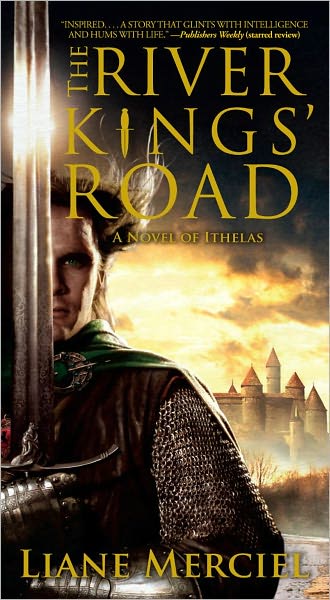
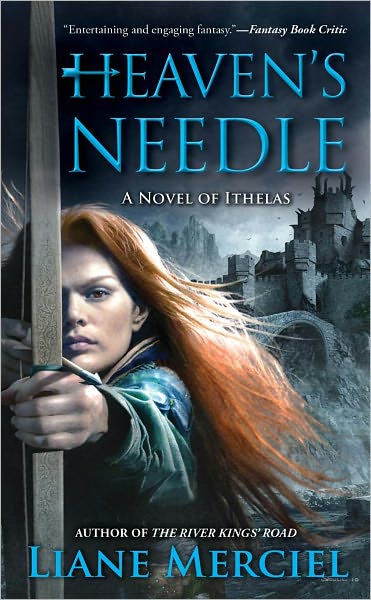
Liane Mercel – author of Heaven’s Needle which is the sequel to River Kings Road


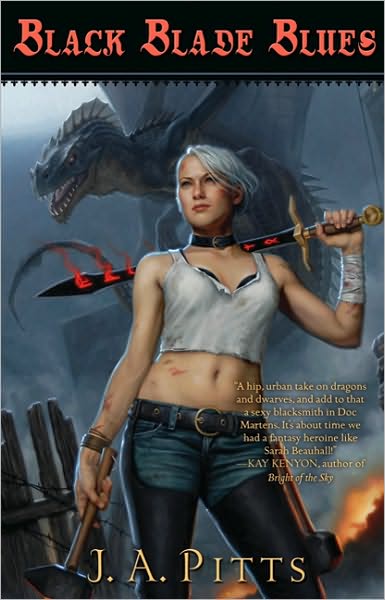
J.A. Pitts – author of Black Blade Blues and the forthcoming sequel Honeyed Words


Wednesday, July 20, 2011

Dreadnaught, Bioshock, and Bloodshot Reviewed at SFFWorld

We’ve got three new reviews up at SFFWorld, one from Mark, one from Kathryn (aka Loerwyn aka Cheerwell in the forums) and one from me.

I’ll start with link/excerpt dump with the newbie’s review. Many people have played the game Bioshock (myself enthusiastically included) and as a result, the fine makers of the game thought it would be a nice idea to publish a novel based in the undersea city of Rapture. So they enlisted the pen of acclaimed writer John Shirley and Kathryn read the result Bioshock: Rapture and here’s what she thought of it:

BioShock: Rapture is everything it promises to be, and does so quite well. We start off in the years preceding the creation of Rapture, but after the devastating attacks of the US on Japan, and over three parts we watch Rapture go from an idea through to a decaying ruin. At the start of each chapter, the author notes the year, and sometimes month, in which those events happen, and it allows the reader to contextualise everything from the events of the surface world through to even the smallest cultural references, such as the mention of the rise of rock 'n' roll. We also see the city through the eyes of a number of characters and this gives us a very good view of what is happening to each of the major players of the series. All of these viewpoints are written in different styles relating to the character they follow. For example Bill, a working class plumber, has a 'Scouser' accent that comes through in his narration as well as his dialogue, whereas Andrew Ryan's chapters are generally more formal.


As a tie-in novel, it's aimed squarely at those who've played through the two games currently released.


I’ve been on more of a SF kick this year than in past years and one series that’s been coming up (thanks to Mark Yon’s review and Mark Chitty’s enthusiasm for the books) is Jack Campbell’s Lost Fleet. Campbell started a second series about hero Admiral John “Black Jack” Geary with Beyond the Frontier and I reviewed the first book, which published in April 2011, Dreadnaught:
A lot of the political maneuvering was handled fairly well, and I felt Campbell portrayed the conflict between military and government believably. Geary’s bouncing ideas of his subordinates was also done nicely. This back-and-forth took up a large portion of the novel, and in a sense, allowed me as a new reader to get a fuller sense of Admiral Geary’s situation and provided a fairly logical way for Campbell to lay out events in the previous six book series. I would have liked some more action in the early part of the novel and I suspect fans of the previous books might be slightly frustrated with some of the retreading of prior events.

I came to this novel not having read the previous six book series, so the only knowledge I had of the book was anecdotal and some relatively positive reviews. On that count, I wasn’t too lost as a new reader, these characters obviously have a history, but not knowing that history didn’t detract from my ability to enjoy or fully grasp the situations in the novel.


Whereas I've been delving into the Science Fiction side of things, Mark seems to be on a bit of a vampire kick and as such, reviewed Cherie Priest’s foray into the urban fantasy/vampire genre Bloodshot, the first of the Cheshire Red Reports series
This is Cherie’s tenth novel, but, as far as I know, first foray into the urban fantasy culture. The plot, at least in brief outline here, sounds like pretty standard fare. Vampire-thief Raylene Pendle (AKA Cheshire Red) is quite happy making a living stealing valuable art and jewellery in Minneapolis. When she is asked by blind, debonair vampire Ian Stott to steal government secrets instead, she finds she has opened a major security breach involving something called Project Bloodshot in a secret government laboratory and stirred up a real hornet’s nest with documents that have an automatic trace on them that raises the interest of the military, the CIA and the Men in Black.

Though initially the premise may sound familiar, this has some nice strengths. There’s actually a lot to like here. It’s got a cracking pace and snappy dialogue from the off. We quickly get to know Raylene/Cheshire, as this is a first-person narrative, and she’s clearly an intelligent, feisty and nicely ambiguously-moralled character, if a little neurotic. She’s also snarky and seriously nasty at times, as you might expect from a vampire more than a century old, but has another side to her character that also looks after two homeless kids in one of her abandoned warehouse gaffs.