Showing posts with label Three Investigators. Show all posts

Monday, April 28, 2014

Completely Melded at SF Signal

Last week, I appeared on the great SF Signal twice! (Two, ponderous!)

First was my participation in the Mind Meld curated by the wonderful Kristin Centorcelli (AKA MyBookishWays), the topic of which was: Books That Have Had a Profound Effect on Readers and Writers

Books have the power to make us laugh, cry, and everything in between, and there are those books (you know what I’m talking about) that can actually change the way we think and influence us in very powerful ways, even changing the course of our lives. I asked our panel this question:


Q: As authors, and readers, what book or books have affected you in a profound way, and why?
Here’s part of my response…


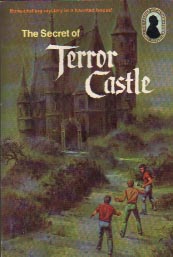
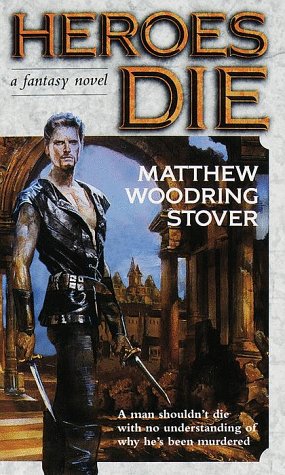
As kid, I was I thoroughly enthralled with The Three Investigators series of books, which initially featured Alfred Hitchcock as mentor to young investigators Pete Crenshaw, Bob Andrews, and Jupiter Jones....Stephen King’s books appear on this roadmap twice, the first of which is Cujo. My parents were two of his many constant readers and Cujo was the first of his that I read, oh maybe around fifth grade? Why Cujo? While my mom was always a big reader my dad was not. That is, until he read Cujo (quite frankly he still isn’t unless King or Joe Hill wrote the book), so naturally, this was the one I gravitated towards and it was the first true for-grown-ups book I read.... the work of Matthew Woodring Stover came to my attention with Heroes Die. This is the book in the genre I use as a measuring stick to judge most of everything else I read in the genre nowadays.


John D. also posted my latest "Completist" column was also posted, featuring Mark Chadbourns's Celtic-flavored Apocalypse The Age of Misrule:


Mark Chadbourn’s AGE OF MISRULE trilogy is the first of three connected trilogies and it was the first set of his books to make their way to the US. As I’ve indicated in previous columns, the imprint Pyr made a nice splash in its early years through a combination of brilliant new voices (David Louis Edelman’s Jump 225 Trilogy) and bringing books to US readers previously only available in other countries. I recalled reading about Chadbourn’s Celtic-flavored apocalyptic series and was curious about the books so I was very pleased when Lou Anders signed Chadbourn and published these books. What’s more, he had the three books wrapped in stunningly gorgeous artwork from John Picacio.
...
Flavors of Horror, Dark Fantasy, Mythic Literature, and Epic Fantasy blend very well and that might be the strength of the trilogy. Early on, the series has a slight feel of horror and even urban fantasy. Chadbourn does a very good job of giving an overall unsettling feeling to things. It proves for a fascinating read, but for the characters, this unsettling feeling is transitioned well from fear and shock to understanding and acceptance.

Thursday, September 27, 2012

The Six Most Influential Books in My Life

Since Aidan and Nila did this based on Justin’s post, I might as well join the fray. Of course distilling a lifelong passion for consuming the written word into five six plus a few collections of those written words is not an easy task.

The Three Investigators by Robert Arthur

While other kids were reading about Nancy Drew and the Hardy Boys, I was riding along with The Three Investigators. I don’t recall which of the many The Three Investigators novels was the first I read, but I’m going to guess it was The Secret of Terror Castle since it was the first in the series. Well, as I originally read the series when I was a wee lad in New Jersey it was Alfred Hitchcock Presents the Three Investigators. I visited the library often to take out an unread book in the series and eventually, started buying the series in the mall stores like B. Dalton and Waldenbooks. (Yeah, I just dated myself)

Like the best crafted series, these books could be read in any order, since Robert Arthur managed (and this is coming from a spot which has been in my memory for over two decades) to convey each of the three young investigators – Jupiter Jones, Bob Andrews, and Pete Crenshaw as distinct characters. The little logo onthe book sported Hitchcock's famous silhouette since he was a mentor for the boys. Sorting through my memories of these terrific books, I’m not surprised in the least that I was drawn to these books and tried to devour all the books in the series for they have a fair amount in common with one of my favorite cartoons of all time – Scooby Doo. Both properties involve youthful investigators and more often than not, the seemingly supernatural MacGuffin (or Red Herring) was a guy in a costume or something not supernatural at all. 

As the series continued, the agreement with Alfred Hitchcock lapsed and a famous “actor” named Hector Sebastian took over as the boys's mentor. The series was continued at one point with the three boys at older ages, re-released and even had a Disney movie (direct to cable) made a couple of years ago.

Anyway, The Three Investigators is what introduced me to the idea of an ongoing series in prose form. What I found pretty cool is that Brandon Sanderson has pointed to this series as influential


The Talisman by Stephen King and Peter Straub

My parents were readers, though my mother more so than 'my father. One author they both agreed upon was Stephen King and like many children of the 1980s who enjoyed reading, I gravitated to Mr. King’s fiction. Although the first from him I read I think was Cujo (when I was in third grade and still is as good a POV from through the eyes of a dog as I've ever read), I’ll have to say the King novel to have the biggest impact on me was the fantasy novel he co-wrote with Peter Straub. Of course, I speak of The Talisman. It was the first book I read more than once and much of the landscape of The Territories still remains strongly in my memory. Although King & Straub were by no means the first to introduce parallel worlds / multiverse into fiction (Moorcock and the D.C. Universe predate them by a couple of decades), but The Talisman was my introduction to the concept. I still see the scenes of Jack Sawyer flipping, dealing with his friend Wolf and the hell he experienced thanks to Sunlight Gardner’s School quite vividly. My dad has the Donald M. Grant two-book limited slipcase edition which contains some gorgeous art.

I haven’t read it in years, but for a few years, I read The Talisman three or four times over the course of five years.

DragonLance: Chronicles by Margaret Weis and Tracy Hickman

If The Three Investigators introduced me to the concept of “series” in prose fiction and The Talisman was something of an introduction to fantasy, then the final piece of this here Triforce would be the Chronicles as fans have come to refer to these books. My young RPG group played Dungeons and Dragons quite often and my friend John had a copy of Dragons of Autumn Twilight lying on his bookshelves and what about that Larry Elmore cover didn’t appeal to me at the time? I of course asked if I could borrow it from him. After devouring the book, I decided to get the first of what would eventually be many volumes in my personal Omnibus Hall of Fame – the Big White Book which contains all three novels in the original trilogy. This big ol’ omnibus is now dog-eared after multiple readings and served as my foundational fantasy series/novel.


Frankenstein by Mary Shelly

For a number of reasons, the least of which involves the words on the page. You see, as an undergraduate English major, this book was on the reading list of half of my classes so I read it quite often. The most important of those classes was my Science Fiction Literature class at Rutgers University in 1994. Why is that class so important? I met my wife in that class. Don’t get me wrong, I think Frankenstein is a masterpiece, a dark, gothic, brooding story of one man’s vanit, his weakness and god complex that serve as the foundation for both Science Fiction and Horror. But yeah, Frankenstein was the first book we covered in that class (of approx 200 students in a school of 30,000 students) where my wife and I met in Scott Hall 135. I've analyzed the book from a few standpoints and remembered being in awe of it. Also on that syllabus: Dune, Hello, America by J. G. Ballard, The Eye in the Sky by Philip K. Dick, the David Lapham comic books Warriors of Plasm, the marvelous Dawn by Octavia Butler and the two books I abhorred and couldn’t finish: The Difference Engine by Bruce Sterling and William Gibson and Solaris by Stanislaw Lem. As part of that course, we were also required to watch Metropolis and Blade Runner.


The Eye of the World by Robert Jordan

As I’ve mentioned on the blog previously, this is the book that sucked me fully into fantasy and science fiction after graduating college and having free reading time on my hands. Were it not for this book, I may not have discovered the SFFWorld forums back in 1999. Had I not joined those forums, the great overlord Dag Rambruat may not have asked me to join the behind-the-scenes workings as a forum moderator, and later book reviewer and this blog might not even exist.

I reread the book two years ago and was pleased at how well it stood up to my initial reading memories. Having read much of the series, it was also impressive to see how impactful much of what happened in the first book is for later installments in the series.

Heroes Die by Matthew (Woodring) Stover 

This is the book that changed the prescription of my fantasy-reading lens. Stover’s violent novel mixes elements of fantasy/mythology and physics in a novel that launched. Stover’s Caine (aka Hari Michaelson) is one of the most complex, interesting, and engaging characters I’ve ever encountered in fiction. Each subsequent installment in what has become The Acts of Caine shows Stover flexing his writing muscles, but this is the one that started it all and the book that forced me to look at the genre differently and experience it differently than I did before reading the book.

It remains my favorite book published in the last 15 years and I suspect if Heroes Die were published today, it would be more widely read and appreciated. In short, I think Matt Stover was ahead of his time with this book.

OK, some honorable mentions, two of which are considered The Great American Novel (at least of their respective centuries of publication) The Adventures of Huckleberry Finn and The Adventures of Kavalier and Klay.  I think Chabon's Pulitzer for Kavalier and Klay says it all.  I'd also add to the almost list 1984 (one of the few perfect novels, IMHO) and perhaps the pinnacle of superhero deconstruction Watchmen, a graphic novel I read about once per year and discover something I'd missed on previous readings.

Right, so there you go. I would't be surprised if I changed my mind at a later date, but the six books highlighted above have probably had the most influence on me as a reader.

Tuesday, February 10, 2009

Magic to the Bone and Sherlock House

Urban Fantasy is the it sub-genre of Fantasy & Science Fiction, if not in general. Right, my other bit of news is that everyday the sun rises. The latest book review I posted is from a new author; a woman author, and falls firmly within the Urban Fantasy arena – three elements/book types I wanted to read more of this year. In this case, the book is Devon Monk’s Magic to the Bone. While I enjoyed it, I wonder if the aspects of the book that didn't work for me are indicative of the subgenre or of Monk’s writing. Anyway, here’s a brief snapshot of the review:
We are firmly in Urban Fantasy/Paranormal Romance (at least as the genre label is known and used today) territory here: mystery, romance, and magic cobbled together in what amounts to a solid page turner. The novel is told in the first person through Allie’s engaging voice, but as the novel marches along, it becomes evident that Allie just might be an Unreliable Narrator. The tag line on the back of the novel indicates, “magic has a price” and in this case, for every spell Allie casts, part of her memory dissolves. Although she carries around a pen and pad to help keep her personal facts straight, when events are chaotic (for the most part the whole novel, but if they weren’t chaotic the novel wouldn’t exist, she doesn’t have the chance to record events as they happen. Monk has created an interesting, flawed protagonist who, for the most part, comes across as genuine and sympathetic.
In other late-breaking news, Mrs. Blog o’ Stuff and I have become somewhat addicted to House. This goes against, in some ways, my personal expectations. I’ve long been tired of hospital/doctor shows and the commercials on FOX with the deep-voiced announcer always saying “…on the next HOUSE” were a turn off. Mrs. o’ Stuff got sucked into an episode about a month or two ago and we’ve both been hooked on the USA re-runs ever since. Watching the show has made me realize how much I really enjoy mystery stories, at least in a filmed context (Criminal Minds, CSI (original), Without a Trace). This is pretty logical since I cut my teeth as a young kid reading The Three Investigators mysteries. Anyway, House the character comes across as snarky, cranky, brilliant, and humorous character. Kind of like Larry David from Curb Your Enthusiasm except smarter and intentionally snarky.

It’s been said many times how House is blatant stand-in for Sherlock Holmes. As a result, and coupled with how much I enjoyed the film Young Sherlock Holmes, I recently dug out Mrs. Blog o’ Stuff’s The Complete Sherlock Holmes from one of the many boxes of books in the various rooms in our house. When I get to reading it is a different story.

Monday, September 17, 2007

The Wheel Turns...R.I.P. Robert Jordan

James Oliver Rigney, also known as Robert Jordan passed away yesterday. I’m just one of many blogs, fans, and news sites reporting this, but it is still worth mentioning here. His Wheel of Time is easily one of the most popular (if not the largest) multi-volume sagas in the genre and helped to make fantasy (and I’m sure by extension, Science Fiction) a more commercially viable genre in the nineties on through to today. For all the finger pointing at Jordan for his shortcomings as a storyteller, he was one of the great “gatekeepers” of the genre, and hopefully will be for many years. The Eye of the World, and to a lesser extent his Conan novels, are some of the first fantasy books people read, or fiction people read in general.

I can only relate my own experience with his writing, and how it helped to bring me back in a greater way to reading fantasy and science fiction. I’d always enjoyed reading; after all I was an English major in college. As I might have said, I cut my reading chops at a very young age on those Choose Your Own Adventure books as well as The Three Investigators, then I moved onto Stephen King somewhere just before middle school. That brought me a bunch of horror, basically whatever my parents had on the shelves. Then, I found Dungeons & Dragons as a game, and DragonLance as a story. Soon, though, college called and my “free-time” reading became something of the past.

As college wound down, my free reading time returned. One of the first books I recall buying was The Eye of the World; I saw something about this Wheel of Time series on one of those news shows the SciFi Channel once aired, Sci Fi Buzz hosted by Mike Jerrick. He and Jordan were discussing the Wheel of Time. The concept interested me; I liked the idea of resonating myths coming to life; a fantasy world that has echoes of our own. I recalled Jordan’s name when I visited Barnes & Noble some time later. I figured, what the heck, the book looks interesting. I was hooked, and I have to admit to still recalling some of the scenes from the first book pretty clearly even a decade later. When I joined the Science Fiction Book Club shortly thereafter, I wound up ordering the next two books and read though them fairly quickly. I didn’t want to have to wait to mail in my order the SFBC and then wait for them to deliver the next books, which would have been The Shadow Rising and The Fires of Heaven, so I bought one in paperback and the other as a discounted hardback.

I remember reading some of the scenes in Lord of Chaos long into the night and in general, those first five or six books of the Wheel of Time were some of the most fun and compelling reading experiences I had, at least up until that point. Despite how a couple of the later books in the series left me unsatisfied, The Wheel of Time will always have a special spot on my bookshelf. I’ve been wondering for a while now if the first books would hold up as well if I were to re-read them. I was considering going through them again once the final book was to be published. Perhaps, as David Gemmell’s widow did, Jordan’s widow can finish off the last volume. She was, after all, his editor.

Before The Eye of the World was published, Jordan published other novels, but he also lived a damned interesting life. He studied physics at the Citadel, he was a nuclear engineer, and fought in the Vietnam War where he received awards for his bravery in the war and settled into a house built in the late 18th Century. Not a shabby set of life experiences, if you ask me.

Robert Jordan, through his Wheel of Time, was an ambassador to the genre, welcoming new readers. Jordan has been compared to Tolkien, and say what you will, Jordan’s importance to the genre cannot be understated. George R. R. Martin has already posted a very nice remembrance of Jordan and a thanks, as have many others. The Wheel of Time helped to make fantasy a much larger genre, and brought in a large audience. As of yesterday, the genre has lost another giant and is a shade smaller.

For that, and the many hours of reading pleasure he brought to his fans, James Oliver Rigney will be missed. Death is never easy, even when you are given a set time to live. My condolences go out to his family, friends and many readers, including those who came together in life through his books.

Over at SFFWorld, we’ve got a thread recalling his work where our members are posting their thoughts and remembrances.

http://ofblog.blogspot.com/2007/09/rip-jim-rigney-robert-jordan-1948-2007.html
http://grrm.livejournal.com/21250.html
http://www.tor-forge.com/NewsArticle.aspx?articleId=574
http://www.dragonmount.com/RobertJordan/?p=90
http://nielsenhayden.com/makinglight/archives/009381.html#009381
http://en.wikipedia.org/wiki/Robert_Jordan
http://thewertzone.blogspot.com/2007/09/very-sad-news.html