Showing posts with label Vampire. Show all posts

Thursday, June 22, 2023

Book Review: Blood Country (The Raven #2) by Jonathan Janz

Publisher: Flame Tree Press
Page Count: 288 Pages
Publication Date/Year: 2022
Genre: Horror

I’ve been making my way through Jonathan Janz’s backlist over the last couple of years. About a year ago (June 2022), I read and thoroughly enjoyed The Raven, his take on the post-apocalyptic story, but with a very potent horror lacing throughout the story. Blood Country is the second novel in the series and the focus, as the title implies, is vampires.

Briefly, in the world of The Raven, a group of rogue scientists released a virus that transformed humanity into creatures out of our nightmares: werewolves, trolls, cannibals (the strength of the people they eat is added to their own), witches, and vampires. Dez McClane is a rarity, he was unaffected by the virus so he is a man without any added abilities. Since the first novel, he’s been searching for the woman he loves. The conclusion of that novel provided him with a direction to head: Blood Country, the land of the vampires. With the woman he saved (Iris), Dez sets out to find his girlfriend Susan and to hopefully right a wrong.

Reading The Raven is a must before diving into Blood Country as the two novels very much feel like two episodes of a larger story, and the story Janz is telling in these novels is an absolute blast. He puts us in Dez’s head, which allows Dez’s fears and doubts to be felt quite effectively. Before the events of the series, Dez lost his family and has blamed himself so his self-blame is only increased with the loss of Susan.

Dez, Iris and their other allies (Michael, a man who can control fire as a result of the changes to the world, a young boy named Levi, and a couple of other allies I won’t spoil) head to the heart of Blood Country, a high school which serves as the seat of power for the vampires, particularly the Vampire Queen. Once they arrive at the high school, the action gets more intense and the emotional twists and turns become more sharp.

The story is very brisk and works somewhat cinematically. I was able to visualize a lot of the action Janz was relaying the novel and felt myself turning the pages rather quickly as a result. In the relatively short space of the story (under 300 pages), Janz crafts a story that is equal parts breakneck plot and character. After having read a small sampling (4 novels at this point) of Janz’s work, I’ve found my reading sensibilities really sync up with the stories he writes. When I was younger, one of my favorite RPGs was Gamma World. I think what appealed to me about that game is something Janz nails so well, even if Gamma World leans more towards fantasy-based monsters and Janz is firmly planted in horror.  The mix of “our world” and something fantastical and horrific is what both these things capture so well. Ultimately, Blood Country was just pure fun for me because I love an over-the-top apocalyptic tale, especially when there are monsters and/or mutants of some kind.

After two novels in The Raven series, I was very pleased to learn there will be at least one more novel. The conclusion most certainly left a very clear path where these characters need go and I cannot wait to catch up with Dez and his crew. The world and characters seem rather fertile for more stories and the length of the two novels so far lend themselves nicely to an episodic, long-form story that could lead to more than just one additional novel.

© 2023 Rob H. Bedford

Monday, October 20, 2014

Hallowe'en Reading 2014 - 'SALEM'S LOT by Stephen King

I have a long association with Stephen King’s fiction, as I may have mentioned in the past. I would say I’ve read about 80% of his novels and many of short stories, but before last week, one of the major oversights of his bibliography for me was his classic vampire novel ’Salem’s Lot. Well, that oversight has been “corrected,” to borrow a term from another of King’s work. In short, I enjoyed the hell out of the novel.

Cover of original US Hardback.
My dad has a copy of this.

As has likely been recounted about this novel, ’Salem’s Lot is King’s mash-up of Peyton Place and Dracula. Both novels are referenced in the text of ’Salem’s Lot: one character (Matt Burke) is remarked to remind the others of Van Helsing and Peyton Place is even called out by another character. After a brief prologue featuring Ben Mears and a young boy after the events of the novel transpire, King introduces the populace of Jerusalem’s Lot in a leisurely fashion. ‘Salem’s Lot (or The Lot), as the inhabitants call it, seem to know each other and each other’s business; the quintessential New England small town. Their everyday life is shaken up when visitors arrive: writer Ben Mears arrives looking to exorcise some past demons through writing a book and Straker & Barlow, two antique salesmen who arrive looking to set up a new shop. Ben and Straker & Barlow are both interested in the old Marsten house which overlooks the Lot to the point that Ben was going to rent it out until he discovered Straker & Barlow have taken up residence in what many feel is a haunted mansion.

Cover of the MMPB I read. I've
had the copy for at least a decade.
While some of the characters can be considered to lean towards cardboard cut-out territory, King gives a lived in, familiar, and quaint feel to the Lot. This is one of the novel’s strengths, its sense of place and initial comfort. The other strength is the subtlety and slow reveal of the terror hiding in the shadows, aside from the dog’s head on the pike early in the novel, of course. The subtlety is when the human characters interact with the vampire; there are more hints than description, allowing the reader to finish the scene with their own imagination. Though King can imagine terrifying things, it is this cooperative horror that proves to be so effective in ’Salem’s Lot.

Where the novel stumbles is two-fold and both of these I’ll generously attribute to the time the novel was published and the fact that it was King’s second published novel. The relative lack of female characters stood out to me. We have one primary female character – Susan Norton – and while it is through her eyes we initially see the novel she’s little more than a romantic entanglement used to drive Ben Mears through the plot and provide him tension and action. The only other truly (and fully) positive female character in the novel is Eva Miller, owner of the boarding house where Ben takes up residence during his time in the Lot. Most of the other women are portrayed in varying degrees from middling to quite negative.

The other stumble is some of the flowery early interaction, between Susan, her family, and Ben. I’ll chalk this up to being a novel of its time in how the characters talk. Susan and Ben fall for each other quite quickly and the language King uses to show them falling for each other reads as a bit put upon by today’s standards.

Some other points to note about ’Salem’s Lot:
  • It is the first (of many) Stephen King novels to feature a writer as the protagonist
  • King would return to similar themes, specifically small town with a dark cloud of monster(s) hovering: It, Needful Things, The Tommyknockers and to a lesser extent The Dark Half
  • Tangentially, like Needful Things, ’Salem’s Lot features a small town disrupted by the arrival of a strange visitor
  • Like IT, ’Salem’s Lot features a small town with some historically recurring darkness
  • As the King constant reader knows, Father Callahan later shows up in the fifth Dark Tower novel, Wolves of the Calla
  • I think part of the reason Needful Things has a lesser reputation in King’s bibliography might be because of how it echoes ’Salem’s Lot (I personally liked Needful Things but it has a special spot for me relating a great deal to when I read it, as I point out in that link at the top of this post).

My colleague (though we’ve never met, and I mean colleague in the sense that some of our writing appears at the same place) Grady Hendrix over at Tor.com wrote about ’Salem’s Lot as part of his Great Stephen King Reread. While he does make some points I can grok even if I don’t agree with them, one interpretive point I can’t agree with is his assessment of the Marsten House. He suggests there’s no real reason for Barlow and Straker to set up residence at the Marsten House. The answer, for me, is right there in the novel. Throughout the novel, characters remark that The Marsten House is a magnet for evil, ever since old Hubie Marsten lived there and committed horrific acts, supposedly demonic sacrifices, killing children, and killing his wife.

The other point on which Grady is also flat out wrong is the character of Mark Petrie; Grady makes Mark out to be something like Harold Emery Lauter when in fact, Mark is fairly well-adjusted and manages to take out the school bully early in the novel. This sort of informs us that Mark, coupled with his love and knowledge of horror/monster movies, is as well-equipped as any character in the novel to take out Barlow. Mark’s calculative methods prove very useful to the plot and if he were nerdy and off-putting, the two other kids we see in the novel (the Glick Brothers) would have been more hesitant to visit him. (Admittedly, Grady recants some of his thoughts on Mark).

I’ll split the hairs regarding Grady’s take on the one-dimensional hillbilly characterization of the ‘Lot’s inhabitants. Most of them don’t really stretch beyond their cliches, like that of a cheating spouse or an abusive mother, but those folks don’t need much more attention than their archetypes in this particular story for me. Again, I see Grady’s point here and can agree with it to an extent.

As for the adaptations of the novel, I watched the old TV miniseries once years and years ago. I hadn’t been aware of who James Mason was at the time, but now I want to rewatch it just for James Mason. I did not see the 2004 remake with the stellar cast of Rob Lowe, James Cromwell and Rutger Hauer but that interests me now, too.

’Salem’s Lot was an incredibly addictive read and I can understand why this helped to set King on the path of superstardom. I’m not sure exactly where it ranks against the other King novels I’ve read only because the later books I read were after he became a more polished writer and storyteller. All told, I really enjoyed the novel despite some of its flaws.

A post-script: Any and all King fans and Constant Readers should check out Grady’s reread project, there’s some good insight to the books in his articles and I’ve reexamined my own thoughts on some of King’s work.

Monday, November 28, 2011

Michael J. Sullivan Sullivan and George R.R. Martin's Fevre Dream Reviewed

Some new things up at SFFWorld recently, the first of which went up today – my interview with Michael J. Sullivan. Michael’s really in the process of hitting it big time as Orbit gives a wide release to his popular and acclaimed Riyria Revelations series.


Here’s a bit from the interview:

What has the transition been like going from primarily being published in eBook format to traditional published format?

It’s really hard to say…ask me in another year ;-) The books are just now showing up in stores and I’ll admit it was fun seeing how excited Robin was as she checked various Barnes and Nobles to see who had the books in stock. We were having breakfast together and she kept typing in various zip codes from around the country. (Davenport Iowa didn’t have any books on that day, but I see they do now.)

There has always been one dream of mine that probably never would have been realized when I was self- or small-press published. I’ve always wanted to be on a train, bus, or airplane and find someone that I didn’t know reading my book. Considering the odds, it still may never happen, but at least I now have a shot at that. If it ever does, I don’t know if I’ll have the courage to go up to them and say, “What do you think of that book you’re reading.” A negative comment would be soul crushing…but in my imagination that meeting always has a happy ending.


Last week, in his ongoing quest to cover the genre's past, Mark reviewed George R.R. Martin’s classic Vampire tale, Fevre Dream:

This is a dark, dark novel, impressively staged and brilliantly portrayed. The oppressive atmosphere of the American South in the eighteenth century, with its decaying plantations, slavery, racism and isolated humidity, is there across every page. It is harsh and it is supremely creepy. Some of the scenes are heart-rending in their matter-of-factness. (There’s also an awesome meal scene to rival events in Ice and Fire...)

To this backdrop the characterisation is, as we have come to expect from George, sublime. Of the main protagonists, Abner is the obsessed Captain Ahab of the Mississippi, forever searching for his love, the Fevre Dream, whilst his nemesis trawls the river looking for new blood. Joshua York is, by turns, both unearthly and oddly deserving of our sympathy. There’s a definite feel of the melancholic martyr here, almost Elric-like in his timbre. Though a vampire, he is a reluctant one who bears his responsibilities heavily. His life story, told in about twenty pages, is simply told without embellishment and is almost worthy of a book of its own. In comparison, the bad-guy Damon revels in his impressively malevolent actions, yet like most paragons of evil, is perfectly justified in his own mind that what he is doing is right.

Sunday, September 18, 2011

Books in the Mail (W/E 2011-09-17)

A decent batch of arrivals, with a substantial portion being the October 2011 Black Library releases, plus a few other in the mix as well as "finished" (the copy you see on the bookshelves in bookstores) versions of ARCs I've previously received.


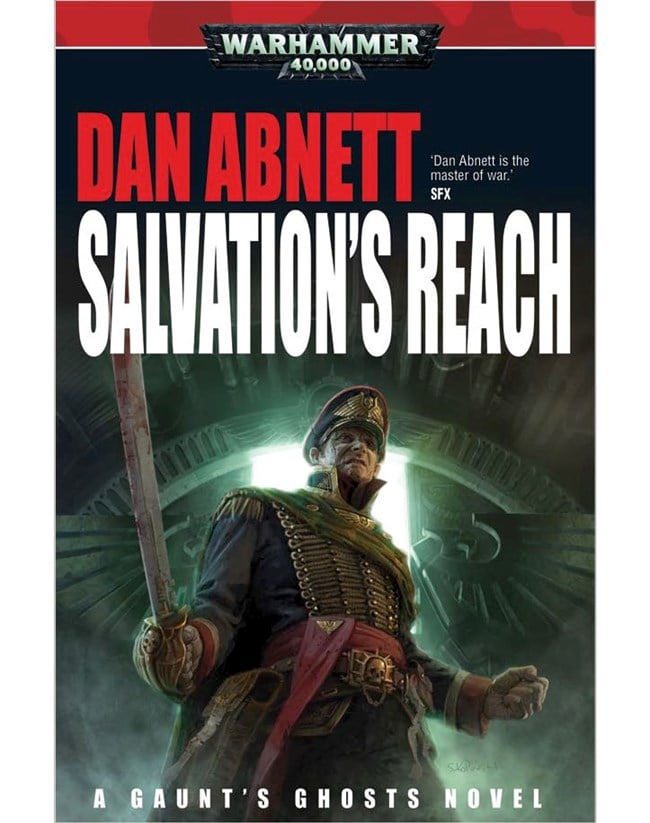
Salvation’s Reach (A Gaunt’s Ghost’s #13) by Dan Abnett (Black Library 10/04/2011) – Black Library’s most popular author, penning what is (arguably) one of (if not THE) most popular Military SF series (not just from Black Library, but Military SF, period) latest adventure.

The Tanith First-And-Only embark on a desperate mission that could decide the fate of the Sabbat Worlds Crusade in the thirteenth book of this popular Imperial Guard series.

The Ghosts of the Tanith First-and-Only have been away from the front line for too long. Listless, and hungry for action, they are offered a mission that perfectly suits their talents. The objective: the mysterious Salvation’s Reach, a remote and impenetrable stronghold concealing secrets that could change the course of the Sabbat Worlds campaign. But the proposed raid is so hazardous, it’s regarded as a suicide mission, and the Ghosts may have been in reserve for so long they’ve lost their edge. Haunted by spectres from the past and stalked by the Archenemy, Colonel-Commissar Gaunt and his Ghosts embark upon what could be their finest hour… or their final mission.

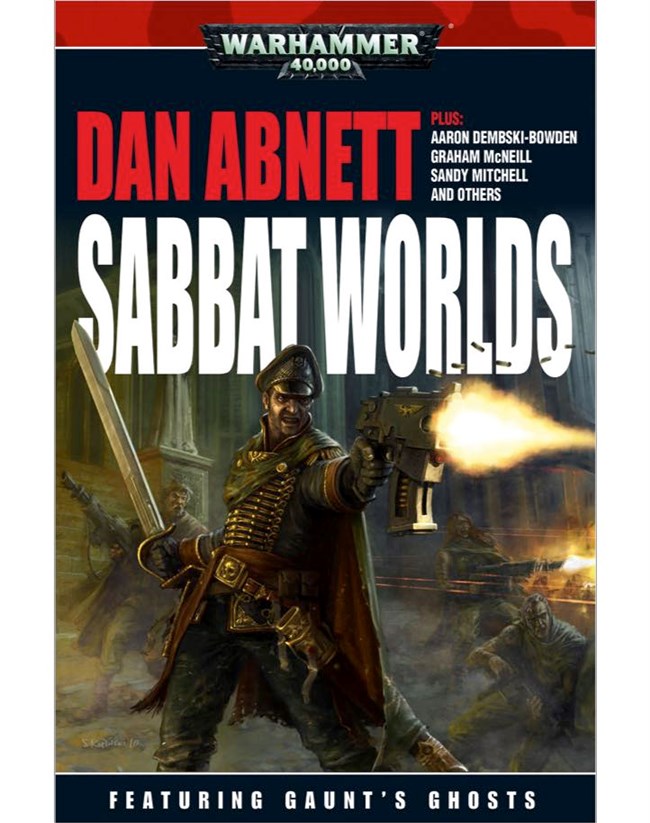
Sabbat Worlds (A Gaunt’s Ghost’s Anthology) by Dan Abnett (Black Library 10/04/2011) – Although Gaunt’s Ghost’s and Sabbat Worlds are indeed owned by Black Library, they are very much Dan Abnett’s babies and this anthology gives other writers from the BL stable a chance to join in the fun.

Across the Sabbat Worlds, a bitter conflict is fought, a conflict that can only end in victory or annihilation. The innumerable forces of the Arch enemy attack without mercy, and planet after planet burns with the flames of war. Yet even amidst this nightmare, the Imperial Guard stand stoic against their foes. The Phantine Air Corps battle the enemies of mankind across burning skies, while the Gereon resistance tries to break the foothold of Chaos on their beleaguered world and the legendary Gaunt’s Ghosts fight in the most violent and bloody of warzones. This anthology opens the gateway to the Sabbat Worlds like never before, featuring new stories from some of the Black Library’s best-known authors including Dan Abnett, Graham McNeill, Aaron Dembski-Bowden and many more.


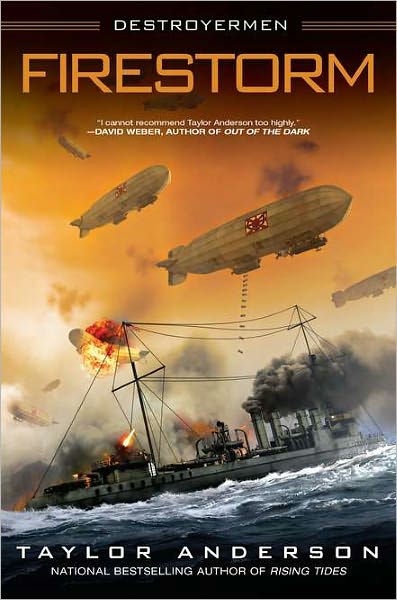
Firestorm (Destroyermen Book 6) by Taylor Anderson (Roc Hardcover 10/04/2010) – I’ve read and enjoyed the first trilogy (Into the Storm, Crusade, and Maelstrom) and recently read the fourth (Distant Thunders) which goes to show that Anderson is really steaming along in this series, though I personally thought the fourth seemed to be half of a novel stretched a bit.

"I cannot recommend Taylor Anderson too highly." -David Weber, author of Out of the Dark

Lieutenant Commander Matthew Reddy and the crew of the USS Walker find themselves caught between the nation they swore to defend and the allies they promised to protect. For even as the Allies and the Empire of New Britain Isles stand united against the attacks of both the savage Grik and the tenacious Japanese, the "Holy Dominion"-a warped mixture of human cultures whose lust for power overshadows even the Grik-is threatening to destroy them both with a devastating weapon neither can withstand.

The Traitor’s Daughter by Paula Brandon (Spectra Trade Paperback 10/04/2011) –This could be a promising debut from fellow NJ native Paula Brandon, what with a very nice blurb from Jacqueline Carey. I don’t know the name of the trilogy nor does the author yet have a Web site so information, other than what is on BN.com, is somewhat scarce.


Here’s the beginning of a lush, epic, wholly original new trilogy that shines with magic, mystery, and captivating drama.

On the Veiled Isles, ominous signs are apparent to those with the talent to read them. The polarity of magic is wavering at its source, heralding a vast upheaval poised to alter the very balance of nature. Blissfully unaware of the cataclysmic events to come, Jianna Belandor, the beautiful, privileged daughter of a powerful Faerlonnish overlord, has only one concern: the journey to meet her prospective husband. But revolution is stirring as her own conquered people rise up against their oppressors, and Jianna is kidnapped and held captive at a rebel stronghold, insurance against what are perceived as her father’s crimes.

The resistance movement opens Jianna’s eyes―and her heart. Despite her belief in her father’s innocence, she is fascinated by the bold and charming nomadic physician and rebel sympathizer, Falaste Rione—who offers Jianna her only sanctuary in a cold and calculating web of intrigue. As plague and chaos grip the land, Jianna is pushed to the limits of her courage and resourcefulness, while virulent enemies discover that alliance is their only hope to save the human race.

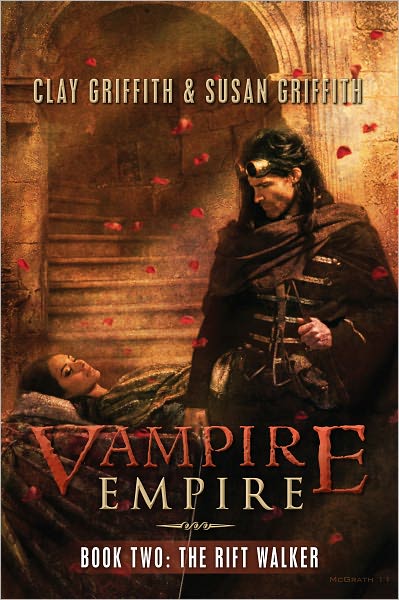
The Riftwalker (A Vampire Empire #2) by Clay and Susan Griffith (Pyr Trade Paperback 09/09/2011) – Second novel in the Griffith’s entertaining mix of Steampunk and Vampire Romance..

Princess Adele struggles with a life of marriage and obligation as her Equatorian Empire and their American Republic allies stand on the brink of war against the vampire clans of the north. However, the alliance's horrific strategy for total victory drives Adele to abandon her duty and embark on a desperate quest to keep her nation from staining its hands with genocide. Reunited with her great love, the mysterious adventurer known to the world as the Greyfriar, Adele is pursued by her own people as well as her vengeful husband, senator Clark. With the human alliance in disarrray, Prince Cesare, lord of the British vampire clan, seizes the initiative and strikes at the very heart of Equatoria.

As Adele labors to bring order to her world, she learns more about the strange powers she exhibited in the north. Her teacher, Mamoru, leads a secret cabal of geomancers who believe Adele is the one who can touch the vast power of the Earth that surges through ley lines and wells up at the rifts where the lines meet. These energies are the key to defeating the enemy of mankind, and if Princess Adele could ever bring this power under her command, she could be death to vampires. But such a victory will also cost the life of Adele's beloved Greyfriar.

The Rift Walkeris the second book in a trilogy of high adventure and alternative history. Combining rousing pulp action with steampunk style, the Vampire Empire series brings epic politcal themes to life within a story of heartbreaking romance, sacrifice, and heroism.

Uncharted: The Fourth Labyrinth by Christopher Golden (Del Rey Trade Paperback 09/09/2011) – This video game series seems a spiritual successor to the old classic Pitfall. Golden is a proven writer so his authorship of the novelization seems a smart choice.

The official novel of Naughty Dog’s award-winning videogame franchise!

In the ancient world there was a myth about a king, a treasure, and a hellish labyrinth. Now the doors to that hell are open once again.

Nathan Drake, treasure hunter and risk taker, has been called to New York City by the man who taught him everything about the “antiquities acquisition business.” Victor Sullivan needs Drake’s help. Sully’s old friend, a world-famous archaeologist, has just been found murdered in Manhattan. Dodging assassins, Drake, Sully, and the dead man’s daughter, Jada Hzujak, race from New York to underground excavations in Egypt and Greece. Their goal: to unravel an ancient myth of alchemy, look for three long-lost labyrinths, and find the astonishing discovery that got Jada’s father killed. It appears that a fourth labyrinth was built in another land and another culture—and within it lies a key to unmatched wealth and power. An army of terrifying lost warriors guards this underground maze. So does a monster. And what lies beyond—if Drake can live long enough to reach it—is both a treasure and a poison, a paradise and a hell.

Welcome to The Fourth Labyrinth.

Transformers: Exiles by Alex Irvine (Del Rey Mass Market Paperback 10/04/2011) – Irvine has written some terrific novels outside of shared worlds/media tie-in and he seems to be building a nice base of shared world novels. This is his second Transformers novel:

The epic battles between Optimus Prime and Megatron have long thrilled Transformers fans. But these two giants weren’t always great leaders and bitter foes. This new novel continues the electrifying saga that started with Transformers: Exodus, unveiling the origins of the conflict—the explosive events that unfolded before Optimus and Megatron arrived Earthside, forever altering the destiny of their kind.

Once allies, Optimus and Megatron are now enemies in a civil war. To prevent Cybertron from falling into Megatron’s hands, Optimus jettisons the planet’s heart, the AllSpark, into space, then sets out to find it with Megatron hot on his heels. Optimus is determined to defeat Megatron, bring the AllSpark home, and restore Cybertron to its former glory.

But a saboteur lurks aboard Optimus’s spaceship, and ahead lie lost colonies, some of them hostile. Optimus needs help of the highest caliber, but from whom? Heroes such as Solus, Nexus, and Vector Prime are just names from make-believe stories of long ago. Or are they? Maybe it’s time for Optimus Prime to find out. Maybe it’s the only chance he has to vanquish mighty Megatron.

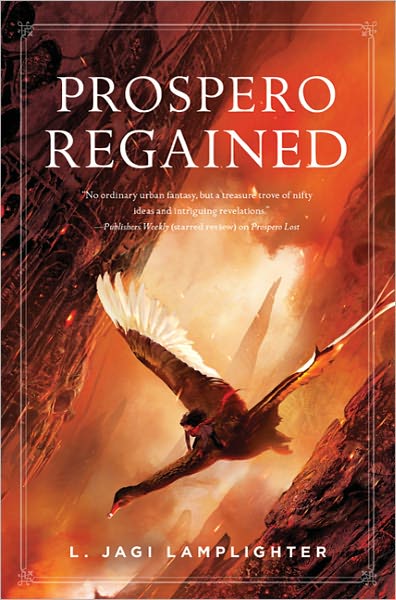
Prospero Regained (Book Three of Children of Prospero) by L. Jagi Lamplighter (Tor (Hardcover 09/13/2011) – Third and concluding volume in Lamplighter’s retelling/continuation of Shakespeare’s The Tempest

Prospero, the sorcerer on whose island of exile William Shakespeare set his play, The Tempest, has endured these past many centuries. His daughter Miranda runs the family business, Prospero, Inc. so smoothly that the vast majority of humanity has no idea that the Prosperos’ magic has protected Earth from numerous disasters. But Prospero himself has been kidnapped by demons from Hell, and Miranda, aided by her siblings, has followed her father into Hell to save him from a certain doom at the hands of vengeful demons. Time is running out for Miranda, and for the great magician himself. Their battle against the most terrifying forces of the Pit is a great fantasy adventure.

MetaMauas: MetaMaus: A Look Inside a Modern Classic, Maus by Art Spiegelman (Pantheon Trade Paperback 10/04/2011) – A DVD-style edition of the Pulitzer Prize winning graphic novel, with a ton of extras and behind the scenes history (including a DVD).

Visually and emotionally rich, MetaMaus is as groundbreaking as the masterpiece whose creation it reveals.

In the pages of MetaMaus, Art Spiegelman re-enters the Pulitzer prize–winning Maus, the modern classic that has altered how we see literature, comics, and the Holocaust ever since it was first published twenty-five years ago.

He probes the questions that Maus most often evokes—Why the Holocaust? Why mice? Why comics?—and gives us a new and essential work about the creative process.

MetaMaus includes a bonus DVD that provides a digitized reference copy of The Complete Maus linked to a deep archive of audio interviews with his survivor father, historical documents, and a wealth of Spiegelman’s private notebooks and sketches.


Compelling and intimate, MetaMaus is poised to become a classic in its own right.


Thanquols Doom (A Thanquol and Boneripper [#3]) by C.L. Werner (Black Library Mass Market Paperback 10/04/2011) – Werner’s third novel featuring the Grey Seer (wizard, prophets of the Horned Rat) and his Rat Ogre bodyguard. The series, set in the Warhammer Old World is a spin-off of the popular Gotrek and Felix

Upon his return to the Old World, the ambitious Grey Seer Thanquol is coerced into leading an army against the dwarfs of Karak Angkul. Renowned for its engineer clans, this city will not fall easily, but the true object of Thanquol’s fascination is their secret artefact of incredible power which he believes will assure his ascension to the Council of Thirteen. His efforts are thrown into disarray when the infamous skaven Ikit Claw usurps control of the army for his own nefarious schemes, and so Thanquol must act quickly before the warlock can unleash his ultimate weapon – the Doomsphere.


Friday, August 05, 2011

Leviathan Wakes & Necroscope - SFFWorld Book Club August 2011 Discussions

Our Book Club selections at SFFWorld for Fantasy and Science Fiction are, respectively, a novel some consider to be a Vampire/Horror classic and one of the more popular and best-reviewed SF novels of 2011 (and at this point, my favorite SF novel of 2011).

Necroscope by Brian Lumley


Leviathan Wakes by James S.A. Corey


So go forth and discuss!

Sunday, October 10, 2010

Books in the Mail (W/E 10/09/2010)

Death Troopers by Joe Schreiber; When Wicked Craves by J.R. Beck; Dreamfever by Karen Marie Morning; Pump Six and Other Stories by Paolo Bacigalupi; Star's End (Book Three of The Starfishers Trilogy) by Glen Cook; Twelve by Jasper Kent; Betrayer of Worlds (Ringworld Prequel) by Larry Niven and Edward M. Lerner; and X'ed Out by Charles Burns.

Tuesday, February 16, 2010

Swords, Space Opera, Necromancer, and Vampires - 4 SFFWorld reviews

A bunch of new reviews have been popping up at SFFWorld over the past week. Mark churned out three, while Dan cranked out one.

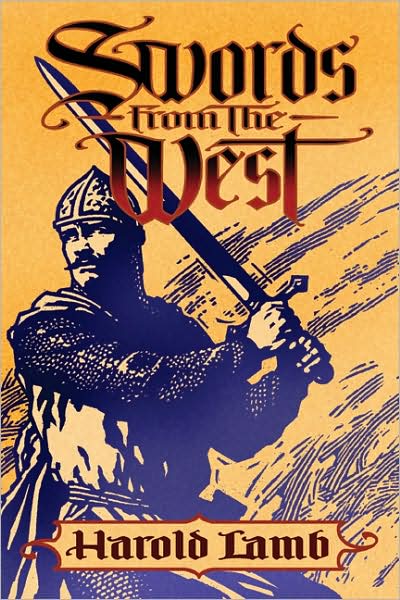
Mark had a chance to look at a very under-appreciated practitioner of classic Sword & Sorcery, Harold Lamb. Mark reviewed Swords from the West:

Harold wrote at a time when the pulp magazines were aplenty. His tales of heroes and enemies, of valour and derring-do are of that time (and the tales here date from 1921 to 1953.) Though he was known at the time for his screenplay writing and his historical biographies, like Tolkien before him, he wrote other things as a hobby. These adventure tales were written for fun as well as publication.

But, what fun! There are seventeen tales of the Crusades and the Indian Raj here, most of them not seen since their first publication in Adventure magazine. We meet Nial O’Gordon, young crusader on a life-changing journey to Constantinople, and Sir Robert of Antioch fighting Mongol masses. As you might expect in tales of the Crusades, we meet men who epitomise the conflict, such as Hugh of Dol, a Christian minstrel, and his opponents, the Turks. King Richard the Lionheart also appears on his quest. We also meet Michael Bearn, fighting for vengeance after being betrayed by an Arabian sultan. In the India of the nineteenth century we have Captain John Malcolm and Rawul Singh defending the British Empire against the Afghan Ali Khan and his co-conspirator Gom Gion.


Dan reviewed The Quiet War by Paul J. McAuley:

Some times, when presented with a political saga of epic proportions, I can get confused about who it is we are supposed to root for. In The Quiet War there is a big cast of characters but, as you would expect, some are merely props to move the action forward. What I soon discovered, the tale belongs to four major players.
.
.
.
A lesser character but one with the important role of villain is Loc Ifrahim who begins the tale as minor diplomat attached to the embassy on Callisto. His family ties to the dominant Brazilian family cause him to be around at crucial points of the story. Loc’s major character flaw is ambition, an ambition that everyone recognizes. His enemies tend to sneer at his efforts; his allies tolerate them. You just know he will come to a bad end.


Mark also took a look at Johannes Cabal the Necromancer:

The tale is an old tale done well: that of the Faustian deal. Johannes Cabal, Necromancer wants his soul back, and is prepared to do a deal with Satan to do so. He’s lucky in that he catches Satan in what seems to be a forgiving mood. Result: Johannes is given a year to collect one thousand souls for Satan with their signatures on the contracts.
.
.
.
The books supporting cast also enhance the reader’s impression of events. Johannes’s relationship with his brother is typically familial, being both bickering and yet touching. On a broader palette we meet enemies from Johannes’ past, and are amused by his relationships (or perhaps non-relationships!) with his colleagues and compatriots.


The last review Mark posted was a retrospective/coffee table book on vampires by Charlotte Montague, Vampires - From Dracula to Twilight:


The structure of the book is pretty straightforward, beginning with the background history of the legend and bringing it up to the present. The book is divided into five chapters, with subsections. Chapter One deals with the vampire myth and how the original idea has been recorded in history. Chapter Two shows how the legend has evolved from peasant to nobleman, looking at elements as diverse as vampire babies and vampire immortality. Chapter Three looks at variants of the vampire myth, from female (succubae) and lesbian vampires to the chupacabra and the psychology and anthropology of vampires. Chapter Four looks at historical examples of people connected to the vampire legend, from Vlad the Impaler and Elizabeth Bathory (‘Countess Dracula’) and Fritz Haarmann. The final chapter looks at vampires through literature, pop and film, from Varney the Vampire to Bram Stoker’s Dracula, True Blood and, of course, Stephenie Mayer. Twilight has a whole subsection of its own, which tells the reader something perhaps of the book’s target audience.

Tuesday, September 29, 2009

Two New Reviews at SFFWorld - Vampire Earth and Themed Anthology

Another week, and two more reviews at SFFWorld. As usual, one of the reviews is mine. The other review is from long-time forum member and a forum leader in our writing forum, Dan Bieger.

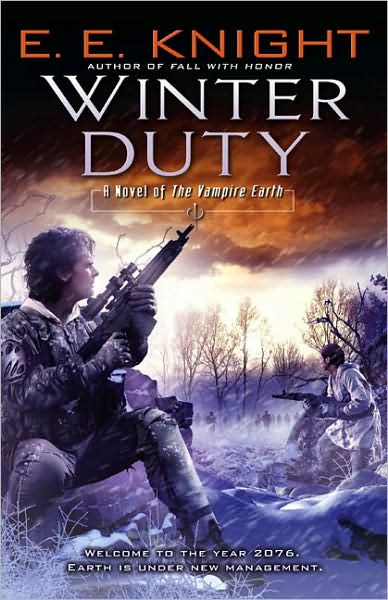
I reviewed the latest volume of one of the more consistent long-standing SF series, E.E. Knight’s Vampire Earth - Winter Duty.


One element that has made the series so much fun to follow is the characters Valentine encounters throughout his travels. With each novel, Knight further fleshes out this future apocalyptic world and lends more plausibility and depth to it – everything is connected and comes together organically. As a fan of the series since the first book, Way of the Wolf I was pleased to see the return of Duvalier who was sort of an enigma since her first appearance. The history between her and Valentine is hinted at in such away to keep longtime readers wanting to see them become closer. On the other hand, Knight hints at enough for readers picking up Winter Duty as their first Vampire Earth novel to encourage them to seek the earlier books in the series.

The main plot is relatively linear throughout the story, but it holds up very well as Knight further explores this blasted future. Valentine deals with a reputation that precedes him and the author’s strength, in addition to the memorable characters, is providing great action scenes of battle as well as the encounters Valentine has with Reapers, the Kurian’s vampire army, and other nasties the Kurians have conjured to keep humanity under their heel.


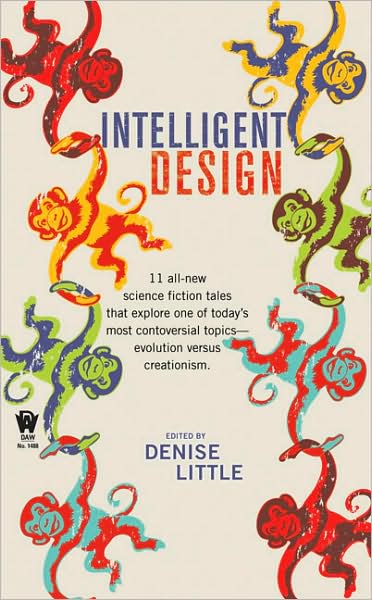
Dan reviewed the Denise Little-edited anthology Intelligent Design. DAW publishes a themed anthology about once per month. Here’s a snapshot of what Dan thought of the book:
Start with the cover design consisting of various color exposures of linked Hasbro monkeys. Stir in Little’s intention to explore “that fascinating border that requires using our senses, and the evidence, and everything science can teach us, to explore the nature, or lack thereof, of the divine.” The result is eleven stories dealing with aspects of creation versus evolution, most with tongue in cheek.


Tuesday, September 15, 2009

By Blood We Live on Dragonbones and Ashes Lie


John Joseph Adams continues to assemble impressive themed-anthologies, gathering a wide range stories on a specific theme. His latest, By Blood We Live is no different and just as impressive as his previous efforts.
Having edited two definitive themed anthologies for Nightshade (The Living Dead and Wastelands), John Joseph Adams turns his deft and careful hands to one of the most iconic of genre characters – the vampire. Adams provides a nice introduction, wherein he goes over the various incarnations of the vampire over the past couple of hundred years. 

Norman Partridge has received a number of awards and award nominations for his long and short fiction. Do Not Hasten to Bid Me Adieu is a great ‘continuation’ of Dracula, which takes place in Texas and features Quincey Morris following the climactic confrontation between Morris, Jonathan Harker and the Count. Partridge captured the local flavor and put a terrific twist on the classic Stoker novel. One of the standout stories in the anthology

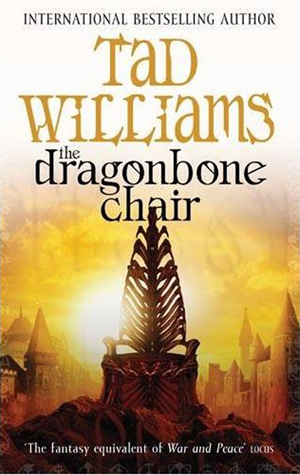
We’ve put up two other reviews in recent days. First, Bridie Roman reviewed the opening volume of one of the modern classics of Epic Fantasy (and one of my all-time favorite series) – Tad Williams’s The Dragonbone Chair, book one of Memory, Sorrow and Thorn.


Dark developments later in the book make for nail-biting stuff as the force of High Kind Elias clash with his brother Josua’s armies in the siege of Naglimund. Not only do the battle scenes have a superb tense atmosphere but also become quite brutal after a deadly pact is made. This story line in the book displays to me just why Memory, Sorrow and Thorn played such a large role in influencing the (now in)famous George R.R. Martin. They are epic, full of unexpected twists and turns and the true harshness of a real battle.

The Dragonbone Chair was first published in 1989; that makes it twenty this year, and it would be quite easy for a novel that old to get lost in the more recent plethora of novels that are currently being raved about. But as a dedicated fantasy fan I feel that this would be a crime. This is a book that to me should be seen as ageless - something that keeps the old traditions of save the world quests and rags-to-riches tales and brings in new ones: epic, dark battles and underhanded politics.

Last but not least, Mark/Hobbit takes a look at Marie Brennan’s follow-up to Midnight Never Come - In Ashes Lie


Without going too deeply into historical details, (but for those who perhaps don’t know), it was a time of revolution and change in England. It was a period of civil war, with those supporting Charles I fighting against those supporting elected Parliament, a choice that split regions, towns, villages and families. Ultimately it led to the death of a King, a time of national unrest when ‘the world was turned upside down’, compounded by the fact that the Civil War was followed by plague and, at its demise, the Great Fire of London in 1666.

All of this is here. Even if it were fiction and not fact, this should make a great tale. After my enjoyment of MNC I was looking forward to In Ashes Lie a great deal. Unfortunately, a number of issues meant that, in the end, the book changed from being an enjoyable one to a frustrating one, and stopped me enjoying this as much as I would’ve liked.