Showing posts with label Mira Grant. Show all posts

Wednesday, January 02, 2019

2018 Reading Year in Review

Been a few years since I did a reading year in review here at the Blog o’ Stuff, the most recent being 2015. For completeness sake, here are the previous years I’ve put up a reading year in review, 2014, 2013, 2012, 2011, 2010, 2009, 2008, 2007, 2006. Much of my writing has been divided between about twice-per-month book reviews over at SFFWorld and one or two posts per week at my beer blog, The Tap Takeover. So, without further adieu, of the 80 or so books I read in 2018, below are those I enjoyed the most.

OK, back to the books. I’ll start with some stats as I do every year: I read 80 books in 2018.  In 2018, I posted 28 reviews to SFFWorld and 3 to The Tap Takeover.

Here are some stats:
  • 34 2018/current year releases
  • 43 can be considered Fantasy
  • 24 can be considered Science Fiction
  • 25 can be considered Horror
  • 19 audiobooks
  • 14 total debut
  • 3 Non fiction

The first two (three if you consider slot #1 to be two books) on the list below are easily the top two reads of the year for me, the remainder can pretty easily swap places as they all were fantastic so I’m going alphabetical by author’s last name. Rather than a top 10 list of entries, like in year’s past, I went with 12. Because there are 12 months in the year.

The Calculating Stars and The Fated Sky by Mary Robinette Kowal. 

I’m lumping these two together because they form a single story and were published in back to back months. These are the two of the best Science Fiction novels I read this year, and some of the best Science Fiction I’ve ever read.


A wonderful, seamless blend of character study, hard science fiction, and alternate history. In 1952, the space race is in its infancy and the world is changed, one may say shattered, when a meteor crashes into the ocean off the East Coast of the United States. Told from the first person point of view of Elma, Mary Robinette Kowal gives a personal, bird’s eye view of the global catastrophe and humanity’s efforts to survive. Elma and Nathaniel are directly involved in the salvation efforts; Elma was a WASP (the Women Airforce Service Pilots) in World War II who also happens to be a physics and mathematics genius. Her husband is no slouch either, Nathaniel is chosen to become the lead engineer in the space program.

I was completely absorbed and enthralled with Elma York, a character who immediately leapt to the uppermost reaches of favorite first-person narrators. She’s a hero, a person we can all look up to for the “faults” in her character and how forward-thinking she is. I almost think of her as Leslie Knope (from the great TV show Parks and Recreation) with Nathaniel as her Ben for their hopeful attitude as individuals and their complementary, supportive, and empowering relationship as husband and wife. Hell, if this wonderful novel ever makes it the screen, there’s your stars.


In The Calculating Stars, Kowal takes an exciting time in human history, shakes it up on a global scale, makes it more exciting, and on top of that, takes us on an extremely, intimate personal story. This is the type of Science Fiction we all need right now, such a wonderfully forward-thinking and smart novel told through the voice of an immediately classic protagonist.

The characterization is remarkable throughout. Nathaniel, Elma’s husband, isn’t in the novel as much as he was in The Calculating Stars. This is logical and understandable, Elma spends much of her time in space while Nathaniel is back on Earth. However, their relationship, through their coded letters, is still a highlight and a backbone of who Elma is. As I said in my review of The Calculating Stars, their marriage is probably one of the strongest, most realistic, most loving, and supportive relationships I’ve ever read in any novel.


This book turned out to be the one I was most looking forward to reading and the one that absolutely delivered on the promise. I reviewed this over at my beer blog, here's an excerpt of the review:

As the title suggests, the book is quite evenly divided between “Barrel-Aged Stout,” which chronicles the rise of Goose Island and “Selling Out,” which chronicles Anheuser-Busch InBev’s purchase of the brewery. Soon after that purchase, AB InBev itself launched into a spending spree gobbling up regional craft/independent breweries that in hindsight, seems like a very calculated move, but at the time was a very jarring few years.
Candid, factual, gripping, emotional, educational, eye-opening, fascinating – all these things and more. Anybody who appreciates well-crafted beer will enjoy this book. Readers looking for a unique peek into how a multi-billion dollar conglomerate operates (regardless of your beer preferences) will be fascinated to see how an economic landscape can change in just a few short years.
Barrel Aged Stout and Selling Out is an un-put-downable book that tells a gripping story of perhaps the most important post-Prohibition handful years of Beer History in America. This is definitely a book that will remain within easy reach for reference and for re-reads.


From my SFFWorld reviews (linked above):

Our protagonist, accomplished thief Sancia Grado, is hired to steal a highly-sought after box. She also receives instructions not to open this box but of course curiosity gets the better of her. When she opens the box, she sees a key. It doesn’t seem like much until she grabs it and it speaks to her. Literally. This key, whose name is Clef, connects with Sancia very strongly in large part because of the plate in her head that makes her a scrived human. That “modification” is also part of why she’s such a good thief, she is able to gain a fundamental, almost elemental understanding of anything she touches. Sancia had no choice in this “modification” so naturally seeks revenge against the larger powers that be who allowed this to happen. Those powers are the four houses, or “campos” that run everything in the Venetian inspired city of Tevanne.
Foundryside is a deft combination and weaving of story that was incredibly difficult to set aside. With heist and crime fiction elements that are reminiscent of Scorsese’s The Departed, mythic, fantastic world building that reminded me of both Brandon Sanderson and Rachel Aaron*, and characters that both shine on their own and echo some iconic characters (I found myself comparing Gregor to Batman in some scenes), Bennett has once again unleashed an imaginative epic that is a reading delight.

What Does this Button Do? by Bruce Dickinson


For those not in the know, Bruce Dickinson is the lead singer of legendary British Heavy Metal band, Iron Maiden. Maiden happens to be one of my 3 or 4 favorite bands so this was a delightful book to “read.” I consumed this via audio book, with Bruce Dickinson providing the narration, that seemed the best way to read it and I think I was correct. In addition to having a powerful singing voice, Bruce is a charming fellow. Through this autobiography, a little light is shed on Bruce’s early years, with much of the book focusing on his time in the limelight with Iron Maiden. A must read/listen for anybody who enjoys music biographies and especially Heavy Metal music.


Sure, I’m grouping these two together, but I read them both this year and separated only by a few short months. From my two reviews (linked above): Heavy Metal/Hard Rock and Fantasy have long been intertwined, just look at some album covers from the 1970s and 1980s from bands like Iron Maiden, Manowar, or Ronnie James Dio (whose first band was called Elf) to more recent bands like Blind Guardian or Rhapsody. You’d think there’d be a novel like Kings of the Wyld years ago. You’d be wrong and sure a band of mercenaries and a world described in Rock/Heavy Metal metaphors is a neat hook, Eames has such great humor and storytelling chops that the novel rises above even that great idea.

Although Bloody Rose is set in the same world as Kings of the Wyld six years after the conclusion of the novel and features some of those characters (i.e. a major plotline in Kings of the Wyld was Gabe’s quest to save Rose), the novel can work on its own.


Eames’s tells his story in a very easy-going fashion which ultimately, exudes a great sense of fun. That said, Eames tackles some headier themes, of bad parents, PTSD, abuse, becoming a parent, and how responsibility can be smoothed over. Sure, he’s having a lot of fun with the story, but the story also has Some Things To Say.

Into the Drowning Deep by Mira Grant


As most folks know, Mira Grant is a pen name for Seanan McGuire. I’ve become a convert to all of her fiction over the past year and this is a very strong, creepy, science-fueled novel. Mermaids are real in this novel, and a deep sea expedition is trying to find them. This novel is equal parts horror and science fiction and quite simply a powerful, wonderful novel. I consumed this one via audio book and that added to the creepiness. As much as we all know mermaids are likely not real, McGuire packs enough real-life science into so much of the plot that the mermaids might just be believable. Great characters and a wonderfully brisk pace make this a fantastic read. I’m cheating a bit on this one because it first published in November 2017, but I read the audio early in the year and the paperback published in May 2018.

Scourged by Kevin Hearne


This book is the finale in Hearne’s long(ish) running Iron Druid Chronicles series. 10 books in total (9 novels and a collection of short stories as well as randomly released short stories) over the course of about 8 years, I’ve found these books immensely enjoyable. Hearne does a wonderful job of throwing as many world mythologies into the stew of this series with Atticus O’Sullivan at the heart of the story, especially as he’s become the lynch-pin of the Norse Ragnarok. This one may have made me shed a tear or two, but not in ways I expected it to do so.

We Sold Our Souls by Grady Hendrix


This was an absolute blast for me, especially given that my favorite genre of music is Heavy Metal. Over the course of a very short time, Grady Hendrix is becoming one of the preeminent horror writers.

In a brief amount of time, Grady’s become a leading voice in the horror genre and although I’ve only read one other novel (the outstanding My Best Friend's Exorcism) by him, it is clear to me he’s a writer with great skill and honesty in his fiction. In We Sold Our Souls Grady managed to combine two of my favorite things in the world with this novel: heavy metal music and horror fiction. To that combo, he added a phenomenal protagonist in Kris Pulaski, the lone woman in the band Dürt Würk and our primary P.O.V. character. Kris is at the bottom of her rope despite having a once moderately successful gig as the guitarist for 1980s Metal band Dürt Würk. That all changed when her one-time best friend and lead singer of Dürt Würk Terry Hunt broke away from the band on “Contract Night.” This was a night few can remember, but changed the fate of the band forever. Grady does a masterful job immersing the reader in the heavy metal world and playing with some dark elements like Black Iron Mountain, the driving force behind Terry’s new band Koffin.

Grady takes readers on a cross-country journey that never falters, never takes a guitar solo of a break and is a relentless novel. Highly, highly recommended. This novel as dark, cynical, fun, and a wonderfully paced vision quest.

October Daye by Seanan McGuire


For the series binge that brought me the most reading enjoyment, I have to go with this series. I traveled quite a bit in 2018 and what helped through many of those plane rides were books 2 through 7 of McGuire’s best known series. These are mysteries wrapped up in an urban fantasy setting that are wonderful page turners and a long-game of a character study on the eponymous Toby Daye. McGuire has a deft hand with character and an equally smart vision of world-building for a world that seems like our own, but is actually connected to the world of Fae.


Swan Song by Robert R. McCammon.
I’ll subtitle this as my favorite re-read of 2018


McCammon was up there with King, Straub, and Koontz in 1980s horror and this is his biggest, most audacious novel. Often compared to King’s The Stand, I would argue Swan Song is a stronger novel. I’d been wanting to re-read this novel for years and finally sucked it up and read it via audio. I do love using just one credit for these big audio books, especially when as masterfully performed as this one was by Tom Stechschulte. Nuclear War/World War III happens and the remaining bits of humanity are scattered across the world. Some make it out of the war OK, but not many, and all are changed in some way. Either by their experiences, but trinkets they pick up, or scarred “Job’s masks” they grow. This is a powerful, dark, yet hopeful look at the end and how humanity might claw its way back to life.

Blackwater: The Complete Saga by Michael McDowell


I blame Grady Hendrix for this one, who featured the old paperbacks in his Paperbacks From Hell overview of the Horror Genre of the 1970s-1990s. Counter to that, I did this one via audio since audible had the 6 short books of the series as one volume masterfully narrated by Matt Godfrey. This masterful, gothic, familial saga traces the legacy of the Caskey family from the appearance of a strange women named Elinor Dammert during the disastrous flood that struck Perdido, Alabama in 1919. The Caskeys have long established their place in Perdido’s lumber tycoons. What unfolds is pure beauty and joyful reading experience. I’d love to see Guillermo del Toro focus his film-making lens on this gothic saga.


Speed of the Dark by Elizabeth Moon


Moon is a master storyteller, having written what is arguably a very definitive Military Fantasy series in The Deed of Paksenarrion as well as a finely crafted Military SF series, Vatta’s War. While those novels are very good, Moon turns to something a bit more grounded – Autism and a potential corrective/cure for it. Set “twenty minutes from now,” Moon tells the story of Lou Arrendale and wonderfully captures his voice and the struggles he deals with on a daily basis. A powerful novel that deservedly received the Nebula Award for Best Novel

Sunday, November 09, 2014

Books in the Mail (W/E 2014-11-08)

First week in November brings two books...


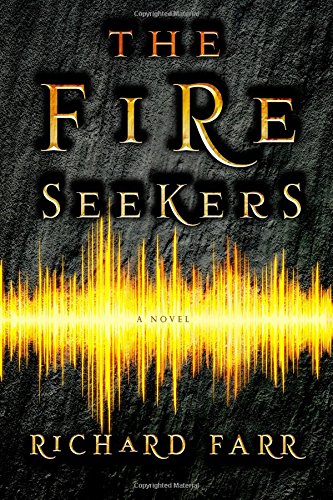
The Fire Seekers (The Babel Trilogy #1) by Richard Farr (47North Paperback 12/09/2014) – This seems to be another self-published novel 47North snatched up and is reissuing under their own imprint.


The time of our immortality is at hand.

An undeciphered language in Crete. A rash of mysterious disappearances, from Bolivia to Japan. An ancient warning at the ruins of Babel. And a new spiritual leader, who claims that human history as we understand it is about to come to an end.

Seventeen-year-old Daniel Calder’s world falls apart when a freak accident brings personal tragedy—and he discovers there’s a link between the accident and a wildly successful new cult, the Seraphim. Catapulted into a violent struggle for humanity’s past and future, he’s not even sure who the enemy is, or if he’s battling a phantom that doesn’t exist. But as Daniel puts his life on the line, he is forced to conclude that our very survival as a species will depend on who, and what, we choose to believe.


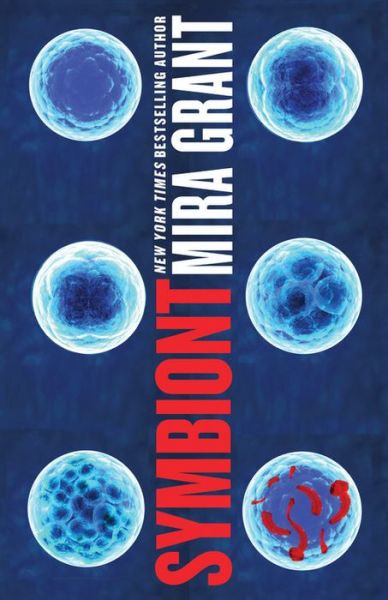
Symbiont ( (Parasitology Trilogy #1) by Mira Grant (Orbit Hardcover 11/25/2014) –The second installment of Mira Grant / Seanan McGuire’s near future sf horror gets to readers about a year after book one. Despite its flaws, I enjoyed the first of this series, Parasite, enough that I want to find out what happens next.

THE SECOND BOOK IN MIRA GRANT'S TERRIFYING PARASITOLOGY SERIES.

THE ENEMY IS INSIDE US.

The SymboGen designed tapeworms were created to relieve humanity of disease and sickness. But the implants in the majority of the world's population began attacking their hosts turning them into a ravenous horde.

Now those who do not appear to be afflicted are being gathered for quarantine as panic spreads, but Sal and her companions must discover how the tapeworms are taking over their hosts, what their eventual goal is, and how they can be stopped.

Friday, August 08, 2014

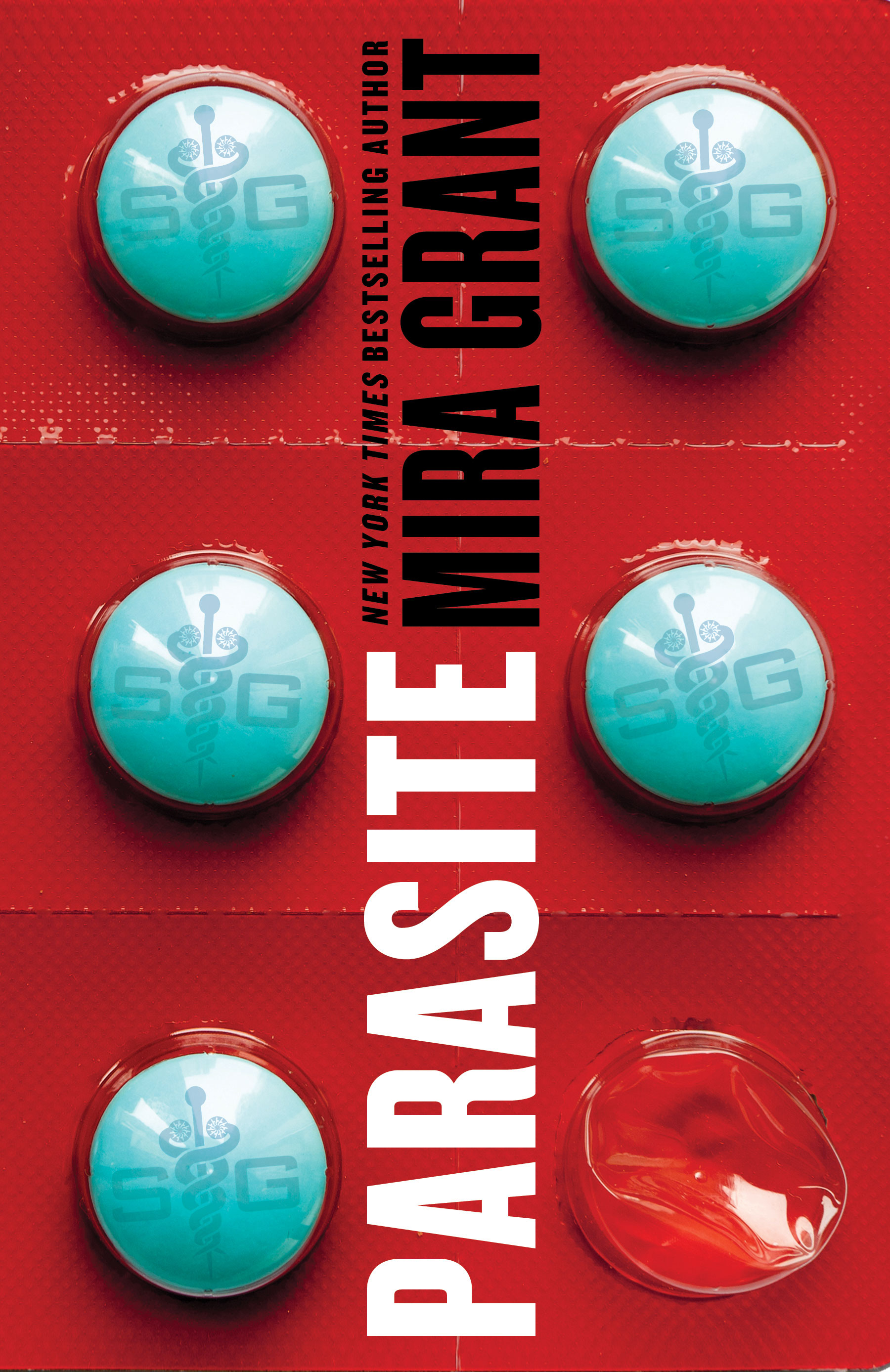
Parasite by Mira Grant - A Review & Hugo Potential

This is a bit of an expanded version of my review/Hugo Appreciation Post for Mira Grant's Parasite, which originally appeared on Tor.com on July 25, 2014.


Mira Grant (aka Seanan McGuire) has achieved a level of notoriety many authors would hope to achieve, she has many fans and her books can often be found on awards ballots, her 2013 novel Parasite is no exception. While her Newsflesh trilogy (FEED, DEADLINE, BLACKOUT) was published as mass market paperback, Grant was promoted to hardcover for Parasite.

Admittedly, the central conceit of Parasite is a large pill to swallow, faith while leaving some logic at the door. In Grant’s near future thriller, the majority of the world has ingested an Intestinal Bodyguard, a tapeworm parasites to help our weakened immune systems. On top of that, all the tapeworm parasites people have ingested are controlled by one company – SymboGen. So yeah, if you can get past those two large grains of salt for the plot’s conceit, I would suggest you hold on because Grant does unfurl a very briskly paced narrative in Parasite.

Grant seems very comfortable utilizing the first person narrative; she did so in her Newsflesh trilogy and here in Parasite employs the first person to tell the story through the voice and experience of Sally “Sal” Mitchell. Sal is a young woman who has miraculously recovered, thanks to her SymboGen implant, from a vehicular accident that left her in a coma. Parasite opens about six years after Sal awakens having relearned how to function in society. Simple things like talking, walking, and the basic tenets of living had to be relearned. She is also a ward of her parents (her father conveniently works as an epidemiologist for USAMRIID, the US Army’s Infectious Disease unit), who treat her like a child. Her sister, Joyce (also conveniently an epidemiologist like her father) seems to like the new Sal better than the previous incarnation of her sister. In a sense, Sal is only 6 years old, but she won’t hear any of that. She has a job at working with animals, a boyfriend (Nathan Kim, who conveniently is a doctor specializing in parasites), and she is required to report in with SymboGen, specifically the head of the company Dr. Steven Banks, and a psychiatrist so her mental and physical health can be monitored.

Sal yearns to be more independent, apart from her parents and not under such scrutiny from SymboGen. She begins to see strange things: people are becoming mindless sleepwalkers (NOT ZOMIBES); sometimes violent but definitely not themselves. First a young girl and her parent, then a man and his dog, at which time Sal’s affinity towards animals comes into play. She calls the dog, Beverly, away from its shambling (NOT A ZOMBIE) owner and effectively gains a four-legged companion. These transformations from people into (NOT ZOMBIES) “sleepwalkers” continues and escalates as the novels progresses.

In SymboGen, Grant has given us the requisite not-so-benign Medical MegaCorp. The majority of the chapters are prefaced with quotes from “interviews” with SymboGen’s Steven Banks and an unpublished autobiography of co-founder Dr. Shanti Cale who has disappeared. The third founder, Richard Jablonsky, committed suicide prior to the events of the novel. So yeah, that all makes for quite a shady organization. Many chapters are also prefaced with quotes from a fictional and very creepy children’s book Don’t Go Out Alone. (I for one would buy a fancy limited edition of Don’t Go Out Alone should it come into existence).

Grant unpacks a lot of the science behind the tapeworms through character dialogue and it mostly works, though the frenetic pacing before such scenes pushed me to read through those passages very quickly and to re-read them. I said earlier that there’s the leap of logic over a grain of salt required to fully absorb oneself in Parasite, and I would also suggest that that one stick the coincidences alongside that large grain of salt. There are quite a few conveniences with the characters; most prominently that Sal’s father is high up in the military division responsible for defensive / countermeasures against biological warfare where sister Joyce also works. Her boyfriend just happens to have a strong connection in the world of parasites and later familial connections which are revealed come across as very convenient.

There was one particular scene of (NOT ZOMBIES) sleepwalkers giving Sal some problems when she was home alone with her new dog Beverly that was very effective. Grant captures an extremely claustrophobic feel in that scene, which also highlighted just how helpful a loving, protective dog could be in such a situation. This was in the latter half of the book, and the emotional fallout, as well as the story fallout as a result of that scene ratcheted up the tension for the remainder of the novel.

Having read and enjoyed the Newsflesh trilogy there were quite a few familiar beats in the novel. Sal could be an analogue to George/Georgia (Newsflesh’s protagonist) and Tansy felt like a cousin to Becks. That said; the character whom Tansy felt most similar to on a larger comparative scale is Harley Quinn, the Joker’s girlfriend/sidekick. The other thing that I found frustrating is the lack of the word Zombie. The “sleepwalkers” exhibited all of the signs associated with zombies, from the shambling to the attacking. On the other hand, the great film 28 Days Later also eschewed such strict zombie classification. Lastly, this novel, more than any I can recall reading (at least recently) ends like a freight train zooming at high-speed into a gigantic wall. The pacing was moving along very quickly for much of the last half just before a Kick-WHAM reveal and the novel ends to the point where I wonder if this was one book awkwardly split into two.

I will say that Grant has a powerful narrative that managed to pull me through its twists and turns regardless those above-mentioned quibbles. Parasite is an at times fun, at others, frustrating read. It is equal parts horror, conspiracy thriller, and science fiction novel with a large influence of Stephen King in its text. (Grant/McGuire, like myself, is a big fan of Stephen King). I found myself reading the book very quickly, being absorbed in the story, and enjoying what I read as I read it, so on the whole I’d say Parasite was a successful book for me.

Is it worthy of a Hugo though? That’s an easier question, I don’t think so. Like Charles Stross (also on this year’s ballot), it seems Grant’s name is almost an automatic thing on awards ballots in recent years. Science/biology/parasitology is such a large component of the novel, so it fits the genre mode. But the size of the grain of salt in the adage of “take it with a grain of salt” as it relates to the central conceit (the majority of the world happily ingesting tapeworm parasites) in Parasite, I think, is far too large. The narrative pulled me along, but I’m not sure Parasite will stand with me for a long time afterwards. While an enjoyable novel, it isn’t one that to me says Award Winner.


Review post-script/confession:  I really enjoyed Grant's Newsflesh trilogy when I read them, I found them gripping page turners in the truest sense. The narrative pull of the novels allowed me to overlook some of the quirks of the books.  I'll admit reading other people's reviews of Grant's work, as well as listening to some podcasts where her work was discussed, sort of put me off diving into Parasite immediately. Those reviews and podcasts pointed out some of those quirky elements I'd overlooked because the narrative pull of the books. I felt those reviews/podcasts called into judgement my (for lack of a better term) credibility as a reader and reviewer.  However, Parasite pulled me in quite quickly even despite some of the "quirks" I mentioned above (major coincidences and the fact that the word Zombie is not uttered in the novel). 

Sunday, June 09, 2013

Books in the Mail (W/E 2013-06-08)

As a reviewer for SFFWorld / SFFWorld Blog and maybe because of this blog, I receive a lot of books for review from various publishers. Since I can't possibly read everything that arrives, I figure the least I can do (like some of my fellow bloggers) is mention the books I receive for review on the blog to at least acknowledge the books even if I don't read them.


Sometimes I get one or two books, other weeks I'll get nearly a dozen books. Some weeks, I’ll receive a finished (i.e. the version people see on bookshelves) copy of a book for which I received an ARC (Advance Reader Copy) weeks or months prior to the actual publication of the book. I’ve been receiving a greater percentage of electronic ARCs this year which is good because death via drowning in a sea of unread books is not how I want to say goodbye to this world.

Sometimes I'll want to read everything that arrives, other weeks, the books immediately go into the "I'll never read this book" pile, while still others go into the nebulous "maybe-I'll-read-it-category." More often than not, it is a mix of books that appeal to me at different levels (i.e. from "this book holds ZERO appeal for me" to "I cannot WAIT to read this book yesterday"). Have a guess in the comments about which book fits my reading labels “I’ll Never Read…” “Zero Appeal” or “cannot wait” "maybe I'll get to it later" and so forth...

Here's the rundown of what arrived either in the mailbox, in front of my garage (where most packages from USPS and UPS are placed) or on my doorstep...


Parasite ( (Parasitology Trilogy #1) by Mira Grant (Orbit Hardcover 10/29/2013) – Grant (aka Seanan McGuire) is ‘promoted’ to her first hardcover release for this new novel which launches a near future sf thriller trilogy. I’m very much looking forward to reading this one.

A decade in the future, humanity thrives in the absence of sickness and disease.

We owe our good health to a humble parasite - a genetically engineered tapeworm developed by the pioneering SymboGen Corporation. When implanted, the tapeworm protects us from illness, boosts our immune system - even secretes designer drugs. It's been successful beyond the scientists' wildest dreams. Now, years on, almost every human being has a SymboGen tapeworm living within them.

But these parasites are getting restless. They want their own lives... and will do anything to get them.


Antiagon Fire (Imager Portfolio #4) by L.E. Modesitt, Jr. (Tor Hardcover 01/22/2013) – The writing machine that is a man releases another (seventh overall) in this series and fourth in this specific sub-sequence

The hard-won battles fought in Imager’s Battalion have earned Quaeryt a promotion to commander, as well as an assignment to convince the Pharsi High Council in the nation of Khel to submit to Lord Bhayar’s rule, which is key to Bhayar’s ambition to unite all of Solidar. Joined by his pregnant wife Vaelora, who is also Bhayar’s sister, Quaeryt leads an army and a handful of imagers deeper into the hostile lands once held by the tyrannical Rex Kharst, facing stiff-necked High Holders, attacks by land and sea—including airborne fire launched by hostile imagers from the land of Antiago—and a mysterious order of powerful women who seem to recognize the great destiny that awaits Quareyt and Vaelora, as well as the cost of achieving it.


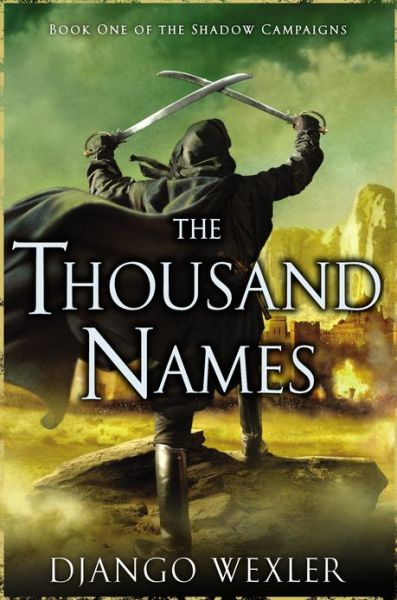
The Thousand Names (Book One ofThe Shadow Campaigns) by Django Wexler (Roc Hardcover 07/02/2013) – Wexler’s debut continues the trend of Flintlock Fantasy being seen in epic fantasy of late.

Enter an epic fantasy world that echoes with the thunder of muskets and the clang of steel — but where the real battle is against a subtle and sinister magic…

Captain Marcus d’Ivoire, commander of one of the Vordanai empire’s colonial garrisons, was resigned to serving out his days in a sleepy, remote outpost. But that was before a rebellion upended his life. And once the powder-smoke settled, he was left in charge of a demoralized force clinging tenuously to a small fortress at the edge of the desert.

To flee from her past, Winter Ihernglass masqueraded as a man and enlisted as a ranker in the Vordanai Colonials, hoping only to avoid notice. But when chance sees her promoted to command, she must win the hearts of her men, and lead them into battle against impossible odds.

But the fates of both of these soldiers, and all the men they lead, depend on the newly arrived Colonel Janus bet Vhalnich, who has been sent by the ailing king to restore order. His military genius seems to know no bounds, and under his command, Marcus and Winter can feel the tide turning.

But their allegiance will be tested as they begin to suspect that the enigmatic Janus’s ambitions extend beyond the battlefield and into the realm of the supernatural — a realm with the power to ignite a meteoric rise, reshape the known world, and change the lives of everyone in its path.

Monday, October 08, 2012

Happy 5th Birthday Orbit! Celebrate with $1.99 eBooks

Orbit Books, the US Imprint, is celebrating 5 years of publishing not just good, but Great Science Fiction and Fantasy in the United States. From content, to cover design/packaging, Orbit has done a fantastic job of branding themselves with titles of very high quality. 

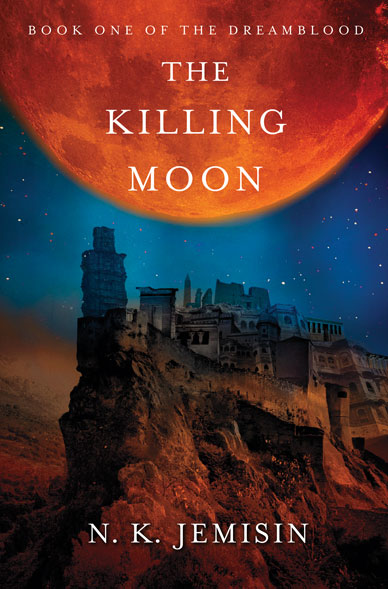
The Killing Moon by N.K. Jemisin I read Jemisin's The Hundred Thousand Kingdoms a couple of years ago and was very impressed.  For $1.99, I'll be downloading this one for the kindle.


Feed by Mira Grant (My review, of the books I read last year, one of my favorites and trilogy which is on the whole, excellent)


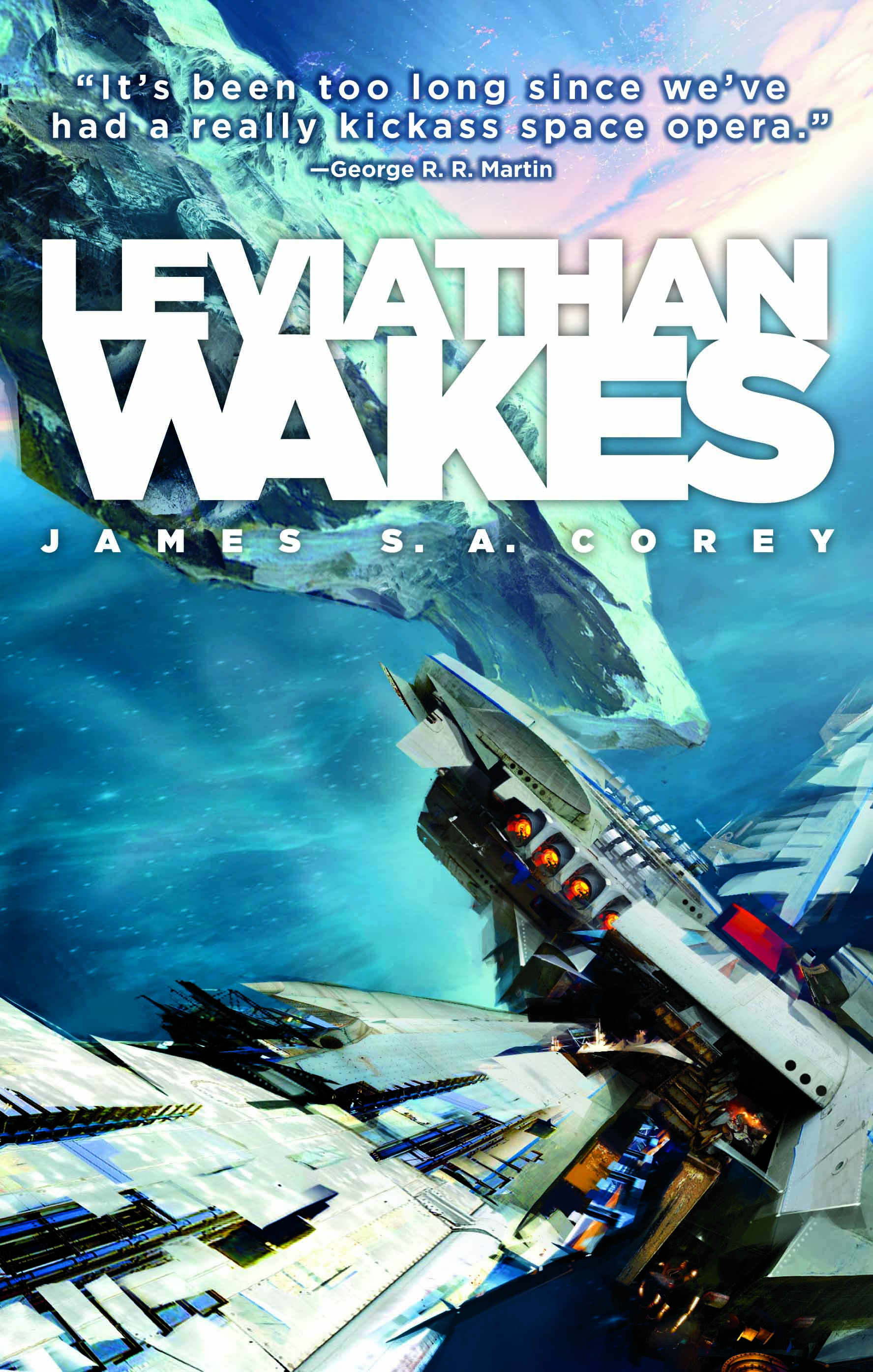
Leviathan Wakes by James S.A. Corey (My review, one of the top 2 SF novels I read which was published 2011)


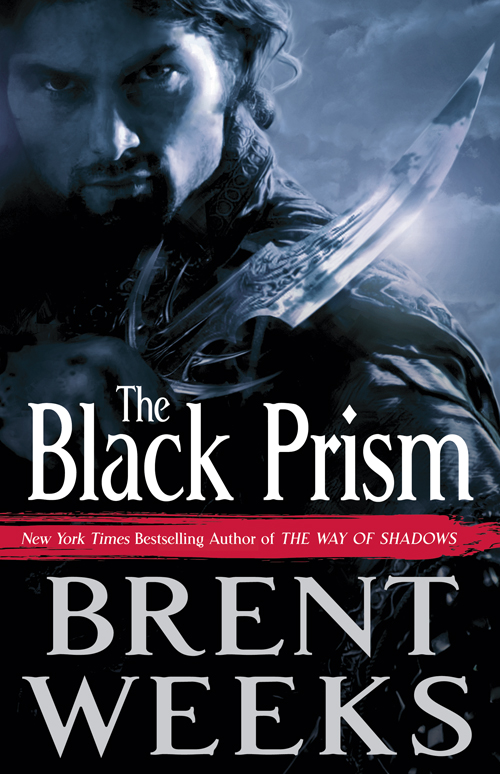
The Black Prism by Brent Weeks I loved Weeks's Night Angel Trilogy, gave this one a shot when it first published and it didn't work for me.  I'm chalking that up to bad timing so I'll be getting this one for my kindle.


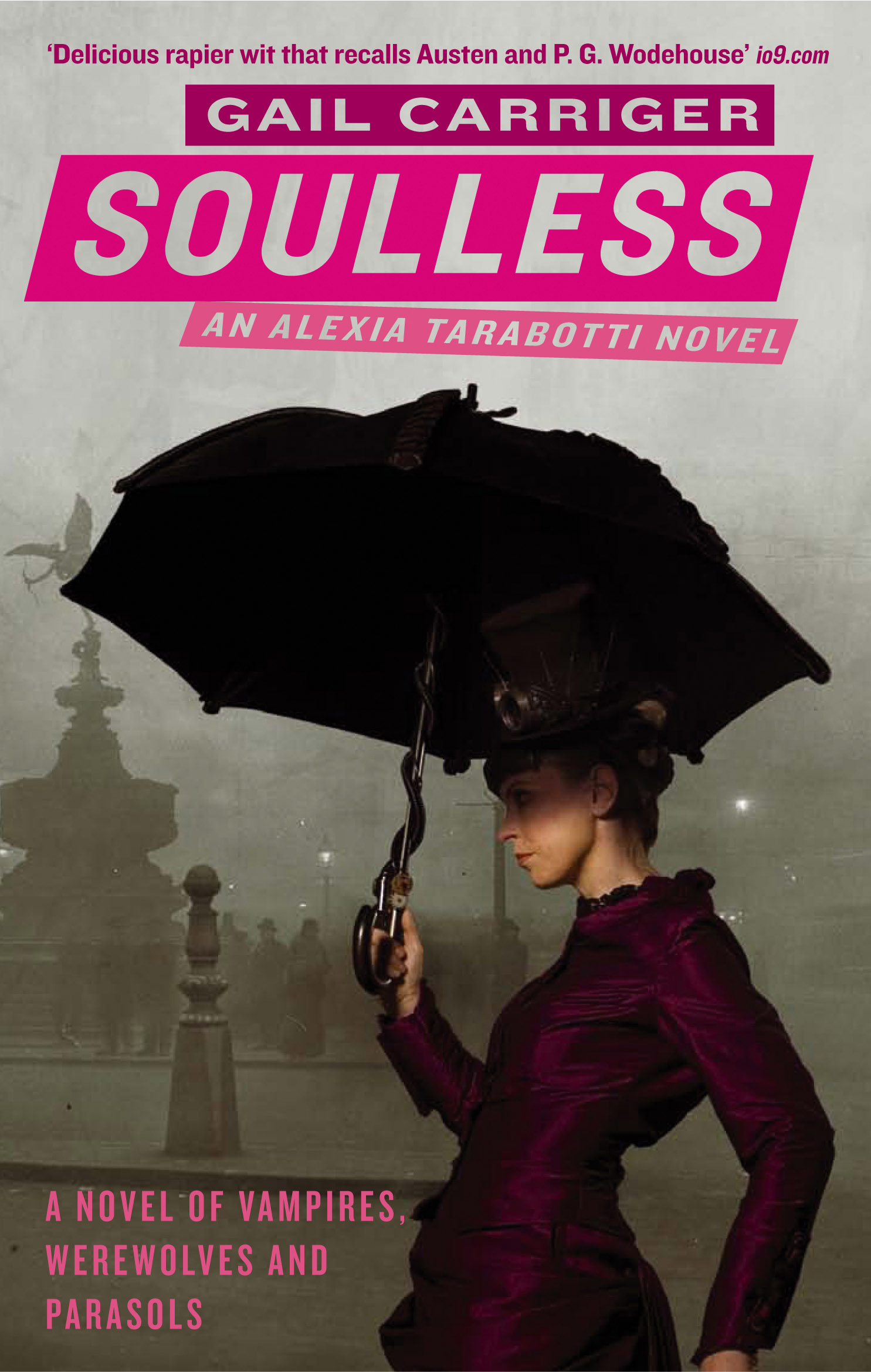
Soulless by Gail Carriger (My review, ultimately a novel that didn't work for me but one that I'm not surprised to have found a very receptive audience.)


Tuesday, May 22, 2012

Blackout (Newsflesh #3) by Mira Grant - Review

Only one review to link to here at the o’ Stuff but the book is one I placed very highly on my 2012 list of anticipated releases. Chances are, if you follow me on twitter (@RobHBedford) and if you don’t you should be, you’ve seen me tweeting about it - Blackout, the conclusion to Mira Grant’s Newsflesh Trilolgy:


So, structurally we’ve got our map laid out, the path Grant takes continues to be filled with conspiracy and subterfuge with a little less on the political game inasmuch as the politicians themselves don’t take to the page until the latter portions of the novel. This isn’t to say the game of politics isn’t present, because it very much is and drives the plot of the novel. Much of the politics involves the power play of control between the CDC (Centers for Disease Control) and the EIS (Epidemic Intelligence Service), specifically the information about the Kellis-Amberle virus and the potential for a cure.


So, how does Blackout hold up to the promises laid out in its predecessor volumes? From my reading perspective very well, Grant brings more Applied Phlebotinum to the table in the form of the clones and how Shaun’s immunity came to be. If Grant were a lesser writer, these elements could derail the novel, but thankfully, she’s quite brilliant at explaining these things in a plausible fashion which is balanced by the overall powerfully addictive narrative.


Monday, March 12, 2012

SFFWorld's Favorite 2011 Novel was

Well, it took a bit longer than I would have liked (which seems to be the norm rather than the exception) but the votes have been tallied. SFFWorld’s favorite 2010 release was…

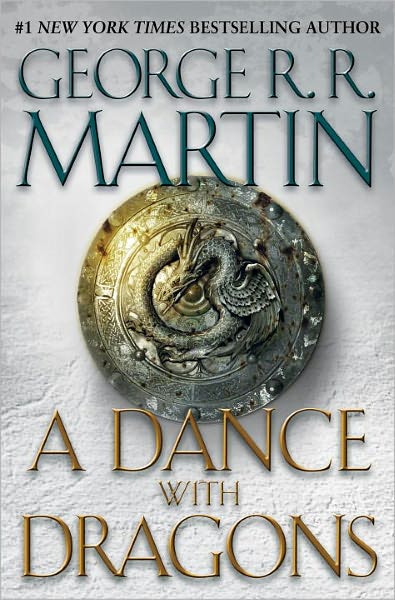
A Dance With Dragons by George R.R. Martin

Right, like anybody was surprised about that. Here’s the full rundown of the top 10:

  1. A Dance with Dragons by George R. R. Martin
  2. The Heroes by Joe Abercrombie
  3. The Wise Man’s Fear by Patrick Rothfuss
  4. The Crippled God by Steven Erikson
  5. The White Luck Warrior by R. Scott Bakker

For what it’s worth, here’s how I voted:

  1. The Kings of Eternity by Eric Brown
  2. Leviathan Wakes by James S.A. Corey
  3. A Dance with Dragons by George R. R. Martin
  4. Tie: Deadline by Mira Grant and The Dragon's Path by Daniel Abraham
  5. Among Others by Jo Walton


The rest of the top 10 and discussion can be found here.

Monday, January 09, 2012

On the Horizon - 2012 Reading Possibilities

Readers can be a forward-thinking bunch, especially readers of Speculative Fiction. We're always planning out what we want to read, often as we are reading books we enjoy a great deal. This includes looking at the books coming out in a given year, despite the size of our current stack of books that have yet to be read.

We’ve got a couple of threads running at SFFWorld for this topic (Fantasy & Horror, Science Fiction), but I figured I’d mention 2012 books I’m looking forward to here on the blog. This list is blatantly copied and pared down from the venerable Locus Web site’s Fortchoming books with some additions. Since I live in the US, I’m only mentioning the US releases

January 2012

  • Myke Cole - Shadow OPS: Control Point by – I’ve already read this terrific debut novel, but the book deserves mention since I think it will be a very talked-about book for 2012.
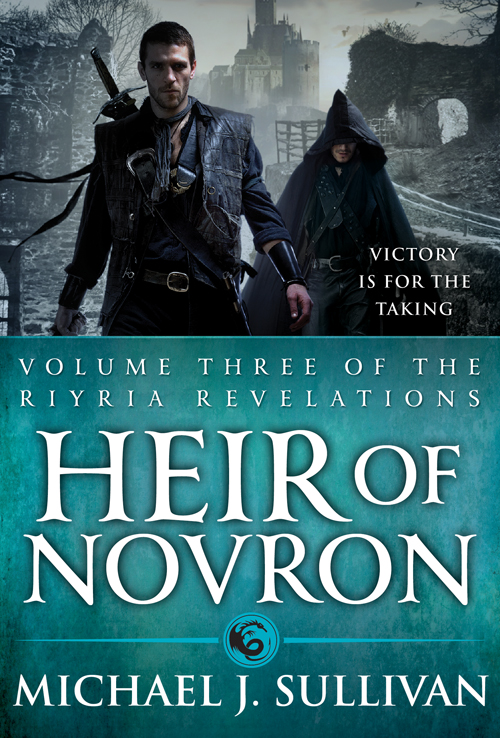
  • Michael J. Sullivan – Heir of Novron - I’m reading the second Riyria Revelations omnibus now so I’ll be all over the concluding omnibus in the next month or so.

February 2012


  • Rachel Aaron - The Legend of Eli Monpress - This omnibus contains the first three novels in Rachel Aaron’s fantasy saga. Hobbit had some good things to say about the first novel, The Spirit Thief.
  • Saladin Ahmed - Throne of the Crescent Moon - Lots of good things have been said about Ahmed’s short fiction. This novel is poised as an early contender for most promising Debut Epic Fantasy of 2012.
  • Tobias S. Buckell - Arctic Rising - I’ve got an e-ARC of this one, Buckell’s first original novel in a couple of years.
  • Tony Daniel Guardian of Night - I’ve only read one novel by Mr. Daniel, enjoyed it a great deal, but then he seemed to have disappeared form the shelves. The fine folks at Baen have signed him up and this looks like good ol’ SF adventure with invading aliens in the future.
  • Elizabeth Moon Echoes of Betrayal - This is the third in Moon’s Paladin’s Legacy series, which is a sequel series to her popular fantasy trilogy, The Deed of Paksenarrion, which I read and loved in 2011. I have an ARC of Echoes of Betrayal though I may not get to the book until the finished/final version arrives.


March 2012
  • Seanan McGuire Discount Armageddon - This is the launch of a new urban fantasy series by the author who is also known as Mira Grant. Typically, this might not be a book I’d normally read but loving her work as Grant might get me to read this book.


April 2012

  • Kevin Hearne Tricked - the fourth in his Iron Druid Chronicles, which I called the logical heir to Jim Butcher’s Dresden Files. These books are quick, enthralling, funny reads.
  • Stephen King - The Dark Tower VIII: The Wind Through the Keyhole - I was a long-time fan of King, but the last book I read by him was the (at the time) final Dark Tower novel so this could be an interesting read.
  • James Lovegrove - Age of Aztec - I thoroughly enjoyed two of books I read in Lovegrove’s Pantheon sequence, so I’m looking forward to this one.
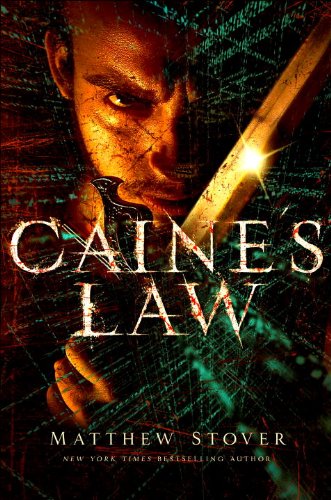
  • Matthew Stover Caine's Law - The fourth installment in The Acts of Caine, one of my favorite fantasy/science fiction series and perhaps the most under-rated current SF sequences.

May 2012
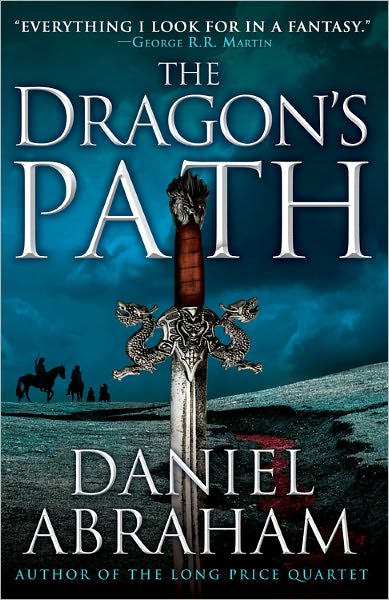
  • Daniel Abraham The King's Blood - The second installment in Abraham’s The Dagger and the Coin. Considering I placed The Dragon’s Path as one of my top 2011 novels, yeah, I’ll be reading this one.

June 2012

  • Eric Brown - Weird Space: The Devil's Nebula - The first of a new shared world Space Opera series Brown created for Abaddon Books. This one sounds like fun and considering I named The Kings of Eternity by Mr. Brown my favorite 2011 book, I'll be reading this book.
  • James S. A. Corey - Caliban's War - The second book in The Expanse sequence, which began with Leviathan wakes, another favorite SF novel from 2011
  • Mira Grant - Blackout - The concluding volume of The Newsflesh Trilogy and one of my most anticipated 2012 novels. Nuff said.
  • Paul S. Kemp The Hammer and the Blade - Kemp’s first original/non-shared world novel is the first in series recounting the adventures of the rouges Eagle and Nix. Modern Sword and Sorcery by a guy who does S&S proud with his Forgotten Realms novels, can’t wait for this one.
  • Alastair Reynolds - Blue Remembered Earth - It’s a new novel, which launches an epic SF saga about the next 11,000 years of humanity’s evolution and expansion to the stars. What else needs to be said? Yeah, look at that jaw-dropping cover, too.
  • John Scalzi Redshirts - Sclazi mixes humor and SF very well, I hope to get to this one; however, I still have yet to read Fuzzy Nation.

July 2012

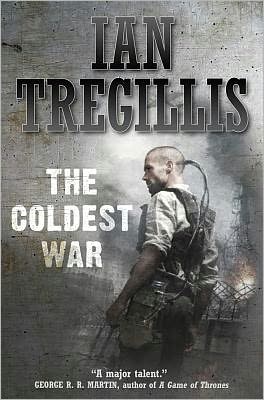
  • Ian Tregillis - The Coldest War - After far-too long a delay, the second installment in Tregillis’ alternate history/superhero fiction/Cthulhu mytos/Science Fiction Milkweed Tryptich hits shelves.

August 2012

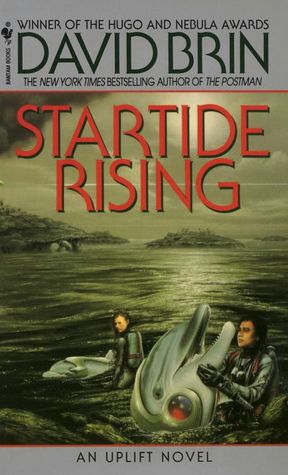
  • David Brin - Existence - I’ve never read David Brin, something I hope to rectify this year by the time this novel publishes, or at the very latest with this novel.
  • Justin Cronin - The Twelve - Sequel to Cronin's blockbuster The Passage, a favorite of mine in 2010
  • Mark Lawrence - King of Thorns - Sequel to what I thought was the best debut of 2011 and second in The Broken Empire trilogy? Yeah, this one is a priority read for me.

Not Scheduled (through September 2012)
  • Scott Lynch - The Republic of Thieves - The third Gentlemen Bastards novel has seen some long delays, hopefully this one gets to us in 2012
  • Robert Jordan & Brandon Sanderson - A Memory of Light, the final Wheel of Time novel. I’ve got some catching up to do, which leads to the next section of this blog post….

Backlist Reading/Non-new Releases
You’d think I have enough to read with the books publishing through August 2012, right? Well, chances are I may not get to all of the books noted above because of some other books I want to read

So, the last book I mentioned was A Memory of Light. I’m in the middle of re-reading Wheel of Time, plus I’ve got the books after Winter’s Heart to read before reading A Memory of Light. I think I might go a WOT book a month between now and November, the anticipated pub date of A Memory of Light.

I might be re-reading the three Caine books before Caine’s Law publishes, though I’ve read both Heroes Die and Blade of Tyshalle at least twice already

I’d really like to get to some of the older titles I picked up last year at used bookshops, like:


  • The Giants Trilogy by James P. Hogan
  • The Evergence Trilogy by Sean Williams and Shane Dix – Space Opera from an author who has delivered for me in the past.
  • Legend by David Gemmell – I never read this book. I know, please don’t stone me.
  • The Gap Sequence by Stephen R. Donaldson – This series is supposedly as good, some say better, than his Thomas Covenant books. I’d been hunting the series down in used book shops in NJ for a while, never finding a complete set until this past summer
  • A Canticle for Leibowitz - by Walter M. Miller – Another landmark novel of the genre I haven’t read. Remember, please hold the stones.

Other Books I’ve Had Laying about the House


  • The Long Price Quartet by Daniel Abraham – I tried the first book, A Shadow in Summer a few years ago and it just didn’t completely click with me at the time. I now have all four books and based on how much I enjoyed Abraham's books from last year, I need to catch up with this series.
  • Shadows of the Apt by Adrian Tchaikovsky – I only read the first of the series, liked it enough that I’ve hung onto the subsequent installments.
  • Honor Harrington - I picked up books 2-5 used last year. Weber has really risen in my personal ranks. I may wind up doing a read-through of the entire series starting this year. Over a dozen books in the series, what am I, crazy?
  • The Dresden Files by Jim Butcher – I usually read at least one or two of these a year, perhaps I’ll finally catch up to the publication schedule
  • The Black Company by Glen Cook – I’ve had the second and third omnibuses for a couple of years.
  • Heris Serrano by Elizabeth Moon – Another omnibus I’ve had for a couple of years. Having enjoyed Moon’s fantasy, I want to try her SF stuff.

Others/Books I don’t Have

Since I received a Kindle for my birthday in November, I’ve downloaded a bunch of freebies from Baen as well as some from amazon. So here's a random of assortment of other books I might get to this year:


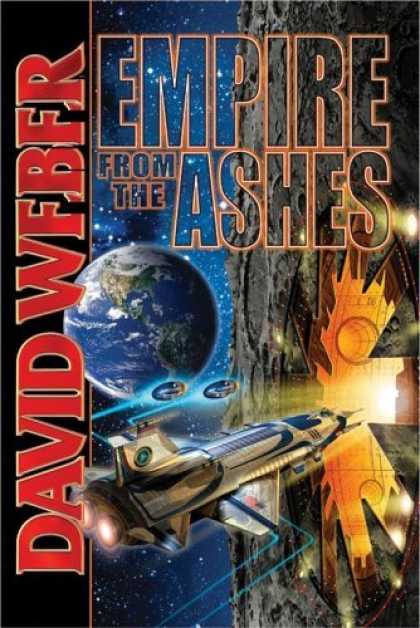
  • David Weber - Empire from the Ashes - seems like fun Big Dumb Object SF – The Moon is actually an ancient Warship!
  • Lois McMaster Bujold - The Vorkosigan Saga - All of these books are free at the Baen Fifth Imperium. Another SF series I’ve been wanting to catch up with since reading one of the many omnibus editions (Young Miles) collecting the series.
  • The Uplift Series by David Brin – These books have been in the back of my mind for quite some time (especially since Adam Whitehead recently reviewed the series on his blog) and with Brin releasing a new book in 2012, I think it’s about time I get to his most famous set of books. I do have a copy of Earth I may get to, as well.
  • Arthur C. Clarke - One of the Big Three, I’ve only read one book by him. Shame on me, must rectify.
  • John Ringo and David Drake – Two modern masters of Military SF with a decent amount of their work available free through the Baen Fifth Imperium

Wednesday, January 04, 2012

2011 Reading Year in Review

I’ve done this for a few years now (2010, 2009, 2008, 2007, 2006), so in order to maintain the middling credentials as a genre blogger/book reviewer I have, I'm doing it again for 2011.

As I have in the past, I’ll start with some stats…According to goodreads, I read (or at least attempted to read) 77 books in 2011. I say attempted because a few books I simply dropped because nothing about the book compelled me to keep reading. Many of those, 40, were new/2011 releases, but I have been trying to get back into some of the older stuff and the fact that nearly half of what I read was pre-2011 means I did just that.

In 2010, I posted 46 reviews to SFFWorld and 5 to the Sacramento Book Review /San Francisco Book Review, plus a couple here at the blog.

Some of the older stuff included catching with series I’ve been following like Dredsen Files, Robert Jordan’s Wheel of Time, David Weber’s Safehold and of course a re-read of the entire A Song of Ice and Fire series in preparation for both A Game of Thrones on HBO and A Dance with Dragons

Here are some stats:
  • 32 can be considered Fantasy
  • 40 2011/current year releases
  • 25 books by authors new to me
  • 32 can be considered Science Fiction
  • 9 can be considered 2011 debuts
  • 6 can be considered Horror
  • 12 Books by women (Not necessarily 12 different women because, for example, I read 4 total novels [one novel and an omnibus] by Elizabeth Moon)

All that said, on to the categories for the 2011 … Robloggies? ManBearPiggies? Stuffies? Sullys? I don’t know! As I said last year, this isn’t a typical top 10 or 12 or anything, but whatever you want to call them, here are some categories for what I read in 2011 and what I put at the top of those categories.


Rob Favorite Science Fiction Novel(s) Read in 2011


It’s already getting tough because three books vie for this spot and I might give a slightly different answer today compared to a week from today. The best way to go over these three books is chronologically, that is the order in which I read them.

I’ve only read one Eric Brown novel prior to reading The Kings of Eternity, but that is going to change. I found the book amazing with a powerfully addictive narrative strength:
In 1999 a reclusive writer named Daniel Langham shuns all forms of publicity living a truly introverted life on a remote Greek Island. His only real contact with the outside world is the restaurant owner where he eats every day. That is until he meets Caroline, an artist who intrigues Daniel both for her beautiful art as well as her charming personality. Because Daniel is so reclusive, he is unwilling to trust anybody very easily and his fears of being discovered on the remote island come to fruition when an investigative report hunts him down. Daniel finds solace both in the words he writes as well as the journal of his grandfather, Jonathon Langham.

In 1935 a writer named Jonathon Langham is summoned to the cottage of his editor Jasper Carnegie, along with fellow writer Edward Vaughan to witness a strange phenomena. Carnegie has everything planned for his friends and almost tortuously reveals what he wishes to show his friends. When he brings them to a clearing in Hopton Wood, Langham and Vaugham behold a portal to another world that appears strange, wondrous, and alien. Repeated viewings bring a visitor in the form of a dwarf-like alien on the run from aliens of another race who are hunting him. This meeting, of course, has a great impact on Langham, Vaughan, and Carnegie such that they are friends for the remainder of their lives.


Daniel Abraham is no stranger to the genre, though his novel with his friend George R.R. Martin’s assistant Ty Franck under the James S.A. Corey name is new. The author team with one name launched a classic Space Opera in 2011, a novel laced with noir and horror. Leviathan Wakes is the first installment of The Expanse and here’s what I said about it:
Holden’s crew is very much a family and from my most recent reads, I was reminded of the crew of the Ketty Jay from Chris Wooding’s terrific Retribution Falls. I mentioned in my review of that book, the parallels I found with Firefly. The landscape in Leviathan Wakes, though confined ‘only’ to our solar system plays off both epic and personal, space after all is large, but the sense that all the characters have a comfortable level of knowledge of the solar system much like seasoned business travelers would have a good working knowledge of the United States. Part of what makes the solar system so believable is how the problems of big business seemingly controlling things from behind the scenes and the clash of societies mirrors today’s world, just on a larger canvas.


Much like Abraham did in The Dragon’s Path, the narrative is told through a cycling of third-person POV characters, though here we only see the aforementioned Miller and Holden. Again, this style of storytelling makes sense considering Abraham is something of a protégé of George R.R. Martin and Franck is GRRM’s assistant, and this is by no means a negative thing. Martin does this better than any writer, so why not adopt a style that proved effective, unless you can’t pull it off. Fortunately for readers, this one specifically, Corey pulled it off very well.


The last of the 2011 standout novels I’d classify as Science Fiction for two reasons: (1) Science is the impetus behind the state of the world and (2) the spine of the book says “Science Fiction” as opposed to “Horror” or “Fantasy.” Deadline is the second novel of The Newsflesh Trilogy, Mira Grant’s Zombie-Apocalypse trilogy. The second novel maintained the same tension and narrative power as the first and has set the bar high for the concluding volume. Here’s some of what I said about Deadline:
As the layers of conspiracy are revealed, Grant examines the ethics involved in the medical profession, specifically those researchers involved in curing diseases, the power of government, and how those two – when at absolutes – can lay the foundation for an apocalypse. The ethical dilemmas were handled, I felt, very well and engaging through the characters of Dr. Connolly and Dr. Abby. Dr. Abby is introduced in the early stages of the novel as a rogue scientist with a giant mastiff immune to the Kellis-Amberle virus who is in constant hiding from the CDC. Reading through their ideological positions and their conflicts with each other, which was punctuated by the matter of fact and almost cold dialogue between Connolly and Maggie was some of the more ethically thought-provoking science fiction I’ve read in quite some time.


The Newsflesh Trilogy is turning into one of my favorite SF stories and one that is continuing to surprise me – up until the very end of Deadline. This second installment raises the stakes considerably and brings new players into the game, while maintaining the blistering pace of Feed, its predecessor. I can’t say enough good things about this novel, which has made the concluding volume Blackout, quite possibly my most anticipated novel publishing in 2012.


Rob’s Favorite Fantasy Novel(s) Read in 2011


2011 was another strong year for Fantasy, with more impressive debuts and highly anticipated books/installments in popular ongoing sagas (A Song of Ice and Fire, The Kingkiller Chronicle, Sword of Truth) – guess which one of those makes the cut?

As I did with the best SF, I’ll run through the top books in the order in which I read them.

Though published in January, I didn’t get around to it until April, Among Others was a powerful novel that hit so many notes perfectly – Coming of Age Novel, a novel about The Power of Story, Witchcraft, the Outsider – that it worked wonderfully for me and a book I think may require a second reading:

A novel like this is very difficult to sum up without giving away too many spoilers or revealing the joy of discovering what Mor experiences. Essentially, Among Others is epistolary novel told through Mor’s diary. Though I haven’t read too many novels structured in this manner, I wonder if they all hold the same addictive, powerful and voyeuristic appeal as does Walton’s novel. What made this novel work so well for me, and many readers of SF, is Mor’s unbridled love of the genre and perhaps more importantly, how it essentially saved her and allowed her to move on from the tragedy she experienced into the next stage of her life. The novel can be seen as a testament to not only the power of story and the written word, but also the power of community so strongly associated with SF. In fact, as I was reading the novel I very much wanted to visit some of the books Mor read. I made a journey to the local used bookshop to pick up some older SF contemporary with many of the novels Mor read, as well as Walton’s debut novel The King’s Peace.


Another appearance from Daniel Abraham here, this time a book he wrote all by his lonesome. The Dragon’s Path is the first novel in the series he's calling The Dagger and the Coin:

The novel starts with a prologue, hinting at the return of a very dark magic. The Spider Goddess, to be specific, and how she will consume the world. The POV character in this prologue does not receive a name other than “The Apostate.” The remaining chapters are titled based upon the character on whom Abraham focuses his engaging third person omniscient point of view. If this structure is somewhat familiar (especially to those who’ve read Daniel’s mentor George R.R. Martin) then the meat giving that structure bulk does stand apart. For example, the orphan hero is a very popular character type, especially in fantasy fiction. But how often is this orphan taken in by bankers and taught their trade? Not very often, from the many fantasy novels I’ve personally read. In the character of Cithrin Bel Sarcour, Daniel Abraham has given readers that character and watching her grow over the course of the novel was very enjoyable and plausible. At first shy and downtrodden, Cithrin comes into her own and becomes a very confident, assured character by novel’s end.


The plot revolves around power struggles for a throne under hints and threats of war, familial political machinations (primarily from Killian Dawson’s POV), the coming of age of two of the three primary protagonists (Cithrin and Geder), and the redemption of the third (Wester). Where Abraham further separates his novel from other Epic Fantasies dealing with war is where he shows how the wars begin, and through the economic maneuverings that often power the undercurrent of war. On the surface it may not seem that such a premise would make for the most compelling reading, but Abraham infused the narrative with that all important addictive quality of “I need to know what happens next.” In fact, my wife noted while I was reading the book that I couldn’t put the book down and was always reading it. She doesn’t make such a remark very often and I read about a book or two a week.


The last of the Fantasy trio should be no surprise: A Dance with Dragons by George R.R. Martin , I didn’t do proper review of this beast, just a little response on goodreads


Rob's Favorite Debut(s) of 2011


Two of these novels could have easily been in the Fantasy category, but I wanted to spread the love, so to speak.

My favorite debut of the year was from Ace books and was a bit of a controversial title over in the SFFWorld forums. I speak of Mark Lawrence’s Prince of Thorns, the first installment in The Broken Empire trilogy. A crazed, many-ogonistic protagonist, a crapsack world, and powerful narrative made this book impossible for me to stop reading:
Prince Jorg was forced to watch his mother and brother tortured and killed as he was entangled in the thorny briar, unable to move or tear his eyes away from the carnage. This happened when he was nine years old. Fast forward a few years and he’s left the confines of his father’s kingdom and is leading a band of cutthroat bandits and mercenaries extracting coin; questing for revenge upon Renar, the ruler who killed his mother and brother; and pretty much doing whatever they want. As the title of the series, The Broken Empire, implies, the world is not whole. Scattered kingdoms, and that word applies quite loosely, vie for power against the Hundred, the dark powers seemingly in control of the world.


Prince Jorg was forced to watch his mother and brother tortured and killed as he was entangled in the thorny briar, unable to move or tear his eyes away from the carnage. This happened when he was nine years old. Fast forward a few years and he’s left the confines of his father’s kingdom and is leading a band of cutthroat bandits and mercenaries extracting coin; questing for revenge upon Renar, the ruler who killed his mother and brother; and pretty much doing whatever they want. As the title of the series,
The Broken Empire, implies, the world is not whole. Scattered kingdoms, and that word applies quite loosely, vie for power against the Hundred, the dark powers seemingly in control of the world.


The next debut author released three novels over the course of three months, a publishing strategy that has proven very successful in the past (Naomi Novik and Brent Weeks, to name just two). Kevin Hearne kicked off an Urban Fantasy series focusing on a 2,000 year old Druid (Atticus) and his Irish Wolfhound familiar (Oberon) in modern Arizona as he runs into various supernatural entities. The first book is titled Hounded. Hexed and Hammered are the other two, but here's an excerpt from my review of Hounded:

Atticus is a 2,000-plus year old Druid who lives with his Irish Wolfhond Oberon in Tempe, Arizona; runs a shop that specializes in herbal remedies and arcane books; communes with Celtic and native American tribal gods, witches and all sort of supernatural characters. When his arch enemy cranks up the hunt for Atticus, the Druid decides to stop running and confront the Celtic God Aenghus Óg. Aenghus has a somewhat fair reason to have hounded Atticus (whose true name is Siodhachan O’Suileabhain), appropriated Aenghus’s magical sword Fragrach during a battle. So, Aenghus sends his minions after Atticus and the minions get more powerful as the novel progresses until there’s an all-out spectacular battle of magic, gods, and Tuatha Dé Danann to cap off this fine novel.


Primarily for the heavy Celtic flavor, I’d also recommend these books to readers who enjoyed Mark Chadbourn’s Age of Misrule trilogy. Hearne’s pacing and humor make the page turnings rather quickly, he’s got an addictive storytelling style. As a person who grew up with dogs and currently has a dog, I was very impressed with Hearne’s ability to really “get” the relationship between human and canine companion so much so that I imagine my dog thinking some of the same things Oberon says to Atticus. In the relationship between Atticus and Oberon, I was also reminded of Vlad Taltos and his familiar Loiosh, or even Harry Dresden and Bob the Skull. Having the protagonist/sidekick relationship allows for good story progression without the protagonist monotonously spouting a monologue at the reader and Hearne captured this element quite brilliantly, perhaps my favorite aspect of the novel.


Since I’m doing this in threes, why not continue with the debuts? The third debut that knocked my socks off was one of the grittiest, dirtiest, bleakest military SF novels I’ve ever read. It also came across as brutally honest and genuine. I refer to T.C. McCarthy’s Germline

Few novels I’ve read have depicted the dirtiness, pain, monotony and sheer distress involved in war with such believability. Wendell is not a hero, he has serious drug problems, which have led to and compounded his family problems, he isn’t the nicest or bravest guy in the world, and he has a tendency not to turn his writing assignments in on time. One thing at which Oscar excels; however, is endearing himself to the soldiers with which he follows on their tours of duty. Here is where McCarthy shows nice touches, after a minor bit of hazing from the Marines, Wendell fits in with the Marine nicknamed Ox. The camaraderie between them throughout the novel is one of the strengths and something that continually returns as Oscar travels through various points in the war zones.


Adding to Wendell’s instability are the genetics – squads of genetically engineered female supersoldiers placed on the front lines as the elite fighting forces. For reasons that come to light as the novel progresses the only supersolders are females. Just when the novel seems to be about Wendell’s struggles for sanity, cleanliness and war, in comes the relationship angle and the question of “What is humanity?” The genetics are perfected humans, at least physically, but they unfortunately have a very short shelf life, very few living beyond 18-20 years. When Oscar first sees one from a distance, he’s fascinated, though his comrades in arms try to dissuade him from engaging with the genetics. When he does meet and talk with one in particular, Sophie, his fascination grows and becomes a physical attraction that one might say leads to obsession.


Favorite Backlist / Book Not Published in 2011 Read in 2011


I’m not including Mr. Martin’s A Song of Ice and Fire in this category since (1) I’ve previously read all the books save A Dance with Dragons (2) That really wouldn’t be fair. So, here goes:

The top spot goes to novel that was recently nominated for the prestigious Hugo award. It involves zombies, a political campaign, the power and evolution of news reporting. I speak of course, of Mira Grant’s FEED:


The characters are terrific and believable. Georgia is a bottom-line no-nonsense character who upholds telling the truth as the ultimate ideal. Shaun is the more adventurous type and can be seen as a charming and intelligent character from Jackass – think Johnny Knoxville or Bam Margera fighting zombies for our entertainment. The relationship between the brother and sister, adopted after their parents the Masons had to kill their own son when he became a zombie, is one of trust, love, and respect. Shaun and George are not related by blood; however, their bond is no less strong because of it. In presidential candidate Peter Ryman, Grant gives readers what seems to be the ideal man running for the most powerful job in the world. The relationship between Ryman and his wife Emily is painted as ideal as well. As much as the characters themselves are incredibly well drawn, it is in their one-on-one relationships that Grant’s ability to lend emotion to her characters really shines. Georgia/Shaun, Peter/Emily are not the only two, but the best examples in the book. When a third character comes into the picture of the paired characters; however, is when things start go, for lack of a better term, a little wonky. Again, I feel revealing the specifics might take away from the true power of Grant’s story, so I leave it to the reader to explore these themes in the novel.


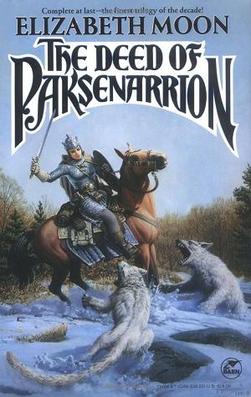
The number two slot goes to an omnibus that is in my personal Omnibus Hall of Fame PeterWilliam) The Deed of Paksenarrion by Elizabeth Moon.


I don’t have a review of it up anywhere, but I liked nearly everything about the three books contained in the big grey/blue book published by Baen. What’s more impressive is that these three books are the first three published by Elizabeth Moon. I think she developed the character of Paks very well throughout the novel and the world came across as quite real. Rumor has it Mrs. Moon sort of wrote these books as a reaction to how Paladins are portrayed in Dungeons and Dragons and on one hand I can see that. On the other, for my reading sensibilities, the omnibus just simply worked. This is one I’d point to if somebody was looking for what is now considered Classic High/Military Fantasy.

Rounding out the triumvirate for this category is the first book in a massively popular series by an author whose work I’ve been finding myself drawn to reading over the past couple of years with growing regularity. (I’m sure you readers are sick of me saying that). The author is David Weber and the book is the first of his Honor Harrington series On Basilisk Station:


Since this novel is set in space and deals with spaceships, a space navy, and a space station, a space battle is inevitable and rollicking. The last 100 pages or so depicting the conflict was terrific reading. Perhaps what made the book so enjoyable for me; however, was Weber’s wonderful handling of characters in tense situations. For example, there's a lot of tension in the air between Honor Harrington and one of her officers, particularly her Executive Officer McKeon. Weber depicts it very well and the resolution of that tension comes off nicely and plausibly. The level of respect that grew from their initial tension was as emotionally satisfying (perhaps more so for me) than the thrilling space battle. Tangentially, Weber relays a great deal of information about the universe set up through narrative info dumps as well as dialogue between the characters. The term info dump often holds an air of negative connotation, but in this case, it worked very well for me.

Weber openly acknowledges the Honor Harrington novels are basically
Horatio Hornblower novels IN SPACE, but that does not deter from any enjoyment I experienced reading On Basilisk Station. Another admirable aspect of what Weber does with his characters in this novel is the balance between believable and heroically over the top. My only problem with his book is the somewhat rocky start. The first few chapters were a little scattershot, in terms of setting up the remainder of the novel. However, once Honor took center stage there was no turning back for and On Basilisk Station turned into a truly entertaining, engaging, and addictive novel.


MVP Author of 2011


For the first time in two years, of doing this on my year-ender Brandon Sanderson doesn't get the mention. It should come as no surprise that it is …


The fact that “in the US it [A Dance with Dragons] had the highest single and first-day sales of any new fiction title published this year” is a testament to his fans and the continuing power of the written word.


Of course, the popularity of the book series is on the rise in small part to a little TV show on a relatively obscure cable network . Remember how I said before I re-read the four books leading up to the release of book 5? Yeah, I guarantee many other fans did just that, both the long-time fans and the new fans thanks to the show.


Hell, George was named by Time.com as one of their "People Who Mattered in 2011", Game of Thrones received many award nominations including a win for Peter Dinklage. I’m just scratching the surface here folks.

Honorable mention goes to Seanan McGuirre / Mira Grant – she published three books in 2011 (two in her popular October Daye urban fantasy series, the middle book of her superb Newsflesh trilogy, and spent a good portion of the year as a Hugo nominee.


Favorite ‘New To Me’ Author(s) of 2011


I’ll mention two, as I did last year. One author is squarely in the Fantasy genre, the other skirts the line between genres and perhaps has created a genre – bucklepunk.

The bucklepunk guy, is of course, Chris Wooding. I’d seen good things about his writing, particularly from readers across the pond who’ve been reading Chris’s work for a few years. This year, the fine folks at Bantam Spectra published the first two books in his Tales of the Ketty Jay, the first of which is Retribution Falls:

Sky Pirates of the Future could easily be the tagline for Chris Wooding superbly entertaining SF novel Retribution Falls, if it were written half a century ago. Perhaps Wooding could have thrown that tagline into the subtitle since the sense of wonder, thrill of adventure, and pure fun that is laced throughout the entirety of the novel evokes those pulpy stories which helped to provide a basis for today’s SF.

As the novel proceeds from the point when the too good becomes the crew of the Ketty Jay’s potential downfall, Wooding does an excellent job of revealing the character’s back stories. I thought this a particularly clever method for getting to know and care about the characters as the character’s history and growth read seamlessly along with the action pieces of the novel.

Wooding starts the novel out very strongly, with Frey and Crake in a sticky situation that immediately establishes what I mentioned before – Frey’s #1 concern is the Ketty Jay, even more than the life of a crew member. In some ways, this reminded me of the beginning of Scott Lynch’s Red Seas under Red Skies, except that here in Retribution Falls, we don’t know the characters quite as well. Nevertheless, the scene itself establishes the overall feel for the book and the beginnings of solid character development.


The other author is squarely in the Fantasy section of town, and at this point, the Sword and Sorcery district. Michael J. Sullivan published his first novel in 2009 electronically and with a small press. Orbit re-released his first two novels in what is now in my Omnibus Hall of Fame - Theft of Swords. I mentioned him fair amount on the blog this year and I interviewed him for SFFWorld. Here's a bit from my review:

Theft of Swords contains The Crown Conspiracy and Avempartha, the first two novels in the series. Both books are just over 300 pages. In The Crown Conspiracy, readers are introduced to the anti-heroic duo of Royce Melborn, thief, and Hadrian Blackwater, mercenary. The two call themselves Riyria and are known as a competent duo, working outside the thieves’ guild taking on jobs for nobles who would otherwise not want to get their hands dirty. Off the bat, Sullivan gives readers fully formed protagonists who are mature and not the typical farmboys of epic fantasy. In fact, the feel I got throughout The Crown Conspiracy was more of a Sword and Sorcery adventure rather than Epic Fantasy. Of course, the comparison many people have made to Royce and Hadrian is to Fritz Leiber’s Fafhrd and the Grey Mouser. The relationship between Royce and Hadrian comes across as something that is long-standing, but as of yet, Sullivan has yet to reveal how the two rogues became partners. This is good, and a pattern of storytelling which Sullivan employs throughout The Crown Conspiracy and a method at which he excels..

Orbit was very smart to (1) snap up these books, (2) pair up two books into one omnibus, and (3) publish the three books in three months. Sullivan’s story fits in great with some of the recent books published by Orbit– I’d recommend the books to people who enjoyed the ‘old-school fantasy’ aspect of Daniel Abraham’s The Dragon’s Path and Brent Weeks
Night Angel Trilogy.


Favorite Publisher of 2011


If you’ve made it this far along the blog post, and you are familiar with who publishes what books, then this shouldn’t come as a surprise…


Orbit Books had a terrific year, though a fair amount of that carried over from 2010 as multiple books they published were on multiple award shortlists. For my reading time, no publisher produced books that worked as consistently from book-to-book for me. That is, on the whole, all the books I read published by Orbit worked for me in a big way. From the smart The Dragon’s Path by Daniel Abraham, to the aforementioned Theft of Swords by Michael Sullivan, to the two novels I read by Mira Grant to the uncompromising debut by T.C. McCarthy as well as Philip Palmer’s Hellship to the rollicking top 3 SF book Leviathan Wakes, it all worked in a big way for me.

This isn’t to say that other publishers didn’t publish great stuff I enjoyed, just that nothing I read from Orbit fell into the disappointment/clunker/meh category. I can't say the same for the other publishers whose books I read in 2011.

Odds and Ends of 2011


For my birthday, I received a Kindle Fire and I absolutely LOVE IT! At this point, I’ve only read one full book on it, but I’ve downloaded a bunch from Baen Fifth Imperium and the free books available through the Baen Free Library so perhaps I’ll do a read through of the Honor Harrington saga in the coming year.

Sully, the dog who became part of our family last year and is looking at you above this section, is now a year older. She's just as loveable, sweet and a pure joy to have in our lives and everything Mrs. Blog o' Stuff and I could have hoped for when we finally decided to bring a dog into our home.

So, in conclusion 2011 was a mixed bag. It was a good reading year for me, but some really crappy things (well, one major crap thing) in my personal life that I hope is on the way to resolving itself. I hope.

Looking Ahead to 2012


Sully and her boyfriend Cooper have their backs turned on 2011 and are waiting to see what 2012 has in store for them, and all of us.

What does 2012 bring?
  • Season 2 of Game of Thrones
  • More Walking Dead
  • The Dark Knight Rises
  • Prometheus
  • The Hobbit (part 1)
  • The Avengers
  • Caine's Law the fourth Act of Caine by Matthew Stover
  • The final Wheel of Time novel
  • Caliban's Law the second in James S.A. Corey's The Expanse
  • The Wind through the Keyhole by Stephen King (Dark Tower 4.5)
  • The King's Blood book 2 of Daniel Abraham's The Dagger and the Coin
  • The final novel of Mira Grant's Newsflesh Trilogy

Looks like a decent batch of major releases on the small screen, big screen, and page for me. Let's just hope some of it lives up to the hype.