Showing posts with label Daniel Abraham. Show all posts

Monday, December 22, 2014

Anticipated Reading: A Baker's Dozen of Books for 2015


In the past, I’ve lumped in a list of forthcoming books publishing in the calendar year with my wrap up of the previous years. This time around, I decided to go with a post of its own to highlight some books I am looking forward to reading. Of course I give the caveat that reading plans are far from things set in stone by any biblioholic like myself. Furthermore, I am not including books I don’t have yet like Elizabeth Bear’s Karen Memory or Dave Bara’s Impulse which I already have in ARC form and will be reviewing in time for the publication dates of those books.

Without further ado here’s a baker’s dozen worth of books publishing in 2015 I look forward to reading…
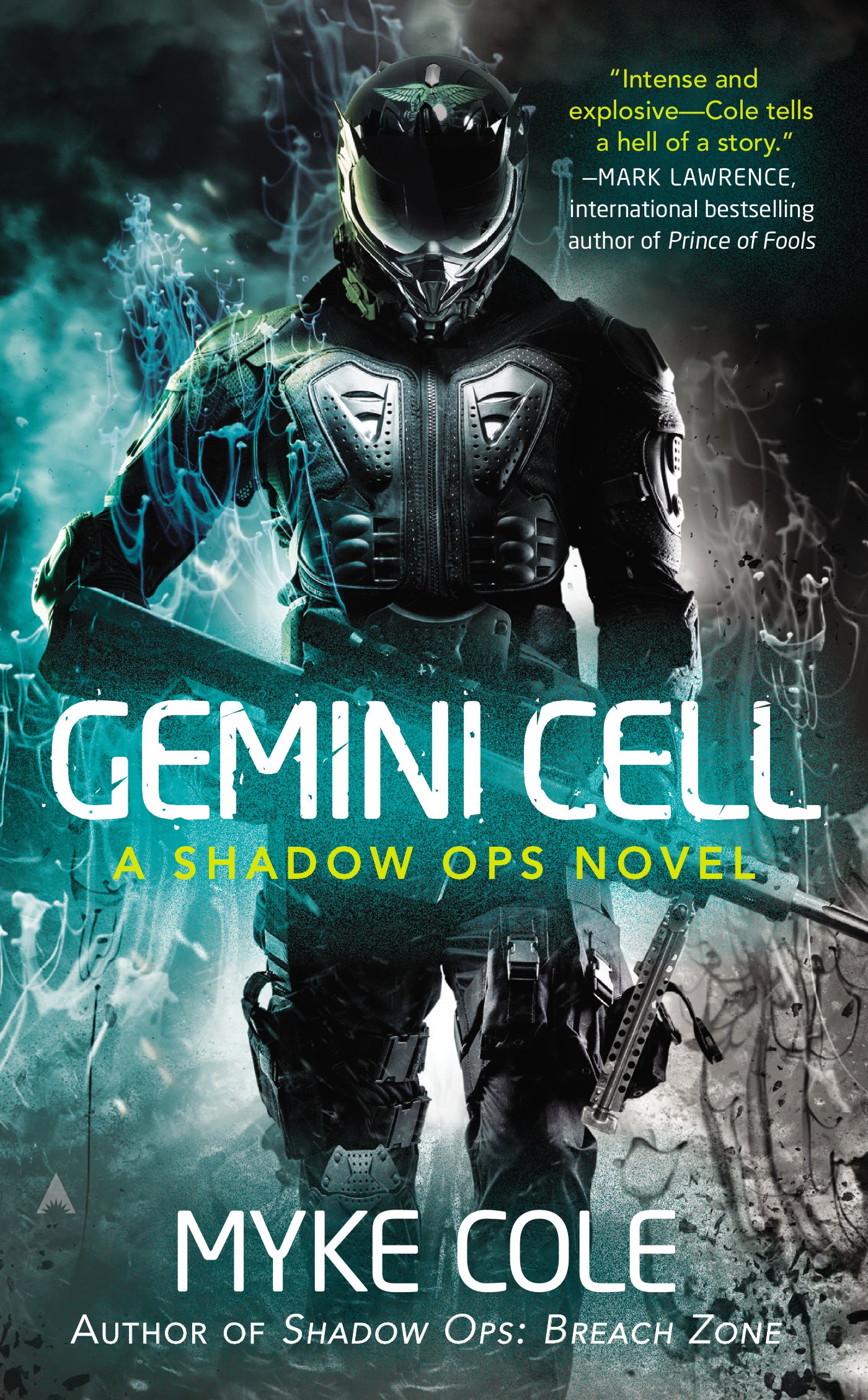
Gemini Cell by Myke Cole (Ace January 2015) – I loved the first three books in his Shadow OPS series (Control Point, Fortress Frontier, Breach Zone) which formed a loose trilogy. This one takes a step back in the action to the days of the Great Reawakening; essentially the foundational time for the milieu.

Myke Cole continues to blow the military fantasy genre wide open with an all-new epic adventure in his highly acclaimed Shadow Ops universe—set in the early days of the Great Reawakening, when magic first returns to the world and order begins to unravel…

US Navy SEAL Jim Schweitzer is a consummate professional, a fierce warrior, and a hard man to kill. But when he sees something he was never meant to see on a covert mission gone bad, he finds himself—and his family—in the crosshairs. Nothing means more to Jim than protecting his loved ones, but when the enemy brings the battle to his front door, he is overwhelmed and taken down.

That should be the end of the story. But Jim is raised from the dead by a sorcerer and recruited by a top secret unit dabbling in the occult, known only as the Gemini Cell. With powers he doesn’t understand, Jim is called back to duty—as the ultimate warrior. As he wrestles with a literal inner demon, Jim realizes his new superiors are determined to use him for their own ends and keep him in the dark—especially about the fates of his wife and son
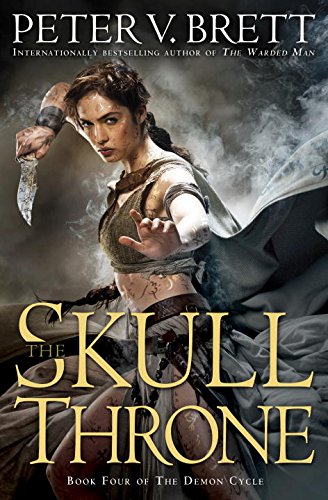

The Skull Throne by Peter Brett (Del Rey March 2015) – I have really enjoyed the three books Peat has published in the Demon Cycle series for its mix of old school high fantasy with some more modern sensibility (The Painted Man, The Desert Spear, and The Daylight War).

Following up on the internationally bestselling The Warded Man, The Desert Spear, and The Daylight War, Peter V. Brett continues his critically acclaimed epic fantasy Demon Cycle series that will appeal to fans of Terry Brooks, George R.R. Martin, David Eddings, and Robert Jordan.

Peter V. Brett has quickly established himself as one of the most successful new fantasy writers working today. Readers have embraced his world and his characters with a fervor, and his third and most recent novel hit the New York Times bestseller list in hardcover. Now he continues his epic series in grand style, offering the continuing stories of all the POV characters we have come to know and love, as well as adding several new ones into the mix.


Providence of Fire by Brian Staveley (Tor January 2015) – I was a little late to the game on Staveley’s debut, The Emperor’s Blades, which I thoroughly enjoyed and what I’ve heard about what happens in this one has me very excited to dive into it.

Brian Staveley's Providence of Fire, the second novel in the Chronicle of the Unhewn Throne, a gripping new epic fantasy series.

The conspiracy to destroy the ruling family of the Annurian Empire is far from over.

Having learned the identity of her father's assassin, Adare flees the Dawn Palace in search of allies to challenge the coup against her family. Few trust her, but when she is believed to be touched by Intarra, patron goddess of the empire, the people rally to help her retake the capital city. As armies prepare to clash, the threat of invasion from barbarian hordes compels the rival forces to unite against their common enemy.

Unknown to Adare, her brother Valyn, renegade member of the empire's most elite fighting force, has allied with the invading nomads. The terrible choices each of them has made may make war between them inevitable.

Between Valyn and Adare is their brother Kaden, rightful heir to the Unhewn Throne, who has infiltrated the Annurian capital with the help of two strange companions. The knowledge they possess of the secret history that shapes these events could save Annur or destroy it.


Lagoon by Nnedi Okorafor (Saga Press July 2015) – I realize this was published in the UK a while back, but the Wizard helming SAGA PRESS Joe Monti is making this one available to US readers. 

It’s up to a famous rapper, a biologist, and a rogue soldier to handle humanity’s first contact with an alien ambassador—and prevent mass extinction—in this novel that blends magical realism with high-stakes action.

After word gets out on the Internet that aliens have landed in the waters outside of the world’s fifth most populous city, chaos ensues. Soon the military, religious leaders, thieves, and crackpots are trying to control the message on YouTube and on the streets. Meanwhile, the earth’s political superpowers are considering a preemptive nuclear launch to eradicate the intruders. All that stands between 17 million anarchic residents and death is an alien ambassador, a biologist, a rapper, a soldier, and a myth that may be the size of a giant spider, or a god revealed.

Cold Iron by Stina Leicht (Saga Press June 2015) – Another book in the Saga Press launch as part of Joe Monti’s plan to take over the SFF publishing world. I missed out on Stina’s series from Nightshade, so I’m very much looking forward to this one.

Fraternal twins Nels and Suvi move beyond their royal heritage and into military and magical dominion in this flintlock epic fantasy debut from a two-time Campbell Award finalist.

Prince Nels is the scholarly runt of the ancient Kainen royal family of Eledore, disregarded as flawed by the king and many others. Only Suvi, his fraternal twin sister, supports him. When Nels is ambushed by an Acrasian scouting party, he does the forbidden for a member of the ruling family: He picks up a fallen sword and defends himself.

Disowned and dismissed to the military, Nels establishes himself as a leader as Eledore begins to shatter under the attack of the Acrasians, who the Kainen had previously dismissed as barbarians. But Nels knows differently, and with the aid of Suvi, who has allied with pirates, he mounts a military offensive with sword, canon, and what little magic is left in the world.
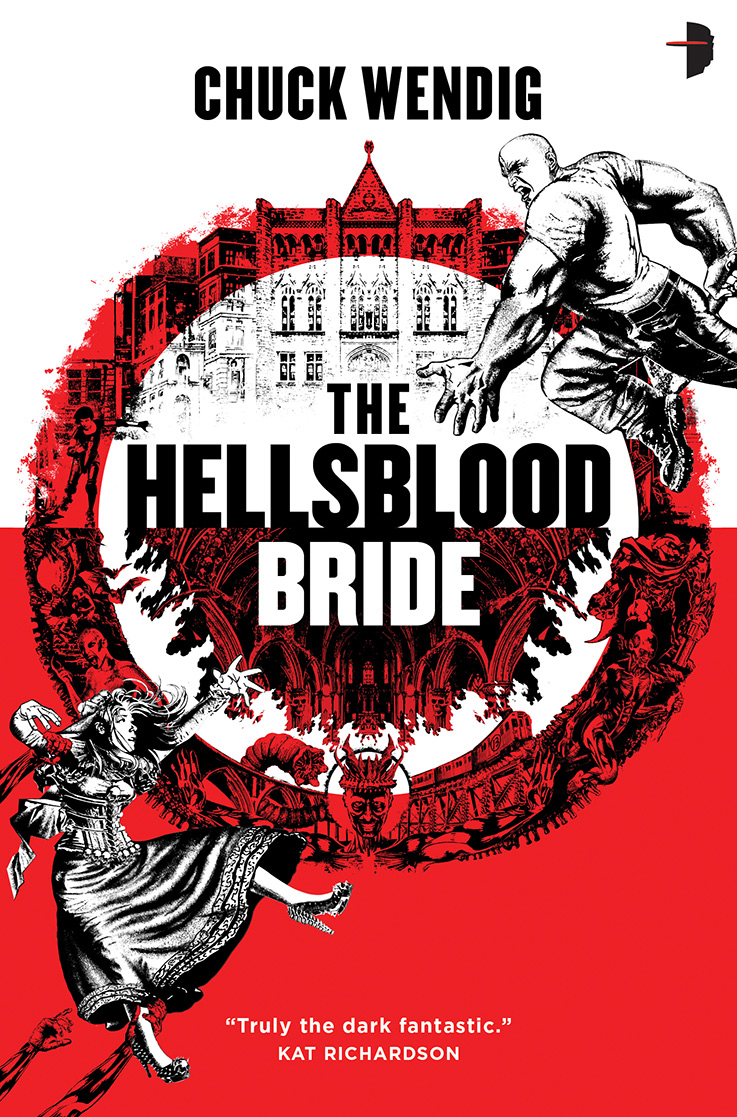

The Hellsblood Bride by Chuck Wendig (Angry Robot March 2015) - I loved the first Mookie Pearl novel, The Blue Blazes. Of it, I said, “It may be reductive to do the whole combine-and-compare thing, but think one part Hellboy, one part Mathew Stover, one part Big Trouble in Little China, and throw in a dash of The Sopranos, the film The Wrestler and pulp sensibilities, and you might have an idea of what a great stew of fun this novel really is.” Also, just look at that awesome cover, right?

Yes, we’re going back deep underground for another twelve rounds with Mookie Pearl.

Father, barkeep, former Mafioso, ruler of his subterranean crime-kingdom. The Organization is back, and they’ll do anything to get Mookie on board, but Mookie has gone legit, and it’s taking every ounce of effort for him to keep his new bar from crashing and burning.

To top it all, his daughter is missing, and when Nora’s not in plain sight, that’s usually a sign of bad things to come! On one hand, the Organization. On the other, Nora.
Why can’t Family ever be easy..?


Nemesis Game by James S.A. Corey (Orbit Books June 2015) - The Expanse is consistently my favorite space-based science fiction series, with each book landing on my top reads of the year. Cibola Burn was a bit of a game changer for the series – in a good way for a series that was already quite good.

The fifth novel in James S.A. Corey's New York Times bestselling Expanse series--now being produced for television by the SyFy Channel!

A thousand worlds have opened, and the greatest land rush in human history has begun. As wave after wave of colonists leave, the power structures of the old solar system begin to buckle.

Ships are disappearing without a trace. Private armies are being secretly formed. The sole remaining protomolecule sample is stolen. Terrorist attacks previously considered impossible bring the inner planets to their knees. The sins of the past are returning to exact a terrible price.

And as a new human order is struggling to be born in blood and fire, James Holden and the crew of the Rocinante must struggle to survive and get back to the only home they have left.

Uprooted by Naomi Novik (Del Rey June 2015) – I thoroughly enjoyed the first few books (His Majesty’s Dragon) of Novik’s Temeraire series by admittedly, my interest waned as the series continued. This is a fresh new world and looks to be a modern twist on a Fair Tale.

Naomi Novik, author of the bestselling and critically acclaimed Temeraire novels, introduces a bold new world rooted in folk stories and legends, as elemental as a Grimm fairy tale.

“Our Dragon doesn’t eat the girls he takes, no matter what stories they tell outside our valley. We hear them sometimes, from travelers passing through. They talk as though we were doing human sacrifice, and he were a real dragon. Of course that’s not true: he may be a wizard and immortal, but he’s still a man, and our fathers would band together and kill him if he wanted to eat one of us every ten years. He protects us against the Wood, and we’re grateful, but not that grateful.”

Agnieszka loves her valley home, her quiet village, the forests and the bright shining river. But the corrupted Wood stands on the border, full of malevolent power, and its shadow lies over her life.

Her people rely on the cold, driven wizard known only as the Dragon to keep its powers at bay. But he demands a terrible price for his help: one young woman handed over to serve him for ten years, a fate almost as terrible as falling to the Wood.

The next choosing is fast approaching, and Agnieszka is afraid. She knows—everyone knows—that the Dragon will take Kasia: beautiful, graceful, brave Kasia, all the things Agnieszka isn’t, and her dearest friend in the world. And there is no way to save her.

But Agnieszka fears the wrong things. For when the Dragon comes, it is not Kasia he will choose.

Empire Ascendant by Kameron Hurley (Angry Robot October 2015) – I don’t know much about what will be happening in the second book of Hurley’s Worldbreaker saga, but all I need to know is that it is the second book in the series and follow-up to The Mirror Empire.


The Spider’s War by Daniel Abraham (Orbit Books June 2015) – The concluding volume of the fantastic Dagger and the Coin series. - The epic conclusion to The Dagger and The Coin series, perfect for fans of George R.R. Martin.

Lord Regent Geder Palliako's great war has spilled across the world, nation after nation falling before the ancient priesthood and weapon of dragons. But even as conquest follows conquest, the final victory retreats before him like a mirage. Schism and revolt begin to erode the foundations of the empire, and the great conquest threatens to collapse into a permanent war of all against all.

In Carse, with armies on all borders, Cithrin bel Sarcour, Marcus Wester, and Clara Kalliam are faced with the impossible task of bringing a lasting peace to the world. Their tools: traitors high in the imperial army, the last survivor of the dragon empire, and a financial scheme that is either a revolution or the greatest fraud in the history of the world.


Fool’s Quest (Fitz and the Fool Trilogy #2) by Robin Hobb (Del Rey August 2015) – Considering Fool’s Assassin was the most enjoyable reading experience I had in 2014, this one is very, VERY high on my anticipation list.

Ranking alongside George R. R. Martin as a groundbreaking master of fantasy, New York Times bestselling author Robin Hobb delivers the second book in her long-awaited Fitz and the Fool trilogy. After a devastating confrontation, FitzChivalry Farseer is out for blood—and who better to wreak havoc than a highly trained former royal assassin?


The Black Wolves by Kate Elliott (Orbit Books July 2015) – A new series from Elliott who writes some of the strongest opening volumes in fantasy.

SOME CHOICES CAN NEVER BE UNDONE.

He lost his honor long ago.

Captain Kellas was lauded as the king's most faithful servant until the day he failed in his duty. Dismissed from service, his elite regiment disbanded, he left the royal palace and took up another life.

Now a battle brews within the palace that threatens to reveal deadly secrets and spill over into open war. The king needs a loyal soldier to protect him.

Can a disgraced man ever be trusted? 


The Prince of Valor by Django Wexler (Roc July 2015) – I read the first two Shadow Campaigns novels last year and thought The Shadow Throne was awesome.

In the latest Shadow Campaigns novel, Django Wexler continues his "epic fantasy of military might and magical conflict" following The Shadow Throne and The Thousand Names, as the realm of Vordan faces imminent threats from without and within.

In the wake of the King’s death, war has come to Vordan.

The Deputies-General has precarious control of the city, but it is led by a zealot who sees traitors in every shadow. Executions have become a grim public spectacle. The new queen, Raesinia Orboan, finds herself nearly powerless as the government tightens its grip and assassins threaten her life. But she did not help free the country from one sort of tyranny to see it fall into another. Placing her trust with the steadfast soldier Marcus D’Ivoire, she sets out to turn the tide of history.

As the hidden hand of the Sworn Church brings all the powers of the continent to war against Vordan, the enigmatic and brilliant general Janus bet Vhalnich offers a path to victory. Winter Ihernglass, newly promoted to command a regiment, has reunited with her lover and her friends, only to face the prospect of leading them into bloody battle.

And the enemy is not just armed with muskets and cannon. Dark priests of an ancient order, wielding forbidden magic, have infiltrated Vordan to stop Janus by whatever means necessary...


It seems the past few years I’ve gone and done a re-read of a series or a re-read/catch-up of a series. Last year it was Memory, Sorrow and Thorn by Tad Williams, the year before that, David Anthony Durham’s Acacia, and the year before that it was Daniel Abraham’s Long Price Quartet and for a couple of years before that I re-read & caught up with The Wheel of Time and as a refresher for A Dance of Dragons and Game of Thrones premiering on HBO, I re-read A Song of Ice and Fire.

In 2015, the series that most likely will fall into this category is Kate Elliott’s Crown of Stars series. As I intimated above, I loved the first book King’s Dragon when I first read it years ago and enjoyed each subsequent volume of the series but, as I’ve written previously, the onslaught of review books over the years kept pushing this series away from my grasp. 


So as of this post, I’ve given myself 20 books to read next year, which will account for about 1/3 of what I’ll likely read.

I’ll close out by saying that I am also VERY much looking forward to Saga Press entering the genre marketplace. 


Strike that, a final postscript: my primary source Locus Online’s Forthcoming books so a couple of books I might otherwise include in this post aren’t on Locus’s list (i.e. Joe Hill’s The Fireman and Robert Jackson Bennett’s City of Blades don’t have US dates listed)

Friday, August 15, 2014

Friday Roundup: Hobb @ SFFWorld, Abraham @ Tor.com, and Buettner @SF Signal

I haven't posted one of these link round-ups in a couple of weeks. More importantly, this week I posted a new review to SFFWorld, the first in a little over a month.  That isn't to say I haven't been reviewing, but as my plethora (OK, under 700) of twitter followers likely know, I've been posting quite a few reviews to Tor.com over the past few weeks.  So, what does today's fancy link round-up include?

Let's start with my latest review for SFFWorld, a book that I hadn't realized how much I was looking forward to reading it until I stuck my head into it: Fool's Assassin by Robin Hobb.  Admittedly, I was a bit nervous about this one based on how badly I bounced off of her second Soldier Son novel, Forest Mage (more for the story than anything, because through everything Hobb has incredible prose), which was the last book by Robin Hobb I read despite her writing five novels since then. All of that having been said, I was more than satisfied with Fool's Assassin and chances are it will be one of (maybe THE) top fantasy novel for me by year's end.


Years have passed since readers were last privy Fitz’s thoughts, he is now married to his boyhood love Molly, his daughter Nettle (whom Molly’s first husband Burrich raised as his own and is now very much enmeshed in the life of Buckkeep court) has appointed him the Holder of the Withywoods Estate she’s been bequeathed. In short, life for the man many know as Tom Badgerlock is far more bucolic than the courtly intrigue in which he spent much of his life embroiled. Then one Winterfest, a traveling group of minstrels and performers arrive; these strangers are very different indeed and bear little resemblance to any folk to have passed through Withywoods as far as any of the staff and people can remember. Life soon returns to its leisurely pace for Molly and Fitz until Molly boldly proclaims she is pregnant. This is something she and Fitz always wanted for many of the children she bore were from Burrich, her first husband and the man who served as a father figure to Fitz.

Much of the novel from this point deals with Fitz as a father to this new child, a child who appears healthy but much smaller than any child should. This young girl, whom Molly and Fitz come to name Bee, is not very communicative and is very withdrawn. She shirks away from Fitz and bonds immediately to Molly. Because of her diminutive size and silence, she is thought by many of Withywoods to be mentally slow and damaged. As the novel progresses, Hobb conveys the emotional turmoil a parent might experience with a child who is so out of what is considered normal.

Last week, my review of another incredible Epic Fantasy novel went live at Tor.com - The Widow's House by Daniel Abraham.  Abraham is climbing the ranks of my personal favorite genre writers and this book raises his stature on that list even more.


In The Widow’s House, the fourth installment of The Dagger and the Coin sequence, author Daniel Abraham continues to deftly explore positions of power, and how perception lends credence to reality. Abraham tells the story through the same points of view as in the previous volume, though these characters have evolved quite a bit since we first met them. Clara Kalliam, widow, mother, plotter against the Lord Regent; Cithrin bel Sarcour, ‘rogue’ banker, former lover and scorner of the Lord Regent; the aforementioned Geder, Lord Regent and emotional basket case; and Captain Marcus Wester, a hardened man of war. Abraham bookends the novel with two additional points of view: a prologue from the POV of the last Dragon Inys, and an epilogue from a soldier’s point of view.

What is most fascinating about this novel, and the story as a whole as Abraham has allowed it to unfold, is how he is playing with archetypes, both propping them up and shattering them. War is most often fought in Epic Fantasy with the standard machinations of war—men with weapons. What if the solution to winning a war is to not fight the war; to pull the proverbial rug out from under the war and completely change the rules? It is an intriguing concept that has been simmering throughout the series as Abraham set Cithrin and Geder, as seeming allies at first, and now characters at ideological cross purposes.

Lastly (and most recently), my latest Completist column went live at SF Signal and features a more recent series than some of the recent column installments. Robert Buettner's Orphange / Jason Wander 5 book Military Science Fiction series.


This series is set approximately 40 years in the future with Earth being attacked by aliens who come to be known as Slugs. Many of the people chosen for this interstellar war are orphans, people whose families were destroyed in the attacks, which take the form of large stone projectiles, with no nuclear armaments, hurtling through space, which destroy the surrounding area where they land, most often populated cities like Pittsburgh or Indianapolis. It is with this premise Robert Buettner introduces the reader to the world of Orphanage and its protagonist, Jason Wander whose hometown is the destroyed Indianapolis.

The premise of alien invasion and a humanity that fights back is a familiar one in Science Fiction, and military Science Fiction specifically. Furthermore, the first person narrative Buettner employs is quite common in Military SF. However, it is no less effective. Rather, Buettner builds an effective, empathetic protagonist in Jason Wander. With his experience as a former Military Intelligence Officer, it should come as no surprise how effectively Buettner conveys military life.


Friday, August 01, 2014

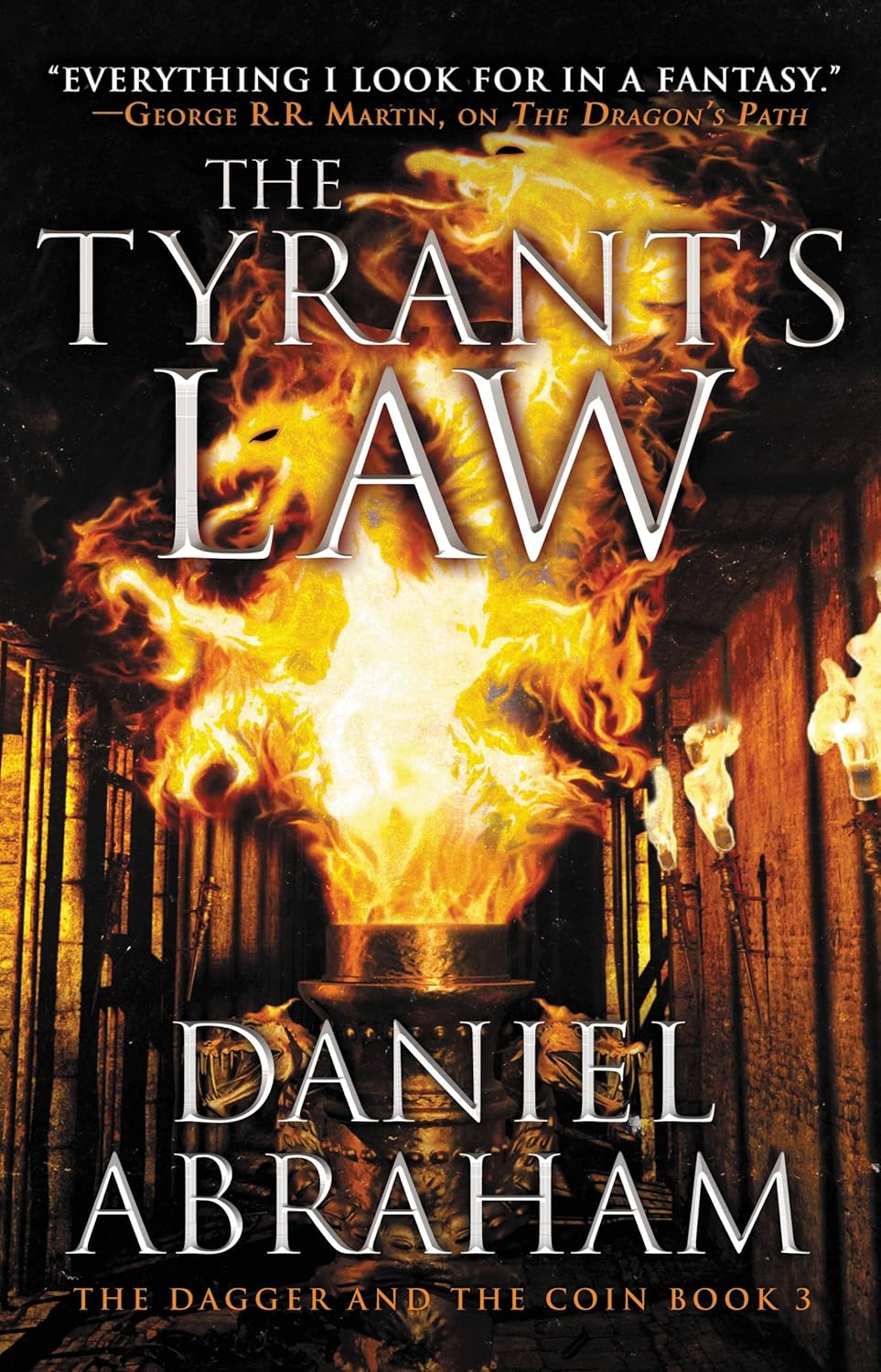
The Tyrant's Law by Daniel Abraham (From the Archives)

With the fourth installment of Daniel Abraham's The Dagger and the Coin sequence publishing next week, I figured I would repost my review of the third installment, The Tyrant's Law which originally appeared on Tor.com...


Banking and ancient races, these are two of the main forces driving the narrative of the characters of and world events in Daniel Abraham’s The Tyrant’s Law. The novel is the third book of his ongoing series The Dagger and the Coin, and is further proof that Daniel is crafting what is arguably one of the finest long form epic stories of the 21st Century.

The main players of the series have been scattered, following their own character arcs despite each of those arcs being connected to the Lord Regent of Antea Geder Palliako (more on that below). Geder is ruling the empire in the place of the young prince Aster, whose father died in the prior installments. Fueling much of Geder’s power is the growing cult of the spider goddess, churches of which have been established throughout the empire.

Geder’s powerful tyrannical influence in the world has left Clara Kalliam’s family in disgrace, her husband killed and branded as a traitor in the previous novel The King’s Blood. Though she was raised to POV character in the previous novel, she has much more impact and is a greater presence here in The Tyrant’s Law. Clara’s sons have spoken out against their father and one of her sons in particular, Jorey, has re-won the favor of Geder since the two were childhood friends. Meanwhile, Clara’s been cast down the social ladder and gets a better idea of how much of an impact Geder’s tyrannical reign of power is affecting people. From the bottom of society, Clara is moving pieces on a chessboard of her own making in order to take down Geder.

Cithrin bel Sarcour’s past dalliance with Geder provides much tension as she ruminates on how to improve the world from her standpoint as a Medean banker. Her role in the bank provides great access to power and control, though she’s still beholden to the rules of the kingdom as enforced by the word of Geder. Abraham does not provide easy choices for his characters, and perhaps Cithirn exemplifies this most profoundly. While he doesn’t outright torture them in the same way Robin Hobb tortures her characters, Abraham’s character’s decisions come with consequences that are far from pleasant, despite the decision the character makes. It is rarely a ‘best’ choice but rather a ‘least bad’ choice.

The fourth POV character is Captain Marcus Wester, a man who left Cithrin in the previous volume with many unresolved feelings and with little warning to his former ward. Wester is acting as a companion and protector for former actor and apostate of the spider goddess cult, Kit. The two men’s storyline forms something of a quest as the two men search for the heart of the spider herself as well as magical items they hope will help to bring down the cult of the spider goddess. What they eventually find is a more surprising reality than they expected.

I’ve previously remarked in how empowering Abraham’s female characters are – they operate as active characters who take control of their lives rather than react to the men around them. Clara’s story arc was perhaps the strongest, whether this was because she was new or because it was the most complex. The fact that she is a widow is a great indicator that she has a fresh start, Clara takes that proverbial ball and runs with it, awakening many aspects of herself she thought she knew – her mind, her drive for justice, her sexuality. She walks a thin line which divides the surface appearance of her actions and the true intent of her actions. As the series progresses, I suspect this line will only become thinner as her maneuverings have a greater effect on the world at large.

In Geder, the super-villain protagonist arc continues to a greater degree from the previous volume. Despite how other characters feel about him, particularly Clara and Wester, it is difficult to dispute some of the decisions he makes and at times, even empathize with those decisions. He isn’t entirely unlikeable, which adds to his strength as a character. Geder sees himself as acting in the best interest of the land he is ruling. The proactive decisions he makes about the empire and how to enforce its strength and growth, are in some senses, reactions to how he perceives others characters view him. An event towards the end of the novel will likely prove to be the tipping point that pushes him over the edge into true Lex Luthor / Walter White territory and cement him as the human-facing Big Bad of the series.

By keeping the viewpoint to four characters, Abraham gives himself the freedom to provide readers a greater insight to each of the characters and to impart upon them believability, plausibility and empathy. In this sense, the intimacy we get as readers allows us to feel a greater sense of urgency of the epic events of the novel as a whole as they affect both the world and those characters we’ve come to know.

On the one hand, it is difficult to distill into one review the pure enjoyment the settles into me when I read these books (or as I’m coming to realize, anything Daniel Abraham writes). As the pages would slide past, the small movements of Abraham’s narrative come together to former a great whole that informs the novel as it barrels forward with great momentum. I’ve long been a fan of Epic Fantasy and when it is handled properly, expertly, there’s no form of entertainment I’d rather be enjoying. Such is the case with the books in The Dagger and the Coin. Everything he’s done in the previous novels so well, Abraham continues to do well here in The Tyrant’s Law.


The series is highly recommended and so is this particular installment, but with the caveat that you go and immediately read The Dragon’s Path and The King’s Blood.

(This review originally appeared on Tor.com on May 10, 2013)

Sunday, July 20, 2014

Books in the Mail (W/E 2014-07-19)

Just one book this week, but a major release for 2014...


The Widow’s House (The Dagger and the Coin #4) by Daniel Abraham (Orbit Trade Paperback 08/05/2014) – Any time a Daniel Abraham book arrives, I’m happy, I’ll be reviewing this for Tor.com


THE RISE OF THE DRAGON AND THE FALL OF KINGS

Lord Regent Geder Palliako's war has led his nation and the priests of the spider goddess to victory after victory. No power has withstood him, except for the heart of the one woman he desires. As the violence builds and the cracks in his rule begin to show, he will risk everything to gain her love or else her destruction.

Clara Kalliam, the loyal traitor, is torn between the woman she once was and the woman she has become. With her sons on all sides of the conflict, her house cannot stand, but there is a power in choosing when and how to fall.

And in Porte Oliva, banker Cithrin bel Sarcour and Captain Marcus Wester learn the terrible truth that links this war to the fall of the dragons millennia before, and that to save the world, Cithrin must conquer it.
THE RISE OF THE DRAGON AND THE FALL OF KINGS

Lord Regent Geder Palliako's war has led his nation and the priests of the spider goddess to victory after victory. No power has withstood him, except for the heart of the one woman he desires. As the violence builds and the cracks in his rule begin to show, he will risk everything to gain her love or else her destruction.

Clara Kalliam, the loyal traitor, is torn between the woman she once was and the woman she has become. With her sons on all sides of the conflict, her house cannot stand, but there is a power in choosing when and how to fall.

And in Porte Oliva, banker Cithrin bel Sarcour and Captain Marcus Wester learn the terrible truth that links this war to the fall of the dragons millennia before, and that to save the world, Cithrin must conquer it.

Thursday, January 02, 2014

2013 Reading Year in Review

I’ve done this for a few years now (2012, 2011, 2010, 2009, 2008, 2007, 2006), so in order to maintain my flailing credibility as a a genre blogger/book reviewer I have, I'm doing it again for 2013.

As I have in the past, I’ll start with some stats: I read (or at least attempted* to read) 71 books in 2013, depending on how you count omnibus editions. I say attempted because a few books I simply dropped because nothing about the book compelled me to keep reading. About half of those, were new/2013 releases.

In 2013, I posted 38 reviews to SFFWorld and 8 to Tor.com. In addition to the book reviews I posted to Tor.com, I published 11 posts in my Orphan Black recap (10 episodes plus intro post).

Aside from the regular gamut of current year releases, some of my ‘catching up’ reads included a few installments of Butcher’s Dresden Files, a read through of David Anthony Durham’s Acacia Trilogy.

Here are some stats:
  • 33 2013/current year releases
  • 28 can be considered Fantasy
  • 27 can be considered Science Fiction
  • 22 books by authors new to me
  • 8 can be considered 2013 debuts
  • 6 can be considered Horror
  • 12 Books by women
All that said, on to the categories for the 2013 … which, as of last year, I'll continue to call the Stuffies. As I said last year, this isn’t a typical top 10 or 12 or anything, but whatever you want to call them, here are some categories for what I read in 2013 and what I put at the top of those categories.


Rob’s Favorite Fantasy Novel(s) Read in 2013

2013 was another strong year for Fantasy, I’m lumping Horror into Fantasy because (a) we do that at SFFWorld and (b) the two categories often overlap, at least more than Horror and SF. With all of that having been said, a fair number of novels I read, and those I enjoyed the most, had a mixture of horror and fantasy / dark fantasy.

NOS4A2 by Joe Hill is my absolute favorite novel published in 2013. As such, it gets the call-out here under Horror and Fantasy. It was a powerful novel and I'd even rank it as one of the ten best I've read in the last decade:
The structure of this novel is quite powerful and epic. We are introduced to Manx (the villain), we then meet Vic. They have an encounter that leaves them both scarred, which is only a precursor to their return match-up. In many ways, this reminded me of an Epic or Heroic Fantasy where the hero gets a measure of their enemy and defeats that enemy at great cost with a knowledge that a final encounter looms. Throughout the novel, this tension (added by the build-up to the Christmasland reveal) is so thick and absorbing that not reading NOS4A2 was a painful thing for me.

The novel is epic in terms of how far ranging the effects of its villain are, the swath of time it covers, and the many worlds which are possibilities brought forth by the narrative elements. On the flip side, because Hill focuses primarily on Vic throughout much of the narrative, it is also a very intimate tale; Vic becomes very familiar throughout the novel. Her fears, her needs, her insecurities and love are all internal intimacies that drive her to thwart the Dark Lord of the novel, Charles Manx.

Once again, Robert Jackson Bennett makes an appearance on this list. American Elsewhere by Robert Jackson Bennett. This is a fantastic novel that is a blend of Mystery, Science Fiction, Dark Fantasy, and Lovecraftian / Cthulhu Mythos that brings those elements together in an unsettling fusion of a powerful whole:
Bennett’s narrative takes hold and allows readers a peek into the window of a nearly perfect Small Town, USA. Mona arrives in Wink as a funeral is being held, which is not the most welcoming event to a new visitor but which also sets the tone for the novel. Of course Wink is not really normal in any fashion other than the most superficial. Posited in a canyon which is overlooked by Coburn National Laboratory and Observatory, much of Wink’s population was a support town for the lab. In a sense, think of the town Indiana Jones stumbles into in the otherwise laughable Indiana Jones and the Kingdom of the Crystal Skulls – Wink is a town frozen in time with the most up-to-date connection to the outside world the 1980s sitcoms broadcast on their televisions.

Bennett raises a lot of questions in the novel and the answers the characters provide are discovered through a narrative that is, for the most part, taut and flavored with unsettling and creepy scenes. Two primary mysteries plague Mona (and the reader) throughout the narrative – who was Laura and what was the nature of Coburn’s research? Mona’s discovery of those two things and how they relate to each other is filled with dread and some otherworldly elements that would fit right at home in an H.P. Lovecraft story.

Daniel Abraham’s The Dagger and the Coin is continuing to be the best current Epic Fantasy series on the shelves and The Tyrant’s Law, book three, further cements that status;:


I’ve previously remarked on how empowering Abraham’s female characters are—they operate as active characters who take control of their lives rather than react to the men around them. Clara’s story arc was perhaps the strongest, whether this was because she was new or because it was the most complex. The fact that she is a widow is a great indicator that she has a fresh start, Clara takes that proverbial ball and runs with it, awakening many aspects of herself she thought she knew—her mind, her drive for justice, her sexuality. She walks a thin line which divides the surface appearance of her actions and the true intent of her actions. As the series progresses, I suspect this line will only become thinner as her maneuverings have a greater effect on the world at large.


By keeping the viewpoint to four characters, Abraham gives himself the freedom to provide readers a greater insight to each of the characters and to impart upon them believability, plausibility and empathy. In this sense, the intimacy we get as readers allows us to feel a greater sense of urgency of the epic events of the novel as a whole as they affect both the world and those characters we’ve come to know.

Chuck Wending is a writer who I’ve been meaning to read for a couple of years and I finally did with the fantastic Blue Blazes which is a superb mashup/stew of Lovecraft, secret cities, Goodfellas pulp sensibilities, and Hellboy. It also doesn’t hurt (for me) that the story is somewhat local and takes place in parts of my home state of NJ:

Mookie is at the stage in his career in the Organization that he’s gained enough trust and loyalty with the Boss that he can come and go as he pleases and run his side of the Organization as he sees fit. The problem is two-fold – the Boss is on his last legs and a young woman named Persephone is causing a great deal of havoc for the Organization and the Underworld in general. What few people know, actually nobody outside of Mookie’s closest ‘friend’ Werth, is that Persephone is actually Mookie’s daughter Eleanor “Nora” Pearl. As events unfold, The Boss appoints his grandson the heir of the Organization, new ‘partners’ are brought into the fold of the Organization, the Boss’s health takes some strange turns; Mookie is increasingly put in the middle of his loyalty to the Organization and his yearning to make things better with his estranged daughter Nora.


Despite the violence and monstrous stakes, Wendig manages to keep a lot of intimacy intact. One of the things Mookie loves, aside from his daughter and The Organization, is eating. Mookie cooks, he has a personal butcher and the food he eats (gwumpki, pierogies) are foods I grew up eating, so I found a level of kinship with Mookie, even if my only other similarity (frankly, I’m not as old as him, not as hulking, nor do I have an estranged daughter) is living in the same NY/NJ corner of the US as does Mookie.

Other fantasies that really stood out to me were:

  • Shadow OPS: Fortress Frontier by Myke Cole - "Another thing Cole does in Fortress Frontier is to expand the borders beyond just the US military. When Bookbinder is introduced, it isn’t long after that readers are introduced to a contingent from the Indian military and his liaison to the Source, a Naga, a many-headed snake/serpent. Specifically, a Prince to the throne of the Naga people whom Bookbinder basically begs for assistance in getting back to Earth. 
  • "Black Feathers by Joseph D’Lacey - "What I find somewhat unique—and interesting—about the story D’Lacey is telling is the dual narrative of the apocalypse as it happens paralleling the post-apocalyptic. More often than not, post-apocalyptic stories feature society rebuilding after an apocalyptic event, while sometimes these stories focus on the quick ramp-up and the immediate response of civilization to the apocalyptic event. In Black Feathers D’Lacey’s dual narrative opens the window on both time frames, and slowly reveals the connection between the two. I found the novel to be extremely addictive, a novel I didn’t want to put down, finishing it barely two days after starting to read it.."
  • The Daylight War by Peter V. Brett - "The mythology/worldbuilding behind the demons hinted in the previous volume is revealed slightly more here in The Daylight War, as Brett peppers in chapter passages from the POV of the demons, providing readers with a glimpse of their society and race as a whole. Whether he will continue to expose more of the demons’ nature and origins remains to be seen, but I enjoyed the slow reveal unfolding here and I am very curious to see how much of the demons’ history Brett will allow readers to see."
  • Doctor Sleep by Stephen King – I didn’t write a review of the book, but I loved it nonetheless. I hadn’t read and enjoyed a King novel since the final Dark Tower novel and this bold move to write a sequel to perhaps his best known novel was a risk that paid off with major dividends. Classic King.
  • Emperor of Thorns by Mark Lawrence – “…a powerful and layered narrative whose details don’t overburden the narrative flow of the novel. Admittedly, I feel like there was almost too much to digest in one reading of the novel. One reading; however, is enough to realize that Lawrence has accomplished something quite powerful and resonant with this trilogy. Because of the fantasy-feel-in-a-far-future-apocalypse, the unreliability of the narrator and much of the “feel” of the novel, I felt a great deal of resonance to Gene Wolfe’s Book of the New Sun."


Rob Favorite Science Fiction Novel(s) Read in 2013

Science fiction was strong this year for me. One of the more recent SF novels I read in 2013 jumped every other SF book to be my favorite. I list it under Science Fiction because the story while dealing with young people possessing super powers, utilizes science to get to these powers and the two ‘villain protagonists’ themselves are scientists. That book? The recently optioned by Ridley Scott’s production company Vicious by V.E. Schwab:
Readers familiar with comic books, especially The Fantastic Four and Watchmen might find some resonance in the tale of Victor Vale and Eli Ever, the two anti-protagonists of the novel. While the two young men may be evenly matched in their intelligence, Eli is far more outgoing, he knows how to interact and play people. Victor is the introvert. Despite their social differences, they become friends, even colleagues as they search for answers to their fantasies through science. They attempt to discover what circumstances lead one to become ExtraOrdinary (EO for short). In other words, how can people gain super powers in the same way that Spider-Man gained his super powers. The two friends come to realize Near Death Experiences (NDEs) are triggers for people gaining powers and set about, briefly, allowing each other to die in order to come back to life with a power based on their last willful thoughts before dying.


The next in my batch of favorite SF novels is by a writer trying something slightly different under a slightly different pen name. The Burn Zone by James K. Decker. A thrilling story of alien and human cohabitation:
Sam Shao is a surrogate mother to an alien child; as part of a program with the haan, humans have been helping to raise haan babies ever since their space ship crash landed approximately 50 years ago. The haan are physically similar to humans, though the clear skin and fragile bones do set them apart, as does their eyes and appetite. Sam’s life is upended when her adoptive father Dragan is seized by authorities for conspiring against the government. Sam is, of course, unwilling to believe this of her guardian and even less willing to believe, as the news vids report, that he is a cannibal and worse. Sam relinquishes the infant haan to which she bonded, struggling with the decision and making an impression with the makeshift adoption agency. Sam connects with one of her friends, Vamp, tries to touch base with people she thought were allies of her father and eventually a haan soldier by the name of Nix finds her and the trio pursues her adoptive father and to find out the truth behind his abduction. Along the way, she learns a great deal more about the truth of the haan than she expected.

As strong as the plotting and narrative pull are in The Burn Zone, I think Decker’s greatest strength is the character of Sam. She is a fully empathetic character throughout most of the novel, the choices she made informed by the knowledge she possessed were completely believable. At times her determination and strength don’t waiver, and in the small instances they do waiver, it helps to round out her character as a fully realized human being.


James S.A. Corey (AKA Daniel Abraham and Ty Franck) knock it out of the park again with the third installment of The Expanse; Abaddon’s Gate (The Expanse was signed to a TV deal earlier this year!)
The main action of Abaddon’s Gate picks up the story about a year after the events of Caliban’s War and focuses once again on James Holden and his crew of Rocinante. As has become custom with Corey’s novels, the chapters rotate through four point of view characters: Holden; Melba, also known as Clarissa Mao, sister of the late Julie Mao who died in Leviathan Wakes; Anna Volovodov, a new character, a Pastor from Europa who is sent to the Ring as a part of a larger humanitarian committee; and Bull, the security officer on the Behemoth, a ship of the Outer Planets Alliance (OPA for short, a governing body of the Solar System) sent to the Ring.


Over the course of these three books, Abraham & Franck aka Corey have produced essential space-based science fiction. They’ve built up mystery, intrigue and human characters coming to grips with the solar system and now even more so in Abaddon’s Gate, a universe that is much vaster in size and with a history more far flung than they initially thought.


Rachel Bach is new to SF, but this name is just an open pseudonym for Rachel Aaron, whose Eli Monpress novels were terrific. Fortune’s Pawn is the first installment of Paradox

The plot involves various jobs the Glorious Fool takes on, from moving goods from one planet to another in need to checking out a supposedly empty alien vessel. Mission to mission, the Glorious Fool is attacked, stops at various planets to take breaks and have equipment fixed. Each mission does build on the previous; much more is going on with Caldswell and the Glorious Fool than the surface details would imply and Devi becomes curiouser and curiouser. Because the novel is first person, this allows for the details to be very limited to only what Devi sees and hears which makes the reader (at least this one) just as inquisitive about what is really going on as Devi herself.

With any first person narrative, the success of the novel with the reader will lie a great deal in how the reader feels about the protagonist. I’ve tossed a couple of books across the room in frustration because I found the first person narrator so damned annoying. This is far from the case with Devi; I liked her, I felt very invested in her plight throughout the novel, and was just as curious about the things she discovered along the way as she was. For me, that speaks a great deal to Bach’s success in crafting her character, because I am really looking forward to reacquainting myself with Devi in the next volume.

Rob's Favorite Debut(s) of 2013


My favorite debut of the year was from Roc books in the US and Orbit in the UK (although it was self-published in 2012). Anthony Ryan’s Blood Song, the first installment in his Military Fantasy series Raven’s Shadow:
Vaelin Al Sorna is the son of the Battle Lord of King Janus’s Unified Realm and is dropped off at the gates of the Sixth Order, a monastic order of warriors dedicated to hunting down Deniers and ensuring all who live under the King’s rule are true to the Faith. The boy is unsure of himself, initially, but soon his resentment for his father grows inside of him, it drives him to dedicate his focus to becoming a member o the order. He truly takes to heart the idea that he belongs to the order.

Before we get to this, Ryan frames the story much like Patrick Rothfuss framed The Name of the Wind (and the subsequent novel The Wise Man’s Fear): we initially meet the protagonist through the eyes of, Verniers Alishe Someren a historian charged recounting Vaelin Al Sorna’s, known to Verniers’ people as Hope Killer, duel for honor. The historian is intrigued by Vaelin, how he answers some of the assumptions made about him and eventually asks the Hope Killer to recount his story.

Blood Song is a very male-centric novel featuring primarily a cast of males. However, the females who are in the novel (and especially Vaelin’s mother who is not seen and only known and spoken of in memory) have a powerful hold over the characters, particularly Vaelin.

The other debut to impress me a great deal also involves “Blood” in the title. I refer to Brian T. McClellan’s Promise of Blood, which is the launch of his Powder Mage Trilogy. This is what is considered a Flintlock Fantasy with magic and gunpowder existing side by side (and often in conjunction) with one another. McClellan brings an impressive pedigree, Brandon Sanderson was one of his college instructors.

At the start of Promise of Blood, Brian McClellan’s debut novel and first installment of The Powder Mage Trilogy, Field Marshal Tamas destroys that notion by charging the king with treason and summarily executing him. The country of Adopest erupts into chaos, primarily the center of the capital where the king is executed. Tamas, though he has allies, has made enemies over the course of his military career and many see his move as a chance for Tamas to rule, which is not what he wants. Growing tension with the Kez, the enemies of Adopest, further fuels the unrest in Adopest.

McClellan’s doing a lot of things in this novel, as this review might lead one to believe. But the important question is this – is he doing it well? For this reader, the answer is yes, very well indeed. I was glued to my kindle reading this novel so much so that I brought it on the treadmill and read it through the bounces as I did my daily runs. I’ve alluded to similarities, or rather, resonances with both Rachel Aaron and Joe Abercrombie, but the most obvious yet to be compared is Brandon Sanderson and Brian’s approach to inventive magic systems.


Favorite Backlist / Book Not Published in 2013 Read in 2013

While one story, David Anthony Durham’s Acacia Trilogy was a magnificent Epic Fantasy featuring global tumult and how one royal family was at the center of it. The books were published in 2007, 2009, and 2011. Although I read the first, The War with the Mein as an ARC before it published, I reread it since it’s been so long.

The War with the Mein opens on a kingdom during a gilded age during its waning days, King Leodan is old weakened, but keeps up a façade for his children whom he loves above everything; he wishes them to see only the beauty in the world. When the king is murdered in full view by an ancient enemy, the children soon learn of the truth behind the thin façade their father was projecting. The prosperity of Acacia has been built on the backs of slaves and its own citizens who are addicted to a drug, the mist, the monarchy uses to keep the populace under control.
While The War with the Mein, the first installment of David Anthony Durhams sprawling epic fantasy saga Acacia, showed a world shuffling about after the fall of a great leader, The Other Lands could be seen as a novel about the weight of leadership and how easily a leader can become corrupt. … The women of this novel take center stage: Corinn the sorcerer queen and Mena the warrior woman. Their journeys and their characters are far from simple or one-dimensional. Corrin is scarred by a life of loss and perceived treachery: her mother died when she was very young (prior to the events of the first novel); her father was murdered when she was young, but she old enough to understand death to a full extent; her brother was killed in battle; and she was a prisoner in her own castle by the man whose forces killed her father and brother, but fell for her captor; the world she lived in was stolen away from her when the truth of its foundation was revealed to her. … With the finale at hand in The Sacred Band, the history of the world comes into greater light. This progression is one of the many strong elements of the narrative and Durham’s technique is expert. Even moreso than in The Other Lands, we learn more about the horrors the slave people have had to endure, as well as the mysterious long lives of the Auldeks. The Auldeks may live forever, but they are unable to either bear children, or retain their full centuries worth of memories. While the lives of the slave children fuel them, it strips them of the ability to procreate.
It seems I’m reading one backlist title from George R.R. Martin every year. In 2013, it was the collection/fix up novel featuring Havlinad Tuf, Tuf Voyaging:

Martin has long professed his admiration for Jack Vance’s writing and these stories can very much be seen as homage to Vance or his style. The balance of humor and fantastical situations were hallmarks of Vance’s work. In particular, one might imagine Tuf himself interacting with Cudgel the Clevor or Rhialto the Marvelous. Undoubtedly, Tuf’s deadpan style and pure logic work in direct contrast to every personality he encounters. Nobody trusts Tuf, he is distressed by this lack of trust when he always attempts to present himself as, if not altruistically as possible, as logically as possible. Humanity has evolved to a state on many of the planets he visits that logic is far from even the tenth lens to view their respective world.


The final book here is A Dog's Purpose by W. Bruce Cameron. I didn’t review this one and it falls slightly sideways of the normal Fantasy and Science Fiction fare I read, but as a Dog owner and lover, this book tugged at my heartstrings all the way through. Through various lives the soul of a dog (and my eyes are watering up just typing this) learns what it means to be a dog and how powerful the bond between human and canine can be and is. A wonderful, beautiful novel about man’s best friend.


MVP Author of 2013

As I said above, NOS4A2 was the best book I read this year, or rather my favorite book published in 2013. In it, “Joe Hill has embraced everything that he is as a storyteller from his creative well and funneled all of it into this epic novel that should make his old man proud and one that will stand on my shelves as a singular literary achievement of wonder and power.” It is his best selling novel, reaching #5 on the New York Times Best seller list and has received nearly universal praise.

As relates to NOS4A2, Joe also launched a comic book mini-series that serves as a prequel/origin story for the villain of the novel, Charles Manx. The book and comic can be read independent of each other, but work best in unison.

But NOS4A2 wasn’t the only thing Joe Hill gave readers in 2013. His long running comic book with artist Gabriel Rodriguez, Locke & Key came to a close in December. Along its 5 year publication journey, the series has received multiple award nominations and has won the treasured Eisner Award (for Joe Hill as writer), arguably the highest honor which can be bestowed upon comic books, and the series twice won the British Fantasy Award for Best Comic or Graphic Novel.


While a TV pilot was made in 2010, rights for a feature film were secured in June 2013 by some of the same folks who are responsible for the first rebooted Star Trek film, Fringe, and Sleepy Hollow.

The film adaption of his second novel Horns features Daniel Radcliffe and premiered at the 2013 Toronto Film Festival.

Favorite ‘New To Me’ Author(s) of 2013

This is another hands-down easy one for me:

Chuck Wendig – I’ve been following him on twitter for a while and I finally read two of his novels this year: The Blue Blazes which was an absolute blast and - Under the Empyrian Sky a dystopic young adult novel that has been dubbed the first Cornpunk novel.


V.E. Schwab blew me away with Vicious and after receiving at least a dozen books by L.E. Modesitt, Jr. to review, I finally dove into The Magic of Recluce and plan on continuing with the series.

Favorite Publisher of 2013


Seems like the obvious choice again, based on the percentage of books I read that worked for me, right? Yeah, Orbit is once again my favorite publisher of the year. Between the stunning American Elsewhere by Robert Jackson Bennett, the best selling Abaddon’s Gate by James S.A. Corey (AKA Daniel Abraham and Ty Franck); impressive debuts like Brian T. McClellan’s Promise of Blood and  Ann Leckie’s Ancillary Justice (even if it didn’t quite work for me) was a smashing success based on the high praise many have given it.

Orbit was one of the first imprints to bring self-published writers to the big six with Michael J. Sullivan and he published two brand new novels with them in 2013. I’ve only read one so far (The Crown Tower
). The imprint brought self-publishing sensation David Dalglish to a wider audience this year with the first two novels of The Shadowdance trilogy.


Regarding books from them I’ve yet to read Mira Grant continues to be a rockstar for the imprint, with Parasite the first of a new (NOT ZOMBIES BUT REALLY) duology and Will McIntosh’s Love Minus Eighty seemed to receive universal acclaim.

Continuing series, like Daniel Abraham’s The Dagger and the Coin with The Tyrant’s Law, which does not relent.

The ‘rebranding’ of Rachel Aaaron as Rachel Bach and the launch of her Paradox series with the trhilling Fortune’s Pawn.

On top of that, Orbit continues to be one of the more reader and genre community friendly publishers, including monthly Orbital Drops wherein a book will dip to $1.99 for a period of time.

Hell, for a better more thorough case for Orbit being the preeminent Genre Imprint, look no further than Justin Landon’s post about the imprint and specifically editor Devi Pillai.

I would also be remiss if I didn’t point out that Angry Robot (and sister imprint Strange Chemistry) are really becoming a leader in the digital footprint of genre books. I also read more books from AR/SC this year and for the most part, was very pleased with those books. I also really love that Angry Robot is quick to omnibify (Orbit does this, too) their series books into one massive volume including two to three books between two covers.


Looking Ahead to 2014


What does 2014 bring (in no particular order)?
  • Shadow OPS: Breach Zone by Myke Cole
  • Prince of Fools by Mark Lawrence first in a new trilogy set in the Broken Empire world
  • Tower Lord (Raven’s Shadow #2) by Anthony Ryan
  • Half a King by Joe Abercrombie
  • City of Stairs by Robert Jackson Bennett
  • The Crimson Campaign (The Powder Mage Trilogy #2) by Brian McClellan
  • Skin Game (Dresden Files #15) Jim Butcher
  • Catching up with more of Chuck Wendig’s books
  • Words of Radiance (Stormlight Archive #2) by Brandon Sanderson
  • Honor’s Knight and Heaven’s Queen books 2 and 3 in Rachel Bach’s Paradox series
  • Cibola Burn the fourth in James S.A. Corey's The Expanse
  • The Widow's House book 4 of Daniel Abraham's The Dagger and the Coin
  • Veil of the Deserters Bloodsounder's Arc #2 by Jeff Salyards
Looks like a decent batch of major releases on the small screen, big screen, and page for me. Let's just hope some of it lives up to the hype.

As I have the last few years, I leave you with pictures of my dog Sully.  Because just look at her. In the second picture, I can't tell if she's (1) guarding my books, (2) taking possession of them for herself, or (3) asking for the next books by each of the authors.