Showing posts with label Mark Yon's Review. Show all posts

Friday, March 28, 2014

Weekly Round-Up: Patrick, Sanderson, and Karsak

Some new reviews at SFFWorld this past week, including one from Mark, one from Nila, and one from me.

Mark reviewed Den Patrick's The Boy with The Porcelain Blade, about a week after interviewing Den. Here's a bit of Mark's review:

As we begin the book Landfall is a place in turmoil. The King is clearly insane and so the world is run by people to whom corruption is second-nature. Our main protagonist in this story is Lucien de Fontein, a child of privilege, born into one of the Kingdom of Landfall’s wealthiest families. Although he is an Orfano (some sort of royal bastard child) he has certain benefits. He is nannied, educated and trained to use a porcelain sword in fighting, at which he has some skill.

...

The plot is mainly about Lucien’s coming of age, written in a style that flitters between the present and the past. Most of his early life, rather like Titus Groan’s in Gormenghast, is centred on one place, in Lucien’s case the city state of Demesne. Here we see Lucien grow and become increasingly independent. He finds himself having to defend himself against some Orfano and ally himself with others, finds himself at odds with some of his tutors and befriends others. In the end he uncovers a grisly mystery, and secrets about his past and his heritage that have been hidden from others for a long time…


I reviewed perhaps the biggest (both in physical size and anticpated) fantasy novel of the year, Words of Radiance, the second installment of Brandon Sanderson's Stormlight Archive:

Whereas the first novel, The Way of Kings, focused a great deal on the character of Khaladin, Words of Radiance (as has been mentioned by many who’ve read it) is Shallan’s book. She is apprenticing under Dalinar’s daughter Jasnah, learning about the history of the world and essentially practicing the magic of the world. In many ways, Shallan’s journey over the course of this novel reminded me a bit of the journey Daenerys Targaryen has been taking for much of George R.R. Martin’s A Song of Ice and Fire. Shallan’s family is not what it once was, an event in the first third of the novel forces her to travel with, initially, very few companions until she begins to amass followers after making bold promises to them, and she is asserting herself in the world. Through flashback sequences to her life prior to her introduction to the series, Sanderson provides many tragic details about Shallan that inform the person we are traveling with on her journey to the Shattered Plains. The emotional resonance of her past echoes to her “current” journey, helping to make such large and epic novel feel so intimate and personal. As Shallan is a young woman not fully aware of the world at large, we as the readers get to learn about the world anew as she experiences and learns about it herself. This sort of world-building and storytelling is often the strongest kind giving the character a strong tie to the world and here in Words of Radiance, it is highlight of the novel.
...
I would be remiss if I didn’t mention the beautiful package/piece of art this book is. The US cover (Tor) is by the legendary Michael Whelan, front interior art is a character study of Shallan by Michael Whelan (above, which in my opinion should be the cover), and back endpapers of a map. Brandon posted all the artwork from the book here. Each chapter has an icon denoting on whom the chapter will focus and scattered throughout the book are full page illustrations which come across as creature illustrations, character studies, and the like. Irene Gallo and the whole Tor art and production team should be highly commended.

Nila continues her review of self-published/small press titles with Chasing the Star Garden by Melanie Karsak:


The book begins in the middle of a race. Lily and her crew are sailing through the sky above London, hot on the heels of her racing nemesis, an obviously better pilot than she because he wins and she doesn’t. Lily does come in second place, which isn’t half bad, but before she can claim her trophy, a man dressed in harlequin assaults her by shoving a long, clothed cylinder down the front of her pants – then promptly plunges to his death.
...
In addition, though Chasing the Star Garden was an interesting read and had some wonderful airship maneuvers, I never felt a connection to the main character. Lily’s life begins with the strict attentions of a couple of horrendous male guardians. She’s psychologically scarred and becomes an opium addict because of them, but somehow Lily ends up with well-intentioned men around her during this story. Though her love affair with Lord Byron, also a benefactor, might be construed as damaging, he does not demand much from Lily. He seems more of a easy crutch for the author to give Lily want she needs when she needs it.

Monday, February 03, 2014

SFFWorld Welcomes Mark Chitty + Mark Yon Reviews Jo Walton

Last week, SFFWorld welcomed Mark Chitty to our reviewer ranks. Mark and I have been pals online for quite some time, he's a member in the SFFWorld forums, he was the purveyor of the (sadly now-closed) blog Walker of Worlds and we follow each other on twitter.

With his blog closed (for the moment) Mark still wanted to review books and he is doing just that for SFFWorld. His first review is of Neal Asher's Jupiter War. This novel is third installment of Asher's Owner series:

What works in Jupiter War is the way Asher has pulled together all elements from the previous novels into a coherent whole, answering questions that are raised and continuing the character development nicely and without any unwarranted changes. Saul continues on the path to godhood, combining ever more with technology and moving away from his human side. This is particularly evident in his dealings with those on board Argus, even with his sister, Var. Galahad is truly the villain, and is everything you could ask for in a character. Her conviction that she’s doing what is right for the planet doesn’t waiver, but her confidence and arrogance push her to megalomania. She’s fascinating to read, perhaps more so than the Owner, and seeing her in action often brings a smile even when that’s not the intention. Of course, with two personalities such as these present in the story there is bound to be conflict, and when it comes the outcome never seems to be certain, despite everything we know.
Mark Yon reviewed What Makes this Book So Great, a compilation of selected Tor.com posts from Jo Walton between 2008 and 2011. (A copy arrived for me yesterday):


Of the selection here, there’s a lot of fun to be had. The first essay sets out the stall with the title ‘Why I Re-read’. It makes a good case for re-reading, and I found myself pretty much agreeing with what was said. The idea of the joy and perils of re-reading pops up in a couple of places elsewhere in the collection, as Jo explains ‘The Suck Fairy’ (what happens when you re-read an old favourite and it doesn’t quite match what you remembered) and the re-readability factor, when sometimes you just have to reread an old favourite, as a guilty pleasure, despite the wealth of riches out there.

The book is peppered with such ideas throughout: whether you should skim books, whether swearing in genre books is a good idea or not, why the anticipation of an unfinished series is sometimes a joy, or indeed why you should enjoy the feeling you can get when you start the first of what will be a long series, or the first of an author’s lengthy body of works. There’s even a case put forward to re-read books you didn’t like.

Wednesday, December 11, 2013

Rouaud's The Path of Anger, Scwab's Vicious, and Wallace's The Wolves of Paris

We've got a few new reviews at SFFWorld this week. Heck, ever since Dag revamped the Web site it  has been something of a hotbed for genre content like reviews and interviews.  One of the ongoing "series" at the site is "Authors review Authors." At the title implies, small press/self published authors pair up and review each other's work.

Aside from those regular updates, Mark, Nila, and I have new reviews.

Over the weekend, Mark posted his review of The Path of Anger by Antoine Rouaud, the first installment of The Book and the Sword:

http://www.sffworld.com/2013/12/path-anger-antoine-rouaud/
I must admit my first impression was that this debut Fantasy novel was a book catering to the ‘I know-what-I-like’ reader. Admittedly the cover is very cool, but as we’re looking at a world of knights, Emperors and assassins, I was rather concerned that I’d think I’d read it all before.

How wrong I was.
...

The world is deliberately medieval-esque. It’s rather like the French Revolution of the 1790’s transposed to a more traditional medieval fantasy world. There is magic here, known as the animus, which people can tap into, although at a physical cost.

The world of Masalia is a world in transition: a place where we look at the formation of a Republic and the collapse of an Empire. It raises interesting questions, in the same way that the Star Wars trilogy does: when the Empire’s ended, the bad guys have been beaten: what happens next? The reader, and the people within this world, may not like all that they see.

Yesterday, I posted a book that will be on my list of best 2013 books. Vicious by V.E. Schwab is her fist novel for the adult market and is one of the best super-hero/super-villain deconstructions stories I've encountered:


http://www.sffworld.com/2013/12/vicious-v-e-schwab/ Through a non-linear narrative, we learn in the “present” of the novel, Victor has just broken out of prison after serving for 10 years. Initially, his reason for incarceration is not given, but hints leading up to the revelation paint a good picture. The two friends were successful in their attempts to gain super powers, but as a result their friendship is forever fractured.

The first half of the narrative was told mostly from Victor’s point of view, and Eli’s point of view entered into the second half of the narrative, even if it was still mostly from Victor’s POV, with some chapters throughout from the POV of Sarah and Sydney, sisters, one of whom winds up as Victor’s ‘sidekick’ and the other a romantic interest for Eli. Schwab jumped around in time, focusing on the days surrounding the time Eli and Victor conducted their experiments in the hopes of becoming EOs and the days and weeks leading up to their final confrontation. The shortened chapters with intertwined timelines did a fantastic job of building suspense on multiple levels. It seemed a natural way for the story to be told, and I suspect it was one of those tricks that took a great deal of effort to get correct, but felt effortless due to Schwab’s incredible storytelling powers.


Today, Nila reviews Michael Wallace's The Wolves of Paris:

http://www.sffworld.com/2013/12/wolves-paris-michael-wallace/
The Wolves of Paris is a short, fun read of murder, mayhem, and werewolves in 15th century Paris. Told primarily through three main characters; two brothers at odds with each other, and the woman they both love; The Wolves of Paris starts out funny. Not laugh-out-loud funny, but pretty darn close.

Two gate guards, an older, half-blind fellow and his younger compatriot, are freezing as night descends over Paris. The two collect tolls but their minds are decidedly in the gutter, awaiting the appearance of Lade d’Lisle’s bottom as she extends it over the Seine to relieve herself.
...
Michael Wallace writes a dashing tale of suspense, religion, intrigue, with a bit of romance thrown in for good measure. He colors his world with quick and accurate descriptions that keep the story moving briskly while filling out the histories and customs of the land. His characters are well-drawn and likeable, and the situations they find themselves in are touched with equal amounts of horror and humor.

Friday, August 16, 2013

SFFWorld Weekly Round up featuring Wendig, Star Wars, and Pern

Three new reviews at SFFWorld the past week, two from Mark and one from me.  First off, is Mark's review from earlier in the week.  A book which pays tribute to Anne McCaffrey's fiction, primarily her Dragonriders of Pern.  The book, Dragonwriter, sports a beautiful Michael Whelan cover


As the sub-title suggests, Dragonwriter is a biographical tribute to Anne. It contains essays from many of those who knew her personally and worked professionally with Anne. These include David Brin, Sharon Lee and Steve Miller, Wen Spencer, David Gerrold, Elizabeth Moon, Lois McMaster Bujold, Mercedes Lackey, Jody Lynn Nye, Elizabeth Ann Scarborough, artist Michael Whelan, songwriter Janis Ian and her children Todd and Georgeanne (Gigi) McCaffrey.
...
McCaffrey tales are often ones where the relationships between the characters are primary, whether the characters are human or dragon. She was a writer not afraid to write about relationships or sex, and her books are seminal examples of what we now see as ‘soft-SF’, dealing with relationships and personal issues rather than the previously more typical Hard SF, with its (usually) male-scientist, can-do-anything type of role. Anne’s female characters are strong-willed and very different from the women-as-victim stereotype often seen in SF’s early days. The societies are cooperative and designed for the good of the Hold rather than individual gain – something which no doubt also made the stories popular.

My review this week is from an author whose fiction I first encountered earlier in the year and loved.  Chuck Wendig's first young adult novel, Under the Empyrian Sky is also the first installment of his Heartland Trilogy:


Wendig infuses this novel with a great deal of despair and anger, but lifts it up with small tent poles of hope and allows his characters to funnel their rage towards potentially positive goals. All of the characters seem to have varying levels of desperation, even the so-called villains in novel like the aforementioned mayor’s son and the mayor himself. Rigo’s father is a drunk, Cael’s father has strange tumors as a result of the corn, and his mother is bedridden. So yeah, not many smiles to go around. But what makes the novel so damn readable was the drive fueled by Cael’s anger. As I said, he manages to funnel it towards positive ends (most of the time), but of course, the anger does get in the way.
...
I couldn’t help but continually draw comparisons between this book and the game Bioshock: Infinite, in terms of the feel of a frontier America mixed with some vaguely steampunk technology and settings both evoked. While Under the Empyrian Sky might not have the Vigor-enabled powers and some of the time-travel elements, the idea of revolting against an imperial overlord and even a city in the sky are similar.

Lastly (and actually yesterday), Mark had a look at one of those "Technical Manuals" of fictional constructs, Star Wars Blueprints - Inside the Production Archives by J.W. Rinzler:


Star Wars Blueprints is a book that covers all six movies to date, in production order: so from Star Wars A New Hope, (Episode IV) to Revenge of the Sith (Episode III), which will be a nice closure before the new Disney/Lucasfilms appear in 2015. For each film Rinzler gives the reader a potted background as to how it came about from a production point of view.
...
Of the blueprints themselves, some are excellent: some just made me go “Huh?” We have a nice range of set blueprints – the Millennium Falcon hangar at Mos Eisley and the Death Star Trench from Star Wars (Episode IV), to the Hoth Command Centre and the Reactor Control Room (Empire Strikes Back, Episode V) to Jabba the Hutt’s throne room and barge from Return of the Jedi (Episode VI). It was also pleasing to see some of these still labelled ‘Blue Harvest’, the secret name for Jedi’s early production drawings. Of the omissions, I was surprised not to see more drawings of the iconic Death Star or the Imperial Cruiser here, although they have been covered elsewhere.

Friday, August 09, 2013

SFFWorld Round-up (2013-08-09): AJ Smith, Joe Hill, Michael J. Sullivan

Another round-up of the week's postings at the SFFWorld blog.  New additions from Mark and I, plus some interviews Dag (the esteemed site owner of SFFWorld and man in the shadows) at the main SFFWorld site.

First up, Mark just posted his review of AJ Smith's debut novel, The Black Guard, which is the first installment of his Long War sequence:


It must be said that are many similar debuts out there at the moment. In my opinion, The Black Guard is one of the better ones. What works here for me more than other recent debuts I’ve read is the characterisation. Generally the characters are recognisable and yet different enough to be entertaining. The reader will identify with the good guys and hiss mightily at the bad, though there’s a nice touch of greyness in there too. In particular, their dialogue is appropriate to the setting and worked for me, a problem I’ve had with many recent debuts. One warning: there is profanity and rather bloody mayhem here (it’s not really a Young Adult tale) but it was refreshing to find that, unlike some ‘Grimdark’ books of late, it doesn’t reduce the overall impact by overdoing the violence or the expletives.

...

Before I get too carried away, it must be said that the book isn’t entirely perfect. We could quibble about the huge dollops of set-up dialogue in conversations at the beginning of the novel, a slight lag in pace in the middle of the novel and the occasional over-the-top Conan-esque moment, but generally what happens works well and keeps the reader’s attention over a 600+ page book.

My big review of the week is (so far, and likely to remain) my favorite novel published in 2013.  The novel is the third from Joe Hill and is a masterpiece of horror / dark fantasy, NOS4A2:


For my tastes, a villain is much more terrifying if he is calm and calculated rather than a slavering creature who shouts. On this count, Joe Hill’s creation of Charles Talent Manx is one of the creepiest individuals in modern Horror literature. In interviews with Joe Hill (particularly this great one which first aired on The Geek’s Guide to the Galaxy podcast), he’s mentioned getting Manx’s voice right was a challenge. The hard work paid off because the character, conversely, seems effortless and a fully-formed creation. The man speaks as if he is of a different era, does not use contractions (is not v. isn’t; do not v. don’t) and abhors curse words, is quite concerned about what is proper, and loves Christmas. Well, concerned about what is proper aside from abducting kids, turning them into monsters, and feeding off their life force. In other words, Charles Talent Manx is a prime example of the Affably Evil character.

...

The structure of this novel is quite powerful and epic. We are introduced to Manx (the villain), we then meet Vic. They have an encounter that leaves them both scarred, which is only a precursor to their return match-up. In many ways, this reminded me of an Epic or Heroic Fantasy where the hero gets a measure of their enemy and defeats that enemy at great cost with a knowledge that a final encounter looms. Throughout the novel, this tension (added by the build-up to the Christmasland reveal) is so thick and absorbing that not reading NOS4A2 was a painful thing for me.


Lastly, Michael J. Sullivan provided a guest post to the SFFWorld blog, in which he discusses the notion of bringing secondary characters more fully into the spotlight:

Dag also posted his interview with author Douglas E. Richards.


Friday, August 02, 2013

SFFWorld Review & Interview Round up: Micahel J. Sullivan, David J. Peterson, Heinlein and Hearne

Here's a gathering of recent reviews and interviews that we've  have posted to SFFWorld over the past few weeks. Recent interviews include:

David J. Peterson, who created the languages of Dothraki and Valyrian for Game of Thrones

SF Said author of Phoenix.


Most recently, I reviewed Michael J. Sullivan's The Crown Tower (Volume 1 of The Riyra Chronicles.  I found this to be a successful prequel to his Riyria Revelations


Hadrian Blackwater is a former soldier and arena fighter wandering the world, looking for purpose. Hadrian is on his way to meet with his father’s old acquaintance at Sheridan University, when a young boy known only as Pickles encourages Hadrian to board a boat. Along the way, several people are killed on the boat, almost including Hadrian himself. When Hadrian finally arrives at the university he discovers his father father’s old acquaintance is Arcadius, the Professor of Lore at Sheridan University. What’s more surprising is that the mysterious hooded man whom he suspected of killing the people on his boat is waiting in Arcadius’s office. The man, of course, is Royce Melborn whom Hadrian’s father’s friend pair up and assign a mission of stealth – to steal a book from the Crown Tower.

Running parallel to Hadrian’s storyline is that of Gwen DeLancy, the “hooker with aheart of gold.” [WARNING: Clicking that link will send you to the rabbit hole known as TVTropes] As much as The Crown Tower is an origin of sorts for the Riyria (Hadrian more so than Royce), Sullivan devotes nearly as much narrative to Gwen’s story. Here, Sullivan gave the novel its truest villains in the drunk, violent customer Stane and Gwen’s boss, Raynor Grue. When Stane kills a prostitute in The Hideous Head Tavern and Alehouse (Grue’s establishment) and gets away with it, Gwen decides she needs to leave Grue’s employ to start her own brothel, Medford House.


Mark's re-read of Heinlein's classic novels as part of the Virginia Edition. The latest is for Farmer in the Sky:


There’s some nice links to some of the earlier novels and stories. The Space Patrol (see Space Cadet) is mentioned, as too the song The Hills of Green Earth and its blind composer Rhysling. Colonies on Mars and Venus, briefly mentioned, relate to Heinlein’s other tales. Heinlein was clearly starting to make his stories of the future interrelate. He even introduces the idea that there has been in the past a space-faring race that has left their mark in space.

So, what does Heinlein bring to the table that is new this time around?

The first shock is that the first part is written from the point of view of Bill. After the previous books were traditional second-person perspective, this is a bolder stylistic move, and one that creates a more personal standpoint. The second shock is that from the start the book does not read positively. This is a surprise, as the juveniles were stories written predominantly for boys and meant to highlight the virtues of the Scouts, and yet from the beginning this is not the positive characteristics you expect from a Scout. On the first page Bill has to deal with a trainee Scout who he calls a twerp from the outset. There is an argument between Bill and his widowed father George over George’s decision to embark on the Mayflower. The world around them is clearly not good, with food rationing in place and rations often cut, George going without meals to ensure that their nutrition intake is sufficient.


Last week, I reviewed the fifth installment of Kevin Hearne's entertaining Iron Druid Chronicles, Trapped:


Five books deep into a series that appears as if it can go at least double that number provides a writer with a certain level of comfort, as it can for the readers of that series. After all, that’s part of why readers return to successful series and why authors continue to write them. On the other hand, progression and stagnation can enter as the series progresses. Not so with Hearne’s Iron Druid Chronicles, each book builds on the predecessor and most importantly no action Atticus or any other character takes is without consequences. Atticus killed possibly the most recognizable Norse god and two books later, the ramifications of that action (and Atticus’s actions in early novels) and the events surrounding it are plaguing the last Druid. In short, Hearne continues to admirably walk the fine line between safety/comfort and progression/consequences.

An element that’s always been an undercurrent of these novels is Hearne’s reverence for storytelling.  Whether in the backstory of Atticus or the short mythic stories other characters tell to Atticus (the stories Väinämöinen’s told in Hammered, the ‘truth’ about the Svartálfar Norse dark elves revealed here in Trapped), the past always ties into current events and provides powerful, resonant, and layered storytelling. Again, the idea of consequences as a powerful theme in these novels becomes more apparent.

Friday, June 28, 2013

Recent Reviews & Interviews at SFFWorld: Ryan, Decker, Matheson & Pacific Rim

The SFFWorld Blog (and reinvigorated SFFWorld main site) have seen a flurry of new content posted over the past couple of weeks, some reviews from Mark and me, plus a new interview.

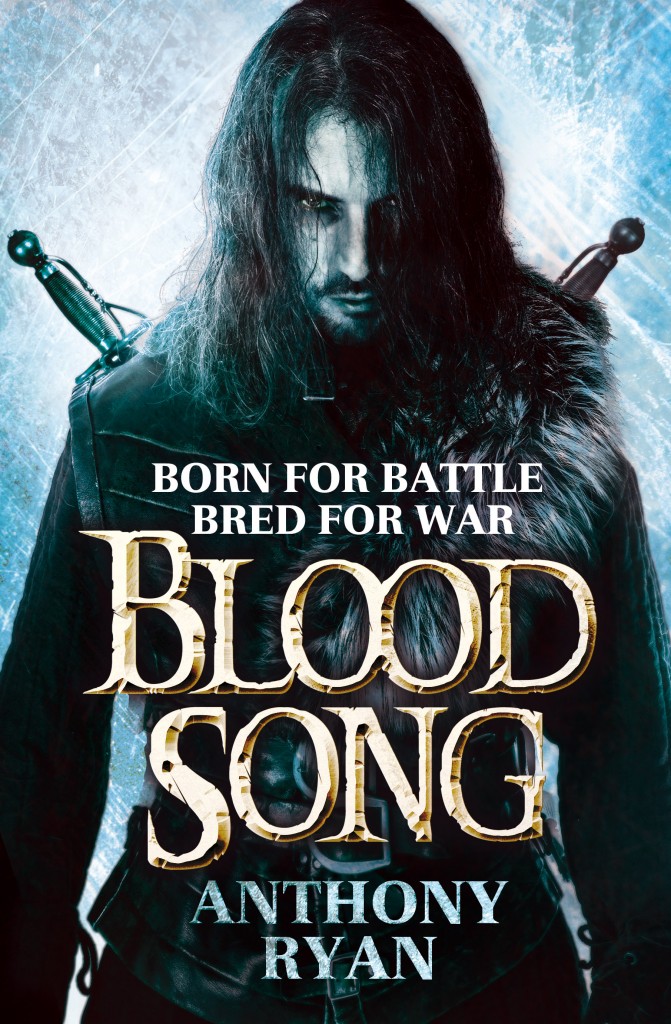
Earlier in the week, I posted my review to what is likely to be the most impressive debut fantasy novel of 2013, Anthony Ryan's Blood Song:

Much of the novel follows the growth of Vaelin from a blank slate of a young child to a hardened warrior trained by the Order in the art of war and combat. Vaelin distinguishes himself early, gaining the respect of his peers and making close ties with a handful of boys, much like (I assume) soldiers would bond during their military training. Vaelin comes to think of these peers as his brothers, Barkus, Caenis, Dentos, and Nortah. The bonds of trust and respect that develop between these young men are strengths of Ryan’s narrative on full display throughout the novel. One writer I’ve always felt who handles such bonds of friendship between youthful characters is Stephen King (The Body, Hearts in Atlantis, for example) and here, Ryan captures that bond just as powerfully.
...
Ryan’s style is somewhat relaxed and paced extremely well. I was lulled into the novel with Ryan’s almost conversational tone which kept me reading as the strength of the narrative’s power clung to me very strongly. The framing device, a chronicler hearing the legend of the man from the legend himself, utilized allows for an unreliability to set in as the novel progressed. Questions the historian Someren asks don’t exactly match with the narrative it seems Vaelin is telling in the framed sections of the novel. Unreliable narrators work best when this unreliability comes through subtly, and like Rothfuss and Gene Wolfe before him, Ryan pulls off this balance quite well.

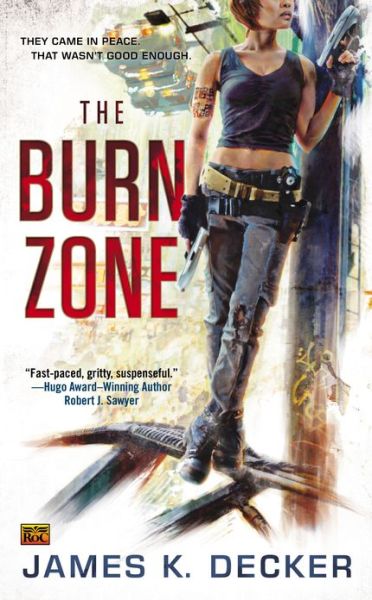
I read and loved James K. Decker's The Burn Zone earlier in the year and it will likely go down as a top SF read for me this year.  As such (and with a pending Author Roundtable with him, T.C. McCarthy and a yet unnamed author).  Here's the link to the interview:


For folks who are on the fence about reading The Burn Zone what would you tell them to push them over the edge to read the book?

As a science fiction fan, I feel like not enough science fiction attempts to go out a little bit on a limb. My editor informed me that The Burn Zone was totally different from anything they had in the works when release time came – I wasn’t sure if that was meant as a good thing or if they were nervous about it, but I am a science fiction fan, and I love works that make an effort to be different. There is violence in The Burn Zone to be sure, and yes, there are aircar chases and action sequences, but underneath all that is the story of real people with real world problems that matter. Come out and join me on the limb, it will totally hold us all.


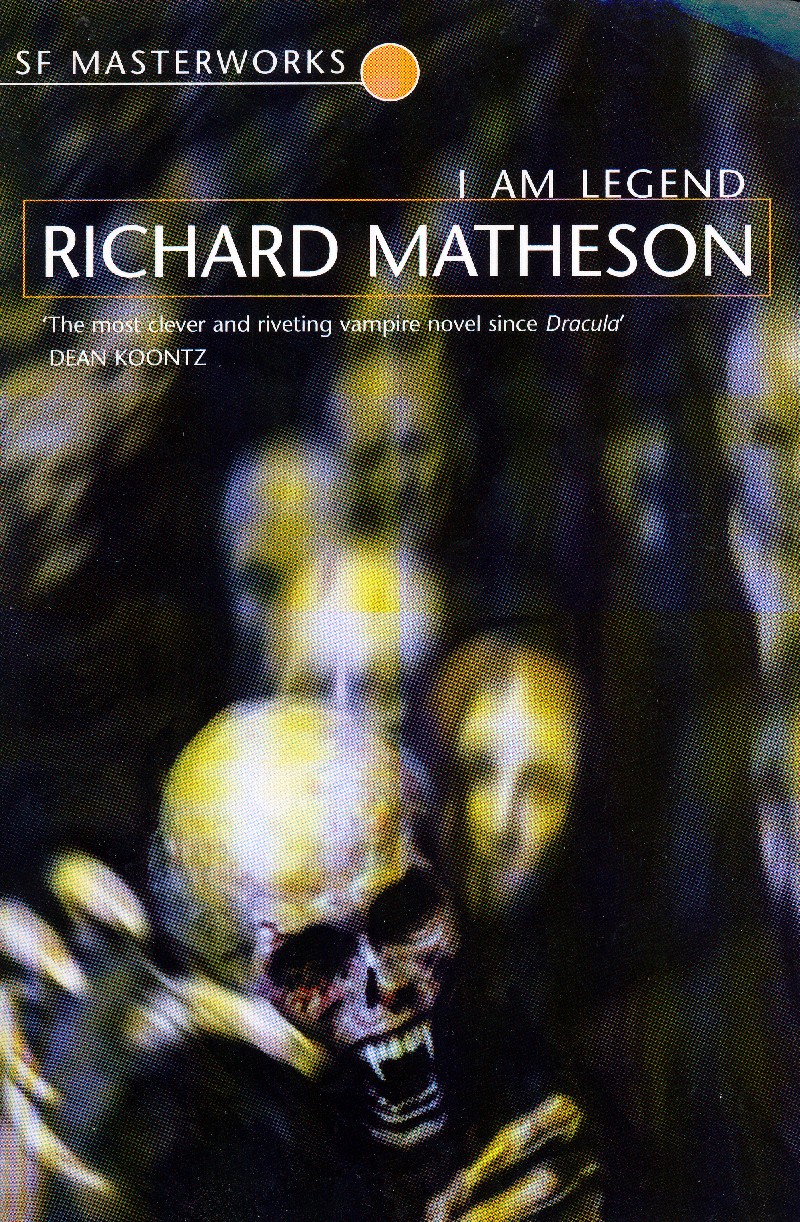
Mark posted a review of the classic (and IMHO, the best modern) vampire novel I am Legend by the late Richard Matheson:

The story is pretty straightforward. Starting in (a future) 1976, the story concerns itself with Robert Neville, the last surviving human in a world of vampires. Every night his barricaded house in Los Angeles is surrounded by vampires who wish to claim him and spend their time shouting at him to come out. His days are spent repairing the damage from the previous night, collecting provisions and trying to find a cure for the mysterious vampire illness that seems to have appeared almost overnight. As the book develops, Neville realises that he must find a cure if he is to survive.

Surprisingly to me, I hadn’t realised when I first read it that this was Matheson’s first published novel. Though he went on to write Hell House and The Incredible Shrinking Man, as well as scripts for The Twilight Zone and films, for a first book this is startlingly frank - a dark and angry novel. Though not perfect, for a debut novel it is stunning. The prose is stark, simple and yet effective. It is a masterwork of the minimal, one of those books that says more by saying less, bluntly and directly.


Mark also had a look at the behind-the-scenes / art book for the forthcoming film, Pacific Rim: Man, Machines, & Monsters:

This book shows that he clearly enjoyed the experience. The robots, monsters, cities, boats and other vehicles from the film are all shown here in various guises, in quite some detail. Although there’s the odd film picture, the book also shows a lot of obligatory behind the scenes photos of the film’s quite colossal production.

To the book itself, then. Presumably like the film, it is a lavish production – quality stock, lots of full-colour pictures throughout, and some lovely big versions that would look terrific framed. The attention to detail is very pleasing. The book has lots of little items stuck into the book throughout, that the inner fanboy/girl will love. There’s posters in an envelope at the back, Jaeger stickers, alien diagram pullouts, identity cards, blueprints of all the main robots, a page from Guillermo’s notebook. It’s the sort of thing you can imagine being paraded proudly in the school playground, although the reader may find them a little fiddly and annoying, even when they look great.

Tuesday, May 28, 2013

Hester, Kent, Esslemont and Wendig at the SFFWorld Blog!

Mark and I have posted Lots of new content on the SFFWorld blog over the past week, a few new reviews and what turned out to be the first interview for the SFFWorld blog since the soft launch/reboot.


Today, I posted my review of a novella from blogger and author Patrick Hester. He launched the Cord Cahill serials with the entertaining novella Cahill’s Homecoming:

When Cord attempts to ask people he knew, friends and former acquaintances, about his sister’s death, few are willing to answer. Cord searches out his sister’s estranged husband Charlie, who has become the town drunk as a result of first, their failed marriage and then, Kate’s death. The two men come to an uncomfortable understanding in their quest for justice.

The immediate thing that came to mind, that resonated with me while reading Cahill’s Homecoming was the television show Firefly, mainly because of the mix of far future and frontier settings. I wouldn’t say Cahill might resemble Malcolm Reynolds, but both men have a gruff exterior which belie a more sympathetic heart. This is best evidenced in Cord’s his words to Charlie, despite their differences and Cord’s displeasure with how Charlie treated Kate, “Today we’re family and family takes care of its own.”

On Sunday, Mark posted his review of the second installment of Steven L. Kent’s Clone Rebellion series, Rogue Clone. The series, initially published by Ace in the US is being issued in the UK by Titan Books. Mark likes how the series is shaping up.


Rogue Clone manages something very difficult from the off: to summarize the events of Book One without too much information dump and move the story on, all within the first thirty pages or so. Whilst war is brewing between the Unified Authority of the Orion Arm (that’s Earth to you and me) and the rebellious Outer Worlds, led by Crowley and the Morgan-Atkins (Mogat) separatists, Wayson Harris of the Unified Authority, now presumed dead, and his mercenary colleague Ray Freeman, are on the hunt for the leaders of the Mogat rebellion. Whilst reporting under cover back to his old mentor, Admiral Klyber, Wayson soon discovers where his nemesis, Amos Crowley of the Galactic Central Fleet, is hiding. We spend much of the beginning of this novel in space, with Harris undercover, guarding Admiral Klyber at a conference on board the Doctrinaire. Harris meets Admiral Huang again, a political enemy of Klyber’s and no friend of the Liberator clones, of which Harris is one of those remaining. Despite this, the conference appears to pass fairly successfully. However an incident after the conference leads to a plot which involves betrayal, political manoeuvring and a coup attempt, whilst in the background the influence of other partners in some rather fragile coalitions become increasingly important.


Yesterday, an interview Mark and I conducted with Ian C. Esslemont, co-creator of the Malazan world was posted on the SFFWorld blog to help celebrate the publication of his latest Malzan Tale Blood and Bone. Here's the direct link to the interview: http://sffworld.blogspot.com/2013/05/ian-c-esslemont-interview-for-blood-and.html.


A week ago, I posted my review to Chuck Wending’s The Blue Blazes, which publishes today. Although this was the first novel I read by the great bearded one of Pennsylvania, I’ve been following him on twitter pretty much since I joined and it will NOT be the last novel I read from him.


What could be a simple novel takes on an air of gravitas because of Wendig’s subtle yet powerful writing. Giving these totems, places, and people titles like The Underworld, The Boss, and The Organization, Wendig lends them a resonance that gives the story great, almost mythic power. This is further enhanced by the “journal clippings” prefacing each chapter, the journal of a lost, possibly insane and possibly fictitious, cartographer of The Great Below, John Atticus Oakes. Such chapter prefaces often work very well for my reading sensibilities and the fact that I found a resonance of sorts with what Chuck Wendig did here to what Mathew Stover (a favorite writer of mine) did in Blade of Tyshalle only heightened my enjoyment because Wendig did just as an effective job with these lost journal fragments.


It may be reductive to do the whole combine-and-compare thing, but think one part Hellboy, one part Mathew Stover, one part Big Trouble in Little China, and throw in a dash of The Sopranos, the film The Wrestler and pulp sensibilities, and you might have an idea of what a great stew of fun this novel really is. Although I wouldn’t go so far as to say that Mookie is a killer on the same level of Richard “The Iceman” Kuklinski, there’s a similar dichotomy and divide between the family life and the “work life” of the two men. What’s even better is that Wendig seems to only given readers a peek into the world Mookie and his daughter Nora inhabit.

Thursday, May 09, 2013

New Reviews at the SFFWorld Blog - Abraham, Miéville, and Knight

New reviews over on the SFFWorld blog this week:

Mark's review of The Tyrant's Law by Daniel Abraham. I read this one, too and loved it. My review should be popping up on Tor.com next week.  Here's a bit from Mark's review:


What we get more of here is a sense of the Epic, in that the eleven races of human, previously mentioned but not given too much detail, are fleshed out more. We see more of their nature and actions, as the consequences of what has happened before ripple out wider and begin to both affect them and draw them into the conflict.

...

All these narratives are in separate chapters as before, but as the plot thickens they connect and divide throughout. Much of the fun of the book is seeing how these characters separate and follow their own narrative paths, developing as they do before affecting each other again. As before in the series, not everything goes the way we as readers might suspect. Loyalties are rekindled, new characters divide up the fellowship, and further division. And throughout there is still the insidious influence of deities and revelations of dragons.

Mark pulls his review of Looking for Jake by China Miéville from the SFFWorld Archives


There are thirteen stories and one novella in this collection; three of these are new, one story dates from 1998. The novella, The Tain, was originally published by PS Publications in 2002, and is the last of the fourteen stories in the book.

I have enjoyed what I have read of China’s work, even when it is not an easy nor comfortable read. One of the key characteristics of New Weird, as I see it, is its ability to unsettle – to jolt the reader from the cosy environment of their reading environment. This collection clearly does this.

The general theme of the collection is a common one in most of China’s work - one which looks at horrors, both physical and mental, real and imagined. What this collection does, unlike Perdido Street Station, The Scar and Iron Council, is use real places and real events, which emphasises the unreality – when what we know and understand becomes something twisted and surreal

I go through the Way-Back machine to highlight E.E. Knight's debut novel and the novel that launched his very entertaining Vampire Earth saga, Way of the Wolf:


E.E. Knight postulates a grim future in his debut novel, The Way of the Wolf. The reader is introduced to a world over-run by creatures out of our most ancient nightmares and darkest legends, with humanity fighting for survival, not only against these monsters, but some of his or her fellow men and women. How did Earth become so desolate and nightmarish? Learning this is part of the fun in reading any opening novel in a multi-volume saga, and most importantly, part of the fun of this book.

...

The novel works very cinematically, or rather episodically, as if the this book will hit screens one day, as each chapter begins with a paragraph or two of background introduction. This gives an epic feel to the novel and allows the reader to more than simply read the novel, it allows the reader to experience the novel and this dark future Earth. Each chapter is paced very well, with the proper amount of action and characterization to keep the story moving, and more importantly, to keep the pages turning. Perhaps the only fault is a recurring sense of predictability.


Wednesday, May 01, 2013

Turtledove and Galaxy's Edge reviewed at the SFFWorld Blog

Mark and I put up two new reviews over at the SFFWorld Blog this week.


Mark has been reviewing a lot more short fiction than I have, specifically, the first issue of the new zine Galaxy's Edge, take a look at his review


So it’s a brave move to try and publish a new magazine in such a climate and yet here we have one from Phoenix Pick. Whilst it is free to read online, and available in electronic format for computers, tablets and the like, my copy was a good-old-fashioned ‘tree-copy’. There are, however, links to the various sections online throughout this review.


And I enjoyed it a lot. Its size is a little unusual, being bigger than digest size, but 4-5 cm less tall than A4. The print is black and white throughout, apart from the matt finish cover. Pages are printed in two columns per page.


...


I also enjoyed the magazine’s serialisation of the first part of a rather forgotten classic, Daniel F. Galouye’s first novel, Dark Universe, from 1961. It was a Hugo nominee in 1962 (losing out to Robert A Heinlein’s Stranger in a Strange Land), and is a post-apocalyptic tale of human survival below ground with no light. It has some interesting ideas which it examines through the story. ‘Darkness’ and ‘light’ have become mythic or even quasi-religious in stature, and the survivor’s senses have changed, with hearing more acute to accommodate for the absence of light. Taking up 24 pages of the magazine, the first five chapters are here, with the rest in Issue Two.


Meanwhile, the fine folks at Del Rey have reissued the first four books of Harry Turtledove's classic "crossover" fantasy series The Videssos Cycle in two omnibus volumes. I put up my review of the first novel* The Misplaced Legion:


This is a politically flavored novel for all of its focus on war and soldiers. Marcus must navigate the politics of the newly found world which are fraught with religious overtones as well racial/national biases the many characters have for and against each other.

Turtledove is inarguably, the most recognizable writer of Alternate History. He wouldn’t have been known as such if he weren’t a student of history and it shows very much in this crossover fantasy world. There is an authentic feel to the world and the Roman soldiers despite the novel taking place in an invented world with magic. I also thought Turtledove’s characterization of and the story-arc for Marcus in the novel were strong elements in the novel; Marcus was believable with his men, as well with the new people of Videssos who grew to respect him. I also though some of the religio-political discussion in which Marcus engaged with his newfound allies to be interesting and thought provoking.

*hint, I only reviewed the first of the four novels in these two books because it will be the only one of the four novels I will be reading.

Tuesday, April 09, 2013

Campbell and Crompton Reviewed at SFFWorld

Two weeks in a row for new reviews? Say it ain’t so! Seriously, I catch up with a late 2012 SF release and Mark reviews a book that provides a somewhat depressing snapshot of the UK’s most important and renowned comic artists.


I’ve been enjoying Jack Campbell’s Military SF/Space Opera hybrid novels set in The Lost Fleet universe for a couple of years now. He turns the tables a bit with The Lost Stars the series which kicks off with  Tarnished Knight  and takes a look at the "other side" of the war depicted in The Lost Fleet.


The narrative focuses on two individuals who form an uneasy alliance at the outset of the novel. Reeling from the defeat at the hands of the Alliance and “Black Jack” Geary, Artur Drakon and Gwen Iceni, once CEOs in the Syndicate hierarchy, must find a way to trust each other and rebuild their broken government. In addition to trying to recover from such a serious blow to their worldview and egos, Iceni and Drakon must quell any uprisings on Syndicate ruled worlds, while deflecting their Internal Services group – arguably the most powerful governmental organization in the Syndicate – as they rebuild their government.


The Tarnished Knight is a fine enough starting place for readers unfamiliar with Campbell’s Lost Fleet novels, for it can easily be read as a story about the issues surrounding post-war rebuilding on the side of the defeated. Campbell alludes to enough of what he’s created in this milieu not to exclude the newer readers. On the negative side, Iceni and Drakon, continually repeat how they must “do things differently than in the past, the Syndicate failed” both in their internal dialogue and to each other and other characters to the point where I was saying to myself “OK, I get it, we all get it.”

Alastair Crompton’s Frank Hampson: Tomorrow Revisited is a retrospective of the popular comic artist. Here’s part of what Mark had to say:


Though not a name many know well these days, his work in the 1950’s until the 1970’s, in particular in the UK, was instantly recognisable and iconic. Although Frank drew Westerns, adventure stories and even Biblical tales, it is his drawings of Dan Dare for the Eagle comic that set a phenomenally high standard, influencing contemporary artists such as Dave Gibbons, Graham Bleathman and Chris Foss. The first edition of the Eagle comic, published on the 14th April 1950, sold a previously unheard of number of copies – widely recognised to be about 900 000 – when comics in the UK typically sold less than 100 000 in a very good week* – and Hampson’s front page spread of Dan Dare, in colour, was seen to be a key factor in the comic’s continued success for the next twenty years. At its peak the Eagle has been estimated to have sold around one million copies a week.


In his engagingly honest Introduction Alastair explains his take on the issue and tries to keep things as even-handed and as accurate as possible through presenting many interviews and transcripts from details at the time. With rare photos and interviews throughout, the book shows what an innovative and inspirational place the offices of the Eagle must have been in the 1950’s and 60’s, although ultimately relentless and unforgiving.

Tuesday, April 02, 2013

The Forever Knight, NOS4R2, and Book of Sith at SFFWorld

Mark’s got two reviews over the past week (one a catch up due to technical difficulties at SFFWorld) and I’ve got one.

After my re-posts of my reviews of the first three novels in John Marco’s, Bronze Knight Chronicles it should come as no surprise that my review is John’s newest novel The Forever Knight .


The first thing in Marco’s latest novel to distinguish itself from its predecessors is the authorial voice. This time around, John chose to tell Lukien’s tale through Lukien’s own voice utilizing the first person narrative technique. There’s a more intimate feeling to the story, although not quite a coziness, because Lukien is far from being the proverbial happy camper. He’s held his true love as she died, turned his best friend into an enemy, helped the Inhumans secure a place of safety (Grimhold), overthrown a madman, and gained another spiritual familiar in the form of Malator, the Akari. All of this happened in the novels The Eyes of God, The Devil’s Armor, and The Sword of Angels. This past baggage is not necessary for readers unfamiliar with those books to know since John sprinkled enough of Lukien’s past throughout the narrative to give him the weight of a burdened, tired-of-meandering, and on the cusp of breaking character for new readers to jump into the narrative.


I’ve been a fan of John Marco’s since I read his debut novel The Jackal of Nar well over a decade ago. With each book I’ve read by John, I’ve discovered something new in his writing, a different shade of what his abilities as a storyteller are. In The Forever Knight, John’s written his shortest novel to date, but by no means does that indicate is any less powerful a novel. The first person narrative works very well within this smaller, more tightly focused tale. Reacquainting myself with Lukien’s story, through Lukien’s own voice was a most welcome return.

Mark gets an early look at one of the more hotly anticipated novels of the year. The third novel from Joe Hill, NOS4R2:


The story is mainly told through and around the experiences of Vic McQueen, who begins the story as a young tomboy and rider of bicycles. In a Twilight Zone style twist, Vic finds early on in the novel that she can cycle from her place of residence (the small town world of Englewood, Colorado) to anywhere she chooses, from ‘Found’ to ‘Lost’ and back again, via her accessing what she calls ‘the Shorter Way Bridge’, a rickety bridge that in reality no longer exists. With practice, she finds that she can travel to places to fetch and find things, but not without cost, as there seems to be a physical effect on her every time she transports hers.


There are (deliberately, I’m sure) echoes of SK throughout this book, with spooky possessed cars, creepy houses, broken people, a large dog, a combination of Twilight Zone elements juxtaposed with homely elements of Americana, albeit often from the hidden underbelly. There’s bikes, cars and girls (or in Vic’s case, boys.) A character named Tabitha (Joe’s mother’s name). And, like IT’s Mike Hanlon, a librarian (with a stutter like Richie Tozier) is there to save the day. Here we channel the vampires of ‘Salem’s Lot and combine them with the creepy car experiences of Christine, as well as adding a smidgen of IT and a touch of The Body (although some may prefer the film title Stand by Me.)

Lastly, Mark reviews something of a novelty book a purported historical artifact from the Star Wars Expanded Universe. Book of Sith - Secrets from the Dark Side by Daniel Wallace:


There are five chapters here, with an encapsulating sixth element from Sidious himself. They show the long history of the rise and fall of the Sith over many thousands of years. Sorzus Syn"s chronicle of the original rise of the Sith Empire, thousands of years ago, begins the collection. It is the tale of a female Jedi, exiled from the Jedi Order, who set herself up as one of the first Sith Lords and created the Sith Code at the time of the Second Great Schism. Darth Malgus"s war journal was written during the Great Galactic War, when the Sith was defeated and the Republic ruled the Empire, as shown in the Old Republic computer games. Darth Bane (from Drew Karpyshyn"s novels) tells of a time when the Sith Order was in decline, having to do their work in the shadows, and shows how the Sith learned from their mistakes. Here Bane summarises his ideas and creates The Rule of Two (namely that one Sith must contain all the power of the dark side and that one Master must decide how that power shall be used) in order to rise again. Mother Talzin"s Wild Power text adds an element of the tale from the Clone Wars, that of the history, beliefs and work of the Nightsisters, a Sith splinter group who became dark side mercenaries. The fifth section is by Darth Plagueis, Darth Sidious" Master, showing his scientific thoughts on the true nature of the nature of the Sith.

Wednesday, March 13, 2013

Kent & Knight Reviewed at SFFWorld

Another pair of reviews from the usual suspects, (Mark and I), Mark reviews a US author’s book reaching UK shores after success here in the US and I review a UK author’s debut.


On tap for Mark is the first book in a Military Science Fiction series whose fifth book I reviewed a couple of years ago, Steven L. Kent’s The Clone Republic:


It is the year 2508AD. The Unified Authority rules over the galaxy, using clones for much of its policing across the colonies. The story is told from the perspective of one of these clones, Private First-Class Wayson Harris, initially newly assigned to the small and obscure desert outpost of Gobi on a planet called Ravenwood. As a clone, he’s trained to obey without question, and clearly finds the rather laidback setup at Gobi disconcerting.

Part of this attraction may be that initially, for all intents and purposes, the book doesn’t stray too far from the tried and trusted model for military stories. The Marines of 2508 pretty much act and talk like soldiers in 2013. What happens here on a desert-type world in 2508 is very similar to, say, Iraq, Iran or Afghanistan in 2013, a point further emphasized when some of the hardware used has familiar names such as Harrier and Tomahawk which could place the book as easily in the 1980’s as the 2500’s. This reminds the reader that a Marine is a Marine, regardless of time, and nothing really changes that, whether now or in the future. Here they complain, gamble, sleep around and fight one another like any other typical armed force, past, present and (presumably) future.


I take a look at Fade to Black, Francis Knight’s debut novel and the launch of her Rojan Dizon Urban/Dark Fantasy series:


Fade to Black has been categorized as an urban fantasy, but by no means is this the tramp-stamp, sexy magic version of the sub-genre. Rather, this is Urban Fantasy where the city is as much of a character as the people themselves, a novel with more similarities to China Mieville’s King Rat. The protagonist, Rojan Dizon, in addition to being a people finder/bounty hunter, is a pain mage. By inflicting pain unto himself, Dizon is able to locate his quarry more easily; find the proverbial needle in the haystack..

Mahala…a dark sprawling city with layers upon layers of grit and darkness, not exactly the streets of Chicago, Atlanta, or New York. Ruled by the Ministry, perhaps in an allusion to Orwell’s 1984, there’s a great sense of claustrophobia throughout the entire novel. There seems to be nowhere to hide and the characters who inhabit this world, particularly Rojan, have no privacy. There’s a mixed feel of potentially dark future with a hint of pre-industrial city – guns are relatively new, the city is powered by magic, yet the class structure to me felt more modern, something out of a film like American Psycho or even Wall Street. The city itself reminded me a bit of the towering metropolis of Alastair Reynolds’ Terminal World and the dark city of John Meany’s Bone Song, or on the film front the rainy, unnamed city of the film Seven. I also felt a strong resonance with Richard Morgan’s fiction, both his SF and fantasy novels.

Wednesday, March 06, 2013

The Burn Zone & A Conspiracy of Alchemists at SFFWorld

Mark and I are both up with new reviews this week at SFFWorld. One an SF thrill ride (my book reviwe) another an alternate history/steampunk (Mark’s book review)

It isn’t often that a book surprises me, but that’s exactly what happened with James K. Decker’s The Burn Zone. I’d seen some good reviews run through my tweet stream and realized I needed to give the book a try, and I am very glad I did:

Though The Burn Zone is the first novel to be published under the James K. Decker byline, the author published the Revivors trilogy under the name James Knapp, a zombie-noir series which began with the novel State of Decay. I read and enjoyed that novel and see some of the same sensibilities here in The Burn Zone. A non-stop narrative pace kept the plot moving, the pages turning, and this reader guessing which fork in the road the story would take. The noir-ish and gritty feel of The Burn Zone evokes a similar used, grimy, and dirty future as did State of Decay; there’s a clear inspiration from Blade Runner in Decker’s writing.


The novel takes place in the fictional city of Hangfei, which Decker set in a future analogue of China, based on some of the locations and character names. Smartly, he doesn’t specify the nation is China. As the novel progresses and Sam learns more about the haan and their relationship to our world since their ship crashed nearly fifty years ago, the full scope of the aliens effect on Earth becomes much more far ranging than either Sam or this reader could have expected.


Mark dives into a great looking steampunk debuy from Liesel Schwarz,  A Conspiracy of Alchemists:


This is a steam punk romance, in all senses of the word. There’s a love story, combined with a love of technology and some travel across Europe to strange and exotic places. Despite its obviousness (in that it’s pretty clear where it’s going from the beginning) there’s enough energy and enthusiasm here to make this an enjoyable read.


I found this reminiscent of the Studio Ghibli anime movies, which to my mind can only be a good thing. There’s a real joy in the storytelling and it comes across as you read it. Generally the dialogue’s not wincingly twee, the places visited give the reader a definite itch to travel there and the plot’s quite entertaining, although it probably is not one to think about for too long.

Thursday, February 28, 2013

Kay Excperted, Silverberg and Manieri Reviewed at SFFWorld

Two weeks in a row with one of these “new reviews at SFFWorld” posts from me? Say it ain’t so! In addition to the reviews, we’ve also posted an excerpt of Guy Gavriel Kay’s forthcoming novel River of Stars:


Mark returns to a classic fantasy milieu with a series of short stories in Robert Silverberg’s Tales of Majipoor:


… For those who don’t know the books, the Valentine’s Castle series is Silverberg’s take on a planetary romance, echoing a Jack Vance or a Gene Wolfe style, where the glory is in not so much the plot as the luxuriance of the nomenclature and the opulence of the varied environments. Whole dynasties are covered in a sentence, tales that could be the basis of a separate novel. As the book often reminds us, Majipoor is a big planet, which can lead to a variety of unusual things to be seen and places that are not visited very often.


Whether it is true or not that Tales of Majipoor can be said to be the work of an author treading water, it must be said that, at the very least, it is entertaining. Ultimately, this is a collection that serves its purpose: it introduces potential new readers to the world of Majipoor and, for the long-term fan, collects the remaining shorter Majipoor fiction together from disparate (and these days some quite hard to get) sources. They vary in length and importance, but there’s not a total dud amongst them, although there’s more than one that seems to finish without a proper conclusion.

Not every book works for every reader, such is the case with Evie Manieri’s Blood's Pride, which is also the first novel of The Shattered Kingdoms:


Manieri has created an interesting world that seems to have parts of Anne McCaffrey’s Dragonriders novels (the Dead Ones/Norlanders ride the equivalent of dragons) and parts of Adrian Tchaikovsky’s Shadows of the Apt (a forming rebellion amongst those under the heel of repressive overlords). The Norlanders also communicate with each other through telepathy, for the most part. While the world is constructed fairly well, the plot seemed a bit uneven throughout the novel. What I found the most confounding about the relationship between the Norlander overlords and their slave Shadari was a lack of fear. Outside of the initial devastating attack the Norlanders made on the Shadari, I didn’t get a sense that there were very high stakes should the Shadari just stand up for themselves.


Wednesday, February 20, 2013

Bennett & Scull reviewed at SFFWorld

It’s been far too long since I’ve posted about the reviews of mine that have gone live at SFFWorld. This week's review roundup includes one from me and one from Mark, as is typical. Mark has been chugging along with new reviews on a nearly basis, while I’ve been going about every other week.

Last year the best novel I read was The Troupe by Robert Jackson Bennett so I was very excited about reading his lastest/2013 release American Elsewhere, which is a stunning novel in its own right:


After some getting to know Mona before she makes her journey to Wink, and a very creepy prologue, Bennett’s narrative takes hold and allows readers a peek into the window of a nearly perfect Small Town, USA. Mona arrives in Wink as a funeral is being held, which is not the most welcoming event to a new visitor but which also sets the tone for the novel. Of course Wink is not really normal in any fashion other than the most superficial. Posited in a canyon which is overlooked by Coburn National Laboratory and Observatory, much of Wink’s population was a support town for the lab. 


Bennett raises a lot of questions in the novel and the answers the characters provide are discovered through a narrative that is, for the most part, taut and flavored with unsettling and creepy scenes. Two primary mysteries plague Mona (and the reader) throughout the narrative – who was Laura and what was the nature of Coburn’s research? Mona’s discovery of those two things and how they relate to each other is filled with dread and some otherworldly elements that would fit right at home in an H.P. Lovecraft story.


Mark seems to be on a quest through the debut fantasies of late 2012 / early 2013. The latest novel to be on the path of this quest is The Grim Company, Luke Scull’s debut novel and the launch of his Age of Ruin series:


…this is not family-friendly Fantasy, nor does it try to be. Here Luke is clearly going for an Abercrombie vibe rather than, let’s say, a David Eddings. Some readers will welcome this and be unperturbed about the plethora of sexual and genitalia references, volatile swearing and bodily function references throughout. I can handle that as much as the next man (or woman), but for me, it was so often used that it began to feel unnecessarily obtrusive. The copious references to arses and what could be/would be/ should be done to them, for example, would make a proctologist proud, but ‘in the end’ became irritating (see what I did there?) Whilst it could be said that such matters are rather typical in today’s gritty novels, here at times it detracted from the rather important point of showing and telling me what important is going on.


It is perhaps the range of characters and what they have to do that propel this multi-threaded epic tale. There is a lot going on. It is a world where magic is in decline. Wild Magic can be mined in this world because it exists as crystalline residue left by dying Gods at the time of the Godswar. It is used by the Magelords as a resource that is used to create Augmentors, their elite bodyguards, whose numbers are in decline. The magic is also wanted by a group of Dorminian rebels, known as the Shard, who hope that their procurement will enable them to strike back at Dorminia’s oppressive Magelord, Salazar. The task is taken on by a motley crew.

Wednesday, February 13, 2013

Daylight Red - New Reviews at Tor.com & SFFWorld

I’ve got a new review up at Tor.com, a novel for me that had an extremely high anticipation factor and Mark continues his read-through of the Virginia Edition of Robert A. Heinlein’s work.

My review is The Daylight War by Peter V. Brett, the third in is five-book Demon Cycle. I was very pleased with the novel as you may see if you click through to the review.


While the demons are still very present in The Daylight War, humanity’s remnants need to get their collective heads together before the demon threat can effectively be vanquished. In many post-apocalyptic stories—and a case can be made for The Demon Cycle as a post-apocalyptic story—the trigger event marginalizing human society becomes window dressing as the story progresses and the human character’s conflict takes center stage.

...

The mythology/worldbuilding behind the demons hinted in the previous volume is revealed slightly more here in The Daylight War, as Brett peppers in chapter passages from the POV of the demons, providing readers with a glimpse of their society and race as a whole. Whether he will continue to expose more of the demons’ nature and origins remains to be seen, but I enjoyed the slow reveal unfolding here and I am very curious to see how much of the demons’ history Brett will allow readers to see.

Mark Heinlein read-through catches him up with Red Planet


What surprises me most on re-reading is how complex this book really is behind the obvious plot narrative. We have ancient Martian races, social revolution and rather manipulative humans on a Bonestellian style planet. Our hero is, as was rather traditional for these books, a teenage human male, whose growing up (see: rite-of-passage) was rather frontier-like. On the cutting edge of space colonisation, Jim Marlowe is a pioneer. It’s not by accident the original edition was subtitled on the cover, ‘A colonial boy on Mars’.

Rather surprisingly, Willis still reads as an engagingly depicted character that would gladden the heart of any young reader, although he/she/it is basically a canine substitute (and is something that Heinlein will use again in later books such as Star Beast and The Rolling Stones/Space Family Stone, for example.) It’s not by coincidence that Tor Books once referred to the novel as ‘One Boy and his Martian.’ Supremely loyal and endearingly enthusiastic, these days I can see the similarities between Willis and Edgar Rice Burroughs’s Woola more clearly.