Thursday, February 28, 2008

SPOTLIGHT: Detective Wizards, Vampire Hunters, and Werewolves Oh My!

The wizard detective, the vampire hunter, the werewolf D.J, these are but three of the popular characters in one of increasingly popular subgenres of speculative fiction. Some call it supernatural fantasy, others urban horror, while others call it urban/dark fantasy. No matter what it is called, readers know what it is and have been gobbling up many of the titles over the past ten years or so as the this subgenre has exploded (yeah, next I’ll tell genre readers that the sun rises every day). Just check out this fairly extensive discussion at SFFWorld. For my part, I’ve read some of the authors but by no means have I read all of them, nor would I completely consider myself an expert on the subgenre. However, I am finding myself drawn to books of this ilk more strongly. Writers like China Miéville, and Charles de Lint wander into this territory, but they are not exactly the authors to whom I’m referring. What follows is just a brief overview of some of the writers/series.

Laurell K. Hamilton
When and why has the subgenre proven so successful? The character and set of books that kickstarted this trend would arguably be Laurel K. Hamilton’s Anita Blake: Vampire Hunter series. These books were able to catch on to the genre-reading public in no small part because of the success of Anne Rice’s Vampire Chronicles and perhaps more so, Buffy the Vampire Slayer (TV). Although the Anita Blake books may not have been the earliest in the latest trend, they have proven extremely popular. Vampires have always fascinated people and between Rice’s success in humanizing them and the strong, powerful female protagonist, Hamilton’s series is in retrospect a no brainer for success. Of the Anita Blake novels, I read the first four or five before being pulled away. Readers have criticized the later books for being little more than erotic fantasy with an overabundance of sex, but the early books are very good and are considered by some as a benchmark in this subgenre.

Jim Butcher
Another ingredient for the success of this subgenre probably has something to do with the presence of these creatures in the “modern/real” world and people possessing arcane abilities in modern society. Another highly popular example of this would be Jim Butcher’s Dresden Files. Harry Dresden is the only practicing wizard listed in the Chicago yellow pages and as such, he is on retainer to the Chicago PD’s Special Investigations division. Cases involving werewolves, vampires, ghosts and other things that go bump in the night are his purvey and when the Police can’t wrap their heads around such a case, they call in Harry. I’ve only read three of these books but they could turn out to be a favorite series if the books continue to entertain me in the same fashion. The series is in the double digits with little sign of slowing down, so the good part is that there are plenty of books for me to read. The world Butcher has created for this milieu is incredibly detailed, and very well thought-out. He’s got the White Council, which is the governing body of the practice of magic, several Vampire Clans, a faerie world (Nevernever) two which Harry travels. A sure sign of the success of this series is that it started out in Mass Market Paperback and with the 5th or 6th book, jumped into Hardcover for the initial release of each book.

A short-lived series on the SciFi channel might have helped to raise the awareness of this already popular series (the first book, Storm Front, is probably in its 20th printing by now), but got the Axe. After a slow start, the series really gained momentum but the ratings apparently weren’t to SciFi’s liking, despite being somewhat comparable to those of Eureka and the abysmal Flash Gordon.
SFFWorld’s Hobbit reviewed many of the books in the series, beware spoilers though: (1) Storm Front (2) Fool Moon (3) Grave Peril (4) Summer Knight (5) Death Masks (6) Blood Rites

Glen Cook
Before Anita Blake and Jim Butcher; however, Glen Cook was writing a little series about Garrett (Glen Cook Wiki entry), a Private Investigator in a “Fantasyland” called TunFaire. I personally haven’t read the books, but one member of the SFFWorld forums whose opinion I can trust (KatG) consistently recommends this series. From what I’ve gathered, the series functions very much like a hard-boiled detective story with goblins, orcs, and wizards thrown in the mix. Based on my enjoyment of Cook’s Dread Empire and Black Company, I’ve really got to check out these books, of which there are already 11 books.

Carrie Vaughn
A werewolf in modern times should be able to fit in, shouldn’t she, especially if wizards and vampires can? Well, Carrie Vaughn’s Kitty Norville is doing her best as a radio talk show host in the series that bears her name. The first book, Kitty and the Midnight Hour published in 2005 to some positive reviews, including my own review. The fourth book is out this year and the Science Fiction Book Club put the first three books under one cover in one of their popular omnibus editions. The subsequent books seem to follow the trend of pleasing readers.


Liz Williams
Liz Williams
has a very strong series going with her Detective Inspector Chen novels. At least based on the first novel, the series seems to be working with a buddy-cop/police procedural template whilst mixing elements of magic and Chinese/Asian mythology. Night Shade Books is publishing this series, which is helping to make their already impressive list of authors even more impressive. Also, the first book Snake Agent was one of the launch titles for Night Shade’s Mass Market Paperback line. This is a very promising series as I said in my recent review of Snake Agent.


Tim Pratt
Tim Pratt (writing as T.A. Pratt) is two books into his Marla Mason series. I’ve only read a short story from that world, but what I saw I liked. The short story had a very Lovecraftian feel to it and I’ve got the first book, Blood Engines, on my To Buy pile. Here’s a nice review from Robert over at FantasyBookCritic.


Kim Harrison
Kim Harrison is another popular writer who seems to churn out a new book every year in her Rachel Morgan/The Hollows series. On the surface, the series blends elements of post-apocalyptic fiction with the “wizard detective,” or in this case, the “witch detective.” Morgan is similar to Harry in that she is an adjunct of sorts to the local law enforcement. I think the post-apocalyptic elements to this series sound interesting so I will eventually check out the books. My friend’s wife really digs this series, so I may just have to borrow the first book. Here is a recent discussion at SFFWorld.


Other authors worth mentioning include:
Kelley Armstrong – Women of Otherworld
Rachel Caine – Weather Warderns & Morganvilee Vampires
Simon Green – Nightside
Justin Gustainis – Quincey Morris Supernatural Investigation
Charlaine Harris – Sookie Stackhouse
Charlie Huston – Joe Pitt Casefiles (My review of Already Dead)
C.E. Murphy – The Walker Papers
Rob Thurman – series begun with Nightlife

Wikipedia helped me sort out a couple of things with this little article as did the folks in the SFFWorld forums, including the participants in the Supernatural Fantasy: Ghosts, Vampires, Werefolk and Wizards tread.

Wednesday, February 27, 2008

I was asked by John DeNardo, of SF Signal, to participate in one of their regular MIND MELD roundtable discussions. The subject for this go-round was Which SciFi Movie Ending Would You Change? As the introduction to the article states, I’m a “luminary.” Cool! I’ve been popping onto SF Signal on a daily basis for a while now as there is always something interesting in their great coverage of the genre.

Thanks to John and the folks at SF Signal for letting me join in the fun. My response is the last of the group, the title of the movie I chose lies hidden within this post. Well, sort of.

Me, a luminary!

Monday, February 25, 2008

Snake Agent

Another Monday, another book review posted. This time, it's the first of Liz Williams Detective Inspector Chen novels, Snake Agent. I liked to book a lot for many reasons; great pacing, interesting characters, a "fresh" (as in not often utilized) mythological backdrop. Williams hit a great chord with the book and it fits perfectly in the ever growing and popular subset of fantasy - the supernatural mystery. I've got more to say about this little subset, but that'll be for another post later in the week.

On another note, if somebody would have asked me before the show started whether or not I would keep tuning in every week to watch Terminator: The Sarah Connor Chronicles, I would probably say no. It keeps drawing me back in every week though.

Monday, February 18, 2008

I just posted my review of Helix by Eric Brown, published last year by Solaris Books. This book seemingly fell under the radar, shame because it was a solidly entertaining novel. This is something of a minor travesty because Helix is a damned good book – Good Space Opera; a good study of characters; a novel of first contact; and a really cool “Big Dumb Object.” The short of it: another quality novel from Solaris Books. For the long of it, check out my review.

The rumors are true, a sequel to one of my favorite 1980s movies is in the works – The Lost Boys. Granted, this is about 15 years late, but the Coreys weren’t doing much else.

Friday, February 15, 2008

SFFWorld's Favorite 2007 Book

SFFWorld's favorite book from 2007 was...

Before They Are Hanged by Joe Abercrombie.

Those who care can click HERE for the full results.

I just checked out the trailer for Indiana Jones and the Kingdom of the Crystal Skull. I'm a bit non-plussed at the moment, I expected to be a little more wowed by Spielberg & Lucas; I expected to be even more charged up to see it. Oh, I'll be seeing it in theaters regardless.

Wednesday, February 13, 2008

Inching Towards Daylight

Anybody who knows my reading tastes knows I consider Matthew Woodring Stover's Acts of Caine one of the unsung great sequences in modern fantasy and science fiction. So, learning my lessons from the many amazon.com teases for A Dance with Dragons and A Feast for Crows, I tempered my enthusiasm when I saw Caine Black Knife on amazon.com with some historical perspective.

Well, that just changed because Mr. Stover made an encouragining annoucement on his blog yesterday. Woe is me, I guess I must re-read two of the my favorite books. Again.

Also, congratulations to LaGringa/The Swivet/Colleen!

Tuesday, February 05, 2008

The Connection has Been Bridged

My internet connection at home has been veeery shaky lately, I’ve had DSL for 3+ years where I’m at now and a couple of years in my previous residence. It just stopped working about a week ago, so I upgraded to cable internet. So far so good.

Right, in that time, I’ve been unable to post my review of Gregory Frost’s Shadowbridge. Fortunately, I did that last night. The book was pretty powerful and is one of those that has a lasting effect. That is, it stays with you long after you’ve put it down. The sequel/conclusion, Lord Tophet, publishes later this year.

I received a really nice looking book from Del Rey yesterday: Elric, the Stealer of Souls. Even though I’ve read the Elric stories in a couple of different books before, this collection (first of a series) looks to be the best of the bunch despite liking the White Wolf editions from a couple of years back. With a striking cover and interior art by John Picacio, this edition also sports an introduction by Alan Moore. Furthermore, there are some “historical” snapshots of Elric, such as magazine covers of Science Fantasy where the stories first appeared as well as the cover of one of the early editions of Stormbringer. Even if you already have one of the Elric collections, this is worth having.

Friday, January 25, 2008

Machine King

Last night, I posted my review of Andy Remic’s War Machine another title from Solaris Books’ firts season of books. While the book based on this book I wouldn’t quite consider Remic the “new master of f rock-hard military science fiction,” the book was still pretty enjoyable. I haven’t thoroughly read Military Science fiction as much as other subsets of Science Fiction so I can’t authoritatively rank War Machine against its peers and predecessors, but as I said, it was a solid novel. It provided some good action scenes, big ideas, and a nice mix of character focus and epic.

Stephen King
has a new book out now, Duma Key. I haven’t read any King since The Dark Tower concluded, but he was the first real “adult” writer I read as a kid. Over the years, I’ve read the majority of his stuff, but two recent books really didn’t work for me Dreamcatcher and From a Buick 8, which I thought was one of, if not his worst book. However, The Talisman and The Stand both still stand as all time favorites. Whether I pick up Duma Key right now, I don’t know. I’m sure I’ll eventually get to it, but I still haven’t read Lisey’s Story either.

Sunday, January 20, 2008

Cloverfield

Mrs. Blog 'o Stuff and I saw Cloverfield today. It was the biggest movie of the weekend, and if Lost didn't already do it, this film completely cemented J.J. Abrams as an A-List guy in Hollywood. Everybody who is interested in this film already knows the premise, a giant monster wreaks havoc in Manhattan. Unlike the predecessors of this particular sub-genre, the story is told by the people most affected by the attack - the people who live in NYC.

The writers/director/producer gave this move such a human feel. By introducing the characters the way they did, you built up an emotional attachment to them, you felt as if you knew them. That, plus all the viral marketing like the character myspace pages, gives the feeling that these people might be your friends.

It was pretty close to brilliant film making, from beginning to end. I want to see this movie again. I want to pick up on some of the clues that were peppered throughout, a trademark of J.J. Abrams' storytelling.

I'm only getting to the monster right now - the monster is and isn't important. Yes movie-goers want to see what the monster looks like. But like the characters from the "retrieved video camera," the important element that helps to build up the emotional tension is the characters themselves, and how they are affected by the monster.

Of course once the film ends and I sat through the credits (which anybody should do for this film), I wanted to know more about the monster's origins. What is it? From whence did it come? The movie works on a lot of levels, it pulls the heart strings with these characters, keeps you on the edge of your seat, and has you asking questions at film's end. It was a risky although proven successful method of film-making, see The Blair Witch. The night of the monster's "attack" isn't the only thing we see on the video, the video held something prior to the night of the monster attack. Two of the characters, Rob and Beth, spent a day together months prior to the Rob's going away part and those little snippits may (or may not) provide some hints, and more than anything, gives the characters more depth.

Go see the movie before you find out too much more about the monster and the plot.

Friday, January 18, 2008

Weekly Writerly Wrap

Some new things for authors whose work I like:

John Marco recently sold a YA Fantasy series, tentatively titled The Skylords, to DAW

Tad Williams relaunced a new official Web site

Patrick Rothfuss explains the delays to Wise Man's Fear. I've intimated before and I will again (as I did with GRRM), I would rather the author take some extra time to make the book better rather than rush to the end. It always bears out in the book

Jim Butcher is publishing a non-Harry Dresden novelette in the Dresden universe with Subterranean Press. Get this, Mike Mignola will be providing illustrations. Sounds like a can't miss to me.

I'm really trying some new approaches to writing with the new project I started - working off an outline, approaching chapter construction differently, and being more focused on the goals of each chapter and how that relates to the overall book/story. It feels right, so I need to get back to writing it.

Tuesday, January 15, 2008

SPOTLIGHT: Catching up with the Classics - Starship Troopers

So, here's the new "feature" at the Blog o' Stuff. Once a month (at the very least, I hope), I'll be taking a look at a classic book or novel from the Fantasy/Science Fiction genres. This will either be a book I haven't read in a while, or the case of in this installment's book Starship Troopers, a classic I have yet to read. How can I never have read this book? I just never got around to it, simple.

What I can I say about one of the most famous, acclaimed, influential, popular, and important Science Fiction books of all time and a Hugo winner, to boot? What can I add to all the words that have been extolled or exhorted in frustration? I don’t know, except for my opinion and my own response. Suffice it to say, it is virtually impossible to open up this book and read it for the first time without knowing about it, its reputation, or having some preconceived notions.

Much of the novel deals with Johnny Rico’s experiences in the Mobile Infantry and how he deals with the equivalent of boot camp in the future. Heinlein basically paints a picture of the life of one volunteer in what amounts to the Space Marines. Throughout, Rico’s thoughts about life, politics become shaped by his training, his superiors, his “drops,” and the battles in which he engages with the “Bugs.” He goes from one who is unsure of his thoughts to a man with strong-held convictions, and in this sense, the story works as a coming-of-age story.

One thing that surprised me as I was reading the book was how little action and science-fictiony stuff happens for the better part of the novel. Don’t get me wrong, I don’t think this is necessarily a bad thing. In fact, I think the best science fiction novels, like this one, have an utterly human quality to them. Even if Johnny Rico serves as something of a mouthpiece for Heinlein (as some have said), the character comes across as genuinely human.

Another part of the story that surprised me was the nonchalance with which Rico reacts to the attack of the Bugs and the beginnings and of the Bug War. Despite Rico losing his mother and the momentary grief he experienced because of it, the attack and break out of the war are dealt with very matter-of-factly. I understand that Rico and his peers are training for war, but there didn’’t seem to be any kind of panic or any great swell of emotion when the Bugs attack Earth, or not as much as I would have expected.

I don’t know Heinlein’s writing well enough, but one item in particular struck me as very far sighted. Much of the novel, probably because it is in an unspecified future, has a timeless air about it. You get the sense that Heinlein was writing this both as a reaction to what he saw as well as a treatise as what he thought. One can also get the feeling that he wrote this book with the intention that it could ring true for many years to come, particularly the chapter where Rico describes something he takes for granted, what most people of that time take for granted, and something that has become a staple of the Military Science Fiction genre – Power Armor:

No need to describe what it looks like, since it has been pictured so often. Suited up, you look like a big steel gorilla, armed with gorilla-sized weapos. … But the suits are considerably stronger than a gorilla. If an M.I. in a suit swapped hugs with a gorilla, the gorilla would be dead, crushed; the M.I. and the suit wouldn’t be mussed. (Page 100 Ace mmpb)

That description says more in the words it doesn’t use than it does in anything else. It allows the reader to visualize something big and powerful; something iconic. It doesn’t rigidly define the thing and allows the thing to stand the test of time.

Although (as I said) I’ve never read the book before now, I do know of its reputation and influence, it arguably spawned the entire Military Science Fiction subgenre. Half of the authors of Baen Books were likely heavily influenced by Heinlein, and this book specifically. As I was reading through the book, I recalled some of the books I’ve read and realized how they were influenced by Starship Troopers – Old Man’s War by John Scalzi. Mr. Scalzi admits to patterning his novel off Heinlein’s. Robert Buettner’s Orphanage* is a very similar story line (the alien enemies are Slugs, close enough to bugs for me), though a good book in its own right. Ender’s Game also has a strong similarity. The whole drop scene and group of Space Marines from the film Aliens were likely patterned after the Mobile Infantry. Look at any of the popular science fiction video games, many can trace their origins and influences back to this book.

Lastly, I have to believe Stanley Kubrick read Starship Troopers at some point in his life prior to making his war masterpiece, Full Metal Jacket. The depiction of boot camp is very similar and there is a point in both stories where they seem like two different novels/movies. As soon as Private Pyle blows off his head and Private Joker heads off to Viet Nam, it seems like a different film. Granted, Full Metal Jacket is an adapted screenplay so the source material may be structured this way, but Starship Troopers fits the mold, to a degree. The cut isn’t as drastic in Starship Troopers, but the tone of the book changes, at least in my internal reading voice, after Rico leaves.

Obviously, I can’t speak on how much the novel is “of its times” nor can I speak directly of how much validity there is that certain characters in the book are simply mouthpieces for Heinlein, I haven’t read all that much by him. What I can say is that the novel is very powerful and I agree with William Lexner’s sentiments – this is a must read and probably one of the five most important Science Fiction novels ever written. I’d go as far as to say one of the most important books written in the 20th Century considering it is on the reading list for three of the four US Military Academies.

I still haven’t seen the movie, and I’m not making any plans to watch or TiVo it. So, have I added anything to the discourse that has been going on about this book since its publication nearly 50 years ago**? Perhaps. If nothing else, it shows that the book is still effective to an experienced reader of the genre like myself.
In sum, I really enjoyed the book and am torn. On one hand, I feel I should have read it many years ago. On the other, I'm glad I just read it for the first time. I'm not sure what my next book will be for this "feature" but I certainly started it off with a bang.

* Buettner's next Jason Wander novel, Orphan's Destiny, publishes later this year through the new Orbit US imprint, which absorbed the WarnerAspect Science Fiction line. Good for Robert, the books are a lot of fun. The covers are redesigned and look very good, but I still like this original piece from Fred Gambino.

**I wouldn’t be surprised if some sort of fancy 50th anniversary edition of the novel will be published next year.

Sunday, January 13, 2008

Pulling the Killswitch, Another Writing Project, Cloverfield

I skipped a week with posting a review, so here’s my latest – Killswitch by Joel Shepherd. This novel wraps up Cassandra Kresnov’s story, for now. Shepherd brought closure to the story but left it wide open enough for more stories, should he choose to return to Sandy’s world.

I started a new writing project this week, using some ideas that have been percolating for a few years. I’m approaching this one a bit differently – I prepared an outline and brief character sketches before actually writing the story. I wanted to get a good sense of what ingredients I was dealing with before I started cooking the stew, to borrow a metaphor. That said, I started the prologue last night with some of the outline still unfinished; I wanted to get a feel for my writing voice in this story, which I think/thought might help me put the finishing touches on the outline.

I’m also considering posting some of this stuff online, perhaps on a blog all itself. It worked for some authors and it would the first bunch of my fiction writing up for public consumption. I have to admit, it daunts me a bit, but I need to get over it. I will.

I’ve got something cooking as a regular feature here at the world famous Blog ‘o Stuff, which might go up this week.

The more I see of Cloverfield, the more I HAVE to see it.

Saturday, January 05, 2008

2007: A Review of Rob's Readings

Well, everybody else is doing it, so why not me. Right? I’m of course referring to a brief summary of what books I liked best from my readings in 2007. Sure, I mentioned a few books in my contribution to the annual SFFWorld round up, but that was limited to only those books published in 2007. As is the case with most readers like myself, not all of my reading is comprised of books published in that specific year. Though in my personal ratings, no book I read last year received a “10,” quite a few received a “9.”
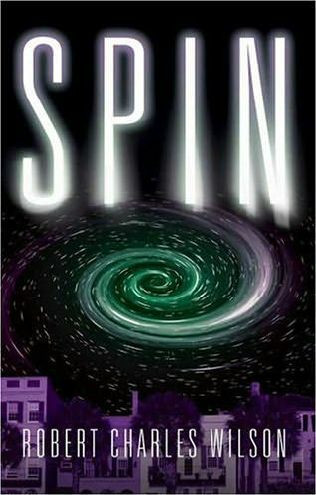
The best science fiction book I read last year was Robert Charles Wilson’s Hugo-award winning novel, Spin. As I said on the blog a few weeks ago:

On the whole, I really REALLY enjoyed this book. I thought it was an extremely human look at a near future where people were confronted with a technological event far beyond anything people in the world are capable of doing. I am not surprised it received the Hugo and think it will be considered a top SF book for a while. The ending was a little frustrating because I wanted to see what would happen next, but I also consider the ending to be appropriate.

The best collection, perhaps the best overall fantasy book I read last year was Jeffrey Ford’s The Empire of Ice Cream. The book contains award-winning stories, which is becoming par for the course with Mr. Ford’s collections. Here’ what I said back in Novermber:

I don’t know if this collection is better than his previous World Fantasy Award winning collection, The Fantasy Writer’s Assistant, but it isn’t any lesser a collection. What we have here is a writer unrestrained by bounds of genre and imagination. Jeffrey Ford’s writing has such an authenticity about it, you cannot help but trust that the stories he tells have a ring of truth to them. More importantly, you want to believe them as real and year for the next stories to be told.

Every year has it fair share of debut novelists, the three whose work most connected with me were Joe Hill’s Heart-Shaped Box, Joe Abercrombie’s The Blade Itself, and the “hot new star” Patrick Rothfuss’s The Name of the Wind. I reviewed both of these for SFFWorld. Here’s a snippet from my review of Heart-Shaped Box:

Where the story transcends both the genre and just being a “good story” is how effectively Joe Hill puts forth the reality of Jude’s situation. One gets the sense that the story could be an episode of VH1’s Behind the Music after taking a very dark turn. Even though Jude is a living legend of an almost Ozzy Osbourne status, Hill paints a picture of a real man haunted by his past and current demons.

Here's a snippet of what I said about The Blade Itself when Pyr delivered the book to US readers:

I thought the novel started a bit slow, I was thinking all the hype surrounding the book upon its UK release last year was going to leave me disappointed. It has happened with other books in the past for me. Thankfully, Abercrombie’s story, and more convincingly, his characters pulled me into the story unheeded. ... Abercrombie is a damned frustrating writer. He writes so well and his story is so infectious it is difficult to stop reading and even thinking about the layers of his story and world.


From The Name of the Wind (which I was lucky enough to read before much of the hype took hold of the book):

Where will The Name of the Wind stand at year’s end and over the next few years in the genre? At least for this year, Rothfuss has set the bar very high for any other author publishing their first novel in 2007. As for where the book will stand in the years to come, it will likely stand as the start of one of the bright careers in fantasy fiction. Suffice it to say, the book is very good and has all the elements of greatness – characters with which the reader can empathize, a fascinating backdrop where these characters live, and the key ingredient: leaving the reader wanting for more. Since this is just the first book in a trilogy, that want will be met.

Though not a new author, I came across her work for the first time in 2007 and the book turned out to be the Science Fiction novel I enjoyed the most, Bright of the Sky by Kay Kenyon.

With a rich and vivid setting, peopled with believable and sympathetic characters and fascinating aliens, Kay Kenyon has launched an impressive saga with Bright of the Sky. My only criticism involves some of the scenes where the narratives point of view character switches from Quinn to those who interact with him in the Entire. The transitions aren’t entirely smooth and I found myself re-reading passages to be sure to whom the words were being attributed. These scenes were very few, but did jar the otherwise smooth and quick pace of the story. That said, Bright of the Sky, like the best novels opening a larger sequence, balances closure with open plot strands.

Scott Lynch’s second book was just as good as his first. This is not surprising because he made Locke Lamora and Jean pirates. I loved the dialogue and interplay betwixt the two and really liked the non-straightforward timeline Lynch used to tell the story in Red Seas Under Red Skies.
As sequels go, Red Seas Under Red Skies is fabulous and a more accomplished, more tightly written novel than its predecessor. Considering what a top notch job Lynch did with his debut, this is impressive. As importantly, Red Seas Under Red Skies doesn’t work so bad as an introduction to the Gentleman Bastards. I found myself smiling throughout most of the book, grinning at the dialogue, and riding right along with Jean and Locke on their pirate adventure. At its heart, Red Seas Under Red Skies is pure fun.

Even though I knew the events that form the backdrop of the book, Buster Olney’s The Last Night of the Yankees Dynasty was a superb book. Being a Yankees fan for the past 30+ years, I’ve followed the team through ups and downs, and none were more “up” than the championship run at the turn of the Century. Even knowing much of the outcome, Olney managed to keep my glued to every word on the page.

The Author I rediscovered in 2007 was Steven Erikson. I’m still slowly making my way through the Malazan Book of the Fallen, but the saga took hold of me fully in the summer of 2007 when I read the first two books whilst serving Jury Duty in May and June.

Another series I rediscovered, after breezing through much of it a few years ago, was Steven Brust’s Vlad Taltos series. Specifically, the latest book, Dzur, which I liked very much.Other books that stood out for me were Peter David’s
Darkness of the Light, Tobias Buckell’s Ragamuffin, David Anthony Durham’s Acacia Book I, and the two books in Brandon Sanderson’s Mistborn trilogy.

I also read a couple of stinkers last year, David Keck’s In the Eye of Heaven. The book seems to be somewhat polarizing, I’m in the camp that didn’t care much for it. Gail Z. Martin’s The Summoner didn’t work for me either, I couldn’t even finish the book. I hate when that happens, but buy the halfway point, nothing worked for me and I felt it was a story I read many times before with more originality. Brian Ruckley’s
Winterbirth didn’t work so well for me either, I just couldn’t find anything in the story about which to care. The book, coincidentally, is the January 2008 Fantasy Book Club of the Month at SFFWorld, others have reacted differently than I did. The most disappointing; however, was Robin Hobb’s Forest Mage. I love Hobb’s writing, but this story angered my like almost no other book I’ve read.

So that’s it, the brief summary of the highlights and lowlights of my 2007 readings.

Wednesday, January 02, 2008

Happy New Year

In what has become something of a Christmas/New Year’s tradition in the Blog o’ Stuff household I watched The Lord of the Rings trilogy. As much as I love the movies, and know how the story ends, all those fade to blacks at the end of Return of the King set one up to think the film has ended. To keep the Tolkien theme in mind, I read The Children of Húrin yesterday. The story reminded me of a Greek Tragedy, in both style and theme Tolkien employed to tell the story as well as the grandeur and power. Though I read it over a day or two, the story is still resonating with me.

Yesterday, aside from the first day of 2008, was also the first NHL Winter Classic. Even though I probably would have had a difficult time seeing the game from the stadium seats, it would have been very cool to be there. It was a solid game with an ending the NHL couldn’t have scripted any better, with the Kid scoring the winning goal in a shootout. I would love to see this become an annual tradition, with perhaps a game in New Yankees Stadium in 2009 or a game in Pittsburgh, or in RFK Stadium with some rotating teams. Maybe the previous Stanley Cup champion being involved in the game, though having the Anaheim Ducks as the host tem would kind of defeat the purpose.

The first day of 2008 was a busy day, as it turned out; I posted my latest review, The Solaris Book of New Fantasy edited by George Mann. I liked the majority of the stories and may pick up their New Book of Science Fiction. In addition, we jiggered up the front page of SFFWorld yesterday.

Sunday, December 23, 2007

Metatemporally a Merry Christmas!

Hobbit / Mark posted the second part of the 2007 Round up by Adam/Werthead, Deornoth/Graeme, Robert/Cervantor, and Aidan/'al Kael, Mark and myself. The first part resulted in a great discussion at SFFWorld, I hope this part does the same. While the focus of the first part was Fantasy, in the second, we turn our attention to Science Fiction, Films, and Comic books. Admittedly, the latter two don't receive as much attention at SFFWorld, but are worth disucssing.
Don't forget to vote for your favorite 2007 at SFFWorld!

Also up at SFFWorld is my latest review, The Metatemporal Detective. I couldn't help posting the awesome cover by John Picacio, which more than many of the covers of the boosk I've recently read, captures the feel of the book so well.

John's one of the top artists in the field right now and it is no mistake that his covers have graced a good number of books by Pyr. John also has done great covers for Jeffrey Ford's two collections from Golden Gryphon books and he recently posted the three covers to the Golden Gryphon versions of Jeff Ford's spectacular Well-Built City trilogy


Merry Christmas to all! Happy Christmas to all!


Sunday, December 16, 2007

SFFWorld's 2007 Reader's Poll & Spin

Over at SFFWorld.com, we are running our annual member poll for favorite reads of 2007.

Hobbit also posted the first part of SFFWorld's annual review., wherein we discuss the books, authors, films, and events in Speculative Fiction. In the past, it was just Hobbit and I who put this thing together. This year we invited some of the regular visitors/bloggers from the forum: Adam/Werthead (http://thewertzone.blogspot.com/), Deornoth/Graeme (http://www.graemesfantasybookreview.com/), Robert/Cervantor (http://fantasybookcritic.blogspot.com/), and Aidan/'al Kael (http://www.aidanmoher.com/blog/).

I finished Robert Charles Wilson's Spin a couple of days ago, and had it fit the eligibility rules we set in place, I might have given it one of my top spots. This book was as good as everybody said it was, not the least of whom are Stephen King and the people who awarded it the Hugo award.

This was an epic book filled with human, well drawn characters who had to deal with earth-shattering (or rather earth-encompassing) events. Diane (the primary female character) seemed to get a bit of the short end of the stick, compared to the other two characters. I think that is mainly due to the smaller amount of screen time given to her character compared to Jase (her brother) and Tyler (narrator/protagonist). That being said, her character in its absences, still exhibited a certain power that neither Jase or Tyler did.

I think the title was a metaphor of sorts, and maybe an inverse metaphor. People are constantly told to stop and not let the world pass by them. In this case the world was stopped and the life, the universe, and everything nearly passed by us. Or so it seemed for much of the novel. I also saw the metaphor of how the story began and ended, for the most part, at the same location.

The political climate RCW depicted seemed very accurately presented. However, we didn't quite get to see the everyman's point of view of what happened. I suppose Tyler was intended to fit this role to a degree, but being the best friend of one of the most powerful men on the planet isn't so everyman.

On the whole, I really REALLY enjoyed this book. I thought it was an extremely human look at a near future where people were confronted with a technological event far beyond anything people in the world are capable of doing. I am not surprised it received the Hugo and think it will be considered a top SF book for a while. The ending was a little frustrating because I wanted to see what would happen next, but I also consider the ending to be appropriate.

The only other novel I've read by RCW is Darwinia, which I also enjoyed. The ending "event" reminded me of that novel. I will be picking up Axis, as well as some of his other backlist titles, as if I don't have enough unread books on the shelf.

Monday, December 10, 2007

Eye of Heaven, Wheel of Time

Seems I'm on a good-bad-good-bad streak with the books I've been reading lately. The latest review up at SFFWorld is a bad one, David Keck's In the Eye of Heaven. When the book first published last year, there was mostly positive buzz, with a couple of naysayers mixed in the buzz. Through most of the book, I was unable to care about the protagonist and what happned to him or any of the characters. Read the review for more. I told Pat this would be another book about which we would disagree.

In bigger news, of course is that Brandon Sanderson will be writing the last and concluding volume of The Wheel of Time. From what I've seen Sanderson really is becoming something of an heir apparent at Tor. He is finishing up the Mistborn series, plus I think he is contracted for another trilogy (or is it duology?) with Tor. His Mistborn novels, at least the first two, I found to be very solid. The guy, from all accounts, is a pro and churns out books at a very impressive pace. That said, there will of course be Jordan fans who won't be happy with this. Either way, I'm glad for Brandon and think Tor made a smart choice on this one.

Tuesday, December 04, 2007

Aliens, Assassins, and a new Arena

My latest review, Fleet of Worlds by Larry Niven and Edward M. Lerner is now up at SFFWorld. This was my introduction to Niven's Ringworld saga, as well as his novel-length fiction. I liked it quite a bit, have others read this and I'm interested to read how it stacks up against his other fiction, both the Ringworld novels and others.

Another very good book I just finished was Steven Brust's most recent Vlad Taltos novel, Dzur. I've been following Brust's witch-assasin and dragon-like familiar since Ace books decided to repackage his early novels in a few nifty omnibus volumes. It has been a few years since I last read one of the Vlad Taltos novels (Issola, to be precise) and I nearly forgot how much fun I have listening to Vlad, er rather Brust, tell me stories.


Brust is a solid writer who should be getting more recognition and deserves a larger readership. When I read The Lies of Locke Lamora last year that something about Lynch's writing reminded me of Brust, not surpising considering both writer's protagonists are known for prodigiously sticking knives in people. That connection came even more strong after reading Dzur. So I can only HIGHLY recommend that people check out Brust's Taltos novels while waiting for the next Lynch book, starting with The Book Of Jhereg (the first Taltos omnibus) or Jhereg (the first Taltos novel).

Brust has acknowledged that his writing was influenced by Roger Zelazny and is an admitted fan of the legend's writing. Much of the plot Zelazny' Amber stories takes place through the conversations of the story's characters, Brust's Taltos novels are as well.

Outside of the Vlad Taltos novels, Brust "reimagined" Satan's revolt in Heaven in the entertaining To Reign in Hell. Brust also wrote a very well received vampire novel, Agyar as well as a collaboration with Emma Bull and one with Megan Lindholm.

Though not explicitly part of the Vlad Taltos series, Brust wrote a few books that take place in the Dragaeran empire, which is the setting for the Taltos novels. Collectively, these are known as the Khaavren Romances and are comprised of The Phoenix Guards, Five Hundred Years After, and The Viscount of Adrilankha, (published in three volumes: The Paths of the Dead, The Lord of Castle Black, and Sethra Lavode).

Like I said, Brust has been writing for a while and should definitely not be lost in the shuffle (so to speak) of all the new emerging writers.

For more information check out his Wikipedia entry.

I enjoyed my first NJ Devils game at the new Prudential Center on Friday. It, of course, didn't hurt that the Devils won 4-0 and Zach Parise got a Hat Trick. The arena is great looking, easy to get to via train and a VAST improvement over the Meadowlands. The seats are a bit small, but the design of everything, the Red/Black color scheme, and stylish concourse/entrance is really awesome.

Wednesday, November 28, 2007

Forest Mage, or the Slacker Protagonist

Yesterday, I closed up what is possibly the most frustrating book I've read in the past few years, Forest Mage by Robin Hobb. Frustrating that the writing itself was good and parts of the story sucked me in, which contrasts with the utter despair at the hopelessness of protagonist Nevare's character. Frustrating because I've come to expect the good writing, and even the passivity of the slacker protagonist, but here it was almost too much to bear. Frustrating because I hold Hobb’s earlier works in such high regard, a measuring stick by which I compare other writers.

I agree with much of what is said in the SFFWorld forum topic about the book: 200 pages of this novel amounted to a constant reminder of how fat Nevare had become. I felt browbeaten into submissive into beliefy. Much of the novel (maybe 50 pages worth even) was Nevare constantly saying "I don't know what to do" or some similar phrase. Basically, far too much of the obvious being hinted at without stating the obvious.

Many readers have complained that Fitz (from the Farseer and Tawny Man trilogies) was something of a dullard. I hope for their sake, they never read this book. Nevare's outright stubborn insistence on doing absolutely nothing was also frustrating. Am I the only one who was thinking from about the first third of the novel that he could have gone to Epiny for assistance with his magic? It is almost as if Nevare forgot that she helped in the prevoius novel.

Watching Nevare persist in doing nothing for himself other than accept the meagerness thrown at him rather than be proactive was akin to driving slowly past a horrific car wreck. You don't want to look and see the blood and death, but part of you is fascinated by it, while the other part wants to see the reason for their delay. I don't know if that is a compliment, but that quality about the story did keep me reading, and fervently at that.

I don't even think there was a good case to support either sides of the conflict (Specks vs. Gernians). Both sides are callous in their approach to the other side and nothing compels me to truly give a rat’s ass which side “wins.” I; however, suspect neither will win.

On the converse side, I would attribute much of Nevare's despair and hesitance to act as a result of his un-acceptance of the magic. To me, this novel could have been trimmed considerably; it would have been a stronger novel, without the browbeating. I get the sense that perhaps this "trilogy" with some judicious (and often needed) editing, could have been a more powerful duology.

In the end I was very compelled (almost as addictively as Nevare's eating compulsion) to read through to the end, and to even want to read the final installment. What is also frustrating is that it took Nevare so long to finally take some sort of stand and do something. Unfortunately this happens in the last handful of pages and the novel ends on a cliffhanger.

Will I read the final book? Probably, I am a completist and a big fan of Hobb. I am also curious if this story would have indeed read as well (or better) as a duology.

Sure, I know this book was published over a year ago here in the US and before that in the UK, but I couldn’t not drop a post about the book here.