Since this is the first big batch of arrivals for 2010 (thanks to the Penguin imprints), I figured I'd include one of the regular explanations for these posts.
As a reviewer for SFFWorld and maybe because of this blog, I receive a lot of books for review from various publishers. Since I can't possibly read everything that arrives, soI figure the least I can do (like some of my fellow bloggers) is mention those what arrives for review on the blog to at least acknowledge the books even if I don't read them.
Sometimes I get one or two books, other weeks I'll get nearly a dozen books. Sometimes I'll want to read everything that arrives, other weeks, the books immediately go into the "I'll never read this book" pile, while still others go into the nebulous "maybe-I'll-read-it-category." More often than not, it is a mix of books that appeal to me at different levels. This is one such week as some books I will unhesitatingly read while others go to the discard/never read pile without a second thought.
So, without further ado, here are the books that reached my doorstep/mailbox/landed-in-front-of-the-garage this past week:
 Flight into Darkness (Alchymist's Legacy #2) by Sarah Ash (Ace, Mass Market Paperback 1/26/2010) – I read Ash’s Lord of Snow and Shadows a few years ago and thought it OK. This book is the second in a trilogy
As an impulsive young man, Rieuk Mordiern accidentally freed Azilis, a guardian spirit charged with keeping the balance between the kingdoms of the living and the dead. Now Rieuk’s sole purpose is to bring Azilis back—only she doesn’t want to return. Instead she has attached herself to a very talented mortal, the renowned singer Celestine—becoming, as Celestine believes, her personal guardian.
Celestine has never needed a guardian more. Her desire for revenge against the people who consigned her magician father to the flames is leading her down a dangerous path. And chaos is growing. Seven daemons from another realm are now threatening to lay siege to the mortal world. Now both Rieuk and Celestine must discover what it means to truly be a hero.
 The Adamantine Palace (Memory of Flames #1) by Stephen Deas (Roc, Hardcover 02/02/2010) – Mark/Hobbit read this and really enjoyed in 2008, a few months before the book was released in the UK. In fact, part of his review is blurbed on the back cover! “There are a lot of pleasing qualities with this debut novel. Though the tropes are not particularly new, it’s very well done. The life cycle of a dragon is quite different and suggests some interesting concepts. Above all, the book is engaging from the start, with the reader is drawn into the High Fantasy trappings very quickly – unrest and power struggles in the monarchy, life amongst the lowlife servant culture is soon to be altered forever and so on – and the pages kept turning very quickly after that.”
The power of the Realms depends on its dragons. With their terrifying natures, they are ridden by the aristocracy and bred for hunting and war. But as dangerous political maneuverings threaten the complacency of the empire, a single dragon has gone missing. And even that one dragon-returned to its full intelligence and fury-could spell disaster for the Realms...
 Unknown (Outcast Season Book 1) by Rachel Caine (Roc Mass Market Paperback 02/02/2010) – The second novel in prolific writer Rachel Caine’s series of novels begun withUndone
Second in the new series from the New York Times bestselling author
Living among mortals, the djinn Cassiel has developed a reluctant affection for them-especially for Warden Luis Rocha. As the mystery deepens around the kidnapping of innocent Warden children, Cassiel and Luis are the only ones who can investigate both the human and djinn realms. But the trail will lead them to a traitor who may be more powerful than they can handle...
Unperfect Souls (Convergent World Book 4) by Mark Del Franco (Ace Mass Market Paperback 02/02/2010) – Fourth book in Gaelic-flavored series reminiscent of The Dresden Files. - In the Boston neighborhood known as the Weird, a decapitated body floats out of the sewer, and former Guild investigator Connor Grey uncovers a conspiracy that may bring down the city's most powerful elite. As the violence escalates, Connor is determined to stop it-with help from one of the most dangerous beings of Faerie. Even if it means unleashing the darkness that burns within him.
Shadows Past (A Borderlands novel) by Lorna Freeman (Roc, Mass Market Paperback 02/02/2010) – This is the third book in a series, of which I haven’t read the first two. Rabbit is struggling to make sense of his new powers and his new position as King Jusson's heir when a man once scorned by his mother comes seeking retribution-and demands that Rabbit marry his daughter...
 Wings of Wrath (Magister Trilogy Book 2) by C. S. Friedman (DAW Mass Market 02/02/2010)– This is the mass market paperback of the Hardcover I read and reviewed last year, and this version of the book includes a blurb of the review. I liked the book a lot and I’m looking forward to book 3. Here’s a brief from my review: An element I’ve enjoyed in all of Ms. Friedman’s novels is her ability to give weight to both sides of a conflict. In Feast of Soul, the Souleaters were monsters out of legend associated with only death and destruction. Here in Wings of Wrath, more background is given to these creatures and their history, which gives the beginning hints of a rational perspective to their existence. A Great Secret may lie at the heart of what they are (perhaps not unlike the world of Erna in her Coldfire Trilogy) but the hints of such a secret may just be teases of What Could Be rather than What Is.
Another strong aspect of the novel is how much of accepted faith is challenged throughout. Kamala as a female Magister (something historically forbidden) is perhaps the best example of this, but faith in the Gods of the world is also challenged. As a Guardian of the Wrath, Rhys has always accepted the role Gods play in setting the world as it is. Events occur which utterly shake his foundation in this faith. At times, he questions himself, but also struggles with whether or not he should share the knowledge which led to this crumble in his foundation of faith with others.
While this second volume isn’t plotted quite as tightly as Feast of Souls, Friedman still manages to keep the dramatic tension quite high throughout. The best scenes involve Kamala, for she is an enigma and something that really shouldn’t exist according to the history of the world in the novels. Characters who were hinted at or seemed only placeholders, in a very welcome move, come more into play in this volume and the society of the Magisters shifts a bit into the background.
 A Girl's Guide to Guns and Monsters edited by Martin H. Greenberg and Kerrie Hughes and (DAW, Mass Market Paperback 02/02/2010) – The February 2010 monthly DAW anthology is exactly what it says on the tin. At least this cover is a bit more tame than the last one this duo edited although it looks like every other cover urban fantasy/tough chick book.
Brilliant, original sci-fi and fantasy stories featuring brave and bold heroines
Thirteen urban and paranormal tales of strong women, armed with weapons they are not afraid to use, as well as fists and feet of fury, who face monsters and bad guys-and are not above rescuing men in the process.
 Brooklyn Knightby C.J. Henderson (Tor , Trade Paperback 01/18/2010) – This looks to be the first in a Dresden-y urban fantasy series involving arcane objects and museums
Professor Piers Knight is an esteemed curator at the Brooklyn Museum and is regarded by many on the staff as a revered institution of his own if not an outright curiosity. Knight’s portfolio includes lost civilizations; arcane cultures, languages, and belief; and more than a little bit of the history of magic and mysticism.What his contemporaries don't know is that in addition to being a scholar of all things ancient he is schooled in the uses of magical artifacts, the teachings of forgotten deities, and the threats of unseen dangers.
If a mysterious object surfaces, Professor Knight makes it his job to figure it out--and make sure it stays out of dangerous hands.
A contemporary on an expedition in the Middle East calls Knight's attention to a mysterious object in the collection of the Brooklyn Museum … just before it becomes the target of a sorcerous attack that leads to a siege on a local precinct house by a fire elemental.
What looks like an ordinary inscribed stone may unlock an otherworldly Armageddon that certain dark powers are all too eager to bring about--and only Piers Knight stands in their way.
 State of Decay (Revivors) by James Knapp (Ace Mass Market Paperback 02/02/2010) – This is the ‘final’ book of an ARC I received back in October.
Just because you're dead doesn't mean you're useless...
A thrilling debut novel of a dystopian future populated by a new breed of zombie
They call them revivors-technologically reanimated corpses-and away from the public eye they do humanity's dirtiest work. But FBI agent Nico Wachalowski has stumbled upon a conspiracy involving revivors being custom made to kill-and a startling truth about the existence of these undead slaves.
 Hespira (A Tale of Hengis Hapthorn) by Matthew Hughes (Nightshade Books, Hardcover 01/12/2010) – Hughes has been publishing stories in the age set just before Vance’s Dying Earth. The Hengis Hapthorn series blends mystery with Science Fantasy and has received some nice praise. I’ve been wanting to read him for a while and now I’ve got the opportunity, this is the third book in the series.
Sherlock Holmes meets Jack Vance's Dying Earth in Hespira, the new novel from Matthew Hughes, acclaimed author of Majestrum, The Spiral Labyrinth, and The Gist Hunter and Other Stories.
As magic continues to reassert its ancient dominion, replacing rationalism as the fundamental underpinning of the universe, Old Earth's foremost freelance discriminator, Henghis Hapthorn, and his intuition (now a separate person named Osk Rievor) are living apart, though they remain on good terms.
But now into Hapthorn's life comes a woman of mystery. Who is Hespira? Who has sent her to lure Hapthorn on a quest across the Ten Thousand Worlds? And to what final, fateful choice will she bring him?
 Spiral Labyrinth (A Tale of Hengis Hapthorn)by Matthew Hughes (Nightshade Books, Trade Paperback October 2008) – What I said about Hughes and these Hengis Hapthorn books equally applies to this title, the second in the series.
It was bad enough when Henghis Hapthorn, Old Earth's foremost discriminator and die-hard empiricist, had to accept that the cosmos was shortly to rewrite its basic operating system, replacing rational cause-and-effect with detestable magic. Now he finds himself cast forward several centuries, stranded in a primitive world of contending wizards and hungry dragons, and without his magic-savvy alter ego. Worse, some entity with a will powerful enough to bend space and time is searching for him through the Nine Planes, bellowing "Bring me Apthorn!" in a voice loud enough to frighten demons.
 Star Wars: Crosscurrent by Paul S. Kemp (Del Rey, Mass Market Paperback 1/26/2010) – Kemp is a very good storyteller who wrote some very novels set in the Forgotten Realms. It will be interesting to see how well this translates to the Star Was universe and I have pretty high hopes.
An ancient Sith ship hurtles into the future carrying a lethal cargo that could forever destroy Luke Skywalker’s hopes for peace.
The Civil War is almost over when Jedi Knight Jaden Korr experiences a Force vision so intense he must act. Enlisting two salvage jocks and their ship, Jaden sets out into space. Someone—or something—appears to be in distress.
But what Jaden and his crew find confounds them. A five-thousand-year-old dreadnaught—bringing with it a full force of Sith and one lone Jedi—has inadvertently catapulted eons from the past into the present. The ship’s weapons may not be cutting-edge, but its cargo, a special ore that makes those who use the dark side nearly invincible, is unsurpassed. The ancient Jedi on board is determined to destroy the Sith. But for Jaden, even more is at stake: for his vision has led him to uncover a potentially indestructible threat to everything the Jedi Order stands for.
 Heretics (Apotheosis Book Two) by S. Andrew Swann (DAW Mass Market Paperback 02/02/2010) – Swann has been writing for quite some time with about 15 novels to his credit. His Prophets (I’m even blurbed on the back!) and listed Mr. Swann as one of my Favorite ‘New To Me’ Author(s) of 2009 so I’ve been looking forward to this book.
The second volume in the long awaited sequel of the Hostile Takeover Trilogy.
After the events of Prophets, the human universe is on the brink of war while, eighty light years away, a being called Adam has arisen to set into motion an attack that has been centuries in the making. Should he succeed, he will rule all of humanity, and all sentient life, as a God.
Only a few know the truth of what is coming. But even with the aid of some unexpected allies, does the human race have any hope of resisting this seemingly omnipresent and omniscient entity?
 City of Night (The House Wars Book 2) by Michelle West (DAW Hardcover 02/02/2010) – Sequel in a series, which is itself part of a larger series.
Demonic activity has escalated in both the Undercity and the mortal surface level city as the worshipers and servants of the Lord of the Hells strive to complete the rituals that will return their god to the mortal realm. As Rath joins with mages and the Twin Kings' agents to wage a secret battle against this nearly unstoppable foe, he gives Jewel Markess and her den of orphans the opportunity to escape the chaos by providing them with a note of introduction to the head of House Terafin, where Jewel will discover her destiny.
 Except the Queen (Esther Diamond #2) by Jane Yolen and Midori Snyder (Roc, Hardcover 02/02/2010) –Yolen is a living legend and Snyder is an accomplished writer in her own right. Here, they’ve teamed up to craft an urban fantasy.
From award winning authors Jane Yolen and Midori Snyder comes a tale of two worlds-and one destiny...
Sisters Serena and Meteora were once proud members of the high court of the Fairy Queen- until they played a prank that angered her highness. Separated and banished to the mortal realm of Earth, they must find a way to survive in a strange world in which they have no power. But there is more to their new home than they first suspect...
A sympathetic Meteora bonds with a troubled young girl with an ornate tattoo on her neck. Meteora recognizes it as a magic symbol that will surely bring danger down on them all. Serena, meanwhile, takes in a tortured homeless boy whose mind is plagued by dark visions. The signs point to a rising power that threatens to tear asunder both fairy and human worlds.
And the sisters realize that perhaps the queen cast them from their homes not out of anger or spite- but because they were the only ones who could do what must be done...
As a reviewer for SFFWorld and maybe because of this blog, I receive a lot of books for review from various publishers. Since I can't possibly read everything that arrives, soI figure the least I can do (like some of my fellow bloggers) is mention those what arrives for review on the blog to at least acknowledge the books even if I don't read them.
Sometimes I get one or two books, other weeks I'll get nearly a dozen books. Sometimes I'll want to read everything that arrives, other weeks, the books immediately go into the "I'll never read this book" pile, while still others go into the nebulous "maybe-I'll-read-it-category." More often than not, it is a mix of books that appeal to me at different levels. This is one such week as some books I will unhesitatingly read while others go to the discard/never read pile without a second thought.
So, without further ado, here are the books that reached my doorstep/mailbox/landed-in-front-of-the-garage this past week:
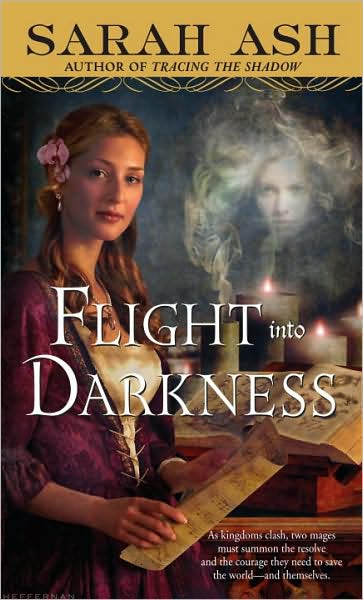 Flight into Darkness (Alchymist's Legacy #2) by Sarah Ash (Ace, Mass Market Paperback 1/26/2010) – I read Ash’s Lord of Snow and Shadows a few years ago and thought it OK. This book is the second in a trilogy
As an impulsive young man, Rieuk Mordiern accidentally freed Azilis, a guardian spirit charged with keeping the balance between the kingdoms of the living and the dead. Now Rieuk’s sole purpose is to bring Azilis back—only she doesn’t want to return. Instead she has attached herself to a very talented mortal, the renowned singer Celestine—becoming, as Celestine believes, her personal guardian.
Celestine has never needed a guardian more. Her desire for revenge against the people who consigned her magician father to the flames is leading her down a dangerous path. And chaos is growing. Seven daemons from another realm are now threatening to lay siege to the mortal world. Now both Rieuk and Celestine must discover what it means to truly be a hero.
 The Adamantine Palace (Memory of Flames #1) by Stephen Deas (Roc, Hardcover 02/02/2010) – Mark/Hobbit read this and really enjoyed in 2008, a few months before the book was released in the UK. In fact, part of his review is blurbed on the back cover! “There are a lot of pleasing qualities with this debut novel. Though the tropes are not particularly new, it’s very well done. The life cycle of a dragon is quite different and suggests some interesting concepts. Above all, the book is engaging from the start, with the reader is drawn into the High Fantasy trappings very quickly – unrest and power struggles in the monarchy, life amongst the lowlife servant culture is soon to be altered forever and so on – and the pages kept turning very quickly after that.”
The power of the Realms depends on its dragons. With their terrifying natures, they are ridden by the aristocracy and bred for hunting and war. But as dangerous political maneuverings threaten the complacency of the empire, a single dragon has gone missing. And even that one dragon-returned to its full intelligence and fury-could spell disaster for the Realms...
 Unknown (Outcast Season Book 1) by Rachel Caine (Roc Mass Market Paperback 02/02/2010) – The second novel in prolific writer Rachel Caine’s series of novels begun withUndone
Second in the new series from the New York Times bestselling author
Living among mortals, the djinn Cassiel has developed a reluctant affection for them-especially for Warden Luis Rocha. As the mystery deepens around the kidnapping of innocent Warden children, Cassiel and Luis are the only ones who can investigate both the human and djinn realms. But the trail will lead them to a traitor who may be more powerful than they can handle...
Unperfect Souls (Convergent World Book 4) by Mark Del Franco (Ace Mass Market Paperback 02/02/2010) – Fourth book in Gaelic-flavored series reminiscent of The Dresden Files. - In the Boston neighborhood known as the Weird, a decapitated body floats out of the sewer, and former Guild investigator Connor Grey uncovers a conspiracy that may bring down the city's most powerful elite. As the violence escalates, Connor is determined to stop it-with help from one of the most dangerous beings of Faerie. Even if it means unleashing the darkness that burns within him.
Shadows Past (A Borderlands novel) by Lorna Freeman (Roc, Mass Market Paperback 02/02/2010) – This is the third book in a series, of which I haven’t read the first two. Rabbit is struggling to make sense of his new powers and his new position as King Jusson's heir when a man once scorned by his mother comes seeking retribution-and demands that Rabbit marry his daughter...
 Wings of Wrath (Magister Trilogy Book 2) by C. S. Friedman (DAW Mass Market 02/02/2010)– This is the mass market paperback of the Hardcover I read and reviewed last year, and this version of the book includes a blurb of the review. I liked the book a lot and I’m looking forward to book 3. Here’s a brief from my review: An element I’ve enjoyed in all of Ms. Friedman’s novels is her ability to give weight to both sides of a conflict. In Feast of Soul, the Souleaters were monsters out of legend associated with only death and destruction. Here in Wings of Wrath, more background is given to these creatures and their history, which gives the beginning hints of a rational perspective to their existence. A Great Secret may lie at the heart of what they are (perhaps not unlike the world of Erna in her Coldfire Trilogy) but the hints of such a secret may just be teases of What Could Be rather than What Is.
Another strong aspect of the novel is how much of accepted faith is challenged throughout. Kamala as a female Magister (something historically forbidden) is perhaps the best example of this, but faith in the Gods of the world is also challenged. As a Guardian of the Wrath, Rhys has always accepted the role Gods play in setting the world as it is. Events occur which utterly shake his foundation in this faith. At times, he questions himself, but also struggles with whether or not he should share the knowledge which led to this crumble in his foundation of faith with others.
While this second volume isn’t plotted quite as tightly as Feast of Souls, Friedman still manages to keep the dramatic tension quite high throughout. The best scenes involve Kamala, for she is an enigma and something that really shouldn’t exist according to the history of the world in the novels. Characters who were hinted at or seemed only placeholders, in a very welcome move, come more into play in this volume and the society of the Magisters shifts a bit into the background.
 A Girl's Guide to Guns and Monsters edited by Martin H. Greenberg and Kerrie Hughes and (DAW, Mass Market Paperback 02/02/2010) – The February 2010 monthly DAW anthology is exactly what it says on the tin. At least this cover is a bit more tame than the last one this duo edited although it looks like every other cover urban fantasy/tough chick book.
Brilliant, original sci-fi and fantasy stories featuring brave and bold heroines
Thirteen urban and paranormal tales of strong women, armed with weapons they are not afraid to use, as well as fists and feet of fury, who face monsters and bad guys-and are not above rescuing men in the process.
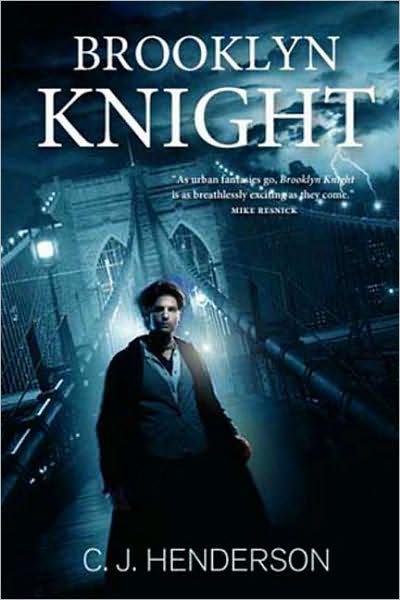 Brooklyn Knightby C.J. Henderson (Tor , Trade Paperback 01/18/2010) – This looks to be the first in a Dresden-y urban fantasy series involving arcane objects and museums
Professor Piers Knight is an esteemed curator at the Brooklyn Museum and is regarded by many on the staff as a revered institution of his own if not an outright curiosity. Knight’s portfolio includes lost civilizations; arcane cultures, languages, and belief; and more than a little bit of the history of magic and mysticism.What his contemporaries don't know is that in addition to being a scholar of all things ancient he is schooled in the uses of magical artifacts, the teachings of forgotten deities, and the threats of unseen dangers.
If a mysterious object surfaces, Professor Knight makes it his job to figure it out--and make sure it stays out of dangerous hands.
A contemporary on an expedition in the Middle East calls Knight's attention to a mysterious object in the collection of the Brooklyn Museum … just before it becomes the target of a sorcerous attack that leads to a siege on a local precinct house by a fire elemental.
What looks like an ordinary inscribed stone may unlock an otherworldly Armageddon that certain dark powers are all too eager to bring about--and only Piers Knight stands in their way.
 State of Decay (Revivors) by James Knapp (Ace Mass Market Paperback 02/02/2010) – This is the ‘final’ book of an ARC I received back in October.
Just because you're dead doesn't mean you're useless...
A thrilling debut novel of a dystopian future populated by a new breed of zombie
They call them revivors-technologically reanimated corpses-and away from the public eye they do humanity's dirtiest work. But FBI agent Nico Wachalowski has stumbled upon a conspiracy involving revivors being custom made to kill-and a startling truth about the existence of these undead slaves.
Hespira (A Tale of Hengis Hapthorn) by Matthew Hughes (Nightshade Books, Hardcover 01/12/2010) – Hughes has been publishing stories in the age set just before Vance’s Dying Earth. The Hengis Hapthorn series blends mystery with Science Fantasy and has received some nice praise. I’ve been wanting to read him for a while and now I’ve got the opportunity, this is the third book in the series.Sherlock Holmes meets Jack Vance's Dying Earth in Hespira, the new novel from Matthew Hughes, acclaimed author of Majestrum, The Spiral Labyrinth, and The Gist Hunter and Other Stories.
As magic continues to reassert its ancient dominion, replacing rationalism as the fundamental underpinning of the universe, Old Earth's foremost freelance discriminator, Henghis Hapthorn, and his intuition (now a separate person named Osk Rievor) are living apart, though they remain on good terms.
But now into Hapthorn's life comes a woman of mystery. Who is Hespira? Who has sent her to lure Hapthorn on a quest across the Ten Thousand Worlds? And to what final, fateful choice will she bring him?
 Spiral Labyrinth (A Tale of Hengis Hapthorn)by Matthew Hughes (Nightshade Books, Trade Paperback October 2008) – What I said about Hughes and these Hengis Hapthorn books equally applies to this title, the second in the series.
It was bad enough when Henghis Hapthorn, Old Earth's foremost discriminator and die-hard empiricist, had to accept that the cosmos was shortly to rewrite its basic operating system, replacing rational cause-and-effect with detestable magic. Now he finds himself cast forward several centuries, stranded in a primitive world of contending wizards and hungry dragons, and without his magic-savvy alter ego. Worse, some entity with a will powerful enough to bend space and time is searching for him through the Nine Planes, bellowing "Bring me Apthorn!" in a voice loud enough to frighten demons.
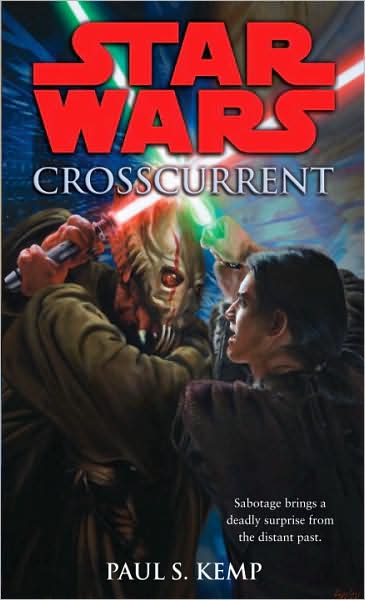 Star Wars: Crosscurrent by Paul S. Kemp (Del Rey, Mass Market Paperback 1/26/2010) – Kemp is a very good storyteller who wrote some very novels set in the Forgotten Realms. It will be interesting to see how well this translates to the Star Was universe and I have pretty high hopes.
An ancient Sith ship hurtles into the future carrying a lethal cargo that could forever destroy Luke Skywalker’s hopes for peace.
The Civil War is almost over when Jedi Knight Jaden Korr experiences a Force vision so intense he must act. Enlisting two salvage jocks and their ship, Jaden sets out into space. Someone—or something—appears to be in distress.
But what Jaden and his crew find confounds them. A five-thousand-year-old dreadnaught—bringing with it a full force of Sith and one lone Jedi—has inadvertently catapulted eons from the past into the present. The ship’s weapons may not be cutting-edge, but its cargo, a special ore that makes those who use the dark side nearly invincible, is unsurpassed. The ancient Jedi on board is determined to destroy the Sith. But for Jaden, even more is at stake: for his vision has led him to uncover a potentially indestructible threat to everything the Jedi Order stands for.
 Heretics (Apotheosis Book Two) by S. Andrew Swann (DAW Mass Market Paperback 02/02/2010) – Swann has been writing for quite some time with about 15 novels to his credit. His Prophets (I’m even blurbed on the back!) and listed Mr. Swann as one of my Favorite ‘New To Me’ Author(s) of 2009 so I’ve been looking forward to this book.
The second volume in the long awaited sequel of the Hostile Takeover Trilogy.
After the events of Prophets, the human universe is on the brink of war while, eighty light years away, a being called Adam has arisen to set into motion an attack that has been centuries in the making. Should he succeed, he will rule all of humanity, and all sentient life, as a God.
Only a few know the truth of what is coming. But even with the aid of some unexpected allies, does the human race have any hope of resisting this seemingly omnipresent and omniscient entity?
 City of Night (The House Wars Book 2) by Michelle West (DAW Hardcover 02/02/2010) – Sequel in a series, which is itself part of a larger series.
Demonic activity has escalated in both the Undercity and the mortal surface level city as the worshipers and servants of the Lord of the Hells strive to complete the rituals that will return their god to the mortal realm. As Rath joins with mages and the Twin Kings' agents to wage a secret battle against this nearly unstoppable foe, he gives Jewel Markess and her den of orphans the opportunity to escape the chaos by providing them with a note of introduction to the head of House Terafin, where Jewel will discover her destiny.
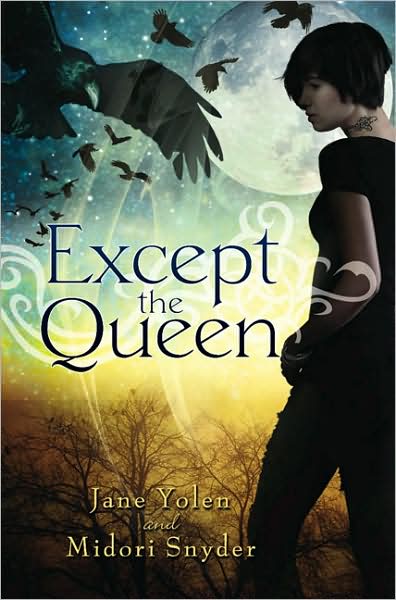 Except the Queen (Esther Diamond #2) by Jane Yolen and Midori Snyder (Roc, Hardcover 02/02/2010) –Yolen is a living legend and Snyder is an accomplished writer in her own right. Here, they’ve teamed up to craft an urban fantasy.
From award winning authors Jane Yolen and Midori Snyder comes a tale of two worlds-and one destiny...
Sisters Serena and Meteora were once proud members of the high court of the Fairy Queen- until they played a prank that angered her highness. Separated and banished to the mortal realm of Earth, they must find a way to survive in a strange world in which they have no power. But there is more to their new home than they first suspect...
A sympathetic Meteora bonds with a troubled young girl with an ornate tattoo on her neck. Meteora recognizes it as a magic symbol that will surely bring danger down on them all. Serena, meanwhile, takes in a tortured homeless boy whose mind is plagued by dark visions. The signs point to a rising power that threatens to tear asunder both fairy and human worlds.
And the sisters realize that perhaps the queen cast them from their homes not out of anger or spite- but because they were the only ones who could do what must be done...