Friday, July 17, 2015

Friday Round-Up: Gladstone & Kurtz @SFFWorld, Anders @SFSignal

Here it is, the Friday Round-up you have all been waiting to read!

A couple of weeks ago, I posted my review of a classic fantasy novel that definitely fits the bill of being “oldie but a goodie.” I refer to Deryni Rising by Katherine Kurtz, books which have long been back-burner books I anticipated reading, but some Twitter conversations with Fred Kiesche, Joe Sherry, Paul Wiemer, and Jonah Sutton-Morse pushed me to get the audible version:


Much of the action presented in the novel takes place in a short time and focuses on a relatively small cast. With Kelson’s coronation looming, he is aided by his father’s close advisor Alaric Morgan and Morgan’s cousin Duncan (a Monsignor). Unfortunately, because of Morgan’s Deryni blood, Brion’s widow Jehanna has no trust for the man who acts as a paternal figure to Kelson and seeks to have him tried for Brion’s murder. People of the Deryni heritage possess magical and psychic powers, causing many to fear them and, over the years, drive them out of Gwynedd. As of Deryni Rising and the years since they’ve been driven out, people of Deryni blood have come to be viewed as something akin to demons.

Despite the novel knocking on the door of the 50-year old mark, Deryni Rising manages to hold its own in terms of tone and style. In other words, for my reading tastes, it has aged quite well and perhaps that is why the novel remains in print and so well-regarded. What also came across, and perhaps this is aided by the wonderful narration performed by Jeff Woodman, is the characterization. His subtle tone and voice changes for each character went a long way in helping to make each character distinct, accentuating the strong characterization imbued by Kurtz herself.

This week, two new reviews were posted, on the same day no less, since they were both officially published on Tuesday, July 14. Let’s go alphabetically, which leads to Nightborn, the second novel in Lou Anders’ Thrones and Bones series for younger readers. I liked this one a lot and breezed through it in a couple of days:


In Nightborn, Anders wonderfully expands both the world and the cast in an organic fashion – the characters are a product of their world and the world is a character in and of itself. Because Karn and Thianna were such well-constructed people in Frostborn, Anders was able to provide a solid foundation for Desstra’s character and her ongoing internal conflict which was primarily who she was becoming versus the cultural expectations placed on her as a member of the Underhand-in-training. As wonderful as Anders infused his Karn and Thiann with life, doubt and believable, youthful humanity, I think he’s done an even more admirable job with Desstra here in Nightborn. Like Karn and his uncle in Frostborn, Desstra struggles under the shadow of a less than savory mentor figure, the selfish and self-centered elf Tanthal.

While Nightborntells a full story within its pages, it seems evident Lou is building something more. He could have easily brought these three characters together and set them on an adventure. But instead, he builds a strong basis for their burgeoning relationship; if they aren’t exactly friends by novel’s end they at least have a good understanding of each other and how their strengths build upon each other and finding out how these characters interact down their adventurous road is something I look forward to reading.

Last, and certainly not least (except that the word “Last” is in the title), is Max Gladstone’s fourth (published, but first chronological) Craft Sequence novel, Last First Snow:


Much of the novel reads like a legal thriller, except that the legality involves a revolutionary and an 8-foot tall skeleton god. That may sound outrageous, but Gladstone makes the premise supremely natural and plausible. The city-state of Dresdiel Lex has not quite recovered from its liberation from the gods, despite their wards still being present. Enter three parties with great interest: The King in Red afore mentioned 10-foot skeletal god (what a simple, effective and cool name with gravitas, and yes, I gave two measurements for him, his size fluctuates); a local figure named Tan Batac; and a holy man named Temoc. A lawyer named Elayne Kevarian tries to keep the peace between the conflicting parties and ensure a peaceful deal can be had.
…
Gladstone keeps the tension high throughout the novel in scenes between the King in Red and Elayne as they try to reach some kind of agreement about what is best for the city. There is also palpable tension in scenes featuring Temoc and his family, especially after the lengths to which he goes in the hopes of securing some kind of peace for the city while striking at the heart of his enemies. Through these characters, Gladstone shows the weight of the changing world on their shoulders, how much a war in the past affects the survivors and informs their every action. Max does a great job of setting a relatively measured pace for the middle portion of the novel – the fall out of that aforementioned event – until the novel builds to a powerful climax that was pure fantasy adrenaline.

Sunday, July 12, 2015

Books in the Mail (W/E 2015-07-11)

One electronic version, three physical and they all look really interesting.

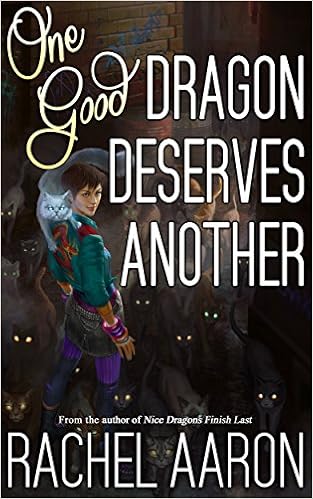
One Good Dragon Deserves Another (Volume 2 of The Heartstrikers Series) by Rachel Aaron (08/01/2015) – I thought the first in this series, Nice Dragon Finish Last was very enjoyable. I liked both the characters and world-building very much.

After barely escaping the machinations of his terrifying mother, two all knowing seers, and countless bloodthirsty siblings, the last thing Julius wants to see is another dragon. Unfortunately for him, the only thing more dangerous than being a useless Heartstriker is being a useful one, and now that he's got an in with the Three Sisters, Julius has become a key pawn in Bethesda the Heartstriker's gamble to put her clan on top.

Refusal to play along with his mother's plans means death, but there's more going on than even Bethesda knows, and with Estella back in the game with a vengeance, Heartstriker futures disappearing, and Algonquin's dragon hunter closing in, the stakes are higher than even a seer can calculate. But when his most powerful family members start dropping like flies, it falls to Julius to defend the clan that never respected him and prove that, sometimes, the world's worst dragon is the best one to have on your side.


Half a War (Book Three of The Shattered Sea Trilogy) by Joe Abercrombie (Del Rey Hardcover 07/28/2014) –The concluding volume to Joe’s Young Adult trilogy, which last July. I’ve got the first one as an eBook, so I’ve go some catching up to do.

New York Times bestselling author Joe Abercrombie delivers the stunning conclusion to the epic fantasy trilogy that began with Half a King, praised by George R. R. Martin as “a fast-paced tale of betrayal and revenge that grabbed me from page 1 and refused to let go.”

Words are weapons.

Princess Skara has seen all she loved made blood and ashes. She is left with only words. But the right words can be as deadly as any blade. If she is to reclaim her birthright, she must conquer her fears and sharpen her wits to a lethal edge.

Only half a war is fought with swords.

The deeply cunning Father Yarvi has walked a long road from crippled slave to king’s minister. He has made allies of old foes and stitched together an uneasy peace. But now the ruthless Grandmother Wexen has raised the greatest army since the elves made war on God, and put Bright Yilling at its head—a man who worships only Death.

Sometimes one must fight evil with evil.

Some—like Thorn Bathu and the sword-bearer Raith—are born to fight, perhaps to die. Others—like Brand the smith and Koll the wood-carver—would rather stand in the light. But when Mother War spreads her irons wings, she may cast the whole Shattered Sea into darkness.

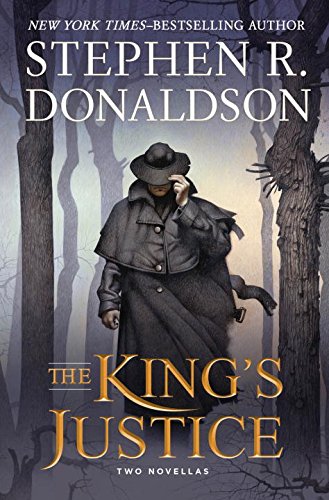
The King's Justice: Two Novellas by Stephen R. Donaldson (Trade Paperback 10/15/2015 G.P. Putnam’s Sons) – Donaldson is one of those writers I read when I was first really getting into the fantasy genre, specifically his Thomas Covenant books, but I haven’t read the final 4. Yet. This book looks very interesting.

Two new, original novellas—Donaldson's first publication since finishing the Thomas Covenant series—are a sure cause for celebration among his many fans.

In The King's Justice, a stranger dressed in black arrives in the village of Settle's Crossways, following the scent of a terrible crime. He even calls himself "Black," though almost certainly that is not his name. The people of the village discover that they have a surprising urge to cooperate with this stranger, though the desire of inhabitants of quiet villages to cooperate with strangers is not common in their land, or most lands. But this gift will not save him as he discovers the nature of the evil concealed in Settle’s Crossways.

The Augur's Gambit is a daring plan created by Mayhew Gordian, Hieronomer to the Queen of Indemnie, a plan to save his Queen and his country. Gordian is a reader of entrails. In the bodies of chickens, lambs, piglets, and one stillborn infant he sees the same message: the island nation of Indemnie is doomed. But even in the face of certain destruction a man may fight, and the Hieronomer is utterly loyal to his beautiful Queen--and to her only daughter. The "Augur's Gambit" is his mad attempt to save a kingdom.


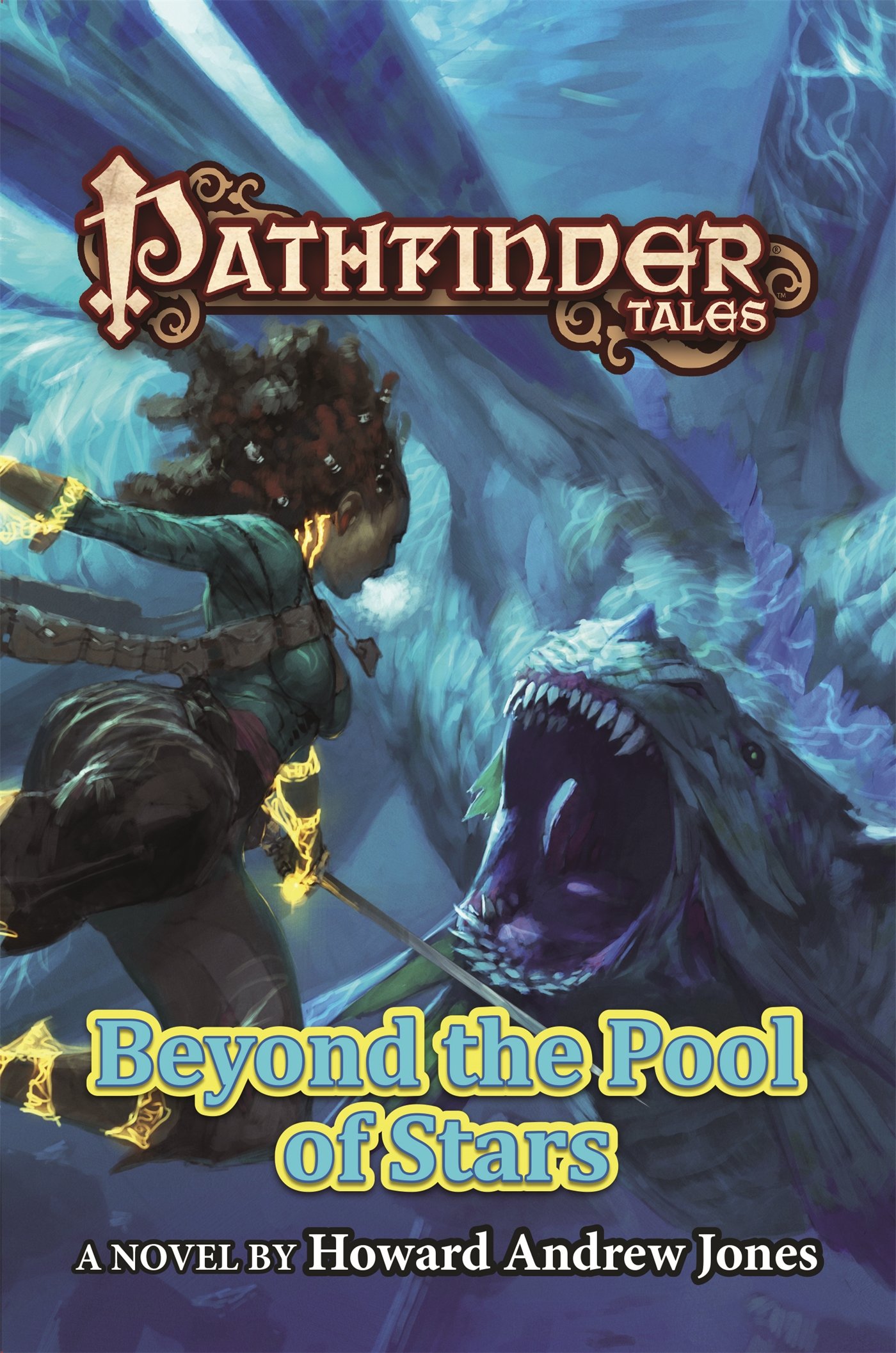
Beyond the Pool of Stars (A Pathfinder Tales novel) by Howard Andrew Jones (Paizo Trade Paperback 10/06/2015) – This is Jones’s third Pathfinder novel and I loved his second installment of The Chronicles of Sword and Sand so I hope I can get to this one

Mirian Raas comes from a long line of salvagers, adventurers who use magic to dive for sunken ships off the coast of tropical Sargava. When her father dies, Mirian has to take over his last job: a dangerous expedition into deep jungle pools, helping a tribe of lizardfolk reclaim the lost treasures of their people. Yet this isn’t any ordinary job, as the same colonial government that looks down on Mirian for her half-native heritage has an interest in the treasure, and the survival of the entire nation may depend on the outcome…

Wednesday, July 08, 2015

The 2015 Six Pack of My Favorite 2015 SFF Books So Far (+ a Shot from 2014)

We are in the first full week of July 2015 which means we’ve passed the half-way point of 2015. Therefore, subsequently, ergo, here is my mid-year six pack – the six books published between January 2015 and June 2015 I enjoyed the most, in alphabetical order by author’s last name (plus one more at the end published in 2014) with an excerpt of my review, which is linked via the book title.

The Skull Throne (Book Four of The Demon Cycle) by Peter V. Brett

At this point, I don’t think it would be spoiling the story too much to say that Arlen and Jardir survived their tumble off the cliff, because Arlen realized it would be illogical to reduce any kind of chances humanity has at defeating the Demons, even if the methods Jardir and his people practice are less than savory. Arlen and Jardir exchange diatribes about their methods, but agree to face the larger threat. Meanwhile, the people who watched them fall to their seeming deaths are left thinking the two “Deliverers” have perished…except Renna who was a participant in Arlen’s scheme to keep both men alive. Their goal: to trap a Mind Demon and enter the Core to take the fight to the Queen of Demons. The characters disperse and we follow three main threads: Inevera, Abban and the Krasians as they attempt to keep the Skull Throne occupied and further their campaign against the “Greenlanders” of Thesa, the Thesians dealing with the Krasian threat with attempts to unite featuring characters Rojer, Renna, Leesha, Gared and those folk; and of course Arlen and Jardir preparing themselves for entry into The Core.
...
pride may be one of the characteristics or traits that does in many of the characters and can be seen as the greatest flaw a person can have in this world. Rojer, Jardir, Jayan (among others) all exhibit a great deal of hubris and pride. Some of them overcome that and don’t let the hubris consume them, but when that hubris so strongly defines an individual character here, it tends to be a fatalistic flaw. Leesha was quite prideful in her journey through to The Skull Throne, but in this third volume, her pride seems to have been quelled and as a result, she is a stronger character.
Gemini Cell by Myke Cole (A Shadow OPS novel) 
Gemini Cell is Myke’s fourth novel and is set in the same milieu as his previous three Shadow OPS novels, but is completely separate from those novels in terms of characters, timeframe, and storyline. In other words, this is the perfect entry point for new readers. In it, Myke introduces readers to Jim Schweitzer, a Navy SEAL, husband, and father. Like many soldiers/operators, he is torn between his military life and his family life. His wife Sarah is an artist and her career is beginning to flourish. As the novel starts, Sarah is having a major exhibition of her work and unfortunately, Jim is called away in the middle of the exhibition by the Navy for an emergency mission.
...
Jim wakes up or rather he is brought back from the dead by a sorcerer and learns he is not alone in his own head and body. His unlife in his undead body share space with an ancient jinn named Ninip. Jim is informed that death has not severed his service to the Navy and he is “transferred” into Gemini Cell with Gemini referring, of course, to the twin souls of Jim and Ninip inhabiting Jim’s zombie body. As Jim soon learns, sharing a body with an angry jinn is a challenging task on top of adjusting to being undead and having been told his wife and son were murdered when he was killed. Jim’s spirit and Ninip’s spirit constantly struggle for control of Jim’s body, when in stasis, training or one of the missions he is sent to accomplish. Ninip is angry, seeks blood death and vengeance while Jim tries to calm the spirit. 

The Grace of Kings (Book 1 of The Dandelion Dynasty) by Ken Liu
Set in the Dara archipelago (an imagined world with a Asian resonances), the Emperor Mapidéré has united the many islands under one banner. Immediately, in my mind, a flag arose. This could be seen as an endgame, for an epic fantasy novel/saga – the uniting of kingdoms by an ambitious ruler. But this is where Liu launches his story, at the apex of one ruler’s conquering goals as viewed by a trickster with lofty aspirations and an orphan seeking revenge. This trickster is a young boy who often gets into trouble, would rather frolic than read, but whose mother continually holds out hope that he’ll eventually “get it” and stop his tomfoolery. This is Kuni Garu, one of the primary protagonists of the novel. We see much of the action of the narrative through his point of view, we see him grow into manhood, become a husband, father, and unlikely leader of men. Kuni joins a street gang, has many adventures until he finally appoints himself Duke Garu and grows a legion of followers who pledge themselves to him. As Kuni climbs the social strata and makes a name for himself, he falls for a woman named Jia, the woman who becomes his first wife.


There’s been a fair amount of criticism about the lack of female characters in this novel, itself just the first part of a trilogy. (This raises the question, I suppose, of how to review one novel in a series, which is a large chapter in a much larger story.) While I can understand that frustration – to a point – it seems to me in order to showcase an element that might be underrepresented, one must first illustrate that deficiency. In other words, such a criticism in my mind is slightly off the mark, because it seems to me the point of what Liu did with the gender imbalance in the first half is to present a problem to be fixed. A broken or unwhole thing can better be amended or repaired when it is viewed wholly.
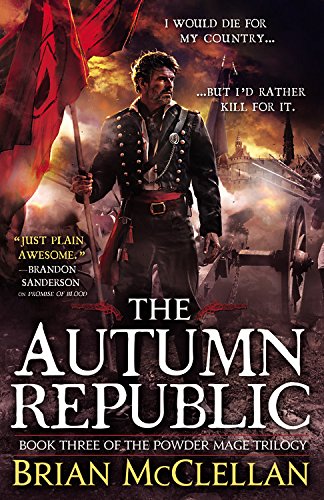
The Autumn Republic (Book Thee of The Powder Mage Trilogy) by Brian McClellan 
An excerpt of my yet-to-be posted review (though I finished the book the last week of June)

One great thing that struck me as I was blazing through the pages is what a great job McClellan did with finishing off The Powder Mage Trilogy in The Autumn Republic. There was a great crescendo of tension as not only the elements of this novel came together, but the themes and character arcs of the whole trilogy came together towards conclusion. As great as McClellan did in crafting believable characters, his pacing was probably the strongest element of The Autumn Republic. I was continually impressed with Brian’s an expert handle on how he wants to conclude the story of Tamas and Taniel and his restraint in not rushing towards it unrestrained, while still maintaining that fantastic pace.

The character of Nila really comes into her own as her character develops throughout the novel from the minor character we met initially in A Promise of Blood to how integral she is here in the finale. Events could not have played out as they if Nila didn’t take the active role she did.


The Red by Linda Nagata (A Red novel)

Lieutenant James Shelley is in charge of a Linked Combat Squad (LCS), who has dubbed him King David because of his premonitions which have often saved some, or all of them, from defeat or death. In this near future (probably about Twenty Minutes into the Future) members of the military wear skull caps on their heads which connect them to a cloud network. The military answers more to defense contractors than the government. The skull caps worn by the squad members also, via the cloud and their network administrator (for lack of a better term), control their emotions to ensure a more cool and calculated demeanor in the field. Ironically enough, Shelly was a war protestor and in lieu of serving out a jail sentence, he agreed to join the military. He excelled and eventually Shelly’s premonitions become more powerful, but he sustains a very damaging combat injury in the first third of the novel. What provides Shelly with these premonitions is something he dubs “The Red;” but is it malevolent, benign, or benevolent or more likely, an unknowable wild card?
...
There’s also a nice metafictional element to the novel. You see, Shelley’s exploits are being broadcast for entertainment consumption, initially, without his knowledge. The public comes to know him and revere him as a hero. As such, the novel itself is broken into three sections, or Episodes, reflecting the exploits of Shelley’s LCS which are broadcast as entertainments. By novel’s end, or the end of three “episodes,” Shelley is transformed from the man we first met, he has accomplished some missions and Nagata has told a fabulous story.

Uprooted by Naomi Novik

Agnieszka lives in a small village protected by the wizard known as the Dragon. Every decade or so, the Dragon comes down from his tower and hand-picks a young girl from the village to come live with him for a decade. Very little is known about what occurs between the two during that time save the woman leaves the tower a practitioner of magic herself and seemingly is no longer connected to her home-village. Nieshka thinks her best friend Kasia will be chosen by the Dragon as the time approaches for his ten-year visit. Much to her surprise (but not to any genre reader, I suppose especially because the tale is told through Agnieszka’s first person voice) Agnieszka is chosen and brought to the wizard’s tower.


Agnieszka is not the most agreeable of the Dragon’s students. She constantly challenges his authority, seeks alternate methods for practicing the magical arts and generally acts in a defiant manner. Superficially, that could make for an annoying character, but I was enthralled with Nishka and her plight. Novik did a marvelous job of building empathy and sympathy for her through nearly every twist and turn of the plot. On the other hand, the Dragon was a man who showed little patience for Agnieska through many of their interactions, but who wielded great power.


The honorable mentions is Emily St. John Mandel’s Station Eleven (published last year) which very quickly jumped up my all time favorite list.


As George R.R. Martin proclaimed when he stated that Station Eleven was his favorite book from 2014, it is a book that shouldn’t work. The structure is not linear, it veers all over the place and doesn’t make itself immediately clear how everything is connected. That perceived barrier is what makes this such a strong and powerful novel because Mandel so skillfully weaves these narratives and left me at each seeming halting of a specific narrative wanting so much more. So I continued with the “new” narrative in the hopes of coming to a connection point between the seemingly separate narratives only to be fully engrossed in that “new” narrative. Or, in other words, I was wrapped up in what was happening to Kirsten only for Mandel to switch over to a narrative featuring Leander’s first wife Miranda and found myself equally enwrapped in her story.
The famous actor Arthur Leander, after years as a Hollywood leading man and box office draw, returns to the stage for a production of King Lear in Toronto. When he dies on stage, the story unfolds in many directions. We learn about Jeevan Chaudhary, the medic who rushes from the audience to the stage to check on the actor. We meet Kirsten Ramonde, the young actress (8 years old) cast as one of Lear’s daughters for this unique performance as. Their narratives spin directly following Leander’s death as civilization collapses (Jeevan) and a decade-and-a-half after the population has dwindled (Kirsten). Mandel also focuses her lens on Leander’s first wife, Miranda and his best friend Clark Thompson.

Sunday, July 05, 2015

Books in the Mail (W/E 2015-04-04)

You all know the drill by now...a shortened week for the mail brings two books to the o' Stuff homestead this week.


Time Salvager by Wesley Chu (Hardcover, Tor 07/07/2015) – Chu is a new superstar in the genre, after the very well-received Tao trilogy with Angry Robot, he jumps to Tor for this novel.


Time Salvager: a fast-paced time travel adventure from Wesley Chu, the award-winning author of The Lives of Tao.

In a future when Earth is a toxic, abandoned world and humanity has spread into the outer solar system to survive, the tightly controlled use of time travel holds the key maintaining a fragile existence among the other planets and their moons. James Griffin-Mars is a chronman--a convicted criminal recruited for his unique psychological makeup to undertake the most dangerous job there is: missions into Earth's past to recover resources and treasure without altering the timeline. Most chronmen never reach old age, and James is reaching his breaking point.

On a final mission that is to secure his retirement, James meets an intriguing woman from a previous century, scientist Elise Kim, who is fated to die during the destruction of an oceanic rig. Against his training and his common sense, James brings her back to the future with him, saving her life, but turning them both into fugitives. Remaining free means losing themselves in the wild and poisonous wastes of Earth, and discovering what hope may yet remain for humanity's home world..


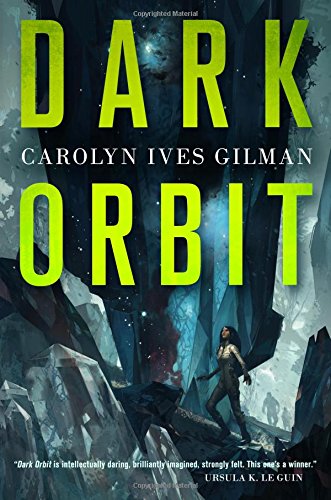
Dark Orbit by Carolyn Ives Gilman (Hardcoer, Tor 07/14/2015) – I like First Contact novels and this one looks to work that trope in an interesting way. This is the final / hardcover of the ARC I received a couple of weeks ago.


From Nebula and Hugo Award-nominated Carolyn Ives Gilman comes Dark Orbit, a compelling novel featuring alien contact, mystery, and murder.

Reports of a strange, new habitable planet have reached the Twenty Planets of human civilization. When a team of scientists is assembled to investigate this world, exoethnologist Sara Callicot is recruited to keep an eye on an unstable crewmate. Thora was once a member of the interplanetary elite, but since her prophetic delusions helped mobilize a revolt on Orem, she's been banished to the farthest reaches of space, because of the risk that her very presence could revive unrest.

Upon arrival, the team finds an extraordinary crystalline planet, laden with dark matter. Then a crew member is murdered and Thora mysteriously disappears. Thought to be uninhabited, the planet is in fact home to a blind, sentient species whose members navigate their world with a bizarre vocabulary and extrasensory perceptions

Lost in the deep crevasses of the planet among these people, Thora must battle her demons and learn to comprehend the native inhabitants in order to find her crewmates and warn them of an impending danger. But her most difficult task may lie in persuading the crew that some powers lie beyond the boundaries of science.

Friday, July 03, 2015

Friday Round-Up: Jim Butcher & Mind Meld @SFSignal and @SFFWorld Interviews (Jeffrey Ford and others)!

With the Fourth of July tomorrow (Saturday), what a great time it is now for a Friday Link-Dump. Here’s some great stuff that has gone up at SFFWorld and SF Signal over the past few weeks. Not too much from me at SFFWorld lately (I read and reviewed Max Gladstone’s forthcoming novel Last First Snow, but I’m holding the review until the publication date gets closer), but that doesn’t mean things aren’t going on over there. I’ve also got two new pieces up at SF Signal this week: a book review and my July Mind Meld.


A couple of weeks ago at SFFWorld, I took part in an interview we posted with one of my favorite (and under-read) writers: Jeffrey Ford. His wonderful Well Built City Trilogy is being issued electronically (along with other titles on his backlist) by Open Road Integrated Media. Here's a sampling:
The two collections being released electronically, The Empire of Ice Cream and The Fantasy Writer’s Assistant display a wide range of imaginative stories, some from themed anthologies, other stories from the magazine/short story market. Do you find crafting a story for a specific themed anthology to prove more challenging than crafting stories that appear in “unthemed” in a place like The Magazine of Fantasy and Science Fiction or Tor.com?


Sometimes it’s easier because you at least have some parameters to begin with, so the limitation offers direction. The problem is it can become stultifying if the subject of the anthology is too played — like zombies, vampires, etc. Story possibilities have been milked for all their worth and then some. Still, if you’re able to come up with a story that escapes the pedestrian in those flayed categories that can be exciting writing. On the other hand, writing with no parameters, the sky’s the limit, that can also be daunting. Unless, of course, you have a story already in mind.


Tuesday, my review of Working for Bigfoot, a tryptich of stories featuring Harry Dresden doing jobs for a Bigfoot published by Subterranean Press went up at SF Signal:


Jim Butcher, especially because of his Dresden Files series, is known mostly for writing novel length fiction. Occasionally, when an anthology editor calls, Jim will write a shorter tale featuring a mini-adventure of everybody’s favorite Chicago Wizard (or another character from the series). The fine folks at Subterranean Press have gathered three of those shorter mini-adventures her in Working for Bigfoot. In each story, Harry Dresden takes on jobs for a Bigfoot as the Sasquatch/Yeti are, unsurprisingly, a separate supernatural race in the world of The Dresden Files.

Prior to reading Working for Bigfoot, I recently read the (at the time of this review) most recent Dresden Files novel, Skin Game, which just happens to have as a supporting character, a Bigfoot. So perhaps the timing of the release of this “Bigfoot Trilogy” of short stories is quite apropos. I found the stories just as enjoyable as the novel-length stories in this series, what I enjoy about the novels (Butcher’s humor, Harry as a character, and the Fantasy Kitchen Sink approach to the supernatural world) was on display here. This is the second limited edition publication Subterranean Press has published featuring a short story in The Dresden Files (the previous is Backup), the art here is by Vincent Chong, who did the covers and art for the limited editions of the Dresden novels Subterranean has published thus far. Even in ARC form, this is a nice edition, with not only an eye-catching cover but moody illustrations for each of the stories.

In addition to the Jeffrey Ford interview I pointed out above, we’ve also recently run interviews with:


Luke Brown has been a great addition to our gaggle of reviewers and was recently the 100th blogger/genre reviewer interviewed by S.C. Flynn.

We’ve got a great Authors Roundtable going on over at SFFWorld featuring Alexes Razevich, Brian Staveley, Jay Posey, and Mark Lawrence


Also at SF Signal, my July Mind Meld went live, wherein I ask Mahvesh Murad, Mihir Wanchoo of Fantasy Book Critic, Shana Dubois, Romeo Kennedy, Melanie R. Meadors, and Alex Ristea about :

From Joanne Harris’s Gospel of Loki going back as far as Evangeline Walton’s “Mabinogion Tetralogy” as well as Roger Zelazny’s Lord of Light, myths and gods from around the world have infused speculative fiction. What is your favorite mythic and god-infused fiction?

Sunday, June 28, 2015

Books in the Mail (W/E 2015-06-27)

A steady stream of books this week, have a look, won’t you?


Ascendance (Dave Vs. The Monsters #3) by John Birmingham (Del Rey Mass Market Paperback 06/30/2015) – This is the third in the series Birminghams urban fantasy/horror series in the Jonathan Maberry and Larry Correia vein.


Kids, there are no monsters under the bed. They’re in the front yard.

As a hardworking monster-slayer, Dave Hooper tries not to bring his work home with him. But nowadays it’s hard to keep them separate. Email, cellphones, empath daemons, they never let a guy rest.

The Horde has been raising hell and leveling cities from New York to Los Angeles, keeping Dave and his fellow monster-killer, Russian spy Karin Varatschevsky, very busy. But when the legions of hell invade the small seaside town his boys call home, Dave has to make a call. Save the world? Or save his family?

Not as easy a choice as you’d think, since Dave’s ex-wife expects to be saved too. And there’s no convincing her that the supersexy Russian spy isn’t his girlfriend. She’s just his sidekick—and an assassin.


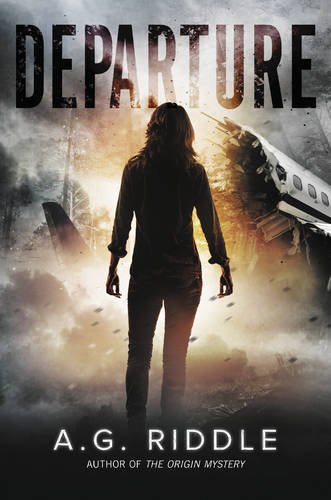
Departure by A.G. Riddle (HarperVoyager Hardcover 10/20/2015) – Riddle is the latest self-published sensation (having sold over one million copies) to make the jump to traditional publishing. This one, as the tag line indicates, has some resonance with Lost .


Flight 305 took off in 2014...
But it crashed in a world very different from our own...

With time running out, five strangers must unravel why they were taken...
And how to get home.


Harper Lane has problems. In a few hours, she'll have to make a decision that will change her life forever. But when her flight from New York to London crash-lands in the English countryside, she discovers that she's made of tougher stuff than she ever imagined.

As Harper and the survivors of Flight 305 struggle to stay alive in the aftermath of the crash, they soon realize that this world is very different from the one they left. Their lives are connected, and some believe they've been brought here for a reason.

In addition to Harper, several other passengers seem to hold clues about why Flight 305 crashed. There's:

Nick Stone, an American on his way to a meeting with The Gibraltar Project, an international group dedicated to building a dam across the Strait of Gibraltar and draining the Mediterranean.

Sabrina Schröder, a German scientist who has unknowingly sealed the fate of half the flight's passengers.

Yul Tan, a Chinese-American computer scientist who has just made the breakthrough of a lifetime: a quantum internet capable of transmitting more data, farther, faster than ever thought possible. His invention, however, does much more than he ever dreamed possible.

With time running out to save the survivors of Flight 305, Harper and Nick race to unravel the conspiracy that crashed their plane. As they put the pieces together, they discover that their decisions have already doomed one world and will soon determine the future of ours.


DEPARTURE is the first new novel from A.G. Riddle since he completed The Origin Mystery, the trilogy that has sold a million copies in the US, is being translated into 18 languages, and is in development at CBS Films to be a major motion picture.

DEPARTURE continues to establish Riddle's standard for fast-paced, high-concept thrillers with twists and big ideas that leave readers thinking long after they turn the last page.


Aurora by Kim Stanley Robinson (Orbit Books 07/07/2015) – I have made multiple attempts at reading novels by KSR and I’ve never been able to connect with them, but I think I’m in the minority since many other genre readers seem to enjoy his work. This is a long departure for him, in that the story leaves our immediate solar system.


A major new novel from one of science fiction's most powerful voices, AURORA tells the incredible story of our first voyage beyond the solar system


Brilliantly imagined and beautifully told, it is the work of a writer at the height of his powers.


Our voyage from Earth began generations ago.

Now, we approach our destination.

A new home.

AURORA.


The Annihilation Score (A Laundry Files novel) by Charles Stross (Ace Hardcover 07/07/2015) – The only Laundry novel I read wasThe Jennifer Morgue which I enjoyed, but never managed to circle back to these books, this is the sixth in the series.


Hugo Award-winning author Charles Stross presents the next case in The Laundry Files, “a weirdly alluring blend of super-spy thriller, deadpan comic fantasy, and Lovecraftian horror” (Kirkus Reviews). 

Dominique O’Brien—her friends call her Mo—lives a curious double life with her husband, Bob Howard. To the average civilian, they’re boring middle-aged civil servants. But within the labyrinthian secret circles of Her Majesty’s government, they’re operatives working for the nation’s occult security service known as the Laundry, charged with defending Britain against dark supernatural forces threatening humanity.

Mo’s latest assignment is assisting the police in containing an unusual outbreak: ordinary citizens suddenly imbued with extraordinary abilities of the super-powered kind. Unfortunately these people prefer playing super-pranks instead of super-heroics. The Mayor of London being levitated by a dumpy man in Trafalgar Square would normally be a source of shared amusement for Mo and Bob, but they’re currently separated because something’s come between them—something evil. 

An antique violin, an Erich Zann original, made of human white bone, was designed to produce music capable of slaughtering demons. Mo is the custodian of this unholy instrument. It invades her dreams and yearns for the blood of her colleagues—and her husband. And despite Mo’s proficiency as a world class violinist, it cannot be controlled…


The Philosopher Kings by Jo Walton (Tor , Hardcover 06/30/2015) – Sequel/Second book in the sequence which began in The Just City earlier this year. I seem to have been one of the few people who didn’t connect with it.


From acclaimed, award-winning author Jo Walton: Philosopher Kings, a tale of gods and humans, and the surprising things they have to learn from one another. Twenty years have elapsed since the events of The Just City. The City, founded by the time-traveling goddess Pallas Athene, organized on the principles espoused in Plato's Republic and populated by people from all eras of human history, has now split into five cities, and low-level armed conflict between them is not unheard-of.

The god Apollo, living (by his own choice) a human life as "Pythias" in the City, his true identity known only to a few, is now married and the father of several children. But a tragic loss causes him to become consumed with the desire for revenge. Being Apollo, he goes handling it in a seemingly rational and systematic way, but it's evident, particularly to his precocious daughter Arete, that he is unhinged with grief.

Along with Arete and several of his sons, plus a boatload of other volunteers--including the now fantastically aged Marsilio Ficino, the great humanist of Renaissance Florence--Pythias/Apollo goes sailing into the mysterious Eastern Mediterranean of pre-antiquity to see what they can find--possibly the man who may have caused his great grief, possibly communities of the earliest people to call themselves "Greek." What Apollo, his daughter, and the rest of the expedition will discover…will change everything.

Sunday, June 21, 2015

Books in the Mail (W/E 2015-06-20)

A nice batch of books this week, two of which are finished copies of previously received ARCs.


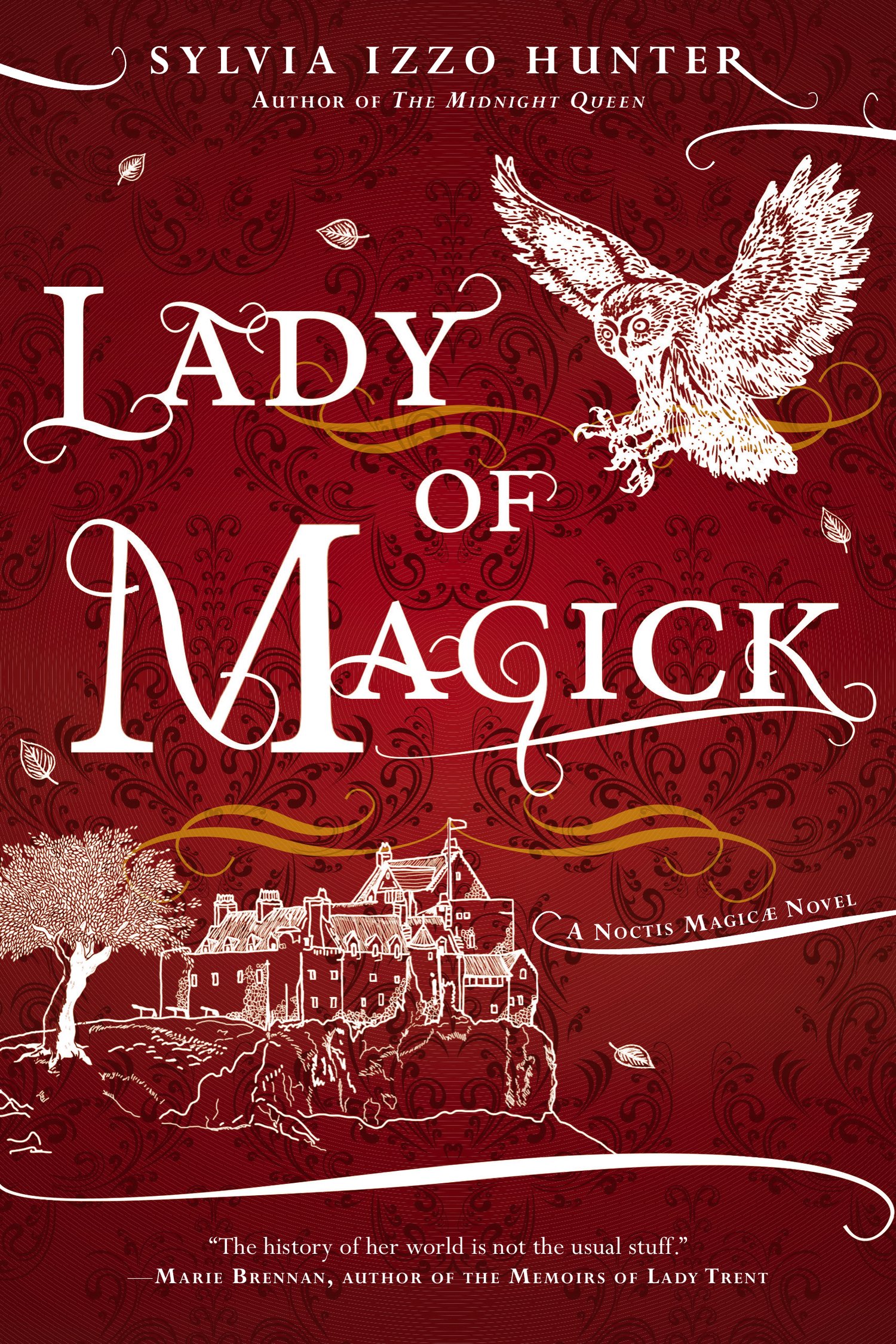
Lady of Magick (Noctis Magicae Book Two) by Sylvia Izzo Hunter (Ace Trade Paperback 09/01/2015) –I really enjoyed Hunter’s debut (Midnight Queen
) last year and really pleased to see the second publish exactly a year after the first one. The copy I received is a bound galley. .


“Sylvia Izzo Hunter brought “both rural Brittany and an alternative Regency England to vivid life”* in The Midnight Queen, her debut novel of history, magic, and myth. Now, in her new Noctis Magicae novel, Sophie and Gray Marshall are ensnared in an arcane plot that threatens to undo them both.


In her second year of studies at Merlin College, Oxford, Sophie Marshall is feeling alienated among fellow students who fail to welcome a woman to their ranks. So when her husband, Gray, is invited north as a visiting lecturer at the University in Din Edin, they leap at the chance. There, Sophie’s hunger for magical knowledge can finally be nourished. But soon, Sophie must put her newly learned skills to the test.

Sophie returns home one day to find a note from Gray—he’s been summoned urgently to London. But when he doesn’t return, and none of her spells can find a trace of him, she realizes something sinister has befallen him. With the help of her sister, Joanna, she delves into Gray’s disappearance, and soon finds herself in a web of magick and intrigue that threatens not just Gray, but the entire kingdom.


Dark Orbit by Carolyn Ives Gilman (Tor 07/14/2015) – I like First Contact novels and this one looks to work that trope in an interesting way.


From Nebula and Hugo Award-nominated Carolyn Ives Gilman comes Dark Orbit, a compelling novel featuring alien contact, mystery, and murder.


Reports of a strange, new habitable planet have reached the Twenty Planets of human civilization. When a team of scientists is assembled to investigate this world, exoethnologist Sara Callicot is recruited to keep an eye on an unstable crewmate. Thora was once a member of the interplanetary elite, but since her prophetic delusions helped mobilize a revolt on Orem, she's been banished to the farthest reaches of space, because of the risk that her very presence could revive unrest.

Upon arrival, the team finds an extraordinary crystalline planet, laden with dark matter. Then a crew member is murdered and Thora mysteriously disappears. Thought to be uninhabited, the planet is in fact home to a blind, sentient species whose members navigate their world with a bizarre vocabulary and extrasensory perceptions.

Lost in the deep crevasses of the planet among these people, Thora must battle her demons and learn to comprehend the native inhabitants in order to find her crewmates and warn them of an impending danger. But her most difficult task may lie in persuading the crew that some powers lie beyond the boundaries of science.


Last Song Before Night by Ilana C. Meyer (Tor 09/01/2015) – My SFSignal pal Paul Weimer brought this book to my attention. Ilana has written for various Web sites, this is her debut novel.


Long ago, poets were Seers with access to powerful magic. Following a cataclysmic battle, the enchantments of Eivar were lost–now a song is only words and music, and no more. But when a dark power threatens the land, poets who thought only to gain fame for their songs face a task much greater: to restore the lost enchantments to the world. And the road to the Otherworld, where the enchantments reside, will imperil their lives and test the deepest desires of their hearts.


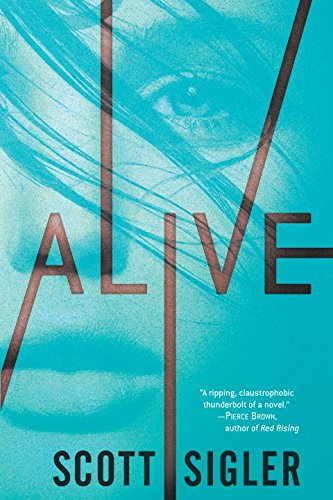
ALIVE (Generations Trilogy #1) by Scott Sigler (Del Rey Hardcover 07/14/2015) – I listened to Scott’s first podcast two novel Infected and Contagious. This is one; however, seems poised to be an explosive next-level type of novel for Scott. I saw Myke Cole mention the book on twitter with an infectious level of positivity so I’m looking forward to getting my grubby hands on a copy of this one closer to the summer. This is the final/finished copy of the EARC I received in May.


For fans of The Hunger Games, Divergent, and Red Rising comes a gripping sci-fi adventure in which a group of teenagers wake up in a mysterious corridor with no knowledge of who they are or how they got trapped. Their only hope lies with an indomitable young woman who must lead them not only to answers but to survival.


“I open my eyes to darkness. Total darkness. I hear my own breathing, but nothing else. I lift my head . . . it thumps against something solid and unmoving. There is a board right in front of my face. No, not a board . . . a lid.”


A teenage girl awakens to find herself trapped in a coffin. She has no idea who she is, where she is, or how she got there. Fighting her way free brings little relief—she discovers only a room lined with caskets and a handful of equally mystified survivors. Beyond their room lies a corridor filled with bones and dust, but no people . . . and no answers.

She knows only one thing about herself—her name, M. Savage, which was engraved on the foot of her coffin—yet she finds herself in charge. She is not the biggest among them, or the boldest, but for some reason the others trust her. Now, if they’re to have any chance, she must get them to trust each other.

Whatever the truth is, she is determined to find it and confront it. If she has to lead, she will make sure they survive. Maybe there’s a way out, a rational explanation, and a fighting chance against the dangers to come. Or maybe a reality they cannot comprehend lies just beyond the next turn.


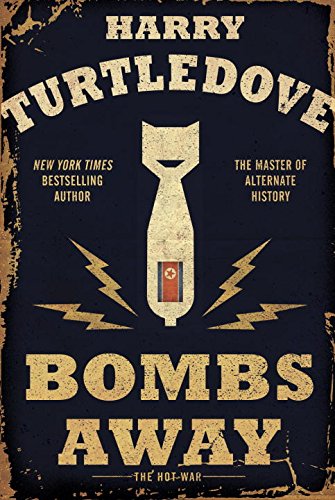
Bombs Away: The Hot War by Harry Turtledove (Del Rey Hardcover 07/14/2015) – If I had to guess, this might be the 50th Turtledove book (inclusive of all editions – Finished, ARC, Hardvover, Mass Market Paperback) I’ve received over the years here at the O’ Stuff.


In his acclaimed novels of alternate history, Harry Turtledove has scrutinized the twisted soul of the twentieth century, from the forces that set World War I in motion to the rise of fascism in the decades that followed. Now, this masterly storyteller turns his eyes to the aftermath of World War II and asks: In an era of nuclear posturing, what if the Cold War had suddenly turned hot? 


Bombs Away begins with President Harry Truman in desperate consultation with General Douglas MacArthur, whose control of the ground war in Korea has slipped disastrously away. MacArthur recognizes a stark reality: The U.S. military has been cut to the bone after victory over the Nazis—while China and the USSR have built up their forces. The only way to stop the Communist surge into the Korean Peninsula and save thousands of American lives is through a nuclear attack. MacArthur advocates a strike on Chinese targets in Manchuria. In actual history, Truman rejected his general’s advice; here, he does not. The miscalculation turns into a disaster when Truman fails to foresee Russia’s reaction. 

Almost instantly, Stalin strikes U.S. allies in Europe and Great Britain. As the shock waves settle, the two superpowers are caught in a horrifying face-off. Will they attack each other directly with nuclear weapons? What countries will be caught in between? 

The fateful global drama plays out through the experiences of ordinary people—from a British barmaid to a Ukrainian war veteran to a desperate American soldier alone behind enemy lines in Korea. For them, as well as Truman, Mao, and Stalin, the whole world has become a battleground. Strategic strikes lead to massive movements of ground troops. Cities are destroyed, economies ravaged. And on a planet under siege, the sounds and sights of nuclear bombs become a grim harbinger of a new reality: the struggle to survive man’s greatest madness.


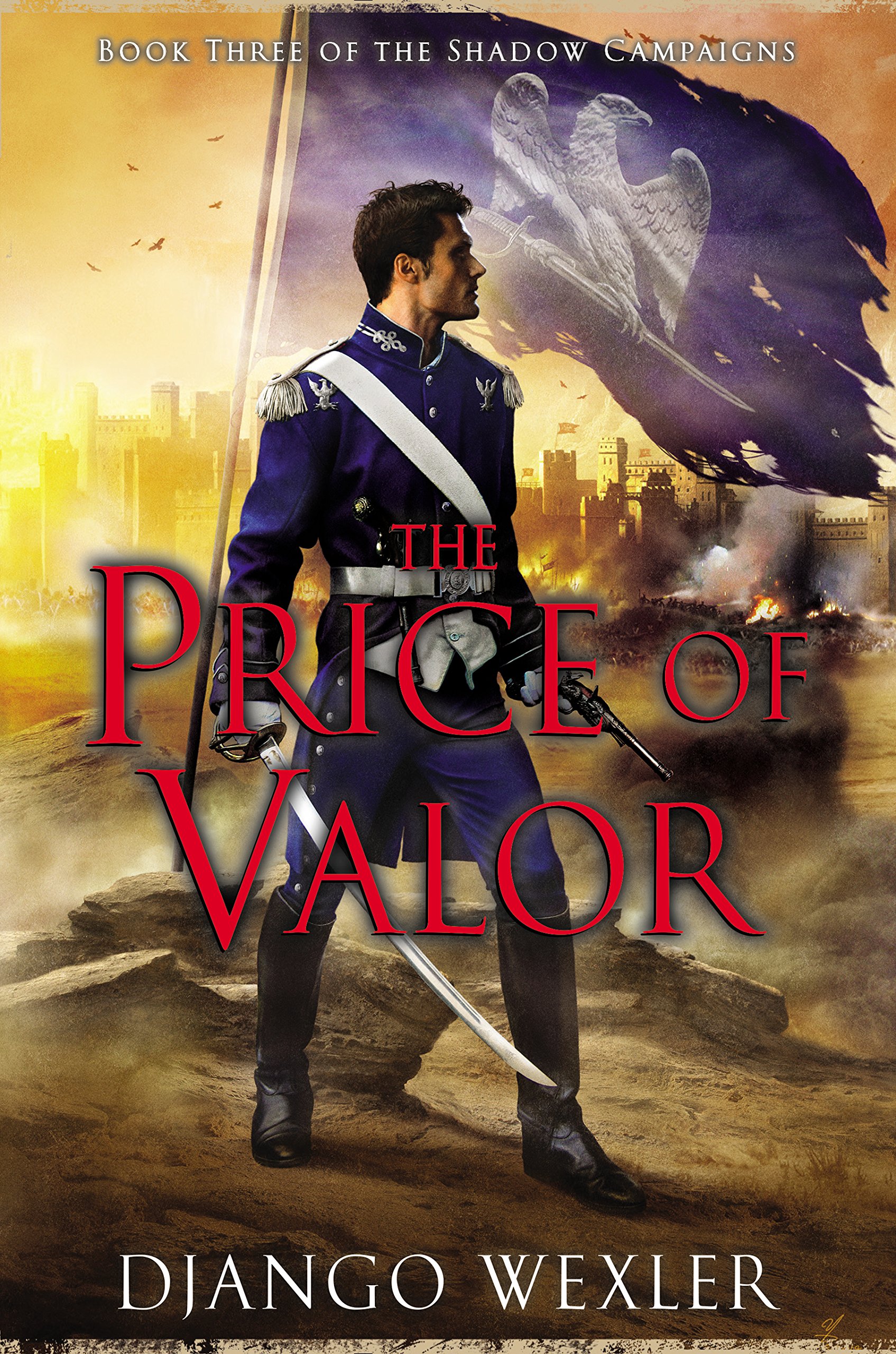
The Prince of Valor by Django Wexler (Roc July 2015) – I read the first two Shadow Campaigns novels last year and thought The Shadow Throne was awesome. This is the final/published version of the ARC I received in May.


In the latest Shadow Campaigns novel, Django Wexler continues his "epic fantasy of military might and magical conflict" following The Shadow Throne and The Thousand Names, as the realm of Vordan faces imminent threats from without and within.


In the wake of the King’s death, war has come to Vordan.

The Deputies-General has precarious control of the city, but it is led by a zealot who sees traitors in every shadow. Executions have become a grim public spectacle. The new queen, Raesinia Orboan, finds herself nearly powerless as the government tightens its grip and assassins threaten her life. But she did not help free the country from one sort of tyranny to see it fall into another. Placing her trust with the steadfast soldier Marcus D’Ivoire, she sets out to turn the tide of history.

As the hidden hand of the Sworn Church brings all the powers of the continent to war against Vordan, the enigmatic and brilliant general Janus bet Vhalnich offers a path to victory. Winter Ihernglass, newly promoted to command a regiment, has reunited with her lover and her friends, only to face the prospect of leading them into bloody battle.

And the enemy is not just armed with muskets and cannon. Dark priests of an ancient order, wielding forbidden magic, have infiltrated Vordan to stop Janus by whatever means necessary...

Friday, June 19, 2015

Friday Round-Up: Orullian, Mandel, Nagata, and SFFWorld's Top 20 Epic Fantasy

Another link round-up for SFFWorld….

Silly me, I neglected to include in my last two Round Ups, an interview I conducted with Peter Orullian went up at SFFWorld. We discuss his storied path to publication including the “Author’s Definitive” edition of The Unremembered


Not many authors have the opportunity to reboot their debut novel in the fashion you did. Do you feel better placed within the genre community now to spread the word and song of your work?
I feel, at least, that the book is closer to what I’d originally intended. That’s a good feeling.
Beyond that, I’m also really excited for readers to discover Trial of Intentions, too. I go deep into the music-magic system I’ve built, which reviewers (as well as other pro writers who’ve read it) are saying is unlike anything they’ve seen before. There’s also a whole new science element that crops up. I’m an amateur astronomer, and readers will find an entire society dedicated to science—and it’s relevant to the plot. Plus, I deal with some sensitive topics by way of character motivation. For example, suicide. It was always part of the narrative development of the series. But I had a friend commit suicide recently, and I think subconsciously it wove its way deeper into the text. There’s some pain in a few of my characters’ story that grows from this. And generally, I thinkTrial of Intentions turns many genre conventions on their heads. I mean, I have a main badass character who’s trying to avert war—that’s where the whole science thing comes in—rather than escalate to war. We’ll see if he succeeds, or is drawn inexorably to confrontation. But it fun as hell to write.


Last week, my review of Station Eleven by Emily St. John Mandel went up at SFFWorld. Put simply, one of the best books I read in the past 5-10 years:


One of the most prevalent genre stories is the Post-Apocalyptic tale; our world transformed irrevocably by disease(s), war, nature, zombies, or threats from beyond the globe. One might even suggest that Post-Apocalypse stories are so popular and prevalent they’ve become its own genre , separate and existing along-side Science Fiction. Into this fray enters Station Eleven, Canadian writer Emily St. John Mandel’s fourth novel and in an understatement, her break-out novel. As of this writing, the novel recently received the Arthur C. Clarke Award and was short-listed for the National Book Award. In a multi-threaded narrative that, for me, evoked the best elements of the television show Lost, Mandel’s novel begins on the eve of the apocalypse and spins out in both directions, following characters in the years prior to the apocalypse and characters living after 99% of humanity has been killed by the Georgia Flu.
...
I “read” Station Eleven as an audio-book, and I am fairly new to consuming books in this fashion. I’ve listened to about a half-dozen audio-books prior to being addicted to Station Eleven, and that addiction is in no small part thanks narrator/reader Kirsten Porter. She subtly modifies her voice through inflection and/or accent to differentiate each character’s voice through which she speaks. I would have enjoyed the novel a great deal had I read the dead-tree version, but I can’t help but emphasize that Porter’s narrative skills enhanced my enjoyment of the novel; she brought a haunting tone to the novel I likely would have been unable to hear in my own voice.


Most recently, my review of Linda Nagata’s spectacular (and Nebula Nominated) Military SF/Thriller novel The Red posted earlier this week. (A strong contender for top SF read of the year at this point):


The action takes place across the globe as seen through Shelly’s eyes and his point of view; he is our first person narrator. Nagata builds a great deal of empathy with him and his plight; when Shelley reunites with his girlfriend Lissa, after being in the field the emotions come through very strongly. When Shelley ruminates on his squad mates, both whose lives were lost and those who he still counts as part of his squad, he does so with a full intimate knowledge of those people. It has been said that the mark of a good book is that it comes across as a conversation between reader and writer. As such, Shelley’s intimacy, interactions, and thoughts transfers seamlessly to the reader, building a connection between the reader and writer that comes across as a pure conversation.
...
I also felt a nice kinship between Nagata’s posited future in which defense contractors running “the show” to the future of Matthew Stover’s Acts of Caine sequence where corporations like Dole are essentially nations. Additionally, the death defying “adventures” of the two protagonists (Nagata’s James Shelley and Stover’s Hari Michaelson/Caine) become popular movies/videos people enjoy a great deal. A big part of what I, and many people, enjoy about SFF is seeing familiar elements spun in a new way so I guess what I’m saying is that Nagata manages to bring a many familiar elements together (and few SF frameworks are as familiar or popular as Military SF) into something that manages to echo great stories that preceded it while still engaging in a powerfully refreshing fashion. In The Red, Nagata manages one of the most seamless, enjoyable, and enthralling meldings in SF of that familiar and “new spin.” I am excited to read the further exploits of James Shelley, The Red and wherever this story goes.

Lastly, our forum members over at SFFWorld took an informal poll to vote on the The Unofficial Top 20 Epic Fantasy Series/Books.  I'll say this, the list is not in the least bit surprising.  FWIW, my ballot from the voting thread looked like this (but it might likely change a bit next time I was to be asked):

  1. Memory, Sorrow and Thorn by Tad Williams
  2. The Acts of Caine by Matthew Stover
  3. The Farseer by Robin Hobb
  4. The Coldfire Trilogy by C.S. Friedman
  5. The Wheel of Time by Robert Jordan
  6. The Dresden Files by Jim Butcher
  7. The Dark Tower by Stephen King
  8. The Deed of Paksenarrion by Elizabeth Moon
  9. Mistborn (the original trilogy) by Brandon Sanderson
  10. DragonLance Chronicles by Margaret Weis and Tracy Hickman (for sentimental value!)

Sunday, June 07, 2015

Books in the Mail (W/E 2015-06-06)

One big highlight among many arrivals this week...


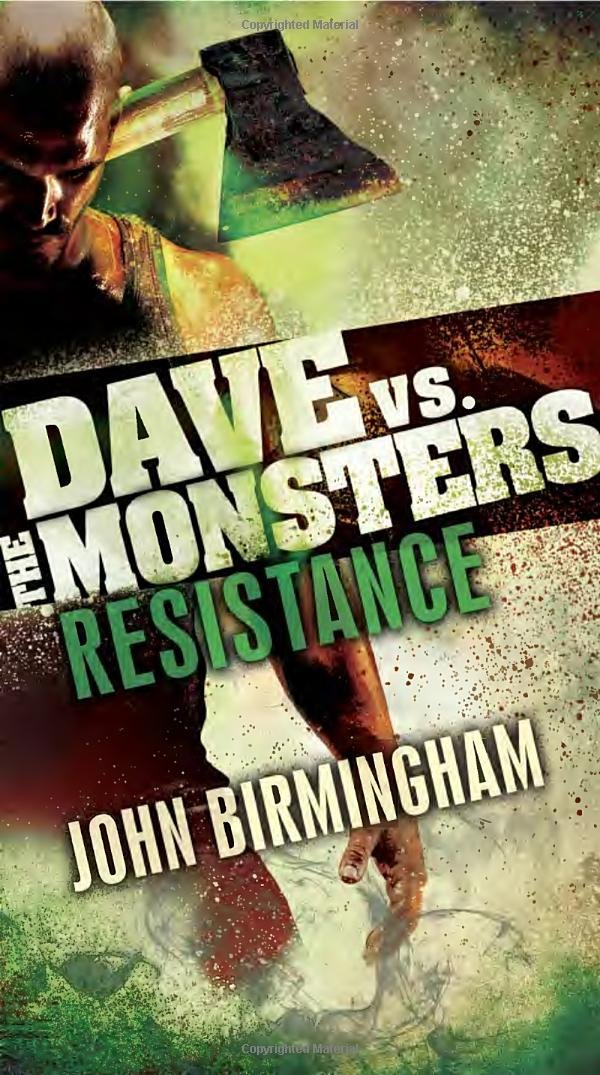
Resistance (Dave Vs. The Monsters #2) by John Birmingham (Del Rey Mass Market Paperback 06/02/2015) – Birmingham makes a slight switch from his alternate history Military SF novels into Military SF mixed with Horror, treading into the Jonathan Maberry and Larry Correia territory. This is the second in the series, Del Rey is pushing these out in monthly installments, at least for the first three.


For fans of Jim Butcher and Kevin Hearne comes an action-packed new urban fantasy series featuring a tough, bleakly funny, down-on-his luck oil rig worker with an unlikely destiny as a monster-slayer and savior of the planet.

When you drop a monster-killer on the Strip, all bets are off.

Holed up in Las Vegas after the tumultuous Battle of New Orleans, Dave is enjoying the VIP perks afforded a champion monster-slayer. He may be a superhero of swag and the toast of the town, but if some fire-breathing dragons have their way, odds are everyone will soon be toast. As the hordes from the UnderRealms regroup for their next attack, Dave parties with celebrities, lunches with A-listers, and gets his ass lawyered up—because his hellacious ex is looking for a piece of that sweet, sweet action.

It’s all good, until new monsters roll in, looking to parley with “the Dave.”

WTF, monsters. Do you think the Dave can’t spot a trap before he falls into it? And when things go to hell at warp 10, a suit from a shadow operation swoops in to offer Dave a deal he can’t refuse. Now Dave’s about to face off against an opponent who makes battling bloodthirsty behemoths look like child’s play—a ravishing Russian spy with a few superpowers of her own.


The Long Utopia by Stephen Baxter and Terry Pratchett (Harper Voyager 06/23/2015) – One of the last books Pratchett wrote, I think and second to final book to publish of his.


The fourth novel in Terry Pratchett and Stephen Baxter’s internationally bestselling “Long Earth” series, hailed as “a brilliant science fiction collaboration . . . a love letter to all Pratchett fans, readers, and lovers of wonder everywhere” (Io9).

2045-2059. Human society continues to evolve on Datum Earth, its battered and weary origin planet, as the spread of humanity progresses throughout the many Earths beyond.

Lobsang, now an elderly and complex AI, suffers a breakdown, and disguised as a human attempts to live a “normal” life on one of the millions of Long Earth worlds. His old friend, Joshua, now in his fifties, searches for his father and discovers a heretofore unknown family history. And the super-intelligent post-humans known as “the Next” continue to adapt to life among “lesser” humans.

But an alarming new challenge looms. An alien planet has somehow become “entangled” with one of the Long Earth worlds and, as Lobsang and Joshua learn, its voracious denizens intend to capture, conquer, and colonize the new universe—the Long Earth—they have inadvertently discovered.

World-building, the intersection of universes, the coexistence of diverse species, and the cosmic meaning of the Long Earth itself are among the mind-expanding themes explored in this exciting new installment of Terry Pratchett and Stephen Baxter's extraordinary Long Earth series.


;
Twelve Kings in Sharakhai (The Shatterred Sands Trilogy Book One) by Bradley P. Beaulieu (DAW Hardcover 09/01/2015) – After a well-received trilogy published by Night Shade Books and Brad himself, this marks Brad’s first book in a new series with publishing giant DAW. I’ve been following Brad on twitter for a while now and I’m really excited to read this one especially with blurbs from John Marco, Robin Hobb, C.S. Friedman, Sarah Chorn, and Aidan Moher.. (Also, Brad is one of the two guys who runs the excellent Speculate SF! Podcast.)


Sharakhai, the great city of the desert, center of commerce and culture, has been ruled from time immemorial by twelve kings—cruel, ruthless, powerful, and immortal. With their army of Silver Spears, their elite company of Blade Maidens, and their holy defenders, the terrifying asirim, the Kings uphold their positions as undisputed, invincible lords of the desert. There is no hope of freedom for any under their rule.

Or so it seems, until Çeda, a brave young woman from the west end slums, defies the Kings’ laws by going outside on the holy night of Beht Zha’ir. What she learns that night sets her on a path that winds through both the terrible truths of the Kings’ mysterious history and the hidden riddles of her own heritage. Together, these secrets could finally break the iron grip of the Kings’ power...if the nigh-omnipotent Kings don’t find her first.


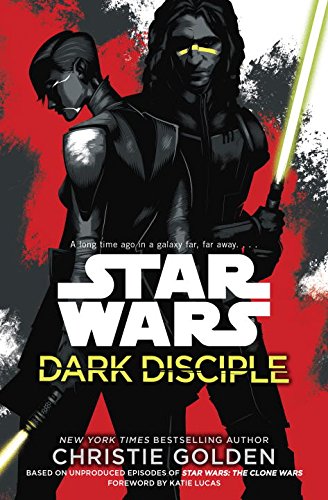
Star Wars: Dark Disciple by Christie Golden (Star Wars Books / Del Rey, Hardcover 07/07/2015) – Golden has been penning tie-in/franchise novels for years with good results, including some very well-received titles in the Star Wars universe. This one picks up stories from the popular Clone Wars TV show.


Based on unproduced episodes of Star Wars: The Clone Wars, this new novel features Asajj Ventress, former Sith apprentice turned bounty hunter and one of the great antiheroines in Star Wars history.

The only way to bring down the Sith’s most dangerous warrior may be to join forces with the dark side.

In the war for control of the galaxy between the armies of the dark side and the Republic, former Jedi Master turned ruthless Sith Lord Count Dooku has grown ever more brutal in his tactics. Despite the powers of the Jedi and the military prowess of their clone army, the sheer number of fatalities is taking a terrible toll. And when Dooku orders the massacre of a flotilla of helpless refugees, the Jedi Council feels it has no choice but to take drastic action: targeting the man responsible for so many war atrocities, Count Dooku himself.

But the ever-elusive Dooku is dangerous prey for even the most skilled hunter. So the Council makes the bold decision to bring both sides of the Force’s power to bear—pairing brash Jedi Knight Quinlan Vos with infamous one-time Sith acolyte Asajj Ventress. Though Jedi distrust for the cunning killer who once served at Dooku’s side still runs deep, Ventress’s hatred for her former master runs deeper. She’s more than willing to lend her copious talents as a bounty hunter—and assassin—to Vos’s quest.

Together, Ventress and Vos are the best hope for eliminating Dooku—as long as the emerging feelings between them don’t compromise their mission. But Ventress is determined to have her retribution and at last let go of her dark Sith past. Balancing the complicated emotions she feels for Vos with the fury of her warrior’s spirit, she resolves to claim victory on all fronts—a vow that will be mercilessly tested by her deadly enemy . . . and her own doubt.


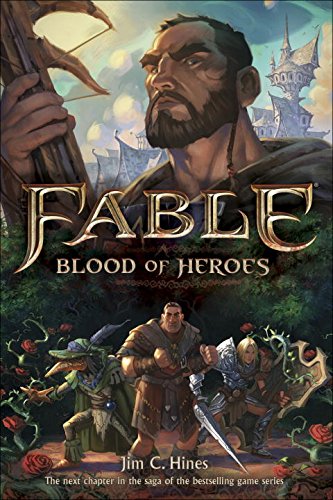
Fable: Blood of Heroes by Jim C. Hines (Del Rey, Trade Paperback 08/04/2015) – Hines is a solid dependable writer who spins fun tales which, I suspect, is why the Fables people selected him to write this book


The official companion novel to the videogame Fable® Legends

Deep in Albion’s darkest age, long before once upon a time . . . Heroes are thought to be gone from the land. So why have the bards begun singing of them once more? For Fable newcomers and dedicated fans alike, Blood of Heroes delves into a never-before-glimpsed era, telling the tale of a band of adventurers who come together to defend a kingdom in desperate need.

The city of Brightlodge is awash with Heroes from every corner of Albion, all eager for their next quest. When someone tries to burn down the Cock and Bard inn, four Heroes find themselves hastily thrown together, chasing outlaws through sewers, storming a riverboat full of smugglers, and placing their trust in a most unlikely ally. As the beginnings of a deadly plot are revealed, it becomes clear that Heroes have truly arrived—and so have villains.

What connects the recent events in Brightlodge to rumors about a malicious ghost and a spate of unsolved deaths in the nearby mining town of Grayrock? Unless Albion’s bravest Heroes can find the answer, the dawn of a new age could be extinguished before it even begins.

Friday, June 05, 2015

Friday Round-Up: Stephenson @SFFWorld, McCammon & Mind Melds @SFSignal

We’ve hit that “every other Friday” wherein I do my linkdump post, highlighting the reviews and other things I’ve posted on line.

Last week, my review of the Seveneves, the smartest blockbuster and most thought-out and plausible apocalyptic novel I’ve ever read went live at SFFWorld:


What if the moon blew up and its pieces posed an apocalyptic threat to the Earth? How would the world deal with it and engage in long-term planning for civilization? If you want an answer to that quandary, particularly, Neal Stephenson’s answer, then dive into his latest novel Seveneves. That is exactly how the novel begins, with something later to be dubbed the Agent. An early caution, Stephenson never reveals the source of the Agent for its only bearing on the novel is setting events in motion and causing the moon to explode. This is initially met with awe, wonder, and shock. Only after these emotions have settled themselves does pragmatism enter, in the form of Doc Dubois, who is all but a stand in for Neil de Grasse Tyson; a brilliant scientist with many, many followers on social media and a man who helps to disseminate science to the masses.

..
Stephenson seems to revel in focusing on granular details of some of construction of his space habitat and many of the particulars involving the technological aspects of the Cloud Ark comprise a great deal of the text of the novel. Some of that minutiae halted the progress, for I was much more enthralled in the character interactions between Dinah, Doc Dubois, J.B.F. and the other characters as they struggled to keep humanity alive from a sociopolitical perspective. Writing this review I’ve come to think that perhaps that’s the rub Stephenson is positing here – humanity can survive such a cataclysm from a technological ingenuity perspective, it is the egos of individuals and their societal upbringings that would be the largest barrier.

Speaking of apocalypses, one of the formative writers of my youth, Robert R. McCammon published a new novel in the Epic Horror/SF vein this week and I was lucky enough to get a copy and review it for SF Signal. The Border was a great novel and an interesting contrast to Seveneves:


Earth is being torn apart by war, cities have been destroyed and humanity is struggling for survival. Superficially, this is a familiar apocalyptic scenario. This war, however, is not one contested by human civilizations. Earth happens to be the border (thus the title) for two warring alien civilizations, dubbed by the world as the Cyphers and the Gorgons. Not only are these two alien civilizations carelessly destroying the Earth, but in their wake some of humanity is transformed into zombie-like creatures known as Grey Men. With this first layer of familiarity peeled away to reveal the reason for the ravaged Earth, The Border, Robert McCammon’s return to the grand-scale dark novels that made him famous, begins to take shape.

…
There’s almost a sense that McCammon was away from genre for so long that he wanted to put everything including the kitchen sink into this novel. While this is being heralded as a Horror novel (mainly, I suspect, because that is what the author is best known for writing), The Border is also very much a Science Fiction novel and Post-Apocalyptic novel considering Earth is nearly destroyed by two alien civilizations. These varying flavors or elements intertwine so well and naturally in an elegant, seamless fashion.

Also at SF Signal, my June Mind Meld went live, wherein I ask Karen Burnham, Gav Pugh, Kristi Charish, Brad Beaulieu, and Linda Nagata the following question:

It seems there are more and more awards every year, from the early days of the Hugo and Nebula Awards to multiple awards nowadays, and controversies surrounding many of them. For you as a genre reader/writer and part of the community, what purpose to genre awards serve, either a specific award or awards in general.


Last week, Paul turned the tables on me and invited me to contribute to his Mind Meld: Writing in Another Author’s Universe:

Along that vein of Sword and Sorcery, a character that is far too overlooked is Karl Edward Wagner’s Kane. While C.S. Friedman leans more towards the grand-scale Epic end of fantasy, darkness permeates both writer’s works and I think it would be fun to see C.S. Friedman pick up spin a tale of Kane. Plus, there is some resonance between Damian Vryce and Kane. This would also give me another excuse to revisit Wagner’s original Kane stories.